

Philly Cheesesteak Stuffed Peppers
All the best parts of a Philly cheesesteak land in these peppers: savory beef, softened onions and mushrooms, and that stretchy provolone blanket on top. You still get the deep,…
Tip: save now, cook later.All the best parts of a Philly cheesesteak land in these peppers: savory beef, softened onions and mushrooms, and that stretchy provolone blanket on top. You still get the deep, beefy, cheesy comfort of the original, but the peppers turn it into something lighter and a lot easier to serve on a busy night.
What makes this version work is the balance between moisture and heat. The peppers get a head start in the oven so they soften without turning watery, and the filling cooks hot and fast in one skillet so the steak stays tender instead of dry. Mushrooms add a little extra body and keep the mixture from feeling heavy, while Worcestershire sneaks in the same kind of savory depth you’d expect from a good cheesesteak shop sandwich.
Below, I’ve included the one step that keeps the peppers from going limp, plus a few smart swaps if you want to stretch the filling or skip a key ingredient.
The peppers stayed tender but didn’t collapse, and the beef filling had that classic cheesesteak flavor without getting greasy. I used provolone and it melted right over the top in the prettiest layer.
Save these Philly Cheesesteak Stuffed Peppers for the nights when you want cheesesteak flavor, melted provolone, and less cleanup than a skillet-and-sandwich spread.
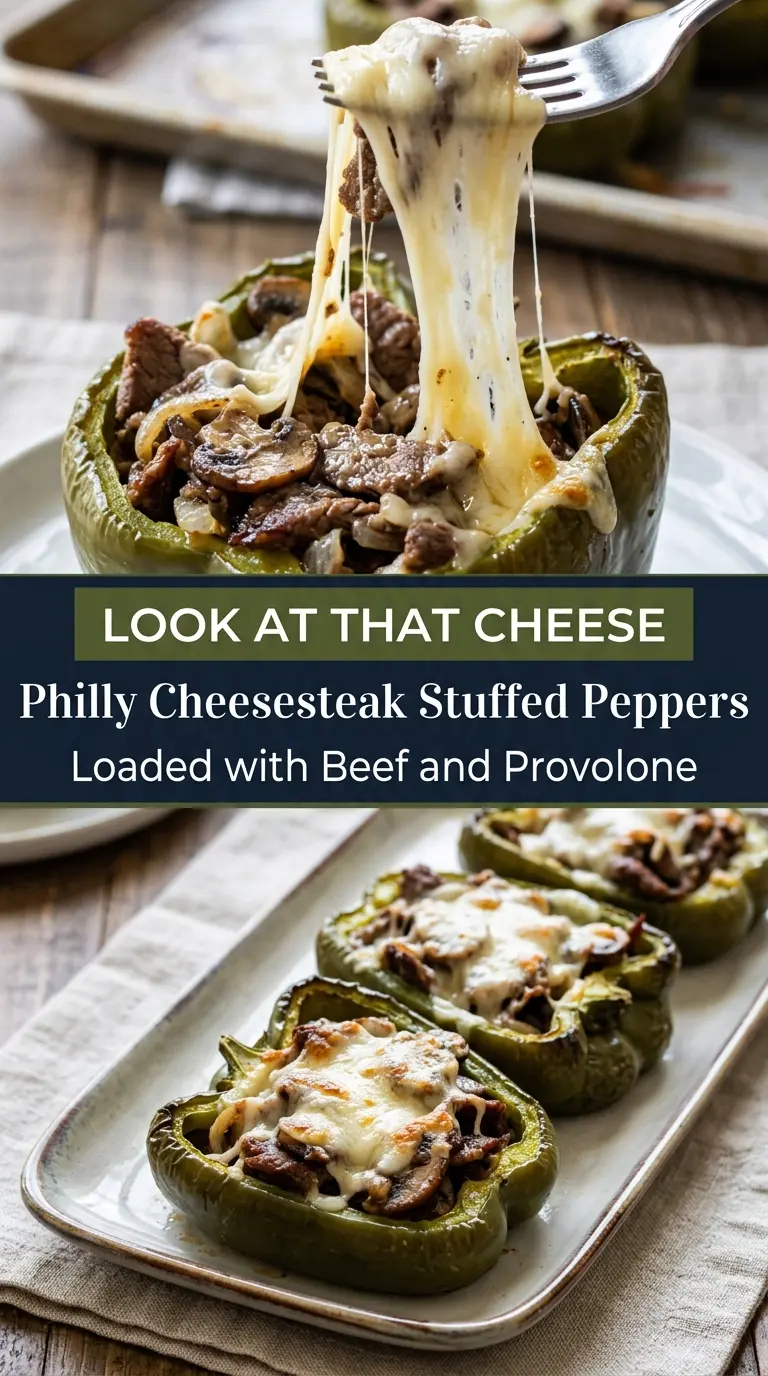
The Trick to Keeping the Peppers Tender, Not Watery
Stuffed peppers fail when the shell and filling finish at different speeds. If you bake the peppers raw all the way through, they can go soft before the filling has enough time to brown and reduce. If you skip the pre-bake, you often end up with a crisp pepper and a filling that tastes cooked but not integrated.
The short oven head start solves that. It gives the pepper a little structure-loss before the filling goes in, so the final bake only has to melt the cheese and marry the flavors. The other thing that matters here is not overcooking the steak. Shaved steak and thin sirloin both dry out fast, so the pan should be hot enough to brown the beef quickly without simmering it in its own juices.
- Bell peppers — Use large, evenly shaped peppers so each half sits flat in the baking dish. If one side wobbles, shave a thin slice from the bottom edge to steady it.
- Shaved steak or thin sirloin — Shaved steak gives you the most authentic cheesesteak texture. If you use sirloin, slice it very thin against the grain so it stays tender after the final bake.
- Mushrooms — They’re not required for a classic cheesesteak, but they add savoriness and help the filling feel hearty. Cremini work best because they hold their shape and cook down with a little more depth than white mushrooms.
- Provolone — This is the cheese that makes the whole thing feel like a cheesesteak instead of just beef stuffed into peppers. Mild provolone melts cleanly; sharp provolone brings more bite if that’s what you want.
Building the Filling So It Tastes Like a Cheesesteak, Not Just Beef in a Pepper
Softening the Peppers First
Set the pepper halves cut-side up in the baking dish and give them a short bake before the filling goes in. You want the edges to just start taking on a little color and the flesh to relax slightly, not collapse. This head start keeps the final bake focused on melting cheese and warming the filling through.
Cooking the Onions and Mushrooms Until They Stop Weeping
Cook the onions and mushrooms long enough that the pan goes from crowded and wet to glossy and concentrated. The mushrooms should release their liquid, then start to sizzle again as it cooks off. If you rush this stage, the filling turns watery and the peppers end up sitting in a puddle.
Searing the Steak Fast
Add the steak after the aromatics have softened, then season and cook just until it loses its raw color. Thin beef needs a quick hand here. Once it’s browned and the juices have mostly evaporated, pull the pan from the heat so the meat doesn’t keep tightening while you finish the peppers.
Melting the Provolone on Top
Spoon the filling into the peppers while it’s still hot, then layer the provolone right over the top. The residual heat from the filling helps the cheese melt into a smooth blanket during the final bake. If your cheese is browning before it melts, the oven is too hot or the pan is too close to the top element.
Three Smart Ways to Adapt These Stuffed Peppers
Dairy-Free Version With a Different Finish
Skip the provolone and top the peppers with a dairy-free melt that has good stretch, or leave the cheese off and finish with a spoonful of garlicky olive oil breadcrumbs. You lose the classic cheesesteak melt, but the filling still carries enough savory flavor to stand on its own.
Extra-Hearty With Rice or Cauliflower Rice
Stir in about 1 cup of cooked rice if you want to stretch the filling for hungrier eaters. For a lower-carb version, use cauliflower rice and cook off the moisture first so the peppers don’t turn soggy. Rice makes the dish softer and more casserole-like; cauliflower rice keeps it lighter.
No Mushrooms, More Onions
Leave out the mushrooms and add another half onion if you want a cleaner, more classic cheesesteak flavor. The filling will be slightly less juicy and less earthy, but the beef-and-onion profile comes through more clearly.
Storage and Reheating
- Refrigerator: Store leftovers in an airtight container for up to 4 days. The peppers soften a little more as they sit, but the flavor holds up well.
- Freezer: These freeze better without the final cheese layer. Wrap portions tightly and freeze for up to 2 months, then add fresh provolone when reheating if you want the best texture.
- Reheating: Warm in a 350°F oven until hot through, or use the microwave in short bursts. The biggest mistake is blasting them on high heat, which turns the peppers mushy and makes the steak tough.
Answers to the Questions Worth Asking

Philly Cheesesteak Stuffed Peppers
Ingredients
Equipment
Method
- Preheat the oven to 375°F (190°C).
- Place the pepper halves in a baking dish. Bake for 10 minutes to soften slightly.
- Heat the olive oil in a large skillet over medium-high heat. Add the onions and mushrooms and cook for 5 minutes.
- Stir in the minced garlic and cook for 30 seconds.
- Add the sirloin (or shaved steak), Worcestershire sauce, salt, and black pepper to the skillet. Cook until the beef is browned and fully cooked.
- Remove the peppers from the oven. Fill each pepper with the cheesesteak mixture.
- Top each pepper with provolone cheese. Return to the oven and bake for 10–12 minutes until the cheese is melted and bubbly.
- Garnish with chopped parsley and serve.
