
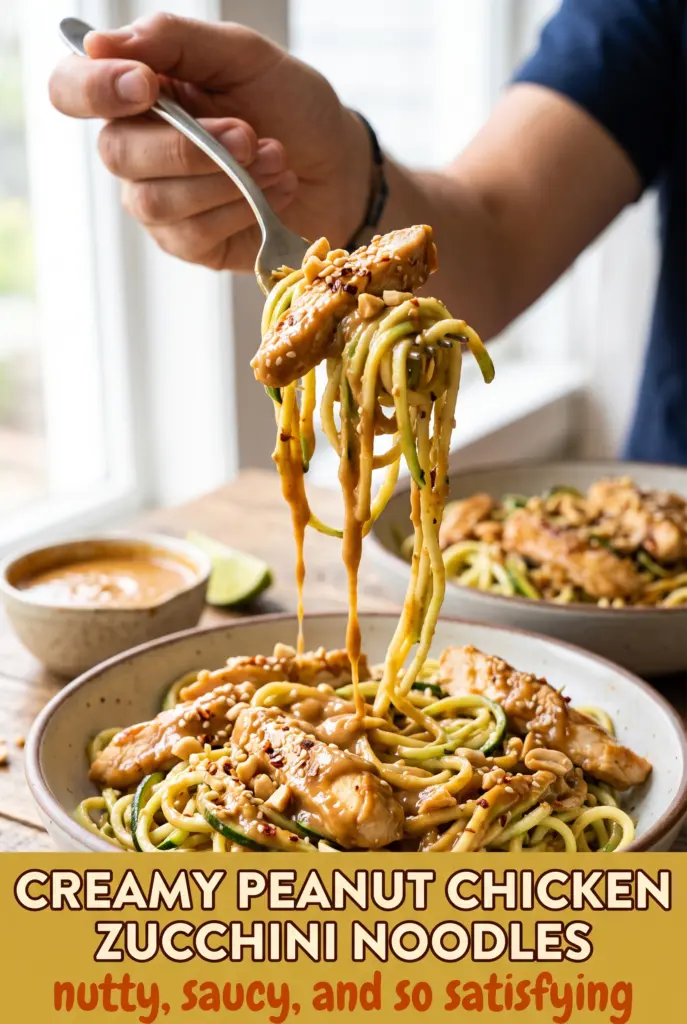
Peanut Chicken and Zucchini Noodles
Juicy chicken, tender-crisp zucchini noodles, and a glossy peanut sauce make this the kind of dinner that disappears fast. The sauce clings to every strand instead of pooling at the…
Tip: save now, cook later.Juicy chicken, tender-crisp zucchini noodles, and a glossy peanut sauce make this the kind of dinner that disappears fast. The sauce clings to every strand instead of pooling at the bottom of the pan, and the balance of salty soy, bright lime, a little honey, and just enough heat makes each bite taste finished, not heavy. It eats like takeout, only fresher and cleaner on the plate.
What makes this version work is a couple of small decisions that matter. The zucchini gets salted and drained first, which keeps the pan from turning watery the second it hits the heat. The peanut sauce is whisked with warm water until it loosens into something pourable and shiny, so it coats the chicken and noodles instead of fighting them. The chicken sears first for flavor, then comes back in at the end so it stays juicy.
Below, I’ll walk through the one step that keeps zucchini noodles from going soggy, the sauce texture you’re looking for, and a few swaps that still keep the dish balanced and bold.
The peanut sauce turned out silky and coated everything instead of getting clumpy, and the zucchini stayed firm even after tossing it all together. My husband said it tasted like our favorite takeout, just lighter, and he went back for seconds without even asking what else was for dinner.
Peanut Chicken & Zucchini Noodles with that glossy lime-peanut sauce belongs on your weeknight dinner board.
The Trick to Keeping Zucchini Noodles from Watering Down the Sauce
Zucchini noodles fail for one reason more than any other: they release water the moment they hit heat, and that extra liquid turns a glossy dinner into a pale, soupy skillet. Salting and draining the noodles first pulls out some of that moisture before it has a chance to dilute the peanut sauce. Then they only need a brief toss in the pan, just long enough to soften slightly while staying a little firm in the center.
The chicken matters here too. Thin strips cook fast and get a better sear than thick chunks, which means you build flavor before the sauce goes in. If you crowd the skillet, the chicken steams instead of browns, so give it enough room to pick up color. That browned surface is what keeps the dish tasting like a proper stir-fry instead of plain chicken tossed with noodles.
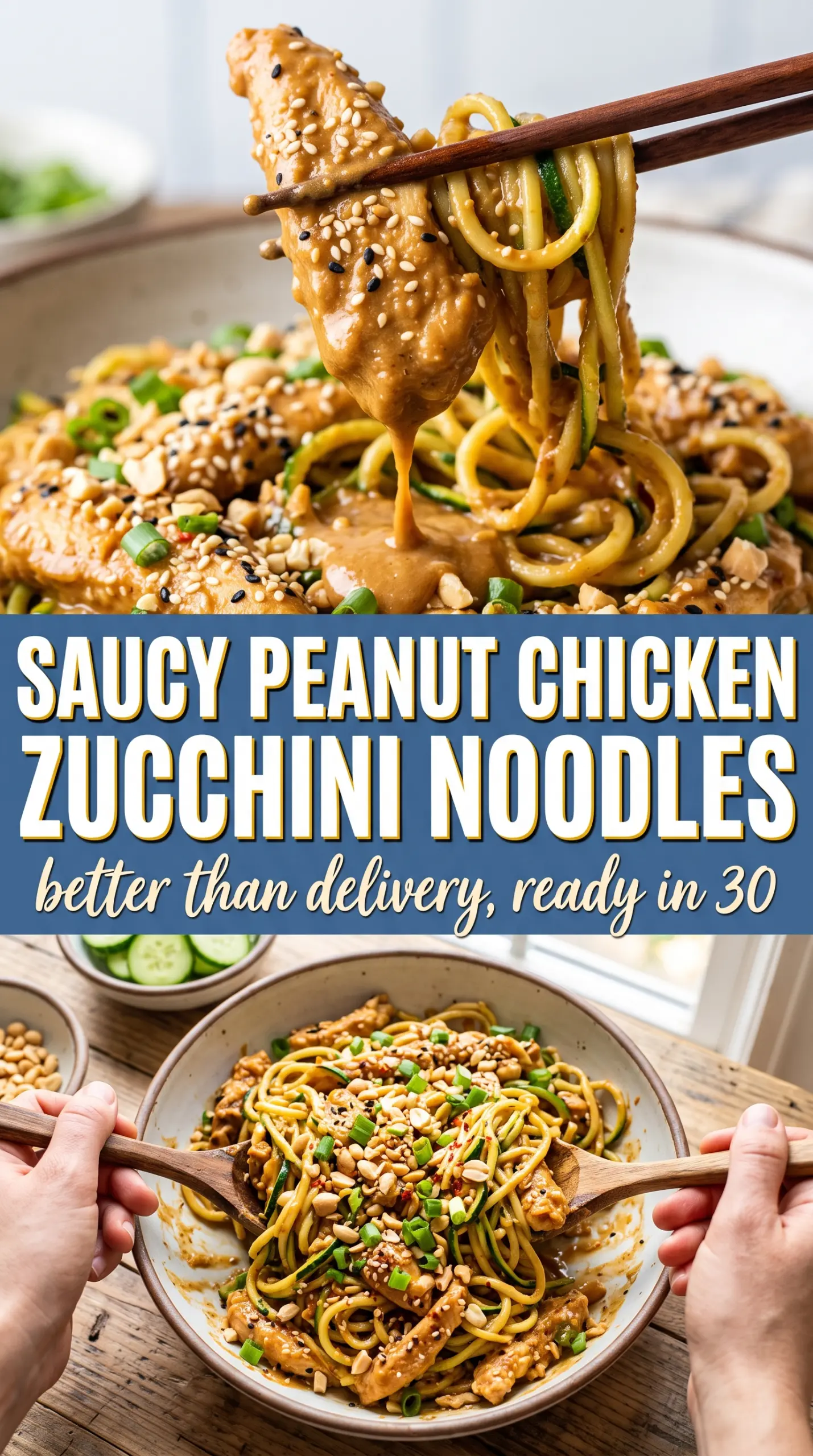
What Each Ingredient Is Actually Doing in This Dish
- Chicken breasts — Cutting them into thin strips helps them sear quickly and stay juicy. If you swap in chicken thighs, you’ll get a richer result with a little more forgiveness on the heat.
- Zucchini noodles — These carry the sauce without making the dish feel heavy, but they need to be drained and cooked briefly. Spiralizing too far ahead lets them puddle water in the bowl, so prep them close to cooking time.
- Creamy peanut butter — This is the backbone of the sauce, giving it body and that nutty, savory depth. Natural peanut butter works, but stir it well first; if it’s overly oily or separated, the sauce can come out loose.
- Soy sauce, rice vinegar, honey, and lime juice — These four ingredients build the balance. Soy brings salt, vinegar sharpens the edges, honey rounds everything out, and lime keeps the peanut butter from tasting flat.
- Ginger, garlic, and sriracha — These are the aromatic lift and the heat. Fresh ginger and garlic taste brighter than powdered versions here, and the sriracha can go up or down depending on how much bite you want.
- Warm water — Peanut butter needs a little help turning into a sauce. Add it slowly until the mixture is glossy and pourable; too much at once can make it thin and hard to control.
- Peanuts, green onions, cilantro, and sesame seeds — These toppings add crunch, freshness, and a clean finish that keeps each bite interesting. Don’t skip the peanuts if you like texture; they give the dish the bite it needs.
Building the Sauce and Cooking the Noodles Without Breaking Either One
Drain the zucchini first
Toss the spiralized zucchini with salt and let it sit in a colander for about 10 minutes. You’ll see moisture bead up on the noodles, which is exactly what you want before it goes into the pan. Pat them dry with a clean towel so the skillet starts as dry as possible. If you skip this, the sauce will thin out and the noodles will steam instead of lightly soften.
Whisk the peanut sauce until it turns glossy
Combine the peanut butter, soy sauce, rice vinegar, honey, lime juice, ginger, garlic, and sriracha first, then whisk in warm water a little at a time. The sauce should look smooth, shiny, and pourable, not stiff or paste-like. If it seizes up, it just needs more water and a little more whisking. Don’t add all the water at once or you’ll overshoot and end up with a thin sauce that won’t cling.
Sear the chicken before anything else
Heat the oil until it shimmers, then lay the chicken in a single layer and leave it alone long enough to brown. If you move it too soon, it’ll stick and pale instead of developing a proper crust. Pull it from the pan when it reaches 165°F and let it rest for a few minutes so the juices stay in the meat, not on the cutting board.
Finish with a fast toss
Add the zucchini noodles to the skillet only for a minute or two, just until they lose their raw stiffness. Return the sliced chicken, pour in the sauce, and toss until every piece is coated and glossy. The dish is done as soon as the sauce warms through. If it cooks too long at this stage, the zucchini softens too much and the sauce starts to look dull.
How to Adapt This for a Few Different Kitchens
Make It Dairy-Free and Gluten-Free
This dish already leans that way, as long as you use a gluten-free soy sauce or tamari. There’s no dairy in the sauce, and the peanut butter gives it all the creaminess it needs. Check the sriracha label too if you’re cooking for someone who avoids gluten carefully.
Swap the Chicken for Shrimp
Shrimp works well if you want something even faster, but it cooks in a fraction of the time. Sear it just until pink and opaque, then pull it out before you warm the noodles so it doesn’t turn rubbery. The final dish will taste a little lighter and more delicate than the chicken version.
Use Cabbage Noodles Instead of Zucchini
Shredded cabbage holds up better if you want a noodle that stays crisp longer. It won’t soak up sauce the same way zucchini does, so the dish feels a little sturdier and more slaw-like. Cook it just until the edges soften, or it loses the bite that makes the swap worth it.
Add More Heat Without Changing the Sauce
If you want more burn, add extra sriracha to the sauce or finish with chili crisp at the table. Stirring more heat into the sauce keeps the spice even throughout, while a topping gives you a sharper hit in each bite. Start small; peanut butter softens heat more than people expect.
Storage and Reheating
- Refrigerator: Store leftovers for up to 3 days. The zucchini softens a bit, but the flavor stays good.
- Freezer: I don’t recommend freezing this one. Zucchini turns watery after thawing, and the sauce loses its smooth texture.
- Reheating: Warm gently in a skillet over low heat with a splash of water to loosen the sauce. Microwaving on high can overcook the chicken and make the noodles collapse.
Answers to the Questions Worth Asking
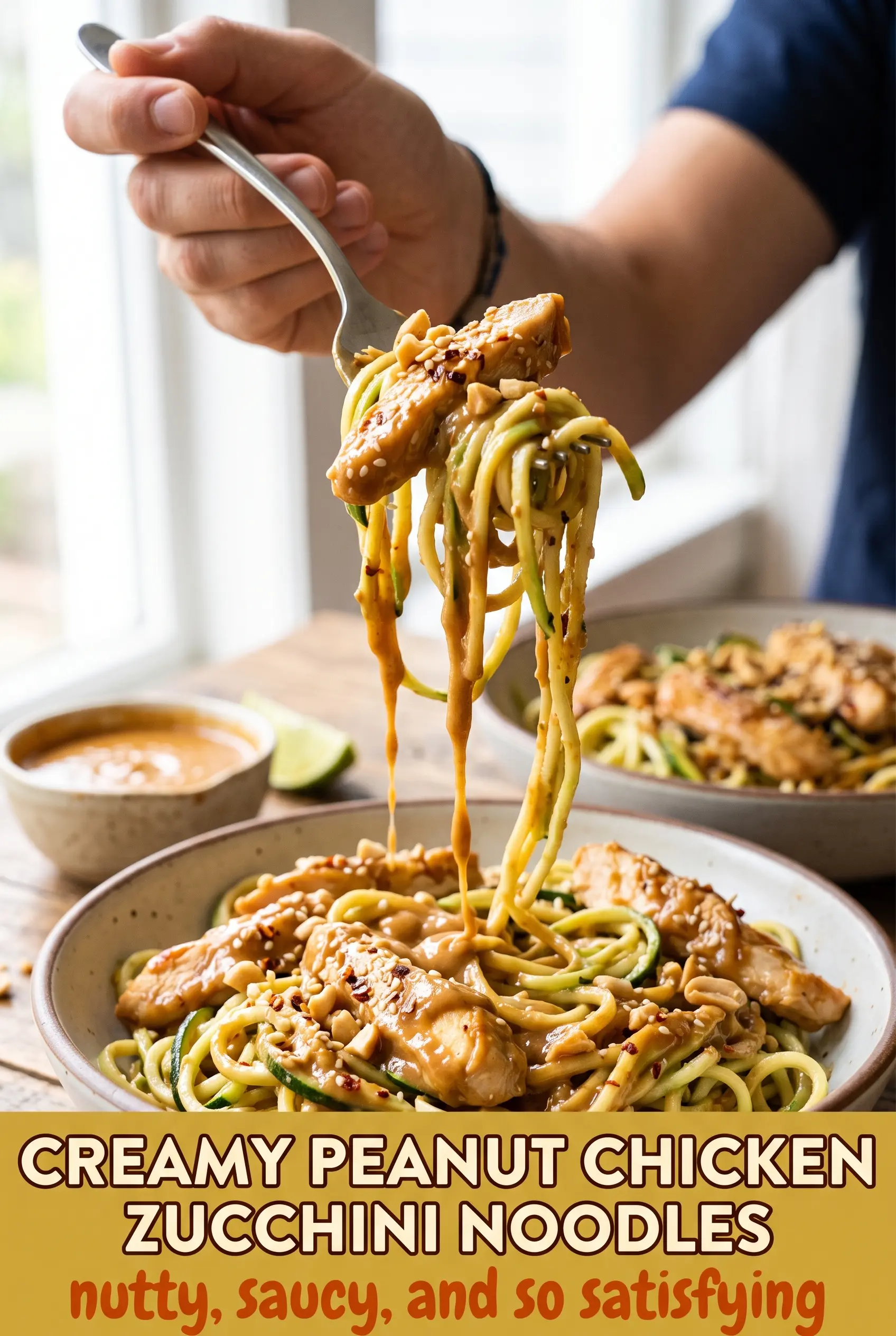
Peanut Chicken & Zucchini Noodles
Ingredients
Equipment
Method
- Toss spiralized zucchini with a pinch of salt in a colander and let drain for 10 minutes, then pat thoroughly dry so the noodles stay firm and don’t water down the sauce.
- Whisk creamy peanut butter, soy sauce, rice vinegar, honey, fresh lime juice, grated ginger, minced garlic, and sriracha until smooth.
- Whisk in warm water 1 tbsp at a time until pourable and glossy, giving the sauce a silky cling.
- Heat 1 tbsp vegetable oil in a large skillet over medium-high heat, then season the chicken strips with salt and black pepper.
- Sear the chicken for 4–5 minutes per side until golden and the internal temperature reaches 165°F, then remove and let rest.
- Add the remaining 1 tbsp vegetable oil to the skillet over medium heat and toss zucchini noodles for 1–2 minutes until slightly softened but still firm.
- Slice the rested chicken and add it back to the skillet with the noodles.
- Pour in the peanut sauce and toss until every strand and piece of chicken is glossy and well coated, warming through for about 1 minute.
- Remove from heat and top with crushed roasted peanuts, green onions, cilantro, and sesame seeds.
- Serve immediately with lime wedges for bright, fresh flavor.
