
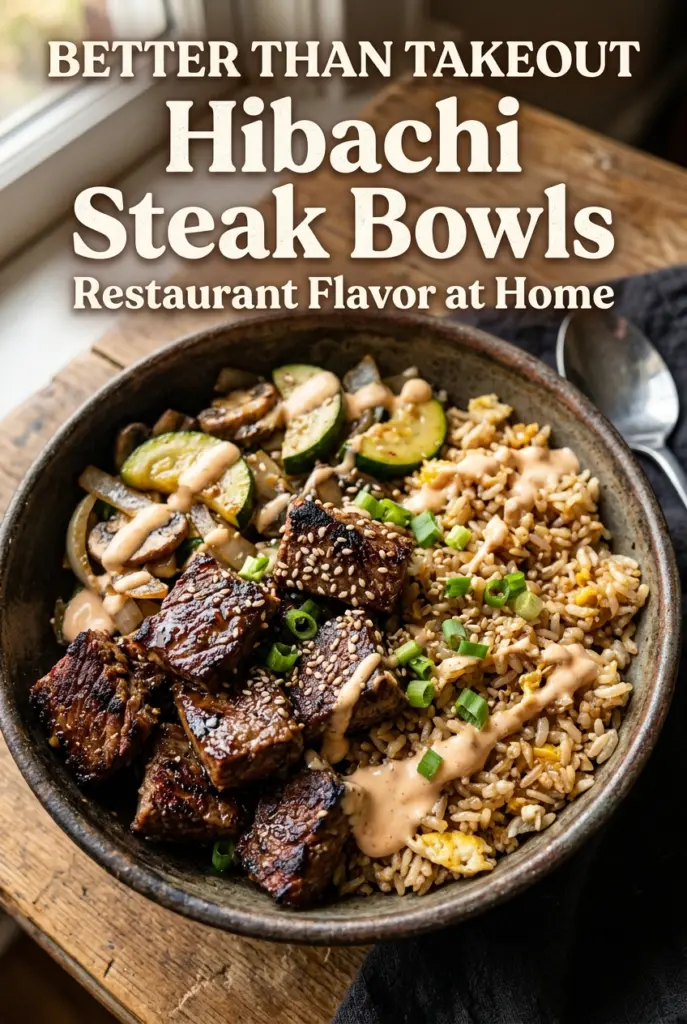
Hibachi Steak Bowls
Hibachi steak bowls hit that sweet spot between takeout comfort and weeknight practicality: seared steak with a browned edge, buttery fried rice, tender-crisp vegetables, and that cool, tangy yum yum…
Tip: save now, cook later.Hibachi steak bowls hit that sweet spot between takeout comfort and weeknight practicality: seared steak with a browned edge, buttery fried rice, tender-crisp vegetables, and that cool, tangy yum yum sauce pulling everything together. The best bowls have contrast in every bite, and this version gives you that without needing a griddle or a restaurant-sized burner.
What makes these work is the order of operations. The steak gets high heat first so it browns fast instead of steaming, and the rice is best when it’s day-old because dry grains fry instead of clumping. The yum yum sauce also matters more than it looks; it needs a short chill so the flavors round out and the texture turns spoonable instead of thin.
Below, I’ve laid out the part that usually gets skipped in home versions: how to keep the steak juicy, how to get fried rice that tastes buttery instead of greasy, and what to do if you’re missing one of the vegetables or want to make the whole bowl lighter.
The steak got a gorgeous crust and stayed tender, and the yum yum sauce thickened up after chilling just like you said. My husband kept going back for more rice and asked if I could put this in the rotation.
Save these hibachi steak bowls for the nights when you want seared steak, buttery rice, and yum yum sauce without leaving the house.
The Sear Matters More Than the Sauce
With hibachi-style steak, the biggest mistake is crowding the pan or turning the heat down too soon. Steak cubes need direct contact with a hot surface so the outside browns before the inside overcooks. If the pan is overloaded, the meat releases juice, the temperature drops, and you end up with gray steak instead of those dark, savory edges that make the bowl taste restaurant-worthy.
The other piece people miss is finishing the steak with butter after the sear, not before. Butter gives you gloss and flavor, but if it’s in the pan too early it can burn before the steak has a chance to brown properly. That last toss in butter carries the garlic and ginger across the meat without softening the crust you just built.
What Each Ingredient Is Actually Doing in This Bowl
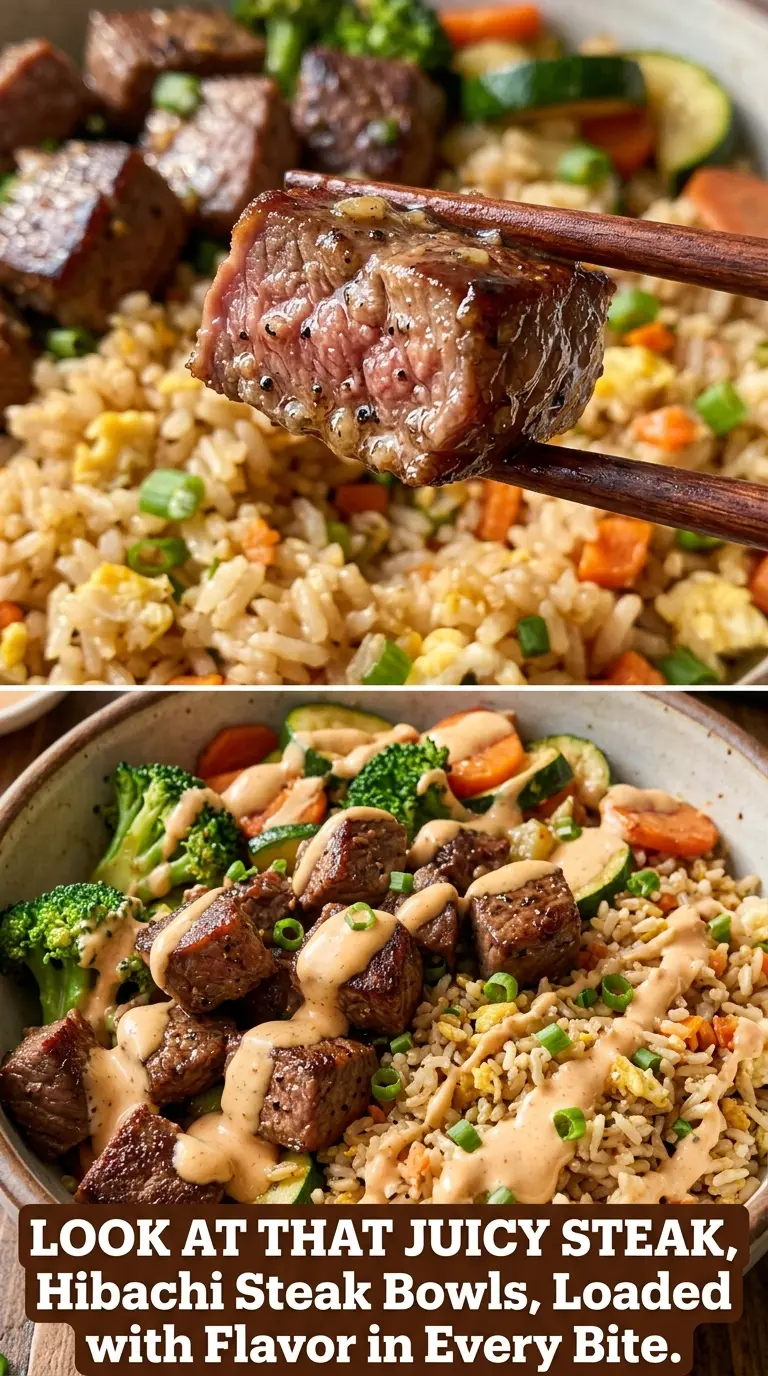
- Sirloin steak — Sirloin stays tender with a fast, hard sear and doesn’t need long marinating. Cut it into evenly sized cubes so everything cooks at the same pace; random pieces mean some will be overdone while others are still under-seared.
- Day-old jasmine rice — This is the difference between fried rice and sticky rice with things mixed into it. Fresh rice holds too much steam, so if you have to use same-day rice, spread it on a tray and chill it until it feels dry on the surface.
- Butter — Butter is what gives the steak, vegetables, and rice that hibachi-style finish. Use real butter here; margarine won’t give the same round, savory richness or the same browning effect.
- Sesame oil — A little goes a long way. It adds toasted depth, not greasiness, so don’t pour it in freely or the bowls will taste heavy instead of balanced.
- Yum yum sauce — Mayonnaise is the base that gives the sauce body, while ketchup, rice vinegar, paprika, and garlic powder build the sweet-tangy flavor. Chill it before serving so it thickens and the sharp edges soften.
The Order That Keeps Everything Hot and Fast
Mix the sauce first
Whisk the yum yum sauce together before you even turn on the stove. It needs time in the fridge, and it’s one less thing to rush once the skillet starts moving fast. If it tastes flat right after mixing, that’s normal; the flavor settles after chilling.
Sear the steak in a single layer
Pat the steak dry if it looks damp, then season it and get it into a hot skillet with space around each piece. You want a deep brown surface, not a gray simmer, so let the cubes sit long enough to form color before you turn them. If they stick at first, leave them alone a little longer; once they brown, they’ll release cleanly.
Cook the vegetables until tender-crisp
The zucchini and mushrooms need enough heat to pick up color but not so much that the zucchini collapses into water. Mushrooms should brown at the edges, and the zucchini should still have a little bite in the center. If the pan looks wet, the heat is too low or the vegetables were sliced too thick.
Stir-fry the rice at the end
Rice goes in after the eggs are scrambled so it can pick up the butter and get lightly toasted. Break up any clumps with a spatula and keep it moving until the grains look separate and glossy. The goal is hot rice with a little texture, not a soft pile of steamed grains.
Make it gluten-free without losing the hibachi feel
Use a gluten-free soy sauce or tamari in both the steak and the rice. The flavor stays savory and close to the original, and you won’t lose the glossy finish that soy sauce gives the dish. Check the yum yum sauce ingredients too if you’re using a bottled mayo brand with unexpected additives.
Swap the steak for chicken or shrimp
Chicken thighs work best if you want a juicier swap, while shrimp gives you the fastest version of the bowl. Shrimp only needs a minute or two per side, so cook it last and pull it as soon as it turns opaque; overcooking makes it rubbery fast. Chicken needs a little longer, but the same high-heat sear still applies.
Make it dairy-free
Use a plant-based butter that melts and browns reasonably well, and choose a dairy-free mayonnaise for the sauce. You’ll lose a little of the classic buttery finish, but the steak seasoning, vegetables, and sauce still carry the bowl. Add a touch more sesame oil at the end if you want a richer finish.
Turn it into a lower-carb bowl
Swap the rice for cauliflower rice and cook it in a separate pan so it can dry out a little before serving. Cauliflower rice won’t pick up the same chewy texture as jasmine rice, but it does carry the steak juices and yum yum sauce well. Don’t crowd it, or it turns watery fast.
Storage and Reheating
- Refrigerator: Store the steak, rice, vegetables, and sauce separately for up to 4 days. The rice firms up a bit in the fridge, which is normal.
- Freezer: The steak and rice freeze fairly well for up to 2 months, but the vegetables lose some texture. Freeze the yum yum sauce separately only if it’s homemade and well mixed; it may need a good whisk after thawing.
- Reheating: Reheat the steak and rice in a skillet over medium heat with a small splash of water or butter. The common mistake is blasting everything in the microwave until the steak turns tough and the rice dries out.
Questions I Get Asked About This Recipe
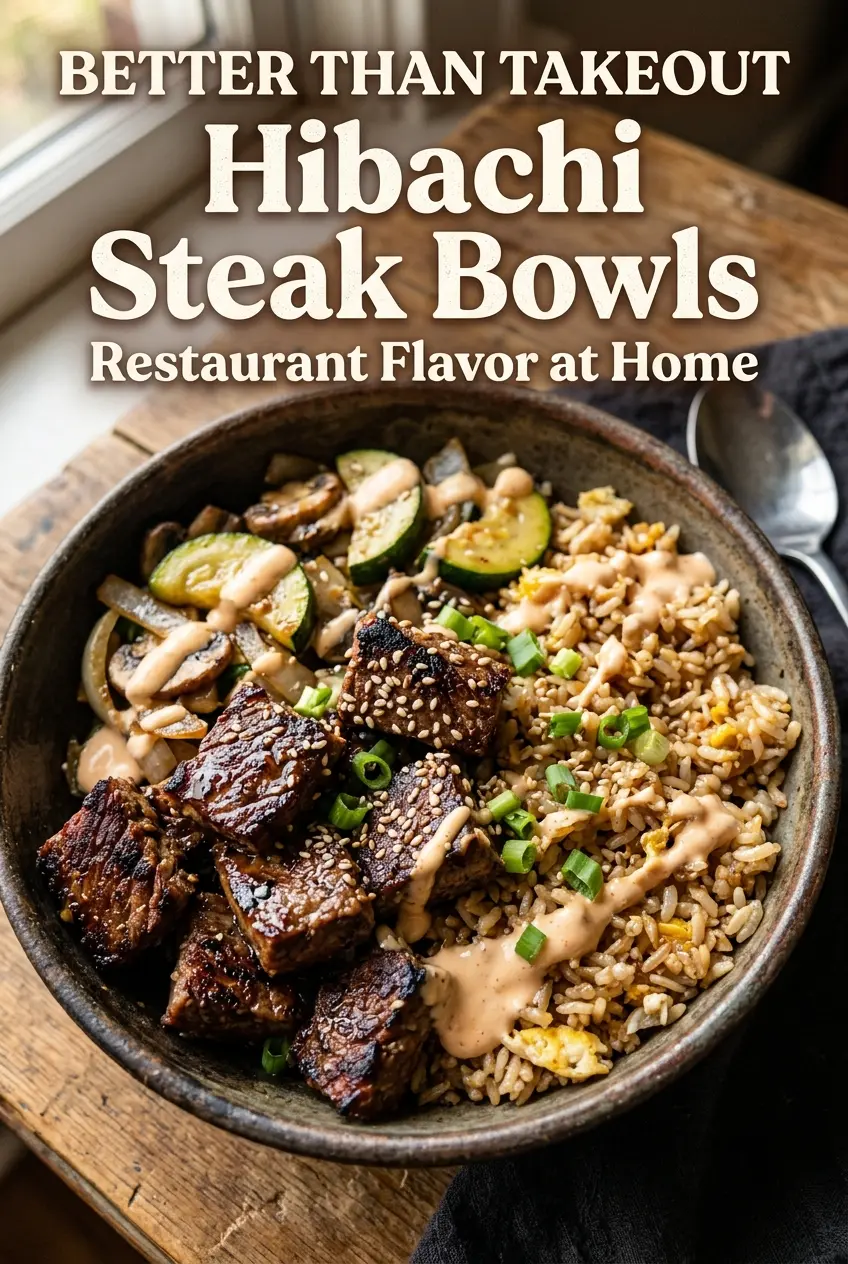
Hibachi Steak Bowls Recipe
Ingredients
Equipment
Method
- Whisk together mayonnaise, ketchup, rice vinegar, garlic powder, paprika, sugar, and water until smooth, then refrigerate. Chill while you cook so the sauce thickens slightly and tastes tangy.
- Season sirloin steak with soy sauce, sesame oil, minced garlic, grated ginger, and black pepper. Toss until every piece is evenly coated.
- Heat a large skillet or griddle over high heat until very hot. The surface should shimmer when you add the steak.
- Sear the steak for 2–3 minutes per side until browned. For best color, avoid moving the cubes too much during each side.
- Finish by tossing the steak with butter until coated. Cook just until the butter melts and clings to the meat, then remove and keep warm.
- Cook zucchini and mushrooms in butter with soy sauce until tender-crisp. Stir frequently and stop when the vegetables still have a slight bite.
- In another skillet, melt butter and scramble the eggs. Cook until just set, then keep them near the rice station so they’re ready to fold in.
- Add cooked jasmine rice to the skillet and stir-fry for 3–4 minutes. Keep the heat high so the rice toasts lightly and steams off moisture.
- Stir in soy sauce, sesame oil, and sliced green onions. Toss until the rice is evenly coated and fragrant.
- Divide the fried rice among serving bowls. Create a bed so the toppings stay centered.
- Top each bowl with hibachi steak and the sautéed zucchini and mushrooms. Distribute evenly so every bite has steak and vegetables.
- Drizzle generously with yum yum sauce and garnish with sesame seeds and sliced green onions. Finish right before eating for the best contrast of hot rice and cool sauce.
