
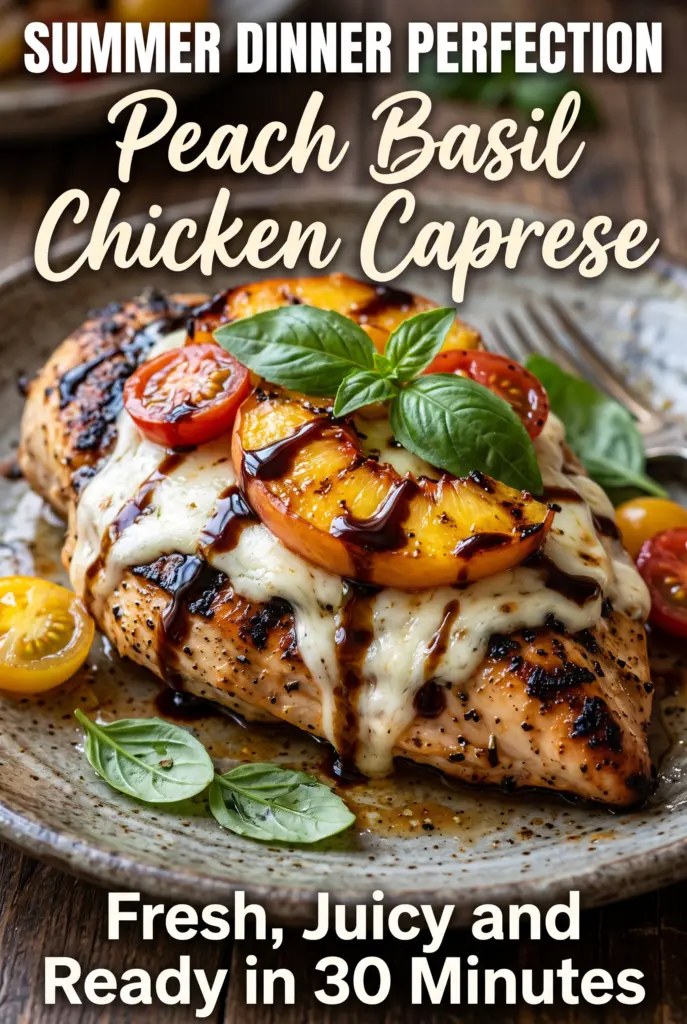
Peach Basil Chicken Caprese
Juicy chicken, ripe peaches, and fresh mozzarella make this Peach Basil Chicken Caprese feel lighter than a heavy skillet dinner, but it still lands with enough flavor to earn a…
Tip: save now, cook later.Juicy chicken, ripe peaches, and fresh mozzarella make this Peach Basil Chicken Caprese feel lighter than a heavy skillet dinner, but it still lands with enough flavor to earn a place in the regular rotation. The peaches bring a soft, fragrant sweetness that plays against the salty cheese and savory chicken, and the balsamic glaze ties everything together with a sharp little finish.
What makes this version work is the balance of heat and freshness. The chicken gets seasoned well and cooked until it’s just done, then the mozzarella is melted on while the pan still has enough residual heat to soften it without turning rubbery. The peaches and tomatoes go on at the end so they stay bright and juicy instead of collapsing into the pan.
Below, I’ve included the small details that matter most here: how to keep the chicken from drying out, when to add the basil so it stays vivid, and what to swap if your peaches aren’t quite perfect yet.
The chicken stayed juicy, the mozzarella melted perfectly, and the peaches gave it this fresh sweet bite that made the balsamic glaze taste even better. I served it with rice and my husband went back for seconds right away.
Peach Basil Chicken Caprese brings together juicy chicken, sweet peaches, and balsamic glaze in one bright, fast dinner.
The Reason the Peaches Go on Last
Peaches are the ingredient that can make this dish feel fresh and memorable, but they also turn mushy fast if they cook too long. That’s why the chicken gets its full time in the pan first, and the fruit is added after the heat has done its job. You want the peaches warm enough to release their aroma, not so hot that they collapse into the tomatoes and cheese.
The other place people go wrong is trying to build this like a traditional Caprese salad and expecting the basil and glaze to hold up under full cooking time. They won’t. Basil bruises and darkens when it’s cooked hard, and balsamic glaze can turn sticky and harsh if it’s reduced too much. Add both at the end, and the dish tastes clean instead of muddled.
What Each Ingredient Is Actually Doing in This Dish
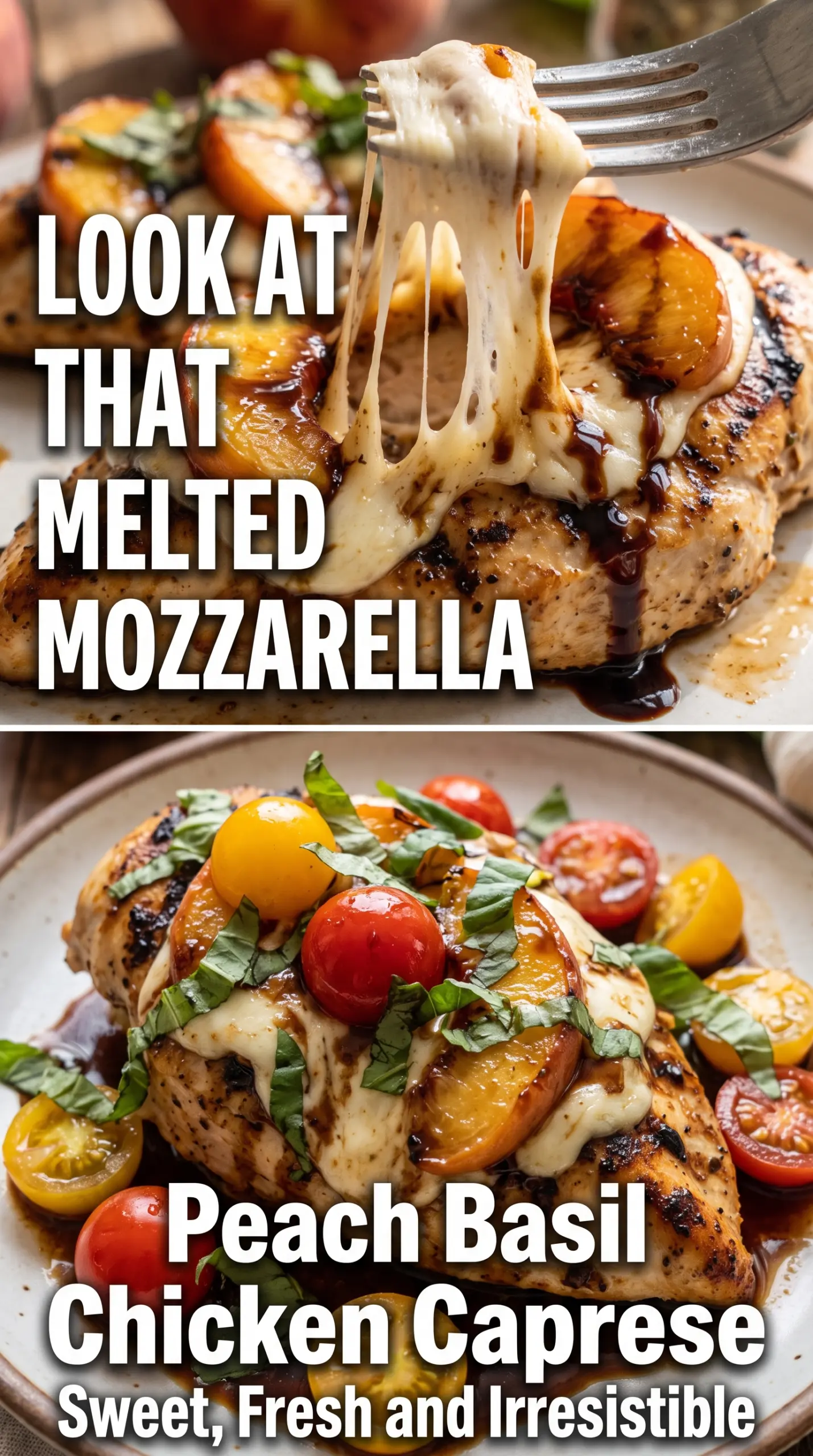
- Chicken breasts — Pounding them to an even thickness matters more than people think. It keeps the thinner ends from drying out before the thick center is cooked through. If you’d rather use chicken cutlets, they work well and cook faster, but watch the pan closely.
- Peaches — Ripe peaches bring the soft sweetness that makes this dish different from a standard chicken and tomato plate. If they’re firm, let them sit at room temperature until they give slightly at the stem; underripe peaches taste flat here. Nectarines work too if that’s what you have.
- Fresh mozzarella — This is the cheese that gives you that soft, milky melt without overpowering the peaches. Pre-sliced mozzarella is fine, but fresh mozzarella gives a cleaner, creamier finish. Dry shredded mozzarella won’t give the same texture.
- Basil — Fresh basil needs to be added at the end so it stays aromatic and green. Torn leaves usually look better and taste brighter than chopped basil, which bruises more quickly. Dried basil won’t give you the same effect here.
- Balsamic glaze — This finishes the dish with sweetness and acidity in one pass. Store-bought glaze is perfectly fine, but if you use straight balsamic vinegar, reduce it first or it’ll taste too sharp. A light drizzle is enough.
Getting the Chicken Cooked Before the Cheese Melts
Pound for Even Cooking
Lay the chicken between sheets of plastic or parchment and pound it to a steady thickness. That keeps the pan time predictable, which matters because the cheese goes on near the end and you don’t want to keep cooking the chicken just to finish the center. Uneven breasts are the fastest way to get dry edges and underdone middles.
Season the Surface Well
Italian seasoning, garlic powder, onion powder, salt, and pepper give the chicken enough backbone to stand up to the sweet fruit. Pat the chicken dry first so the seasoning actually sticks and the meat sears instead of steaming. If the surface looks wet when it hits the pan, you’ll lose that browned crust.
Sear, Then Cover Briefly
Cook the chicken over medium-high heat until the outside is golden and the center reaches 165°F. When the mozzarella goes on, cover the pan just long enough to soften it, not long enough to overcook the chicken. If you leave it covered too long, the cheese turns oily and the chicken keeps carrying over past juicy.
Finish With the Fresh Toppings
Add the peaches, tomatoes, and basil after the pan comes off the heat. That keeps the peaches from breaking down and preserves the basil’s bright flavor. The balsamic glaze goes on last so it sits on top of everything instead of disappearing into the pan juices.
Three Smart Ways to Bend This Recipe Without Breaking It
Make it dairy-free
Skip the mozzarella and finish with extra peaches, basil, and a little more balsamic glaze. You lose the creamy melt, but the dish stays bright and satisfying. A few sliced avocado pieces can give back some richness if you want that soft contrast.
Use chicken thighs instead of breasts
Boneless thighs bring a little more richness and stay forgiving if you’re nervous about overcooking. They take a few extra minutes, and you’ll want to cook them until they’re fully tender and no longer pink at the thickest point. The rest of the recipe stays the same.
Turn it into a gluten-free dinner plate
The core recipe is naturally gluten-free as written, so the main job is watching any packaged balsamic glaze or seasoning blend for hidden additives. Serve it with rice, potatoes, or a simple salad instead of bread-based sides. That keeps the plate light and still complete.
Swap in nectarines or cherry tomatoes that need using up
Nectarines behave almost exactly like peaches, so they’re the cleanest swap if peaches aren’t in season. Extra cherry tomatoes add acidity and juiciness, but don’t overload the dish or it starts to taste like a warm salad. Keep the balance centered on the chicken and cheese.
Storage and Reheating
- Refrigerator: Store leftovers in an airtight container for up to 3 days. The peaches soften a bit, but the flavor stays good.
- Freezer: I don’t recommend freezing this one. The mozzarella and peaches both lose their texture after thawing.
- Reheating: Warm it gently in a covered skillet over low heat or in the oven at 300°F until just heated through. High heat dries the chicken and makes the cheese greasy.
Questions I Get Asked About This Recipe
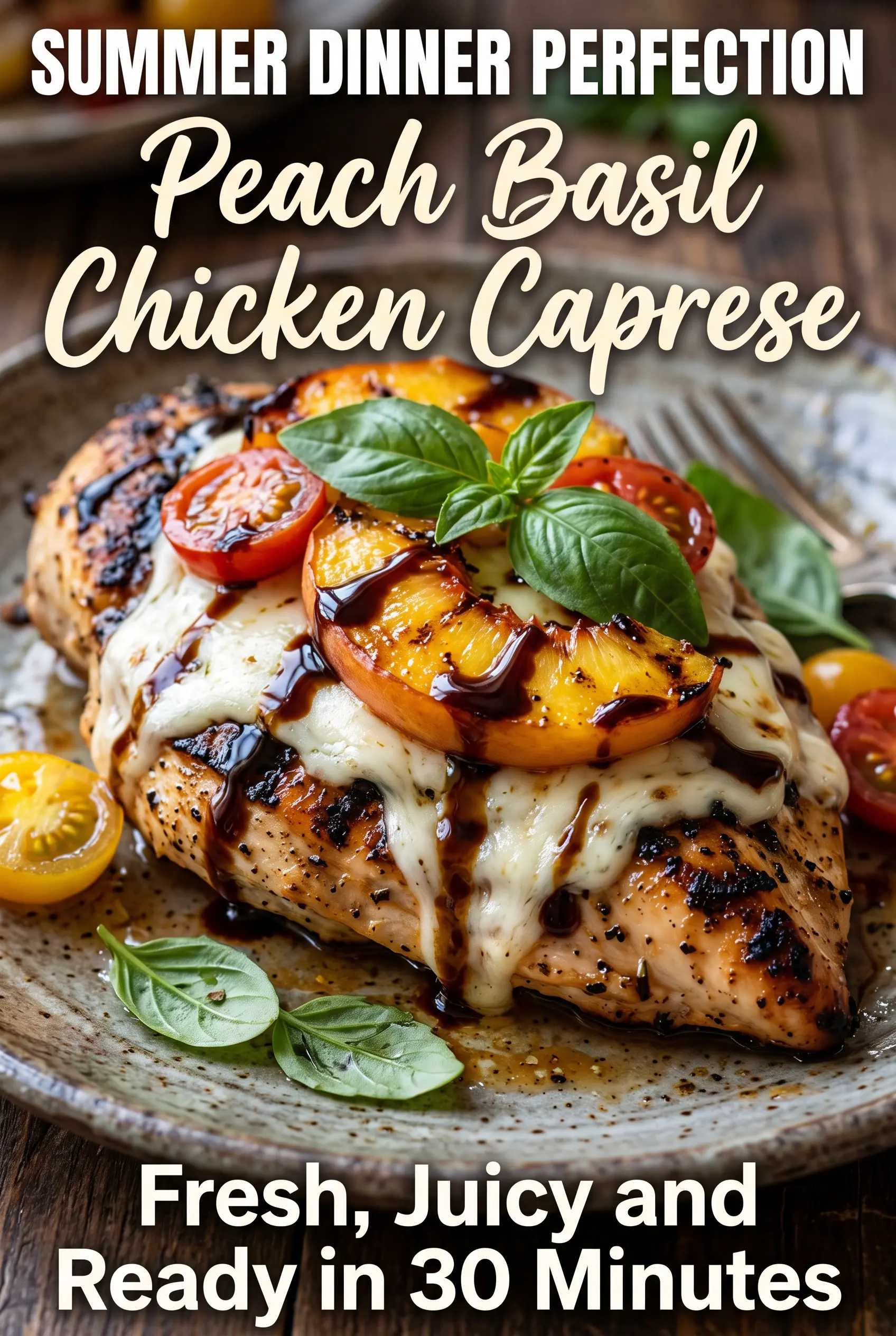
Peach Basil Chicken Caprese Recipe
Ingredients
Equipment
Method
- Pound the boneless skinless chicken breasts to an even thickness so they cook uniformly.
- Season both sides of the boneless skinless chicken breasts with Italian seasoning, garlic powder, onion powder, kosher salt, and black pepper.
- Heat 2 tbsp olive oil in a large skillet or grill pan over medium-high heat until shimmering.
- Cook the boneless skinless chicken breasts for 5–6 minutes per side until the internal temperature reaches 165°F.
- During the last minute, top each boneless skinless chicken breast with fresh mozzarella and cover briefly until the cheese melts.
- Arrange the ripe peaches slices and cherry tomatoes over the chicken while it’s still hot.
- Remove from the heat, then sprinkle generously with fresh basil leaves.
- Drizzle with balsamic glaze and finish with a small pat of butter for extra richness if desired.
