
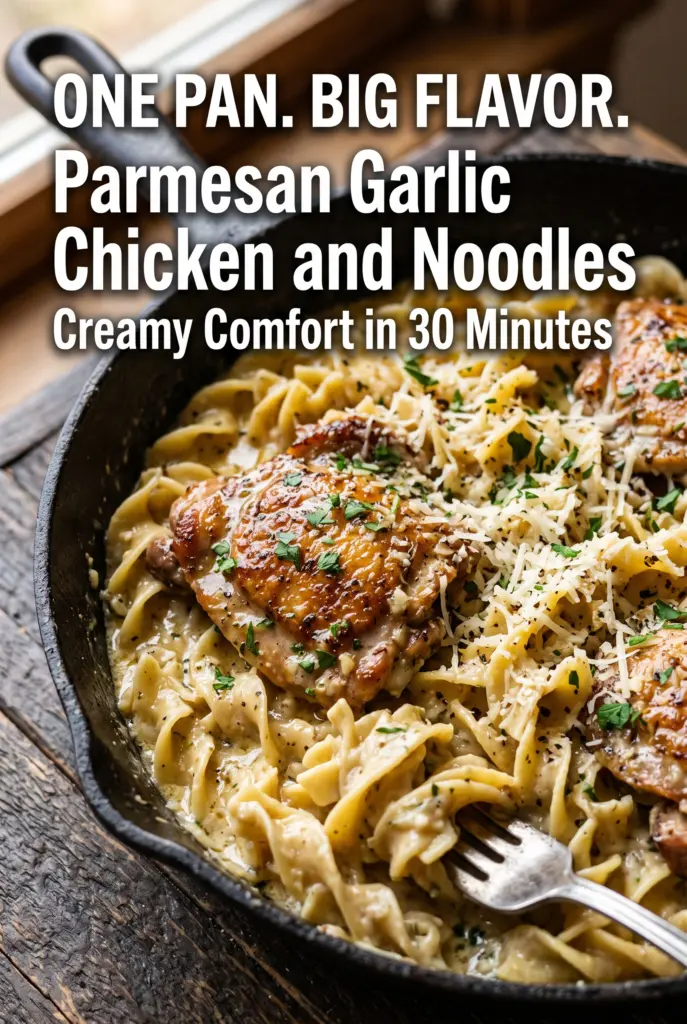
Parmesan Garlic Chicken and Noodles
Parmesan garlic chicken and noodles hits that sweet spot between comforting and practical: tender chicken, silky noodles, and a creamy sauce that clings to every bite instead of pooling in…
Tip: save now, cook later.Parmesan garlic chicken and noodles hits that sweet spot between comforting and practical: tender chicken, silky noodles, and a creamy sauce that clings to every bite instead of pooling in the bottom of the bowl. The best versions of this dish taste rich without feeling heavy, and the difference comes down to building the sauce carefully so the Parmesan melts smooth and the noodles finish right in the pan.
This version leans on a simple flour-thickened base, then gets depth from browned chicken, sautéed onion, and plenty of garlic. Freshly grated Parmesan matters here because it melts cleaner than the pre-shredded stuff, which can leave the sauce grainy or stubbornly thin. Cooking the noodles just to al dente also helps them hold up when they meet the sauce, so the whole skillet stays creamy instead of turning soft and gluey.
Below, I’ve broken down the part that keeps the sauce from splitting, plus the ingredient swaps that still give you a solid dinner when you’re working with what’s in the pantry.
The sauce turned out smooth and creamy, and the Parmesan melted right in without getting grainy. I also liked that the noodles held their shape after tossing them back in — nothing got mushy, and my husband went back for seconds.
Save these creamy Parmesan Garlic Chicken and Noodles for the nights when you want a one-pan dinner with a smooth sauce and tender noodles.
The Mistake That Makes Creamy Noodles Turn Gluey
The fastest way to ruin a dish like this is to dump the cheese into a sauce that’s too hot or let the noodles sit too long before combining everything. Parmesan tightens up when it gets blasted with high heat, and egg noodles keep absorbing liquid after they’re cooked. That’s how you end up with a sauce that looks fine for a minute, then turns thick, heavy, and sticky.
The fix is simple: build the sauce over moderate heat, add the Parmesan off the hottest part of the burner, and fold in the noodles at the end so they can finish in the sauce for just a couple of minutes. You want the sauce to look smooth and loose when the chicken goes back in. It should thicken as it coats the pasta, not after it’s already on the plate.
What Each Ingredient Is Actually Doing in This Dish
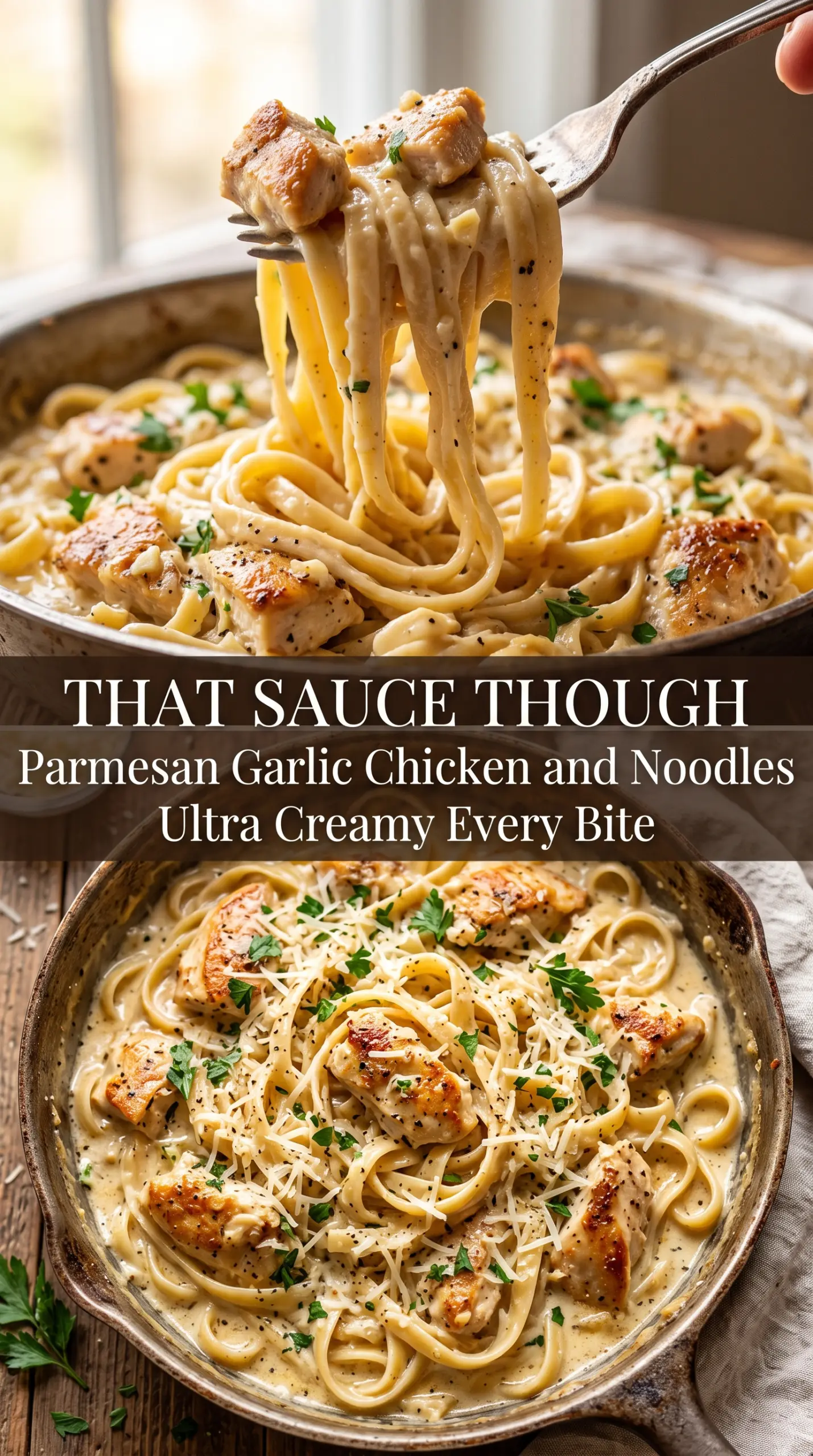
- Chicken breasts — Bite-sized pieces cook quickly and pick up more seasoning and surface color than whole pieces would. Chicken thighs work too if you want a little more richness and don’t mind a slightly longer cook time.
- Wide egg noodles — These hold the sauce well and stay soft without falling apart. If you use a thinner pasta, reduce the simmer time a little because it will absorb liquid faster.
- Freshly grated Parmesan — This is the ingredient that gives the sauce its body and salty, nutty finish. The pre-grated kind often has anti-caking agents that keep it from melting smoothly, so grate it yourself if you can.
- Heavy cream — It gives the sauce its silky texture and keeps the Parmesan from tasting sharp or dry. Half-and-half works in a pinch, but the sauce will be thinner and needs a little more time to reduce.
- Flour — This builds the base that helps the sauce cling to the noodles instead of sliding off. If you need a gluten-free version, use a 1:1 gluten-free flour blend and whisk it in the same way.
- Garlic and onion — These give the sauce its backbone before the cream and cheese go in. Mince the garlic finely so it softens fast; big pieces can scorch before the sauce comes together.
Building the Sauce Before It Has a Chance to Break
Brown the Chicken First
Cook the chicken in the butter and oil until the pieces are golden on the outside and just cooked through. That color matters because it leaves little browned bits in the pan, and those bits give the sauce more depth once you add the onions and broth. If the pan looks crowded, the chicken will steam instead of sear, so work in batches if needed.
Cook Out the Flour
After the onion softens and the garlic smells fragrant, stir in the flour and let it cook for a full minute. Raw flour tastes chalky, and this short cooking step takes that edge away while setting up the sauce to thicken properly. The mixture should look pasty, not dry or burnt.
Whisk the Liquids in Slowly
Pour in the broth first, whisking until the flour mixture loosens completely, then add the cream. Slow addition keeps lumps from forming and gives the sauce a smooth start. If you dump both liquids in at once, the flour can seize up in little pockets and stay that way.
Finish With Parmesan Off the Heat
Stir in the Parmesan after the sauce has thickened a little and the burner is on low. The sauce should look glossy and smooth, with no grainy edges around the pan. If it starts to look oily or separated, pull it off the heat and whisk in a splash of broth to bring it back together before adding the noodles.
How to Adapt This for What’s in Your Kitchen
Dairy-Free Version With a Different Finish
Use unsweetened coconut cream or a plain dairy-free cooking cream and swap in a dairy-free Parmesan alternative. The sauce won’t taste exactly the same, but it still turns creamy and savory if you keep the heat low and don’t rush the thickening.
Gluten-Free Swap That Still Thickens Properly
Use gluten-free egg noodles and replace the flour with a 1:1 gluten-free blend. The texture stays close to the original, but gluten-free pasta can soften faster, so pull it from the pot as soon as it’s al dente and finish it in the skillet quickly.
Chicken Thighs for a Richer Pan Sauce
Boneless skinless thighs bring a little more juiciness and a deeper savory note than breasts. They need nearly the same method, but they can take an extra minute or two to brown, which gives the sauce even more flavor from the pan drippings.
Make It Ahead Without Losing the Creaminess
Cook the sauce and chicken ahead, but keep the noodles separate until serving. Pasta keeps soaking up liquid as it sits, so combining everything too early can leave you with a skillet that looks thick but eats dry. Toss the noodles in just before dinner and loosen with a splash of broth if needed.
Storage and Reheating
- Refrigerator: Store leftovers in an airtight container for up to 3 days. The sauce will thicken as it chills.
- Freezer: It freezes, but the cream sauce can separate a bit after thawing. Freeze in portions if you want, then stir well while reheating.
- Reheating: Warm gently on the stove over low heat with a splash of broth or cream. High heat is the main reason the sauce turns oily or grainy.
The Questions People Usually Have Before Making This
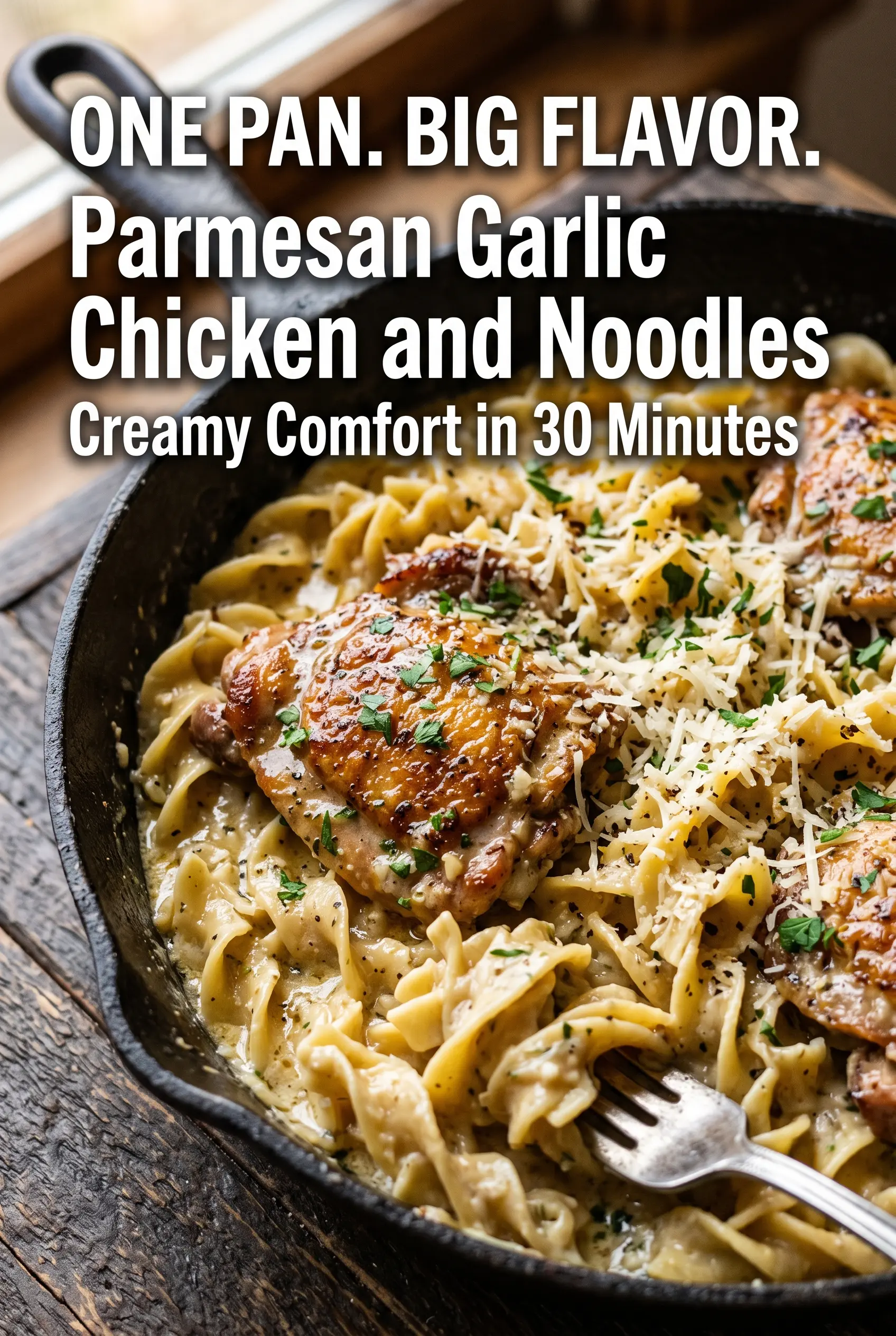
Parmesan Garlic Chicken and Noodles
Ingredients
Equipment
Method
- Cook the wide egg noodles according to package directions until al dente, then drain and set aside.
- Keep the noodles warm off to the side so they’re ready to fold in at the end.
- Season the bite-sized chicken pieces with salt, black pepper, paprika, and onion powder.
- Heat olive oil and butter in a large skillet over medium-high heat until shimmering, then add the chicken.
- Cook the chicken for 5–6 minutes, stirring as needed, until golden and cooked through, then remove and set aside.
- In the same skillet, sauté the diced onion for 2 minutes over medium heat until softened.
- Stir in the minced garlic and cook for 30–60 seconds until fragrant.
- Sprinkle in the all-purpose flour and cook for 1 minute, stirring constantly.
- Slowly whisk in the chicken broth and heavy cream until smooth, with no flour lumps.
- Add Italian seasoning and Parmesan cheese, then stir until the cheese is melted and the sauce is creamy.
- Return the cooked chicken to the skillet and simmer for 2–3 minutes to reheat and meld flavors.
- Fold in the cooked egg noodles and toss until evenly coated in the creamy sauce.
- Garnish with chopped fresh parsley and extra Parmesan before serving.
