
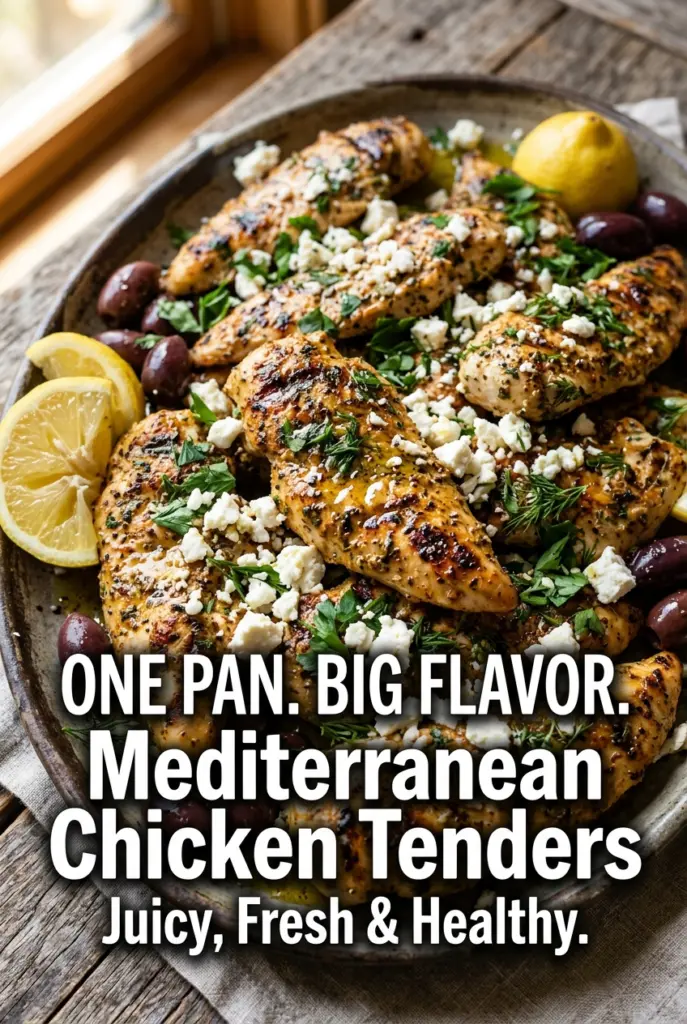
Mediterranean Chicken Tenders
Juicy Mediterranean chicken tenders come down to one thing: a bright, well-seasoned marinade that clings to the meat and turns in the heat without drying it out. These cook fast,…
Tip: save now, cook later.Juicy Mediterranean chicken tenders come down to one thing: a bright, well-seasoned marinade that clings to the meat and turns in the heat without drying it out. These cook fast, but they don’t taste rushed. The lemon, garlic, oregano, and smoked paprika build a savory, lightly smoky crust while the feta and fresh herbs at the end keep every bite sharp and clean.
The trick is not overcomplicating the marinade. Chicken tenders are lean and quick-cooking, so they need enough oil to carry the herbs and enough acid to wake everything up, but not so much lemon that the surface starts to cure before cooking. A short marinate is plenty here. Twenty minutes gives you flavor on the outside; a few hours deepens it without making the texture stringy.
Below I’ve included the exact timing that keeps the chicken juicy, plus a few swaps that still make sense if you’re cooking for different diets or using what you already have in the kitchen.
The marinade gave the chicken so much flavor, and the tenders stayed juicy even after baking. I used the feta and dill at the end like you said, and that fresh finish made the whole dish taste restaurant-quality.
Save these Mediterranean Chicken Tenders for a fast dinner with a lemony marinade, juicy center, and salty feta finish.
The Marinade Works Because It Seasons Fast, Not Long
Chicken tenders don’t need a deep overnight soak to taste good. They need a marinade that hits hard and cooks clean. Olive oil carries the herbs across the surface, lemon wakes up the seasoning, and garlic gives the chicken a savory edge without needing a long rest. If you leave these in the marinade for too long, the lemon starts to work against you and the outside can turn a little soft. That’s why this recipe stays in the sweet spot: enough time for flavor, not enough to damage the texture.
The other thing people miss is how quickly tenders dry out if they’re cooked too long. They’re thin, so they only need a few minutes on each side. Pull them when the thickest piece reaches 165°F and still looks juicy at the cut edge. If you wait for a deep browned crust before checking, you’ve probably gone past the point where they stay tender.
What Each Ingredient Is Actually Doing in This Dish
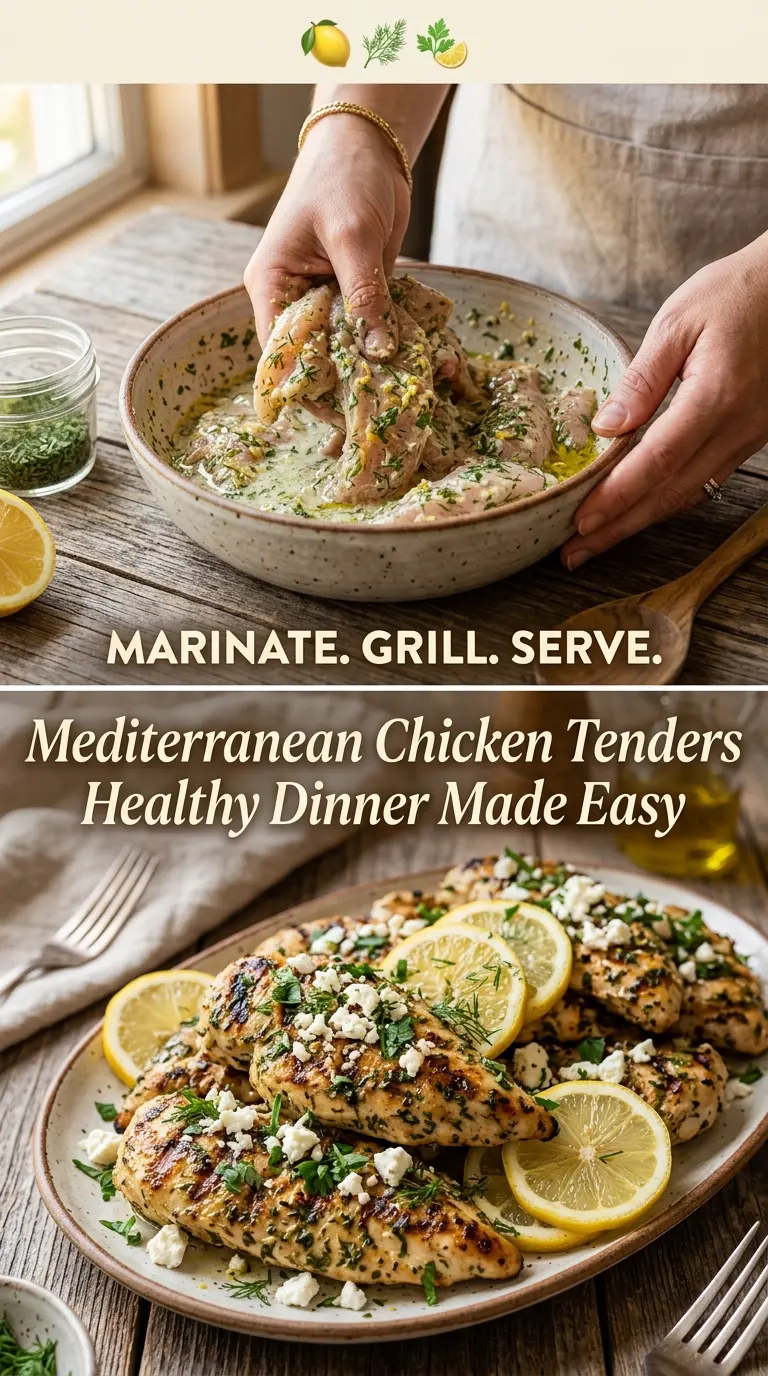
- Chicken tenders — These cook fast and stay tender when handled right. If you use chicken breasts instead, slice them into even strips so they finish at the same time as the tenders.
- Extra virgin olive oil — This helps the herbs coat the chicken and keeps the surface from drying in the grill or oven. A good everyday olive oil works here; save the expensive finishing oil for the end.
- Lemon juice — The acid brightens the marinade and gives the chicken that Mediterranean lift. Fresh lemon matters because bottled juice tastes flat and sharp in a way that shows up after cooking.
- Garlic and dried herbs — Garlic, oregano, and Italian seasoning build the backbone of the dish. Dried herbs are the right choice here because they cling better than fresh herbs in the marinade and don’t burn as easily.
- Smoked paprika and cumin — These are the quiet depth-builders. Paprika gives color and a faint smoke note, while cumin adds warmth that makes the chicken taste seasoned all the way through.
- Feta, parsley, and dill — The garnish is not decoration. Feta adds salt and creaminess, and the herbs bring the fresh finish that keeps the chicken from tasting one-note.
Getting the Chicken On the Pan or Grill Without Losing the Juiciness
Mix the marinade until it looks slightly thickened
Whisk the oil, lemon juice, garlic, and spices until the mixture looks emulsified and a little cloudy. That tells you the oil is carrying the seasoning instead of sitting in a slick on top. If the garlic clumps up in one corner, the chicken won’t season evenly.
Coat the tenders and keep the marinate short
Add the chicken and toss until every piece looks glossy. Twenty minutes is enough to get flavor moving; up to four hours is fine if you want a little more punch. Go much longer and the lemon starts to change the texture on the outside, especially if the tenders are thin.
Cook hot enough to brown, not scorch
For the grill, cook over medium-high heat so the outside picks up color while the inside stays juicy. For the oven, 425°F gives you enough heat for quick browning without blasting the meat dry. The chicken is done when the thickest piece reads 165°F and the juices run clear, but the meat still looks supple, not tight.
Finish with the feta and herbs after cooking
Move the chicken to a platter and let it sit for a minute before topping it. The feta softens slightly from the heat, and the parsley and dill stay bright instead of collapsing. Add lemon wedges at the table so each person can control how sharp they want the final bite.
Three Ways to Make This Fit What You’ve Got
Oven-Baked Instead of Grilled
Bake at 425°F on a sheet pan until the chicken reaches 165°F. You won’t get the same smoky edges as the grill, but the paprika still gives the chicken a nice color and the result stays juicy with almost no effort.
Dairy-Free Finish
Skip the feta and finish with extra herbs, olives, and a drizzle of good olive oil. You lose the salty creaminess, but the chicken still tastes complete because the marinade carries enough flavor on its own.
Using Chicken Breasts
Slice boneless chicken breasts into strips about the same thickness as tenders. That keeps the cook time close to the original recipe and prevents the thinner tips from drying out before the thicker pieces are done.
Storage and Reheating
- Refrigerator: Store in an airtight container for up to 4 days. The chicken stays tasty, though the feta softens and the herbs lose a little brightness.
- Freezer: The cooked chicken freezes well for up to 2 months. Freeze it without the feta and herbs, then add those fresh after reheating.
- Reheating: Reheat gently in a 325°F oven or in a covered skillet over low heat with a splash of water. High heat dries out tenders fast, so avoid blasting them in the microwave unless you like chewy edges.
Answers to the Questions Worth Asking
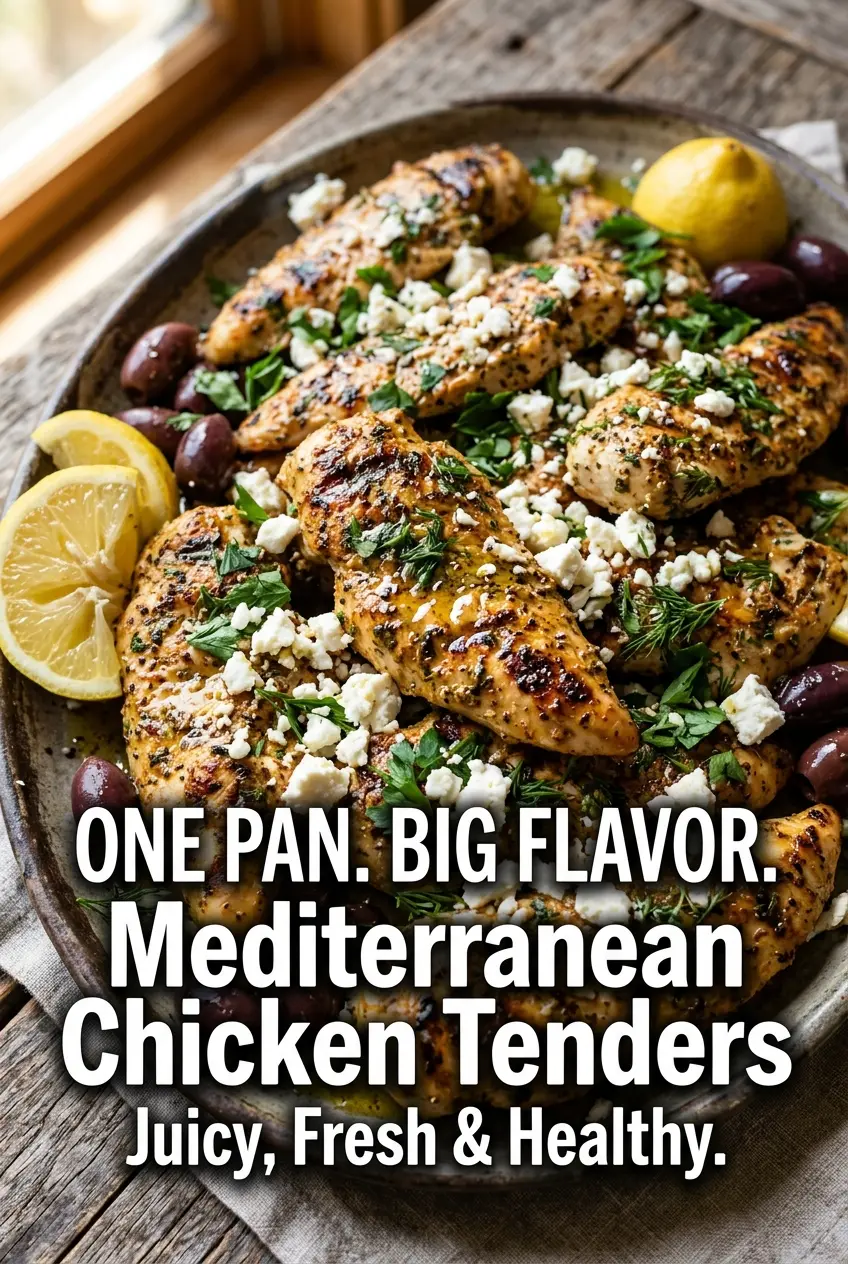
Mediterranean Chicken Tenders
Ingredients
Method
- In a large bowl, whisk together olive oil, lemon juice, garlic, oregano, Italian seasoning, paprika, cumin, salt, and pepper until combined (visual cue: the mixture looks evenly speckled and glossy).
- Add the chicken tenders and toss until well coated (visual cue: every piece is fully covered with the marinade).
- Marinate for at least 20 minutes, or up to 4 hours (visual cue: chicken looks more opaque as it rests in the oil).
- Preheat the grill or oven to 425°F (220°C) (visual cue: the grill is hot or the oven reaches steady temperature).
- Grill the tenders for 4–5 minutes per side, or bake for 18–20 minutes (visual cue: the outside is browned and the chicken releases easily).
- Cook until the internal temperature reaches 165°F (74°C) (visual cue: the thickest tender reads 165°F on a thermometer).
- Transfer the tenders to a serving platter (visual cue: arrange in a single layer so they stay hot and glossy).
- Sprinkle with feta cheese, parsley, and dill (visual cue: feta melts slightly at the edges and forms a speckled topping).
- Serve with fresh lemon wedges and olives if desired (visual cue: lemon wedges are placed on the side for squeezing).
