
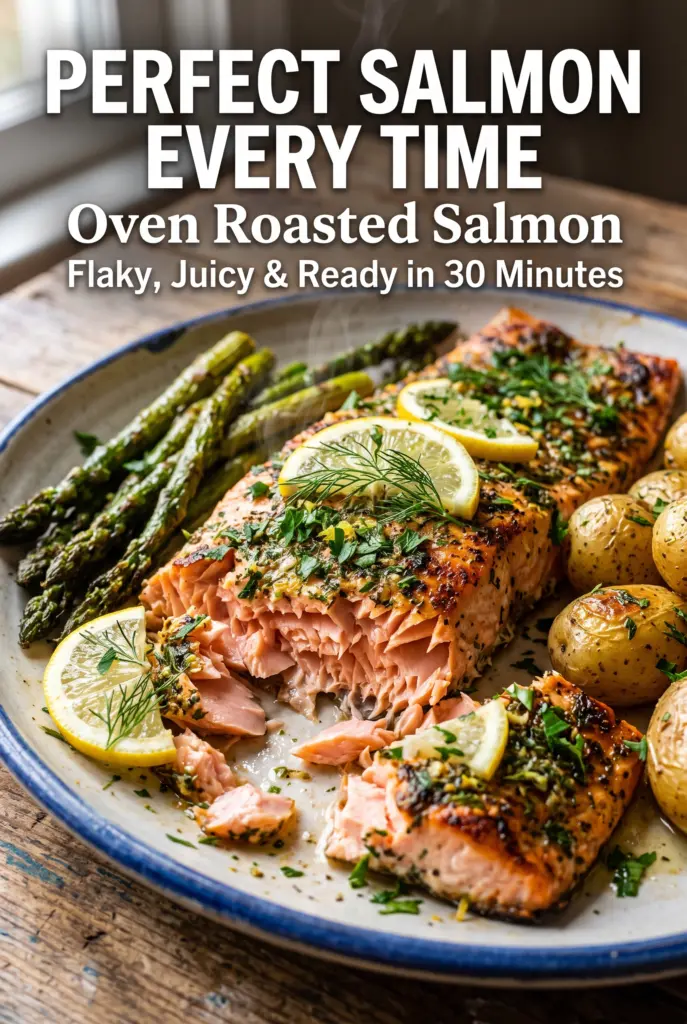
Oven Roasted Salmon
Oven roasted salmon lands on the plate flaky in the middle, lightly bronzed on top, and full of clean lemon-garlic flavor without tasting heavy. The butter gives the fish that…
Tip: save now, cook later.Oven roasted salmon lands on the plate flaky in the middle, lightly bronzed on top, and full of clean lemon-garlic flavor without tasting heavy. The butter gives the fish that soft, rich finish people expect from a great salmon dinner, while the olive oil keeps the surface from drying out in the oven. It’s the kind of meal that looks polished enough for company but still comes together fast enough for a weeknight.
The part that matters most is the balance between moisture and heat. Salmon dries out when it goes into the oven wet, so patting it dry first gives the seasoning a chance to cling and helps the top take on a little color. The lemon zest does more work than the juice here, too — zest gives you bright citrus flavor without adding extra liquid that can wash the seasoning off the fish.
Below, I’ll walk through the small details that keep salmon tender instead of chalky, plus a few ways to adjust the seasoning if you want to lean more herby, more garlicky, or keep it dairy-free.
The salmon stayed buttery and flaky, and the lemon garlic topping browned just enough without drying out the fish. I pulled it at 14 minutes and it was perfect with rice.
Save this lemony oven roasted salmon for a fast dinner with a buttery center and just enough garlic-herb crust to keep every bite interesting.
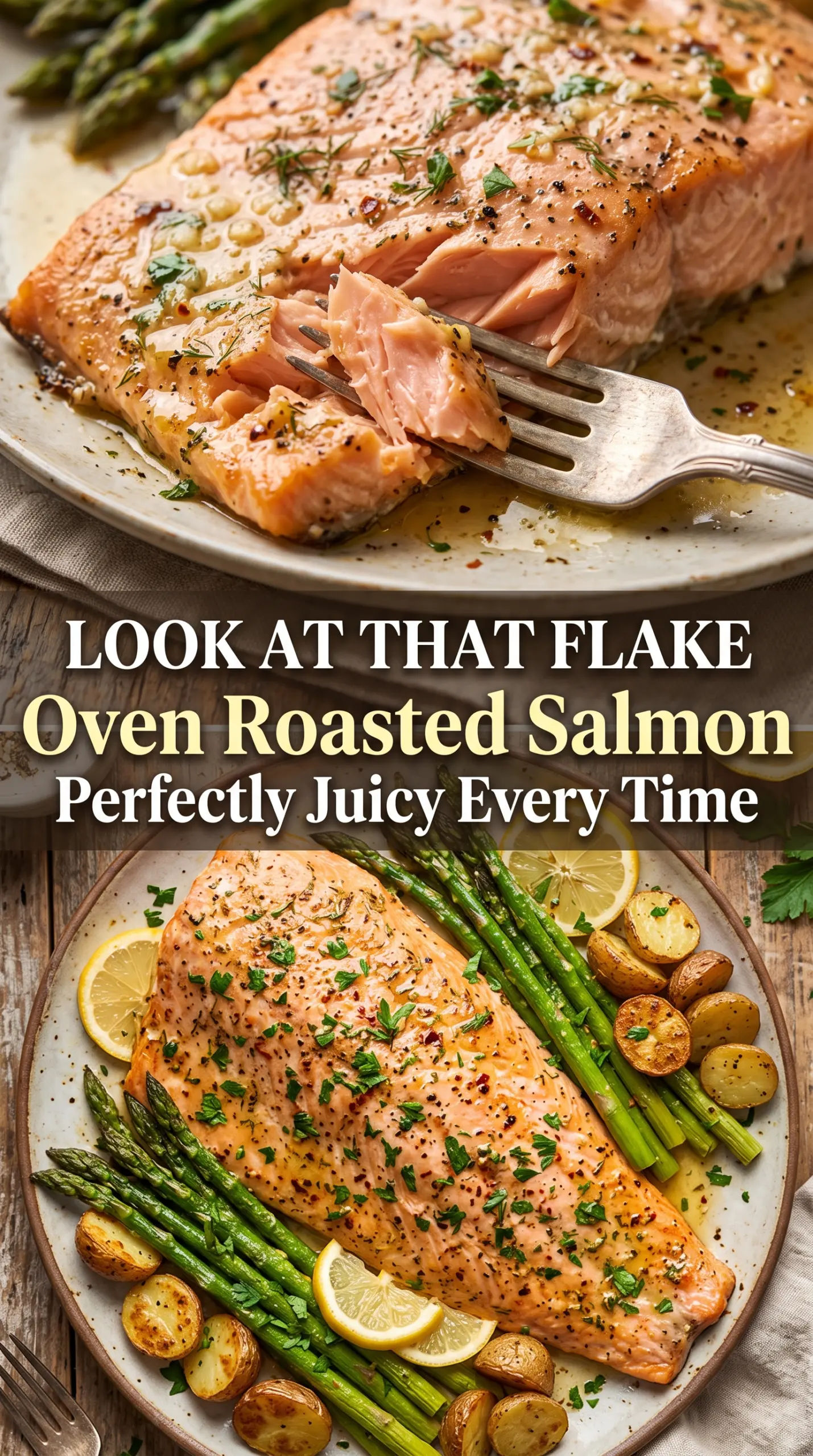
The Small Mistake That Turns Salmon Dry
Salmon gets overcooked faster than most people expect because it keeps carrying over after it leaves the oven. By the time the top looks done, the middle can already be heading toward chalky. The sweet spot is to pull it when the thickest part flakes but still looks a touch glossy in the center. It will finish on the tray.
Lining the pan with parchment helps, but the real insurance is thickness. A thinner tail section will cook long before the center of the fillet does, so tuck the thin end under slightly or separate it from the thicker middle if your piece isn’t even. That keeps the entire fillet closer to the same doneness instead of leaving one end dry and the other end underdone.
- Salmon fillet — Choose a fillet with even thickness if you can. Wild salmon tends to cook a little leaner and firmer, while farmed salmon is richer and a bit more forgiving.
- Butter and olive oil — Butter gives flavor and helps the top brown; olive oil keeps the butter from tasting heavy. If you want to use all oil, the fish will still roast well, but you’ll lose some of that lush finish.
- Lemon zest and juice — Zest brings the bright citrus flavor without watering down the surface. The juice adds sharpness, but too much can make the top taste steamed instead of roasted, so keep it measured.
- Italian seasoning, paprika, garlic — This is the backbone of the crust. Fresh garlic works best here because it perfumes the butter as it roasts; garlic powder can stand in, but the flavor is flatter.
- Fresh herbs — Parsley and dill are finishing herbs, not just garnish. Add them at the end so they stay fresh and green instead of fading into the heat.
Roasting the Salmon So the Center Stays Tender
Build the Seasoning Paste First
Whisk the oil, melted butter, garlic, lemon juice, lemon zest, Italian seasoning, paprika, salt, and pepper into a loose paste before it touches the fish. That keeps the seasoning evenly distributed and stops the garlic from clumping in one spot. Brush it over the salmon in a thin, even layer so every bite gets the same seasoning. If the butter starts to solidify while you work, warm it just enough to loosen it again.
Roast Until the Surface Just Starts to Color
Slide the salmon into a 400°F oven and check it around the 12-minute mark if the fillet is on the thinner side. You’re looking for opaque edges and a center that still has a little translucence. The fish should flake when nudged with a fork, not fall apart into dry shreds. If your oven runs hot, start checking early; salmon goes from silky to overdone in a narrow window.
Use the Broiler Only for a Light Finish
If you want a little color on top, broil the salmon for a minute or two at the end. Stay close, because the butter and garlic can go from lightly golden to bitter fast. This step is for color, not for cooking the fish through. If the fillet is already done, skip the broiler and go straight to garnish.
Dairy-Free Version
Use all olive oil instead of the butter. You’ll lose a little richness and browning, but the salmon will still roast up moist and bright, especially with the lemon zest and herbs carrying the flavor.
More Herby, Less Garlicky
Cut the garlic in half and add extra dill or parsley at the end. This version tastes cleaner and fresher, which works well if you’re serving the salmon with simple potatoes or rice.
For a Thicker Center Cut
If your salmon is extra thick, keep the oven time closer to 16 minutes and let it rest for 2 minutes before serving. The carryover heat finishes the middle without drying the surface, which is the difference between buttery and tough.
Storage and Reheating
- Refrigerator: Store leftovers in an airtight container for up to 3 days. The texture firms up a bit, which is normal for cooked salmon.
- Freezer: It freezes, but the texture softens after thawing. Wrap portions tightly and freeze for up to 2 months if you plan to use it in salads, grain bowls, or pasta.
- Reheating: Reheat gently at 275°F covered with foil, or warm it in a skillet over low heat with a spoonful of water. High heat dries salmon out fast, so skip the microwave unless you’re only warming it for a minute or two.
Answers to the Questions Worth Asking
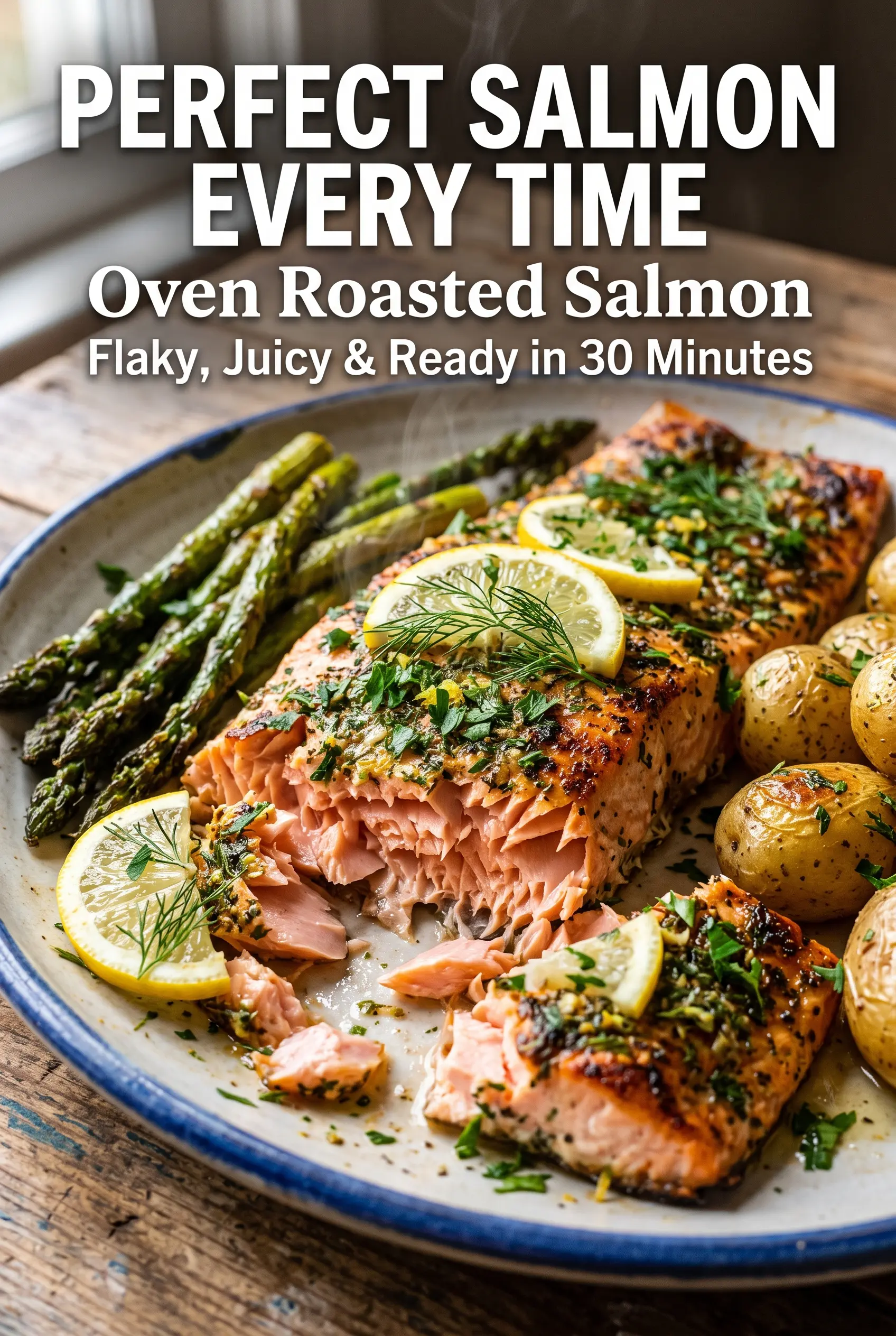
Oven Roasted Salmon
Ingredients
Equipment
Method
- Preheat the oven to 400°F (205°C). This hot oven helps the salmon roast quickly and stay flaky.
- Line a baking sheet with parchment paper. This prevents sticking and makes cleanup easy.
- Pat the salmon dry with paper towels. Dry surface helps the seasoning cling and browns evenly.
- Whisk together olive oil, melted butter, garlic, lemon juice, lemon zest, Italian seasoning, paprika, salt, and pepper. Mix until smooth and fragrant.
- Brush the mixture generously over the salmon. Coat the top so each bite has garlic-lemon flavor.
- Arrange lemon slices over the top. The lemon steams lightly as it roasts for extra brightness.
- Roast for 12–16 minutes, depending on thickness, until the salmon flakes easily with a fork. Keep it uncovered so the surface stays nicely roasted.
- Broil for 1–2 minutes if a lightly golden top is desired. Watch closely so the edges don’t over-brown.
- Garnish with parsley and fresh dill. The herbs add fresh color and a clean finish.
- Serve immediately with roasted vegetables, rice, or potatoes. Enjoy while the salmon is hot and tender.
