
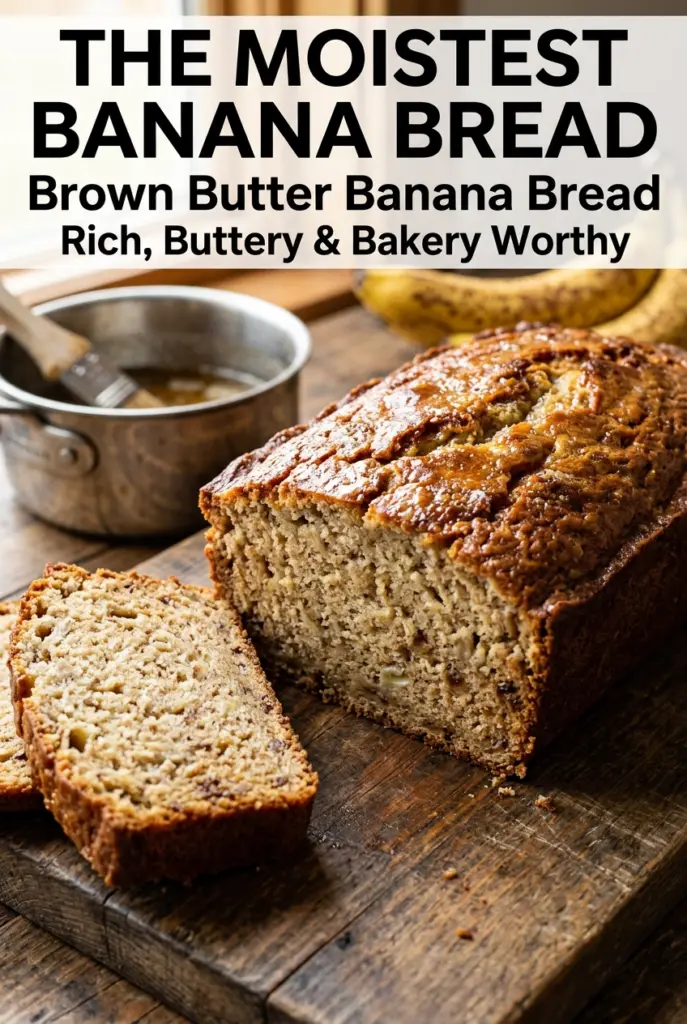
Brown Butter Banana Bread
Brown butter banana bread has that deep, nutty flavor that makes a plain loaf taste like it came from a bakery. The crumb stays tender and moist, the top bakes…
Tip: save now, cook later.Brown butter banana bread has that deep, nutty flavor that makes a plain loaf taste like it came from a bakery. The crumb stays tender and moist, the top bakes up with a gentle crackle, and every slice tastes richer than you expect from such a familiar batter. It’s the kind of banana bread people reach for warm, then go back for cold from the counter the next day.
The part that sets this loaf apart is the browned butter. Once the milk solids toast and smell like hazelnuts, the butter adds a caramel note that plays beautifully with overripe bananas and warm spices. Sour cream keeps the loaf soft without making it heavy, and the mix of brown sugar plus a little granulated sugar gives both moisture and a clean sweetness. The walnuts are optional, but they add a nice bite against the soft crumb if you like a little texture.
Below, I’ve included the small details that matter here: how dark to take the butter, when to stop mixing, and how to keep the center baked through without drying out the edges. If you’ve ever had banana bread come out dense, gummy, or oddly flat, the fixes are all in the process.
The browned butter made the loaf taste almost caramel-like, and the center stayed moist without being gummy. I baked mine for 58 minutes and it sliced beautifully once it cooled.
Brown butter banana bread with that deep caramelized crust is worth bookmarking for the ripest bananas on the counter.
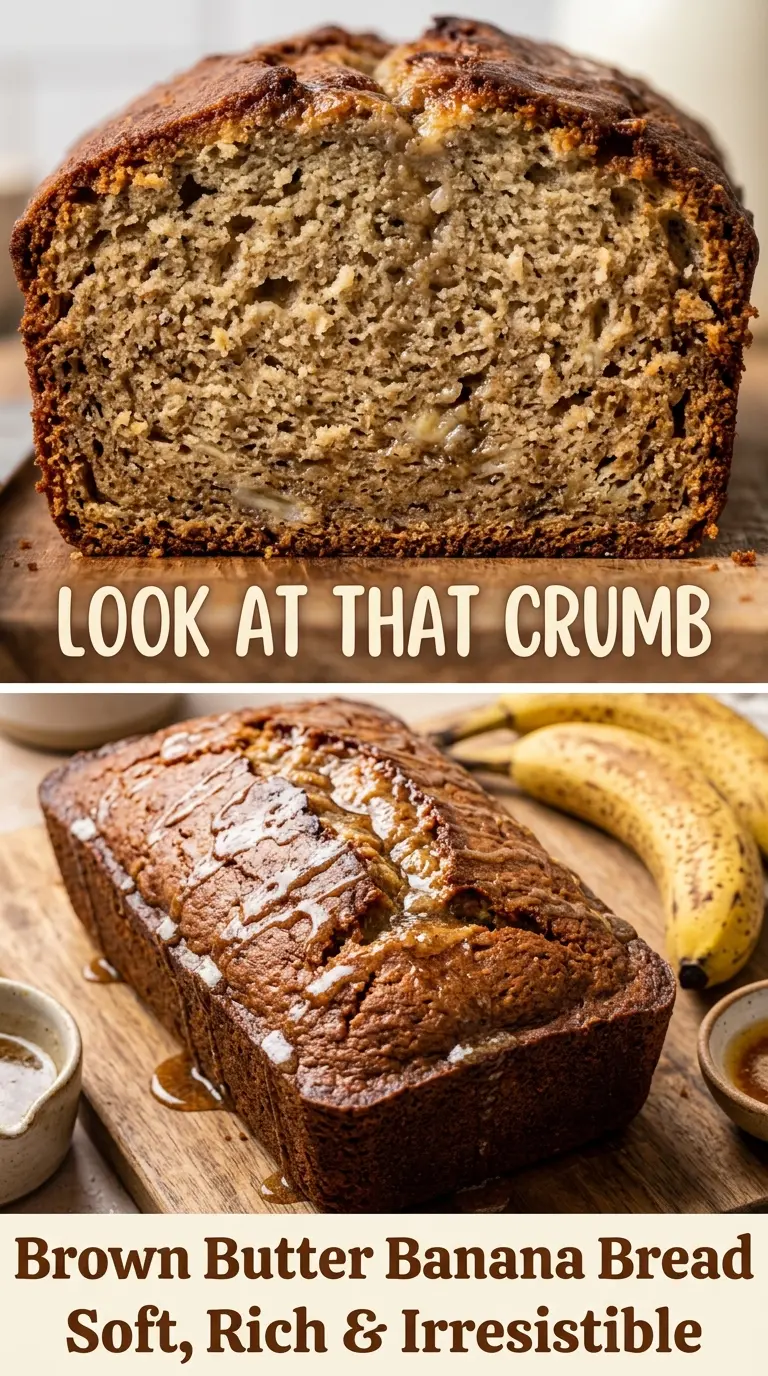
The Reason the Brown Butter Belongs in the Pan First
Banana bread fails in one of two ways: it bakes up flat and bland, or it turns dense because the batter was handled like a quick cake. Browning the butter fixes the first problem by adding depth before anything else goes in, and it helps the loaf taste fuller without needing extra spices or sugar. Cooling it for a few minutes matters too, because hot butter can scramble the eggs and make the batter look broken before it even reaches the oven.
The other trap is overmixing. Once the flour goes in, the batter should look a little rough and streaked with flour at first. That’s the point. If you beat it smooth, the gluten tightens up and the loaf loses that soft, tender crumb that makes banana bread worth baking in the first place.
- Browned butter — This is the flavor anchor. Stop cooking it when the milk solids are a deep golden brown and it smells nutty, not burnt.
- Very ripe bananas — Black-speckled bananas bring sweetness and moisture. Under-ripe bananas taste starchy and won’t give the loaf the same softness.
- Sour cream — It keeps the crumb rich and plush. Plain Greek yogurt works in a pinch, but the loaf may be slightly tangier and a touch firmer.
- Light brown sugar — This brings moisture and a soft caramel note that works with the browned butter. Dark brown sugar will make the flavor deeper and a little more molasses-forward.
How to Keep the Loaf Tender After the Butter Turns Nutty
Brown the butter until the foam settles
Melt the butter over medium heat and keep it moving as the foaming starts. After a few minutes, the bubbling will quiet down and brown specks will collect on the bottom of the pan. That’s your cue to pull it off the heat. If it goes from golden to black in seconds, it’s already past the point where the loaf will taste balanced.
Mix the wet ingredients before the flour ever goes in
Whisk the browned butter with both sugars, eggs, vanilla, mashed bananas, and sour cream until the mixture looks glossy and thick. The bananas should be mashed enough that there are no large chunks, but a little texture is fine. If the butter is still too warm, the eggs can curdle, so let it cool until it feels warm rather than hot on the side of the bowl.
Stop mixing as soon as the flour disappears
Fold the dry ingredients into the wet mixture with a spatula and stop when the last pockets of flour are gone. A few streaks are better than a batter that’s been worked into elasticity. If you add the walnuts, fold them in at the very end so they stay intact and don’t sink to the bottom of the loaf.
Bake until the center springs back lightly
Scrape the batter into the pan and top it with coarse sugar if you want a crisp, crackly lid. Bake until a toothpick in the center comes out clean or with a few moist crumbs, not wet batter. If the top browns before the middle sets, lay a loose piece of foil over the pan for the last 10 to 15 minutes.
How to Adapt This Loaf When You Want a Different Finish
Walnut-Free Banana Bread
Leave out the walnuts and the loaf turns softer and more uniform, which is what most people want from classic banana bread anyway. If you still want texture, add a handful of chocolate chips or leave the coarse sugar on top for a crisp contrast.
Dairy-Free Version
Use a dairy-free butter that browns well and swap the sour cream for an unsweetened thick coconut or almond-based yogurt. The loaf will still be moist, but the browned butter flavor will be softer because not every plant butter toasts the same way.
Extra-Spiced Loaf
Add a pinch of cloves or allspice if you want the loaf to lean warmer and more aromatic. Keep it restrained, though, because the browned butter does a lot of the flavor work already and too much spice can bury it.
Storage and Reheating
- Refrigerator: Store the loaf wrapped well for up to 5 days. The crumb stays moist, but the texture tightens a little in the fridge.
- Freezer: This freezes well. Wrap individual slices tightly and freeze for up to 3 months, then thaw at room temperature or toast straight from frozen.
- Reheating: Warm slices in a toaster oven or a skillet over low heat. Microwaving too long makes the crumb rubbery, so short bursts are better if you want it soft again.
Answers to the Questions Worth Asking
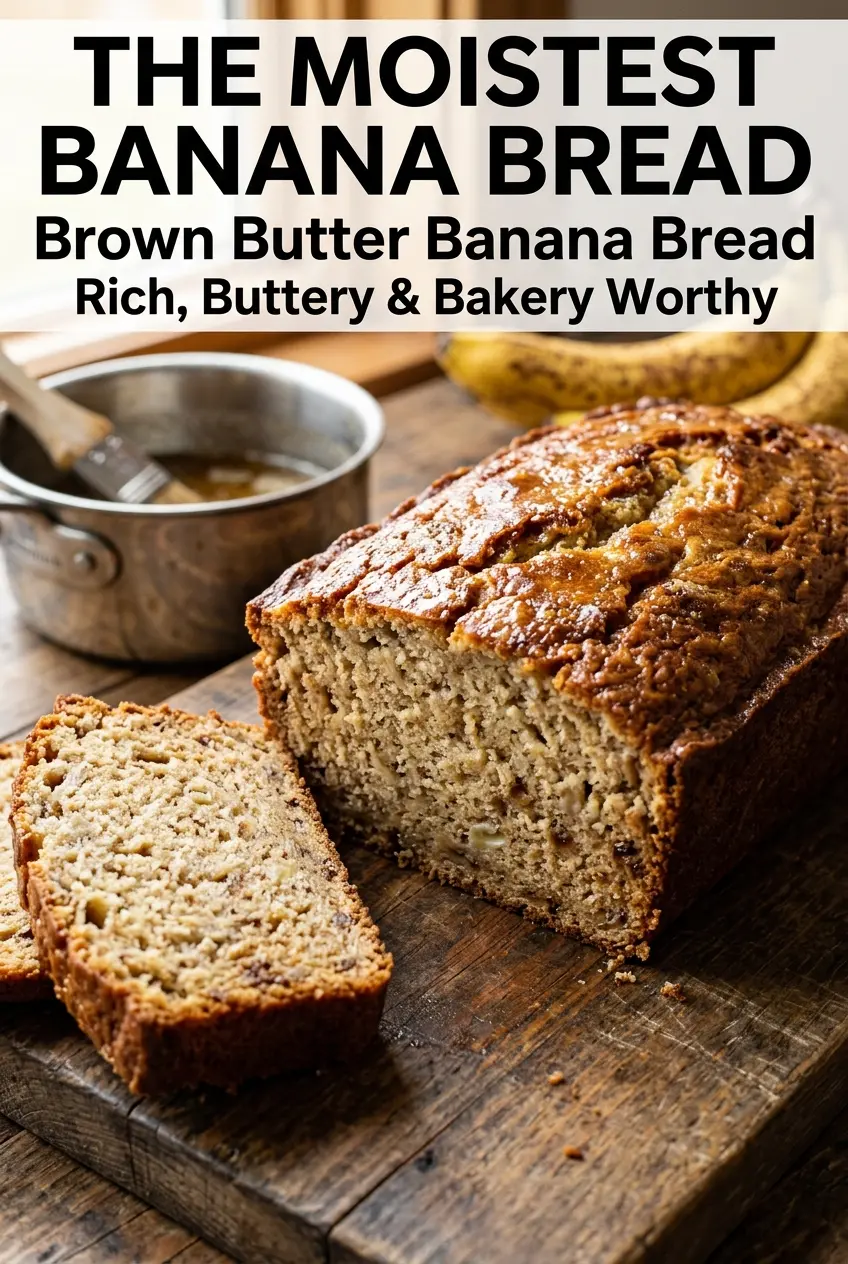
Brown Butter Banana Bread
Ingredients
Equipment
Method
- Preheat oven to 350°F (175°C). Choose a rack position so the loaf pan sits centered in the oven.
- Grease a 9×5-inch loaf pan and line with parchment paper. Ensure the parchment overhangs slightly so the loaf lifts out easily.
- Melt the butter in a saucepan over medium heat until golden brown with a nutty aroma. Watch closely and swirl as the butter foams and browns.
- Cool the browned butter for 10 minutes. This helps it thicken slightly so it blends smoothly with the wet ingredients.
- Whisk together all-purpose flour, baking soda, baking powder, salt, ground cinnamon, and ground nutmeg in a bowl. Whisk until the spices are evenly distributed.
- Whisk together browned butter, light brown sugar, granulated sugar, eggs, vanilla extract, mashed bananas, and sour cream in another bowl. Whisk until the mixture looks smooth and glossy.
- Fold the dry ingredients into the wet ingredients until just combined. Stop mixing as soon as no dry streaks remain to keep the loaf tender.
- Fold in chopped toasted walnuts if using. Fold gently so the batter stays thick and doesn’t get overworked.
- Pour the batter into the prepared loaf pan and sprinkle with coarse sugar. Distribute the coarse sugar evenly over the top.
- Bake for 55–65 minutes at 350°F (175°C) until a toothpick inserted into the center comes out clean. If the top browns too quickly, loosely tent with foil for the remaining time.
- Cool for 15 minutes in the pan before transferring to a wire rack. This firms up the crumb for cleaner slicing.
- Slice and serve warm with butter if desired. Let slices cool 5 minutes for easier cutting and a softer center.
