
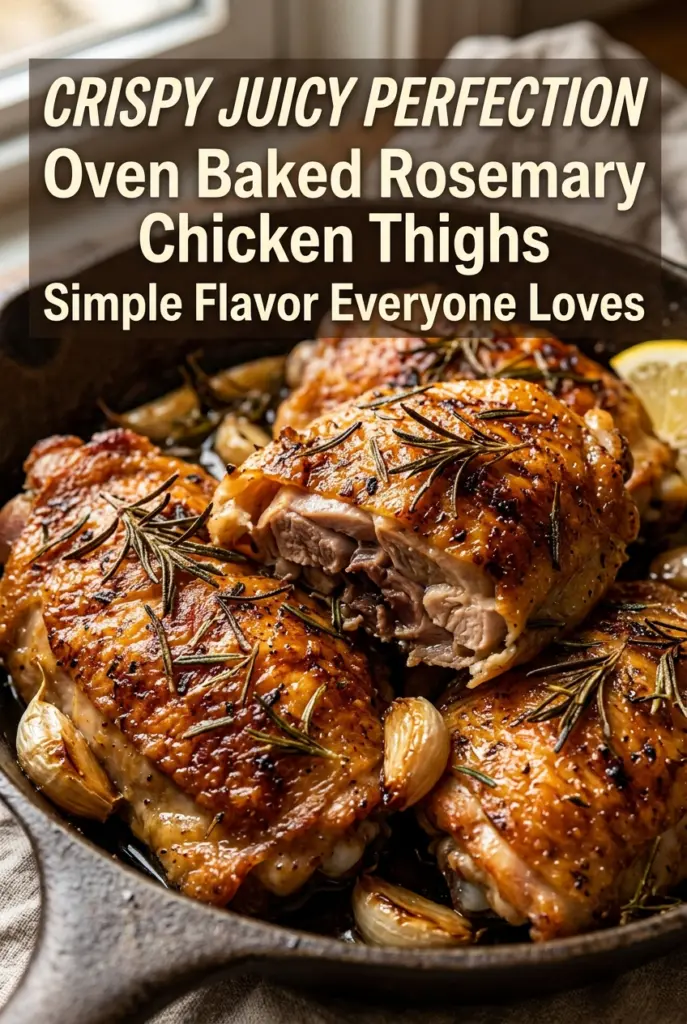
Oven Baked Rosemary Chicken Thighs
Oven-baked rosemary chicken thighs deliver the kind of dinner that disappears fast: crisp, bronzed skin; juicy meat; and a pan that smells like garlic, lemon, and woodsy herbs the second…
Tip: save now, cook later.Oven-baked rosemary chicken thighs deliver the kind of dinner that disappears fast: crisp, bronzed skin; juicy meat; and a pan that smells like garlic, lemon, and woodsy herbs the second it comes out of the oven. Chicken thighs are forgiving, but the difference between decent and excellent comes from a few small choices — dry skin, a hot oven, and enough time for the fat under the skin to render before the meat overcooks.
Fresh rosemary matters here because it perfumes the chicken without turning bitter the way too much dried herb can. The lemon juice wakes everything up, but it stays in the background; this is still a roast chicken dish, not a citrus marinade. I also use a light coating of oil and spices instead of a wet marinade, which helps the skin blister and brown instead of steaming.
Below, you’ll find the exact timing that gives you crisp skin without dry meat, plus a few practical swaps if you only have dried rosemary or want to stretch the recipe for a bigger dinner.
The skin came out deeply golden and crisp, and the rosemary-garlic coating didn’t burn even with the broil at the end. I used the lemon wedges at the table and it kept the chicken bright instead of heavy.
Bookmark these rosemary chicken thighs for a crisp-skin chicken dinner that still turns out juicy on a busy weeknight.
The Crisp Skin Comes From Drying the Chicken First, Not Fancy Seasoning
Chicken thighs can take a lot of heat, but wet skin will fight you the whole way. Patting the thighs dry is what lets the skin tighten and brown instead of turning pale and rubbery. That one step matters more than adding extra oil or a longer marinade.
The other thing people miss is oven temperature. At 425°F, the skin renders and crisps while the meat stays juicy. If your oven runs cool, the thighs can sit there and steam in their own fat for too long, so use a real oven thermometer if you’ve ever had trouble getting even browning.
What Each Ingredient Is Actually Doing in This Dish

- Chicken thighs — Bone-in, skin-on thighs are the whole point. The bone helps the meat stay juicy, and the skin gives you the crisp finish that makes this recipe worth repeating. Boneless thighs work in a pinch, but you’ll lose some of that rich roasted flavor and the timing gets shorter.
- Fresh rosemary — Fresh rosemary brings a clean, piney note that stands up to high heat. Dried rosemary can work, but use less and crush it between your fingers first so it doesn’t taste woody. If your rosemary is older and brittle, use it sparingly because stale herbs show up fast in a short ingredient list.
- Olive oil — The oil helps the seasoning cling and encourages the skin to brown. You don’t need a fancy finishing oil here; a good everyday olive oil is enough. If you cut the oil too far, the spices can look dusty and the skin won’t crisp as evenly.
- Lemon juice — A small amount brightens the chicken and keeps the herb-garlic mixture from tasting flat. Fresh lemon is best because bottled juice can lean harsh. Keep it measured; too much acid can dull the skin’s ability to brown.
How to Roast the Chicken So the Skin Gets Crisp Before the Meat Overcooks
Building the Seasoning Paste
Mix the olive oil, rosemary, garlic, salt, pepper, paprika, onion powder, and lemon juice until the chicken looks evenly coated and glossy. The mixture should cling to the skin instead of pooling in the bowl. If the garlic is left in big pieces, it can scorch on the baking sheet, so mince it finely.
Arranging the Thighs for Even Browning
Set the thighs skin-side up on a baking sheet with space around each piece. Crowding traps steam and softens the skin, which is the fastest way to lose the crisp edge you want. A rimmed sheet pan works better than a shallow dish because it lets the rendered fat spread out instead of soaking back into the chicken.
Roasting Until the Skin Tightens
Bake at 425°F for 35 to 40 minutes, watching for deep golden skin and clear juices around the edges. The most reliable test is temperature: pull the chicken when the thickest part hits 165°F. If the skin isn’t as crisp as you want, broil for 2 to 3 minutes, but stay close because rosemary and garlic can go from browned to burnt fast.
Resting Before You Serve
Let the thighs rest for 5 minutes before serving. That short rest gives the juices time to settle back into the meat instead of running across the cutting board. The skin will stay crisp enough to serve, and the flavor will taste more concentrated once the chicken has had a minute off the heat.
How to Adapt These Rosemary Chicken Thighs for Different Dinners
Dried Rosemary Version
Use about one-third as much dried rosemary as fresh, and crush it between your fingers before mixing it in. Dried rosemary is more concentrated and a little tougher, so this keeps the flavor present without turning the crust sharp or woody.
Garlic-Free Shortcut
If garlic isn’t an option, replace it with a small pinch of garlic powder instead of skipping it entirely. You’ll lose some of the roasted depth, but the powder still rounds out the rosemary and paprika without leaving raw bits on the skin.
Gluten-Free and Naturally Low-Carb
This recipe already works for both gluten-free and low-carb meals as written, which is one reason it stays on repeat in my kitchen. Serve it with roasted vegetables, cauliflower mash, or a simple salad and you’ve got a full dinner without changing a thing.
Storage and Reheating
- Refrigerator: Store in an airtight container for up to 4 days. The skin will soften, but the chicken stays juicy.
- Freezer: Freeze cooked thighs for up to 2 months. Wrap them well so the skin doesn’t pick up freezer flavor, though it won’t stay crisp after thawing.
- Reheating: Reheat in a 375°F oven until warmed through, about 15 to 20 minutes. A microwave will heat the meat, but it turns the skin limp, which is the main tradeoff with leftovers.
The Things That Trip People Up With This Dish
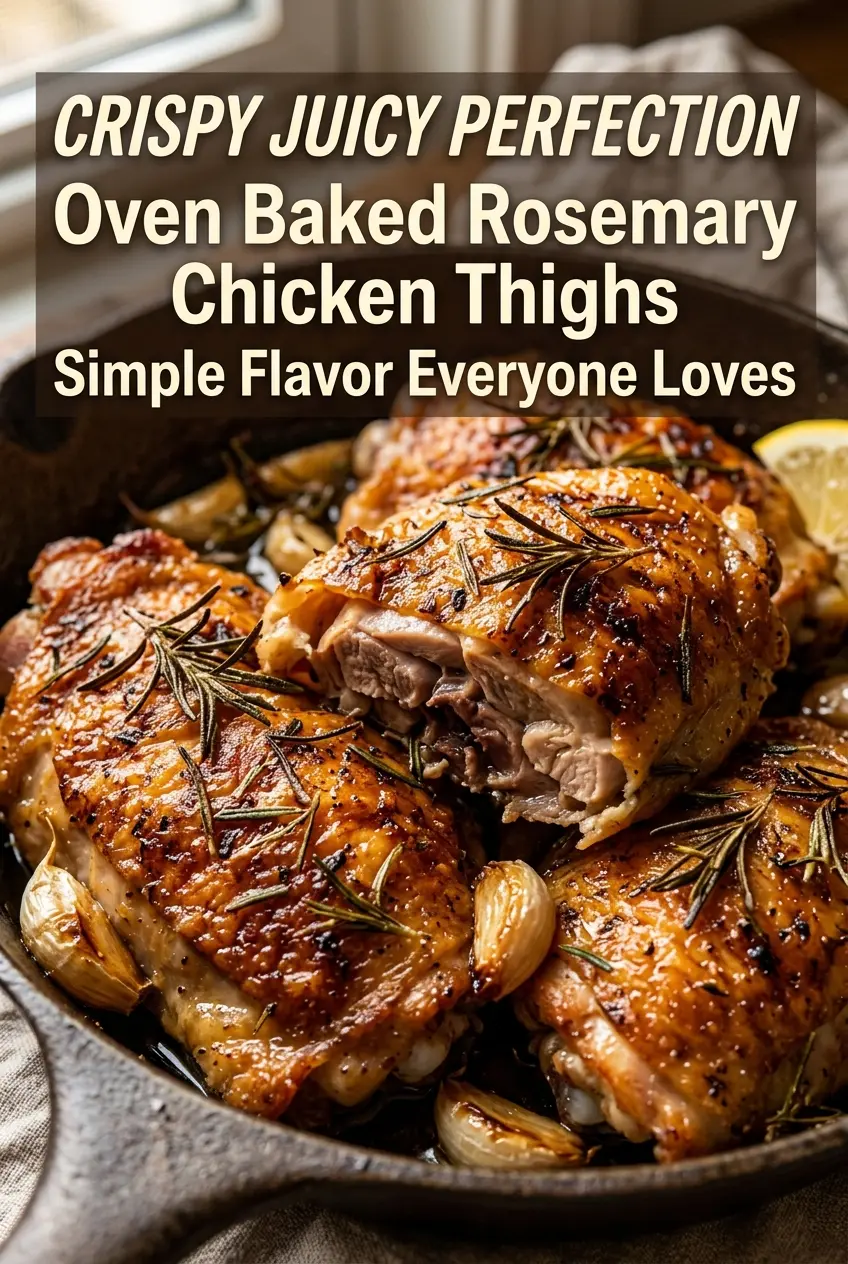
Oven Baked Rosemary Chicken Thighs
Ingredients
Equipment
Method
- Preheat the oven to 425°F (220°C).
- Pat the chicken thighs dry with paper towels to help the skin crisp.
- Place the chicken in a large bowl.
- Add olive oil, rosemary, garlic, salt, pepper, paprika, onion powder, and lemon juice to the bowl.
- Toss the chicken until evenly coated with the rosemary-garlic seasoning.
- Arrange the chicken skin-side up on a sheet pan.
- Bake for 35–40 minutes at 425°F (220°C), until the skin is crispy and the internal temperature reaches 165°F.
- Broil for 2–3 minutes if extra crispiness is desired, watching until the skin looks deep golden and crisp.
- Remove the chicken from the oven and rest for 5 minutes so the juices settle.
- Garnish with fresh rosemary sprigs and lemon wedges right before serving.
- Serve with roasted vegetables or mashed potatoes alongside the chicken.
