
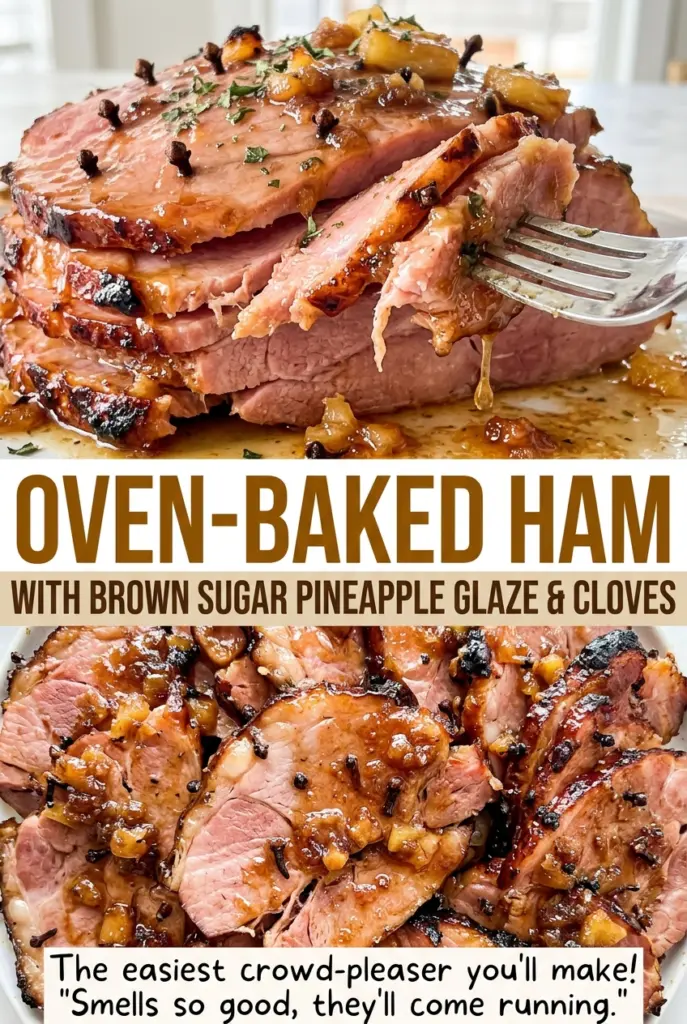
Oven-Baked Ham with Brown Sugar Pineapple Glaze and Cloves
The foil comes off and the ham is still pale, but the scored fat is soft and ready to catch the glaze. That’s the moment this oven-baked ham starts to…
Tip: save now, cook later.The foil comes off and the ham is still pale, but the scored fat is soft and ready to catch the glaze. That’s the moment this oven-baked ham starts to look like a centerpiece. I use an 8-pound, fully cooked, bone-in ham so the oven can warm it gently before the brown sugar and pineapple glaze goes on.
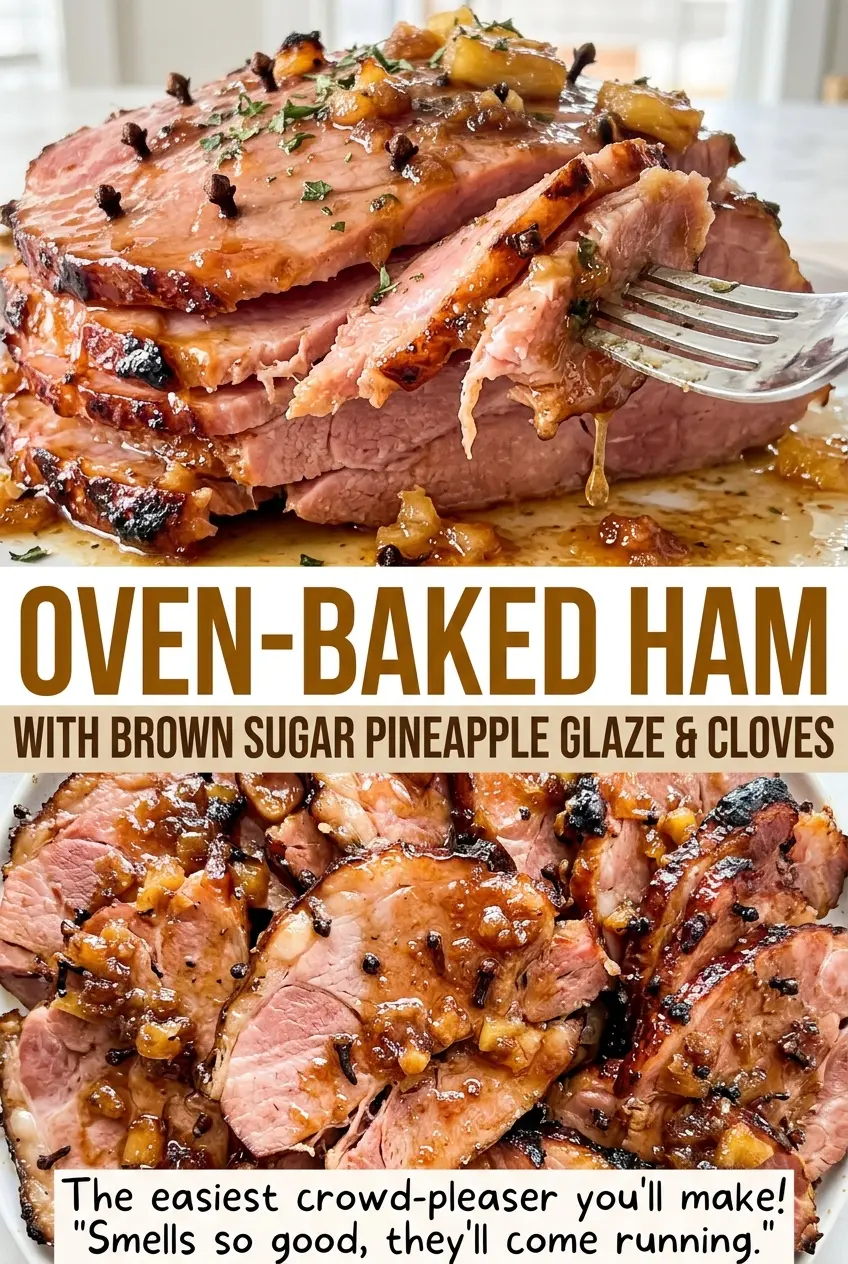
The glaze balances sweetness with Dijon mustard and apple cider vinegar, so it doesn’t taste like candy. Applying it in two coats gives the surface time to turn glossy without leaving sugary glaze in the oven for the entire bake. Once the cloves come out and the ham has rested, each slice has a tender center and a sticky, sweet-tart edge.
Kitchen Note
Keep the scoring shallow: cut through the fat, not down into the meat. That leaves a neat surface for the glaze and avoids exposing more of the ham than you need to.
Save this brown sugar pineapple-glazed ham for a holiday table or a Sunday dinner with glossy slices and warm clove notes.
Why an Unsliced Ham Gives the Glaze a Better Surface
An intact ham gives you one continuous layer of fat to score and glaze. With a spiral-cut ham, the glaze can run down between the slices instead of coating the outside, and those cut edges are more exposed as the ham warms. This method is built around an unsliced ham, so the glaze stays where you brush it and forms a shiny outer layer.
The bone-in cut also gives the ham a substantial shape for roasting, but it means you need to be thoughtful about where you take the temperature. The bone can give a misleading reading if the thermometer touches it. Choosing the specified unsliced cut isn’t just about presentation; it gives the scoring, clove placement, and glaze a single smooth surface to work with.
The Ingredients That Make This Glaze Sweet, Sharp, and Brushable
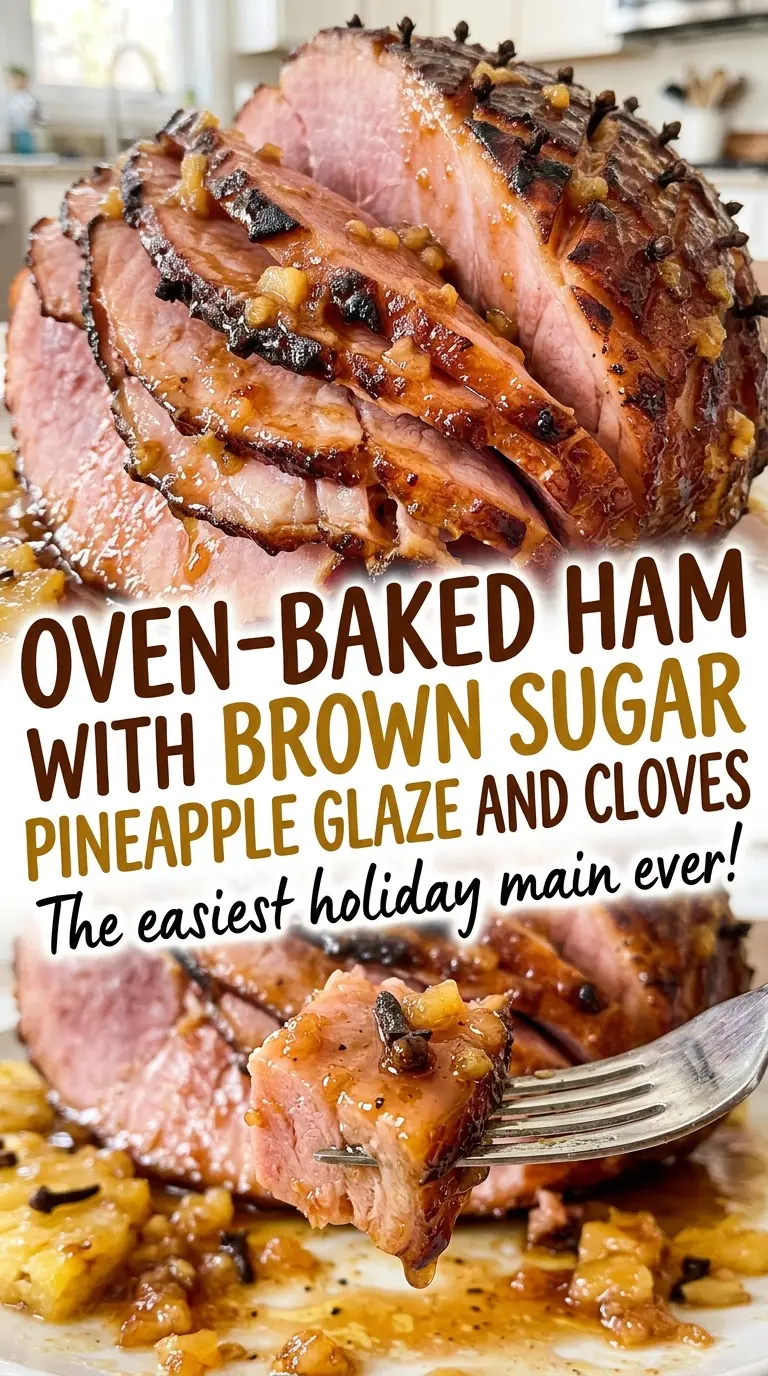
- Fully cooked, bone-in unsliced ham — Use a commercially packaged ham that’s fully cooked and close to the specified size. The intact exterior is important for scoring and glazing; a boneless or spiral-cut ham won’t follow the same timing or give the same surface. Choose another method if that’s the cut you have.
- Whole cloves — Whole cloves tuck into the scored intersections and give the ham a warm, aromatic note. Ground cloves aren’t a good stand-in because they can’t be removed and will spread through the glaze; if you don’t have whole cloves, leave them out.
- Light brown sugar — Packed brown sugar dissolves into a smooth glaze with a mild molasses note. Dark brown sugar works in its place, one-for-one, for a deeper and more pronounced molasses flavor.
- Pineapple juice — Canned pineapple juice is a dependable choice; use juice, not heavy syrup, which makes the glaze much sweeter. Orange juice can replace it in the same amount for a softer citrus flavor.
- Dijon mustard — Dijon brings a clean tang that keeps the glaze from tasting flat. Spicy brown mustard works in the same amount, though its coarser texture and sharper flavor will come through more clearly.
- Apple cider vinegar — Its acidity balances the sugar and fruit. White wine vinegar is the closest easy swap, used in the same amount, with a slightly less fruity finish.
How to Warm the Ham Before the Glaze Goes On
Prepare the Fat-Capped Ham
Heat the oven to 325°F. If the ham has a firm rind, remove it while leaving about 1/4 inch of fat, then score the fat in a 1-inch diamond pattern and press a whole clove into 24 intersections. Set the ham cut side down on the rack of a 16×13-inch roasting pan and cover it tightly with foil. Bake for 1 1/2 to 2 hours, until the center reaches 120°F on an instant-read thermometer.
Simmer the Pineapple Glaze
While the ham bakes, combine the brown sugar, pineapple juice, Dijon mustard, and apple cider vinegar in a 1-quart saucepan. Bring the mixture to a simmer over medium heat and cook for 8 to 10 minutes, stirring occasionally. It’s ready when it looks glossy and lightly syrupy; if it still looks watery, give it the rest of its simmering time.
Brush on Two Coats
Take off the foil and brush half the glaze over the ham. Bake uncovered for 10 minutes so the first coating can begin to set on the surface. Brush on the remaining glaze, then return the ham to the oven for another 10 to 20 minutes; keep the thermometer in the thickest part, away from the bone, as it finishes warming.
Rest Before Slicing
Once the thickest part reaches 140°F, take the ham out of the oven and let it rest for 15 minutes. The surface will be sticky, so use a gentle hand when moving it to a carving board. Remove the cloves before slicing so no one finds a whole clove in a bite.
Three Ways to Change the Pineapple-Clove Finish
Add fresh ginger for a brighter glaze
Stir a teaspoon of finely grated fresh ginger into the saucepan with the glaze ingredients before simmering. It adds a fresh, peppery warmth that sits nicely beside the pineapple without changing the two-coat method.
Give the glaze a little heat
Whisk 1/8 teaspoon of cayenne into the glaze before it simmers. The small amount adds a gentle back-of-the-throat warmth; add more only if you want the heat to compete with the sweet glaze.
Make it gluten-free
Use a fully cooked ham labeled gluten-free and replace the Dijon with certified gluten-free Dijon mustard. The glaze keeps its familiar sweet-tangy character, and the cooking method stays the same.
Storage and Reheating
- Refrigerator: Refrigerate leftover slices in a shallow, airtight container within 2 hours and use within 3 to 4 days. The glaze will firm up as it chills.
- Freezer: Freeze tightly wrapped portions for up to 2 months for best quality. Thaw them in the refrigerator; the texture may be a little softer after freezing.
- Reheating: Put slices in an oven-safe dish with a spoonful of water, cover, and warm at 325°F until they reach 165°F. Reheating uncovered can dry the edges before the centers are warm.
Questions That Come Up While the Ham Bakes
Oven-Baked Ham with Brown Sugar Pineapple Glaze and Cloves
Ingredients
Equipment
Method
- Preheat the oven to 325°F.
- If needed, remove the ham’s rind, leaving about 1/4 inch of fat.
- Score the fat in a 1-inch diamond pattern.
- Press a clove into 24 intersections.
- Set the ham cut side down on the rack of a 16x13-inch roasting pan and cover tightly with foil.
- Bake for 1 1/2 to 2 hours, until the center reaches 120°F on an instant-read thermometer.
- While the ham bakes, combine the brown sugar, pineapple juice, Dijon mustard, and vinegar in a 1-quart saucepan.
- Bring to a simmer over medium heat and cook for 8 to 10 minutes, stirring occasionally, until glossy and lightly syrupy.
- Remove the foil and brush half the glaze over the ham.
- Bake uncovered for 10 minutes.
- Brush the ham with the remaining glaze.
- Bake for 10 to 20 minutes, until the thickest part reaches 140°F without touching the bone.
- Rest for 15 minutes, then remove the cloves before slicing.
