

Mushroom Spinach Wellington Vegetarian Holiday Main
When chopped cremini mushrooms first hit the skillet, they pile up high and look like far too much for one pan. Then the heat draws out their moisture, and they…
Tip: save now, cook later.When chopped cremini mushrooms first hit the skillet, they pile up high and look like far too much for one pan. Then the heat draws out their moisture, and they shrink into a savory, browned filling. That change is what makes this mushroom spinach Wellington feel substantial without meat.
The filling has the earthy depth of mushrooms, a little brightness from Dijon, and enough texture from panko and walnuts to hold together when you slice it. Wrapped in puff pastry, it bakes into two crisp golden logs that are easy to portion for six. I like that the pastry makes this vegetarian holiday main feel special, while the filling is built from familiar ingredients and a skillet.

Kitchen Note
Spread the filling in a shallow layer and let it chill until completely cool before it goes onto the pastry. If it’s still warm, it softens the pastry before the oven has a chance to make it flaky.
Save this mushroom spinach Wellington for a vegetarian holiday centerpiece with a savory filling and crisp, golden pastry.
Why Cooking the Mushrooms in Two Batches Changes the Whole Filling
Mushrooms release a lot of liquid as they cook. Put the full amount into a skillet at once and they crowd together, trapping steam; they soften in their own moisture instead of getting the browned edges that give this filling its deeper, savory taste. Dividing them into two batches gives each piece more contact with the hot pan.
Let the liquid evaporate before you move on. The skillet should look dry rather than glossy with mushroom juices, and the mushrooms should have some color. That browned flavor carries through the spinach and pastry, while a wet pan would leave you with a loose filling that can make the bottom crust soggy. The separate batches take a little longer, but that’s time spent building flavor and controlling moisture—not extra fuss for its own sake.
What Gives the Filling Its Savory Depth and Sliceable Texture
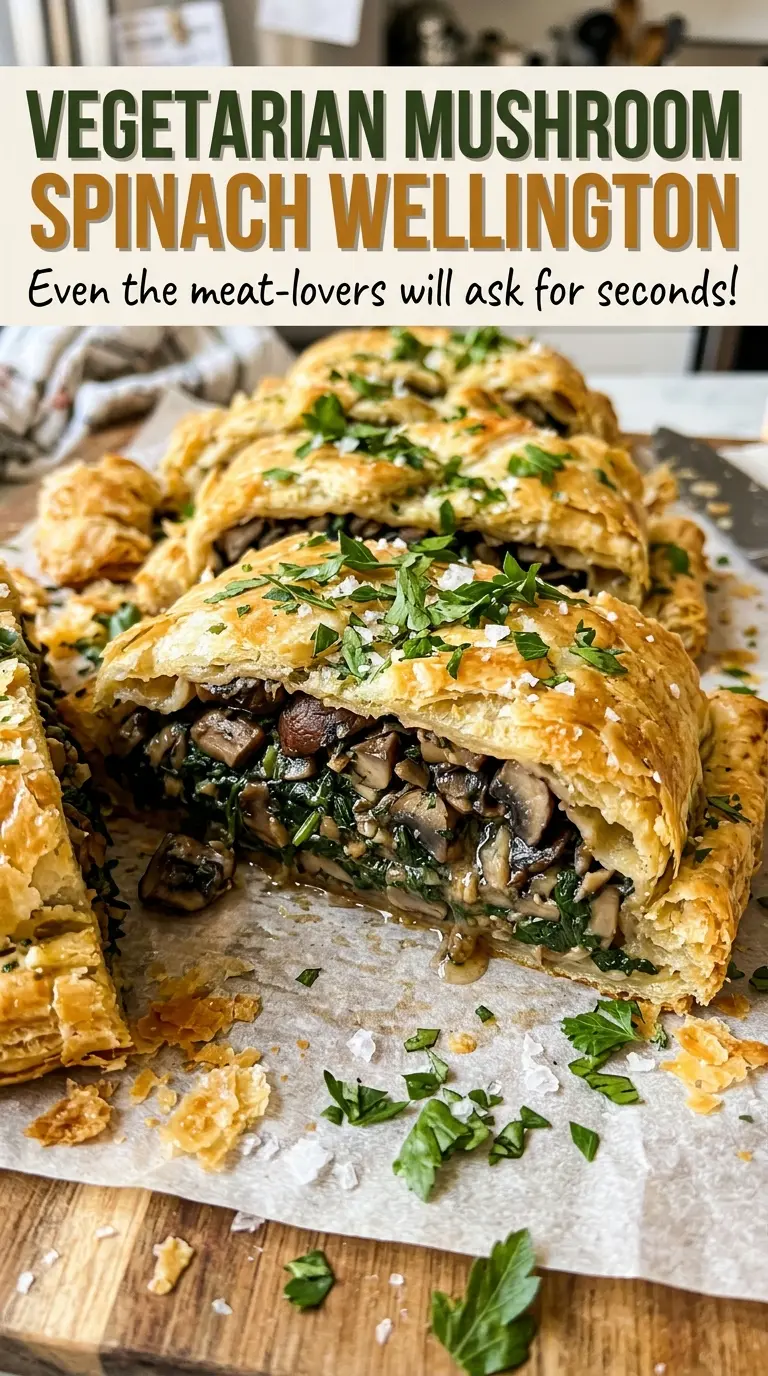
- Cremini mushrooms — Their earthy flavor makes the filling hearty, and finely chopping them helps it pack neatly into the pastry. Choose firm mushrooms without damp or wrinkled spots; white button mushrooms work in their place but taste milder.
- Baby spinach, onion, and garlic — These soften into the mushroom mixture rather than competing with it. Add spinach by handfuls so it wilts evenly, and chop the onion finely so larger pieces don’t interrupt clean slices.
- Fresh thyme and Dijon mustard — Thyme gives the filling a woodsy aroma, while Dijon adds a sharp, savory note. Fresh thyme has the clearest flavor here; if you only have dried thyme, use a smaller amount because it’s more concentrated.
- Panko and walnuts — Panko takes up some of the remaining moisture, and walnuts bring a tender crunch that keeps the filling from feeling uniform. Standard grocery-store panko and walnuts work well; finely chopping the walnuts helps them distribute through every slice.
- Puff pastry — Frozen puff pastry is practical and bakes into distinct flaky layers. Thaw it in the refrigerator as it softens more evenly than pastry left out to warm, and handle it while it’s still cool and easy to lift.
- Egg wash and flour — The beaten egg and water help the pastry edges seal and give the tops their golden finish. Use only a light dusting of flour on the work surface; excess flour can leave a dry layer between the pastry folds.
- Butter and olive oil — Butter softens the onion and adds richness, while olive oil is used to cook the mushrooms in batches. Regular grocery-store butter and olive oil are fine; there’s no need for a specialty variety.
Build the Filling Dry Before It Ever Meets the Pastry
Soften the Aromatics, Then Brown the Mushrooms
Melt the butter in a 12-inch skillet over medium heat, then cook the finely chopped onion for 4–5 minutes until softened. Add the garlic for 30 seconds and transfer the mixture to a medium bowl so it doesn’t scorch while the mushrooms cook. Add 1 tablespoon of olive oil and half the mushrooms; cook for 8–10 minutes, stirring occasionally, until the liquid has evaporated and the mushrooms are browned. Transfer them to the bowl, then cook the remaining mushrooms in the remaining olive oil the same way before returning the first batch and onion mixture to the skillet.
Wilt the Spinach and Finish the Filling
Add the spinach by handfuls, along with the thyme, salt, and pepper. Stir for 4–6 minutes, letting each handful wilt before adding more; the pan should be dry when you’re finished. Take the skillet off the heat and stir in the Dijon, panko, and walnuts. Spread the mixture in a shallow layer in a 9×13-inch baking dish and refrigerate for 30–45 minutes, until completely cool.
Shape and Seal Two Neat Logs
Heat the oven to 400°F and line a 13×18-inch rimmed baking sheet with parchment paper. Dust the work surface with flour and roll each pastry sheet into a 10×12-inch rectangle, then beat the egg with the water. Divide the cooled filling between the sheets, shaping each portion into a 10-inch-long, 2 1/2-inch-wide strip down the center and leaving about 1 inch clear at each end. Brush the pastry edges with egg wash, fold the long sides over the filling so they overlap, press the seam closed, then fold and pinch the ends; set both logs seam-side down on the baking sheet.
Bake Until the Pastry Is Deeply Golden
Brush the tops with the remaining egg wash and cut 3 small vents in each log. Bake for 30–35 minutes, until the pastry looks deeply golden and feels crisp rather than pale and soft. If the tops are coloring but the pastry still looks underbaked, give it the full baking time and use the crisp, golden finish as your cue. Let the logs rest for 10 minutes before slicing so the filling has time to settle.
Simple Swaps That Keep the Wellington’s Structure
Make It Gluten-Free
Use gluten-free puff pastry, gluten-free panko, and rice flour for dusting the work surface. The filling method stays the same, though gluten-free pastry can handle and brown differently, so follow the pastry package’s guidance if it differs from the timing here.
Trade Walnuts for Pecans
Use the same quantity of finely chopped pecans in place of the walnuts. They keep the filling’s gentle crunch but bring a sweeter, buttery note, so the mushroom and thyme flavor comes through a little differently.
Storage and Reheating
- Refrigerator: Store baked, cooled slices in an airtight container for 3–4 days; the pastry will soften as it sits.
- Freezer: Freeze cooled slices individually wrapped for up to 2 months for best quality. Thaw them in the refrigerator before reheating.
- Reheating: Warm on a baking sheet in the oven until the center reaches 165°F and the pastry is crisp again. The microwave heats the filling, but leaves the pastry soft.
Questions That Come Up Before the Wellington Goes in the Oven
Mushroom Spinach Wellington Vegetarian Holiday Main
Ingredients
Equipment
Method
- Melt the butter in a 12-inch skillet over medium heat.
- Add the onion and cook for 4–5 minutes until softened.
- Add the garlic and cook for 30 seconds.
- Transfer the onion mixture to a medium bowl.
- Add 1 tablespoon olive oil and half the mushrooms to the skillet.
- Cook for 8–10 minutes, stirring occasionally, until the liquid has evaporated and the mushrooms are browned.
- Transfer the mushrooms to the bowl.
- Add the remaining olive oil and mushrooms to the skillet.
- Cook for 8–10 minutes until browned and the liquid has evaporated.
- Return the first batch of mushrooms and the onion mixture to the skillet.
- Add the spinach by handfuls, along with the thyme, salt, and pepper.
- Cook for 4–6 minutes, stirring, until the spinach has wilted and the pan is dry.
- Remove the skillet from the heat and stir in the Dijon, panko, and walnuts.
- Spread the filling in a shallow layer in a 9x13-inch baking dish and refrigerate for 30–45 minutes, until completely cool.
- Heat the oven to 400°F.
- Line a 13x18-inch rimmed baking sheet with parchment paper.
- Dust the work surface with the flour.
- Roll each pastry sheet into a 10x12-inch rectangle.
- Beat the egg with the water in a small bowl.
- Divide the cooled filling between the pastry sheets.
- Shape each portion into a 10-inch-long, 2 1/2-inch-wide strip down the center, leaving about 1 inch at each end.
- Brush the pastry edges with egg wash.
- Fold the long sides over the filling.
- Overlap and press the seam closed.
- Fold and pinch the ends.
- Place both logs seam-side down on the prepared baking sheet.
- Brush the tops with the remaining egg wash.
- Cut 3 small vents in each log.
- Bake for 30–35 minutes until the pastry is deeply golden and crisp.
- Rest for 10 minutes before slicing and serving.
