

Hearty Hungarian Goulash Stew with Potatoes and Caraway
The beef gives off a deep, savory smell as it browns, and those dark bits on the bottom of the pot are exactly what I want to see. I make…
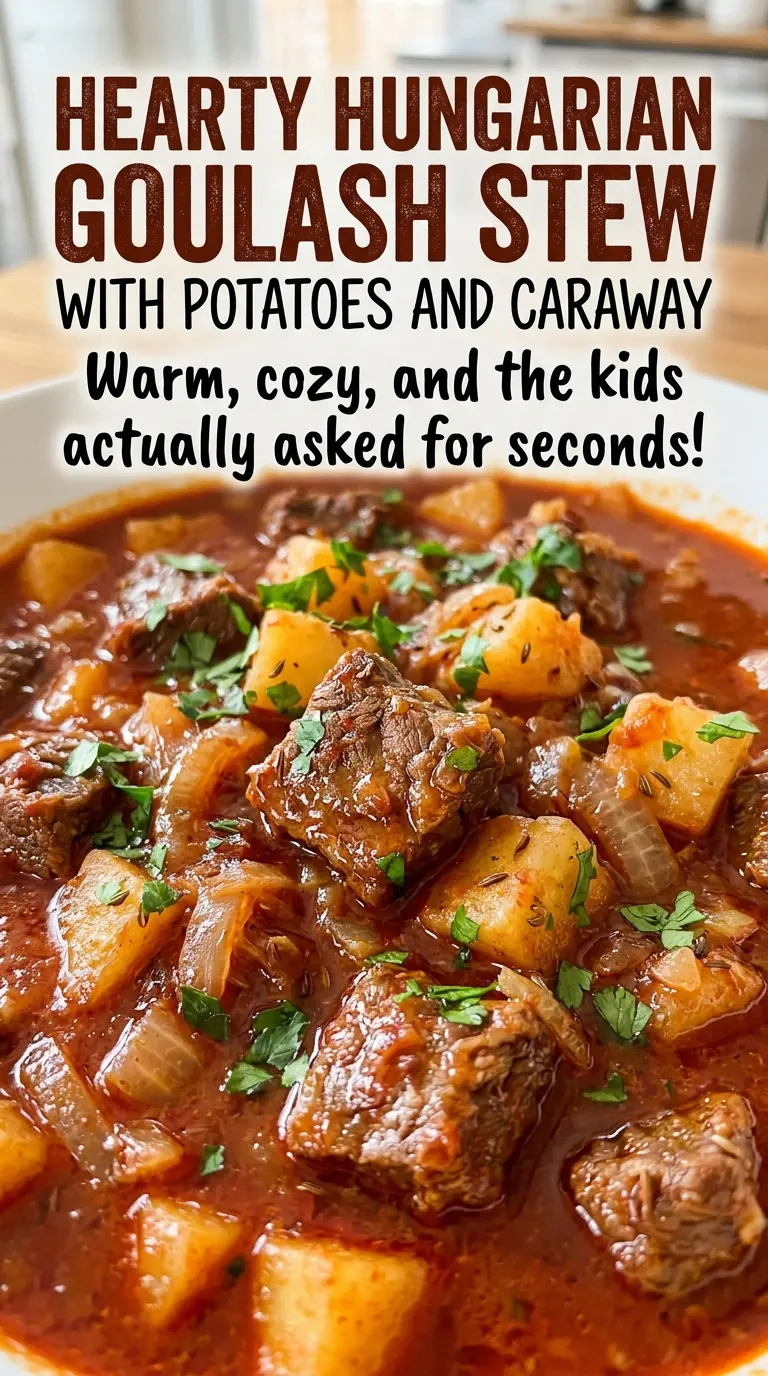
Tip: save now, cook later.The beef gives off a deep, savory smell as it browns, and those dark bits on the bottom of the pot are exactly what I want to see. I make this hearty Hungarian goulash stew with potatoes and caraway when I want a one-pot dinner that turns a tough cut of beef tender without much fuss. The slow simmer does the work, while the vegetables go in near the end so they keep their shape.
One small change in timing makes a big difference: I take the pot off the heat before stirring in the Hungarian sweet paprika and caraway. Paprika can turn bitter if it scorches against a hot pot, so the onions and their warmth are enough to bring out its color and aroma. The finished broth is savory and paprika-rich, with fork-tender beef, soft carrots, and potatoes ready to catch every spoonful.

Kitchen Note
Brown the beef in batches instead of crowding the Dutch oven. When the pieces have room, they develop browned surfaces; crowded beef releases moisture and steams before it can brown.
Save this Hungarian goulash stew for a cozy dinner: tender beef, potatoes, and caraway in a paprika-rich broth.
Why the Paprika Goes In After the Pot Leaves the Heat
Paprika gives this stew its deep red color and rounded pepper flavor, but it needs gentler handling than the beef or onions. Dry spice can scorch quickly on the bottom of a hot pot, and burned paprika tastes harsh rather than sweet. Taking the Dutch oven off the burner before adding it gives the spice a chance to warm in the onions without sitting over direct heat.
The order matters, too. Stir the paprika and lightly crushed caraway into the softened onions first, then add the garlic. Garlic cooks quickly, so adding it after the spices helps keep it fragrant instead of letting it darken while you work the paprika through the pot. When the broth goes in, it loosens the browned bits and carries the spices through the stew. You should see the liquid turn a warm red as it comes to a boil.
This is a different approach from frying spices over high heat, and it’s especially useful when paprika is the main seasoning. You don’t need a complicated spice blend here. A careful moment off the burner keeps the paprika’s mellow, earthy character at the center of the pot.
The Beef, Paprika, and Potatoes That Shape the Stew
- Beef chuck — Its connective tissue softens during the long, gentle simmer, giving the stew tender pieces and a fuller broth. Choose evenly cut chunks so they cook at roughly the same pace. Boneless beef short ribs work as a substitute, though they make the stew richer.
- Hungarian sweet paprika — This is the main source of the stew’s peppery warmth and red color, so a fresh, fragrant jar is worth using. Smoked paprika will work in a pinch, but it shifts the dish toward a smoky flavor rather than the mellow sweetness of Hungarian sweet paprika.
- Caraway seeds — Lightly crushing the seeds releases their earthy, slightly anise-like aroma without turning it into the dominant flavor. Whole seeds are preferable to a jar of pre-ground caraway, which can taste stronger and less fresh.
- Yukon Gold potatoes — Their creamy centers soften nicely while the pieces hold together through the shorter vegetable simmer. Red potatoes are a useful stand-in if needed; they stay a little firmer and less buttery.
- Yellow onions and garlic — The onions soften into the broth and give the paprika something aromatic to cling to. Fresh garlic has a cleaner, brighter taste than jarred minced garlic, but either will season the stew.
- Low-sodium beef broth — It brings beefy depth while leaving room to control the salt. Homemade low-sodium beef stock is a good swap; a strongly salted broth can leave less room to adjust the seasoning.
Build the Broth Before the Vegetables Go In
Brown the Beef in Uncrowded Batches
Pat the beef dry, season it all over with kosher salt and black pepper, and heat the vegetable oil in a 6-quart Dutch oven over medium-high heat. Brown the beef in batches for 5 to 7 minutes per batch, turning to color several sides, then transfer each batch to a plate. Listen for a steady sizzle when the meat hits the pot. If the pieces are packed tightly or the pot goes quiet, give the beef more room before continuing.
Soften the Onions and Warm the Spices
Reduce the heat to medium and add the chopped onions to the same pot. Cook for 5 to 7 minutes, stirring and scraping up the browned bits until the onions are softened. Take the pot off the heat, stir in the paprika and caraway, and then add the minced garlic. The spices should coat the onions evenly; avoid leaving paprika sitting in a dry patch on the bottom.
Simmer Until the Chuck Turns Fork-Tender
Return the beef and any juices on the plate to the pot, then pour in the beef broth. Bring everything to a boil over medium-high heat, cover, and reduce the heat to low. Simmer for 1 1/2 to 2 hours, stirring occasionally, until a fork slips easily into the beef. If the meat still feels firm, give it more time at a gentle simmer rather than turning up the heat.
Add the Vegetables for the Short Finish
Stir in the chopped green bell pepper, sliced carrots, and cubed potatoes once the beef is tender. Cover the pot again and simmer for 20 to 25 minutes, until the carrots and potatoes are tender when pierced. Keep the simmer gentle so the vegetables soften without breaking apart. Take the pot off the heat and let the stew rest for 10 minutes before serving.
Simple Changes for a Different Pot of Goulash
Turn up the paprika heat
For a warmer, sharper stew, replace 1 tablespoon of the sweet paprika with Hungarian hot paprika and keep the rest sweet. The broth will have a more noticeable kick, so use hot paprika rather than cayenne if you want to keep the original paprika character.
Make it lower-carb with cauliflower
Replace the potatoes with a medium head of cauliflower cut into bite-size florets. Add the cauliflower along with the bell pepper and carrots, then begin checking it after 12 minutes; it should be tender but not collapsing. The broth will be lighter and less creamy than the potato version.
Make a gluten-free version
Use certified gluten-free low-sodium beef broth in place of the regular broth. The beef, vegetables, paprika, and caraway need no other changes, and the stew keeps its hearty texture.
Storage and Reheating
- Refrigerator: Store covered for 3 to 4 days. The potatoes will soften a little as they sit in the broth.
- Freezer: Freeze in airtight containers for up to 3 months. The beef freezes well, though thawed potatoes may be softer or slightly grainy.
- Reheating: Warm gently on the stovetop over medium-low heat, stirring now and then, until the stew reaches 165°F. If it has thickened in the refrigerator, stir in a splash of beef broth; avoid a hard boil, which can break up the potatoes.
Questions That Come Up While Making This Goulash
Hearty Hungarian Goulash Stew with Potatoes and Caraway
Ingredients
Equipment
Method
- Pat the beef dry.
- Season the beef all over with the salt and pepper.
- Heat the oil in a 6-quart Dutch oven over medium-high heat.
- Brown the beef in batches for 5 to 7 minutes per batch, turning to brown several sides, and transfer it to a plate.
- Reduce the heat to medium and cook the onions in the Dutch oven for 5 to 7 minutes, stirring and scraping up browned bits, until softened.
- Remove the pot from the heat and stir in the paprika and caraway, then the garlic.
- Return the beef and any juices to the pot, add the broth, and bring to a boil over medium-high heat.
- Cover, reduce the heat to low, and simmer for 1 1/2 to 2 hours, stirring occasionally, until the beef is fork-tender.
- Stir in the bell pepper, carrots, and potatoes.
- Cover and simmer for 20 to 25 minutes, until the potatoes and carrots are tender.
- Remove the pot from the heat and let the stew rest for 10 minutes before serving.
