
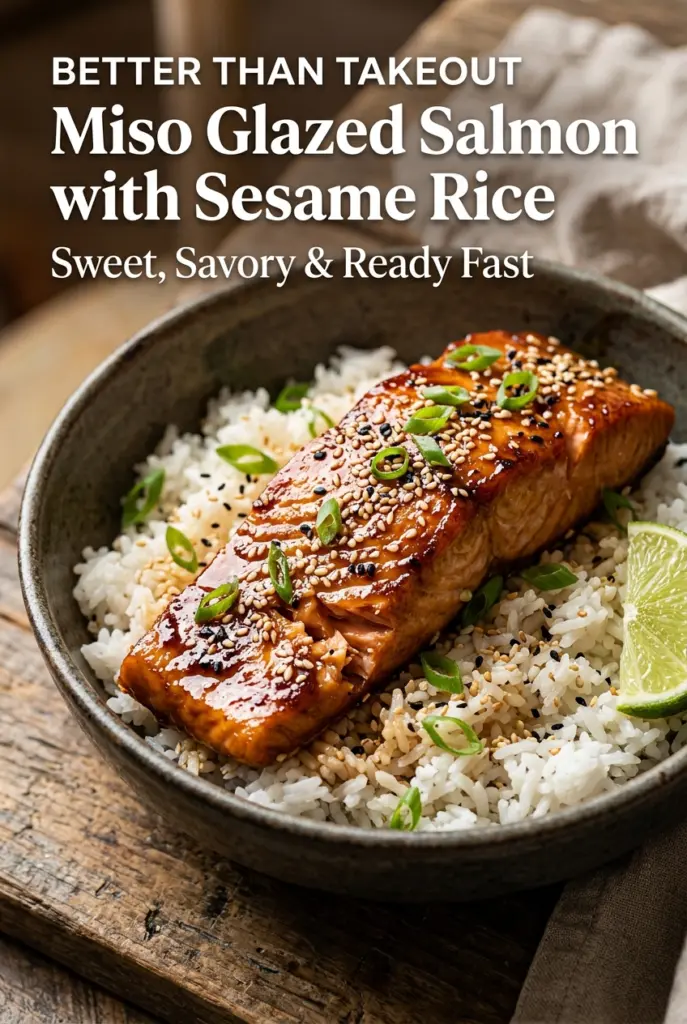
Miso Glazed Salmon with Sesame Rice
Tender, flaky salmon with a glossy miso glaze earns its place in the weeknight rotation fast. The glaze turns deeply savory and a little sweet in the oven, while the…
Tip: save now, cook later.Tender, flaky salmon with a glossy miso glaze earns its place in the weeknight rotation fast. The glaze turns deeply savory and a little sweet in the oven, while the sesame rice underneath catches every bit of sauce and adds its own nutty warmth. It tastes like a dinner you’d order out, but the whole thing comes together in about 35 minutes without much more than one skillet and a bowl for mixing the glaze.
What makes this version work is the balance in the glaze and the way the salmon is handled before it goes into the oven. White miso brings salt and body, honey gives the surface that lacquered finish, and mirin softens the edges so the sauce tastes rounded instead of sharp. Patting the fish dry first matters more than people think; if the surface is wet, the glaze slides off and the salmon steams instead of searing. A short marinate gives the flavor time to settle onto the fish without curing it.
Below, I’ve laid out the one part that keeps the salmon from drying out, what the sesame rice is actually doing, and a few smart swaps if you need to work with what you’ve got in the kitchen.
The glaze got sticky and caramelized in the oven, and the sesame rice picked up all the extra sauce from the plate. I usually overcook salmon, but the 8 minutes in the oven was perfect and it flaked cleanly.
Love the glossy miso salmon and sesame rice? Save it to Pinterest for the nights when you want a fast dinner that still feels polished.
The Reason the Salmon Gets Sticky Instead of Scorched
The line between caramelized and burned is thin with miso glazes, especially when honey is involved. This recipe keeps the glaze in the sweet spot by giving the salmon a short sear first, then finishing it in a hot oven before the sugars on the surface have time to blacken. That two-stage cook is what gives you a glossy coat instead of bitter edges.
The other thing that matters is the oven-safe skillet. Once the fish is seared, the pan already holds the browned bits from the glaze and salmon, and those flavors stay in the dish instead of being left behind on a sheet pan. If the glaze starts to look too dark before the salmon flakes, the oven was probably running hot or the skillet sat on the burner too long before going in.
What Each Ingredient Is Actually Doing in This Dish

- White miso paste — This is the backbone of the glaze. It gives salt, depth, and that savory finish you can’t fake with soy sauce alone. Yellow miso works in a pinch, but the flavor will be a little stronger and less delicate.
- Mirin — Mirin softens the miso and helps the glaze caramelize without tasting harsh. If you skip it, the sauce leans saltier and less rounded. A small splash of rice vinegar plus a touch more honey can stand in, but it won’t taste quite the same.
- Salmon fillets — Thicker fillets are easier to manage because they stay moist during the sear-and-bake finish. Skin-on or skinless both work, but skin-on gives you a little more protection from overcooking if your fillets vary in thickness.
- Toasted sesame oil — Use the toasted kind here, not plain sesame oil. It’s what gives the rice that deep nutty finish. A little goes a long way, so measure it.
- Jasmine rice — Warm, freshly cooked rice absorbs the butter and sesame oil best. Day-old rice will work, but you’ll want to fluff it with a splash of water before stirring in the seasonings so it doesn’t clump.
Getting the Glaze, Sear, and Bake to Work Together
Build the glaze first
Whisk the miso, soy sauce, honey, mirin, sesame oil, garlic, and ginger until the mixture turns smooth and glossy. If the miso stays streaky, it won’t spread evenly over the salmon and you’ll get salty pockets instead of a balanced glaze. This is the point where the sauce should look thick enough to cling but still loose enough to brush.
Give the salmon a dry surface
Pat the fillets dry with paper towels before brushing on the glaze. Moisture on the surface stops browning and pushes the glaze off the fish, which is how you end up with a pale fillet sitting in a pool of sauce. Fifteen minutes of marinating is enough here; much longer and the salt in the miso starts to change the texture of the fish.
Sear just enough to set the coating
Heat the olive oil until it shimmers, then lay the salmon in the pan and let it sit for the full two minutes. If it sticks at first, it usually needs another few seconds to release on its own. Don’t crowd the skillet; the heat drops and the glaze loosens instead of setting.
Finish in the oven until the center flakes
Brush on a second layer of glaze, then transfer the skillet to the oven. The salmon is done when it flakes easily at the thickest part and the center still looks moist, not dry and chalky. If the top darkens too fast, pull the skillet out early and let the residual heat finish the fish on the counter for a minute or two.
Fluff the rice while the fish finishes
Stir the butter, toasted sesame oil, sesame seeds, green onions, and salt into warm rice so the seasonings melt in instead of sitting on top. The rice should look glossy and separate, not greasy. If it feels dry, add a teaspoon of water or a tiny bit more butter and fluff again.
How to Adapt This for Different Kitchens and Diets
Make it gluten-free without losing the glaze
Use tamari in place of soy sauce. The glaze will still be salty, savory, and glossy, but the flavor reads a little cleaner. Check your miso label too, since some brands include barley.
Swap the rice for cauliflower rice
Cauliflower rice works if you want a lower-carb plate, but cook it dry in a skillet first so it doesn’t turn watery. Add the sesame oil at the end, not the beginning, so the flavor stays bright instead of disappearing into steam.
Use another fish when salmon isn’t available
Thick pieces of cod or trout can take this glaze well, but they cook faster and break more easily. Start checking a few minutes earlier than you would with salmon, and skip the hard sear if the fillets are thin.
Dairy-free by default, with one small check
The main recipe is already dairy-free if you use olive oil in the pan. Just swap the butter in the rice for a little more toasted sesame oil or a neutral oil, and you’ll still get a rich finish without changing the structure of the dish.
Storage and Reheating
- Refrigerator: Store leftovers in an airtight container for up to 3 days. The glaze will tighten a bit as it chills, and the rice may firm up.
- Freezer: The salmon can be frozen, but the texture softens after thawing. Freeze portions tightly wrapped for up to 1 month if you need to, though the rice is better made fresh.
- Reheating: Warm the salmon gently in a covered skillet over low heat or in a 300°F oven until just heated through. High heat dries the fish out and can turn the glaze sticky in the wrong way. Add a teaspoon of water to the rice before reheating so it loosens instead of turning crumbly.
Answers to the Questions Worth Asking
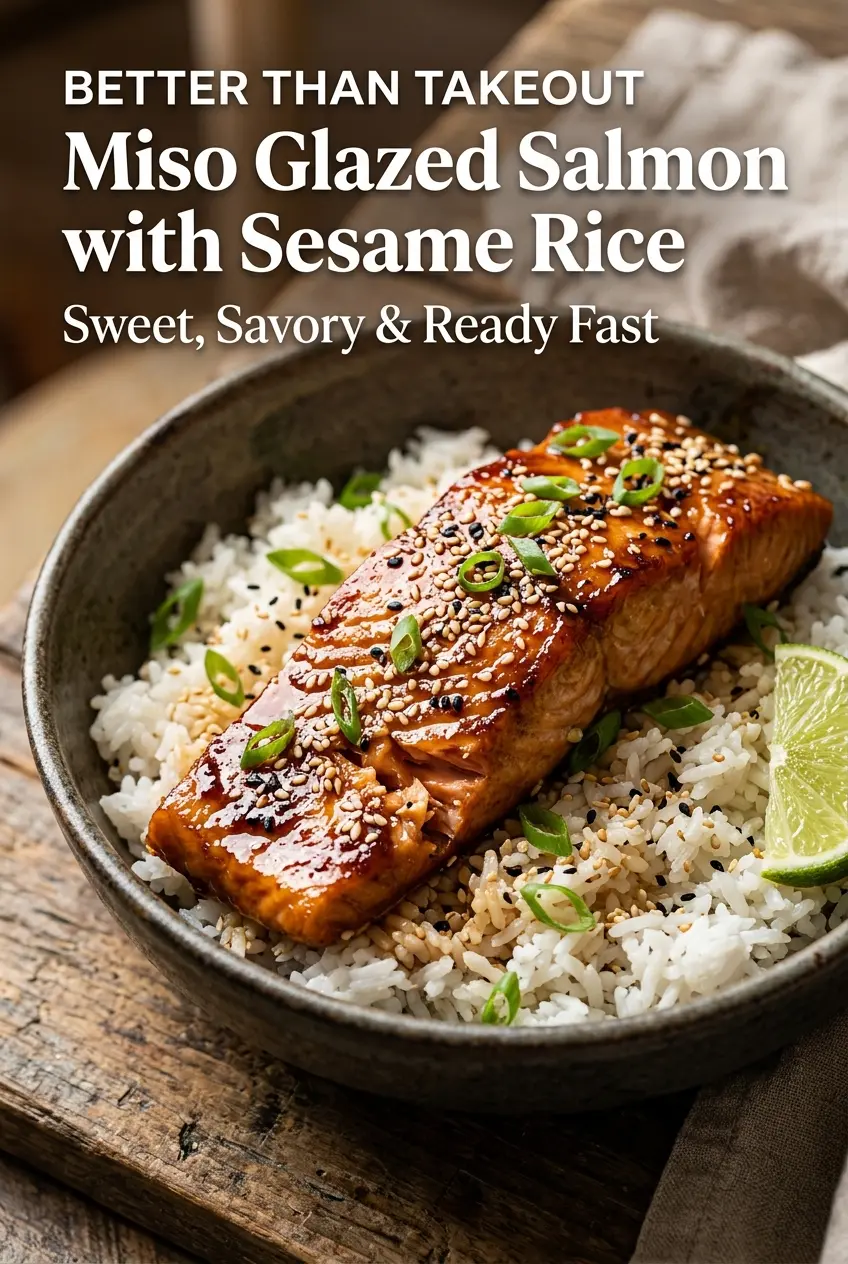
Miso Glazed Salmon with Sesame Rice
Ingredients
Equipment
Method
- In a bowl, whisk together white miso paste, low-sodium soy sauce, honey, mirin, sesame oil, garlic, and fresh ginger until smooth. The glaze should look glossy and evenly combined.
- Pat the salmon fillets dry and brush generously with the miso glaze, coating the tops thickly. Leave any extra glaze in the bowl for later brushing.
- Let the salmon marinate for 15 minutes so the glaze clings and flavors the surface. Place it in the refrigerator while it rests.
- Heat olive oil in a large oven-safe cast iron skillet over medium-high heat until shimmering. You should see a thin, fluid sheen across the pan.
- Sear the salmon for 2 minutes without moving it, until the surface looks lightly browned. The edges should begin to turn opaque.
- Brush the salmon with more miso glaze to build a sticky coating. The glaze should spread in an even layer over the seared tops.
- Transfer the skillet to a 400°F (200°C) oven and bake for 8–10 minutes until the salmon flakes easily with a fork. The center should turn opaque while staying moist.
- In a bowl, stir the warm cooked jasmine rice with butter, toasted sesame oil, toasted sesame seeds, green onions, and salt. Mix until the butter melts and the rice looks glossy with specks of sesame.
- Divide the sesame rice among serving plates, spreading it into even mounds. Leave space on top for the salmon.
- Place the baked miso-glazed salmon on top of the sesame rice. The glaze should look slightly tacky and cling to the fish.
- Garnish with sesame seeds, green onions, cilantro (optional), and lime wedges. Finish right before eating so the lime stays bright.
- Serve immediately while the salmon is hot and flaky and the rice is steaming. Spoon any pan glaze over the fish if you have it.
