
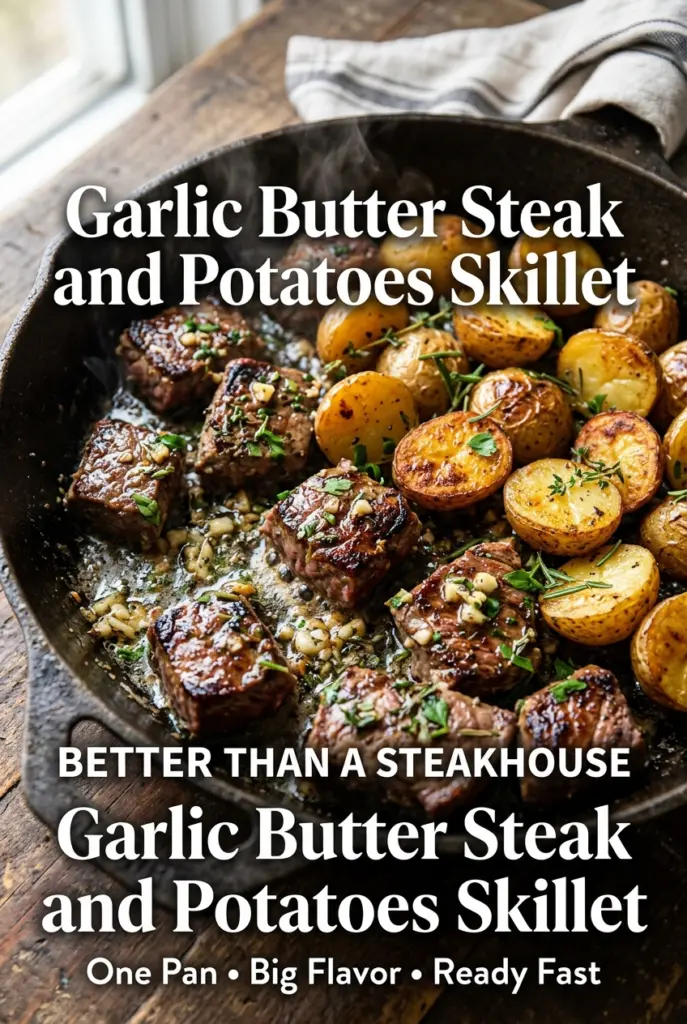
Garlic Butter Steak and Potatoes Skillet
Juicy steak bites, crisp-edged potatoes, and a garlicky butter pan sauce are what make this skillet dinner worth keeping on repeat. The steak stays tender because it gets a fast,…
Tip: save now, cook later.Juicy steak bites, crisp-edged potatoes, and a garlicky butter pan sauce are what make this skillet dinner worth keeping on repeat. The steak stays tender because it gets a fast, hard sear instead of spending too long in the pan, and the potatoes earn their place by turning deeply golden before anything else joins them. That contrast — crusty potatoes, browned beef, glossy butter — is what makes the whole dish taste finished.
The trick is treating the potatoes and steak like two different jobs, not one rushed pan toss. Potatoes need steady time in the skillet so their cut sides can brown and their centers go fluffy. Steak wants high heat, space, and a short cook so the outside browns before the inside overcooks. The garlic goes in after the heat comes down, which keeps it fragrant instead of bitter, and the Worcestershire plus lemon juice give the butter sauce just enough depth and lift to coat everything without tasting heavy.
Below you’ll find the exact timing that keeps the steak tender, the potato edges crisp, and the butter sauce balanced. There’s also a simple way to adapt it if you need a dairy-free version or want to change up the herbs without losing the steakhouse feel.
The potatoes got those crispy browned edges and the steak stayed tender, which never happens when I try one-pan dinners. The garlic butter coated everything without turning greasy, and my husband went back for seconds before I even sat down.
Save this Garlic Butter Steak and Potatoes Skillet for the nights when you want a one-pan dinner with crisp potatoes and a rich garlic herb butter finish.
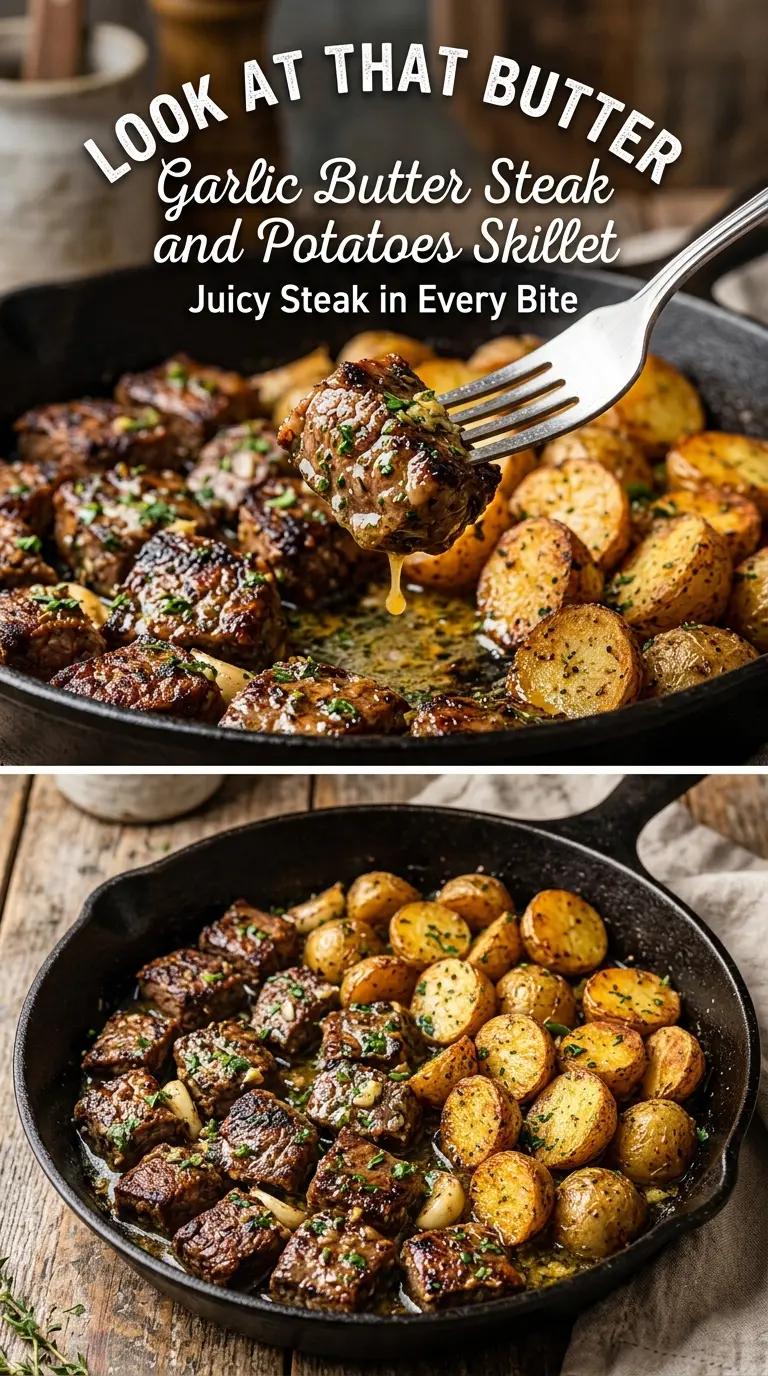
The Reason the Steak Stays Tender While the Potatoes Get Crisp
The biggest mistake in a skillet dinner like this is crowding everything into the pan at once. Potatoes need direct contact with the hot surface long enough to brown, and steak needs room so it sears instead of steaming. If you dump both in together, the potatoes go soft before they color and the steak loses the crust that gives the dish its best flavor.
This version separates the two jobs on purpose. The potatoes cook first and come off the heat when they’re golden and fork-tender, which leaves the skillet ready for steak. Then the butter sauce goes in after the heat drops a notch, so the garlic blooms in the fat without scorching. That sequence is what gives you a skillet that tastes intentional instead of hurried.
- Sirloin steak — This cut gives you tender bites with enough beefy flavor to stand up to the butter and herbs. Cut it into even cubes so it cooks at the same pace; uneven pieces mean some will overcook before the rest are browned.
- Baby Yukon Gold potatoes — These stay creamy inside while the cut sides crisp up beautifully. Russets can work, but they’re drier and more prone to breaking apart once you toss them in the sauce.
- Butter — Unsalted butter lets you control the seasoning at the end. Salted butter works in a pinch, but the sauce can tip salty fast once Worcestershire and seasoned steak are added.
- Worcestershire sauce — This is the quiet ingredient that makes the pan sauce taste deeper and more savory. If you don’t have it, a small splash of soy sauce plus a little extra lemon juice gets close, though it won’t taste exactly the same.
Getting the Skillet Timing Right, From Potatoes to Pan Sauce
Brown the Potatoes First
Toss the halved potatoes with oil and seasonings before they hit the pan, then cook them cut-side down and stir only every so often. If you move them constantly, they never get the dry contact needed for browning. You’re looking for deep gold edges and a fork that slides in with just a little resistance, not potatoes that have gone mushy from overcooking.
Sear the Steak in One Layer
Pat the steak dry before seasoning it, then add it to the hot skillet with space between the pieces. The surface should sizzle immediately; if the pan is crowded, the meat will gray before it browns. Two to three minutes per side is enough for a good crust on 1-inch cubes, and pulling them from the pan at that point keeps the center juicy.
Build the Garlic Butter Off the Heat
Drop the heat to medium before the butter and garlic go in, because garlic burns fast once the pan is empty and hot. Stir just until the garlic smells fragrant and the herbs open up in the butter. When the potatoes and steak go back in, toss only long enough to coat everything; overmixing can knock the crust off the steak and make the potatoes lose their edges.
Dairy-Free Garlic Steak Skillet
Use a good olive oil or a dairy-free butter substitute in place of the butter. You’ll lose a little of the classic steakhouse richness, but the garlic, herbs, and browned beef still carry the dish nicely.
Swap in a Different Cut of Beef
Ribeye gives you more marbling and a softer bite, while strip steak gives you a firmer, steakhouse-style chew. Avoid stew meat; it needs slow cooking, not a quick sear, or it turns tough.
Make It a Little Lighter
Trim the butter back to 2 tablespoons and add a splash of extra lemon juice at the end. The sauce won’t be as plush, but the herbs and garlic still cling to the steak and potatoes without feeling heavy.
Storage and Reheating
- Refrigerator: Store leftovers in an airtight container for up to 3 days. The potatoes soften a bit, but the flavor holds well.
- Freezer: This freezes, but the potatoes turn softer after thawing, so I don’t recommend it if you want the same texture. If you do freeze it, cool it completely first and reheat from thawed for the best result.
- Reheating: Warm it in a skillet over medium-low heat with a splash of water or broth. The mistake is blasting it in the microwave, which tightens the steak and makes the potatoes leathery before the center is hot.
Questions I Get Asked About This Recipe
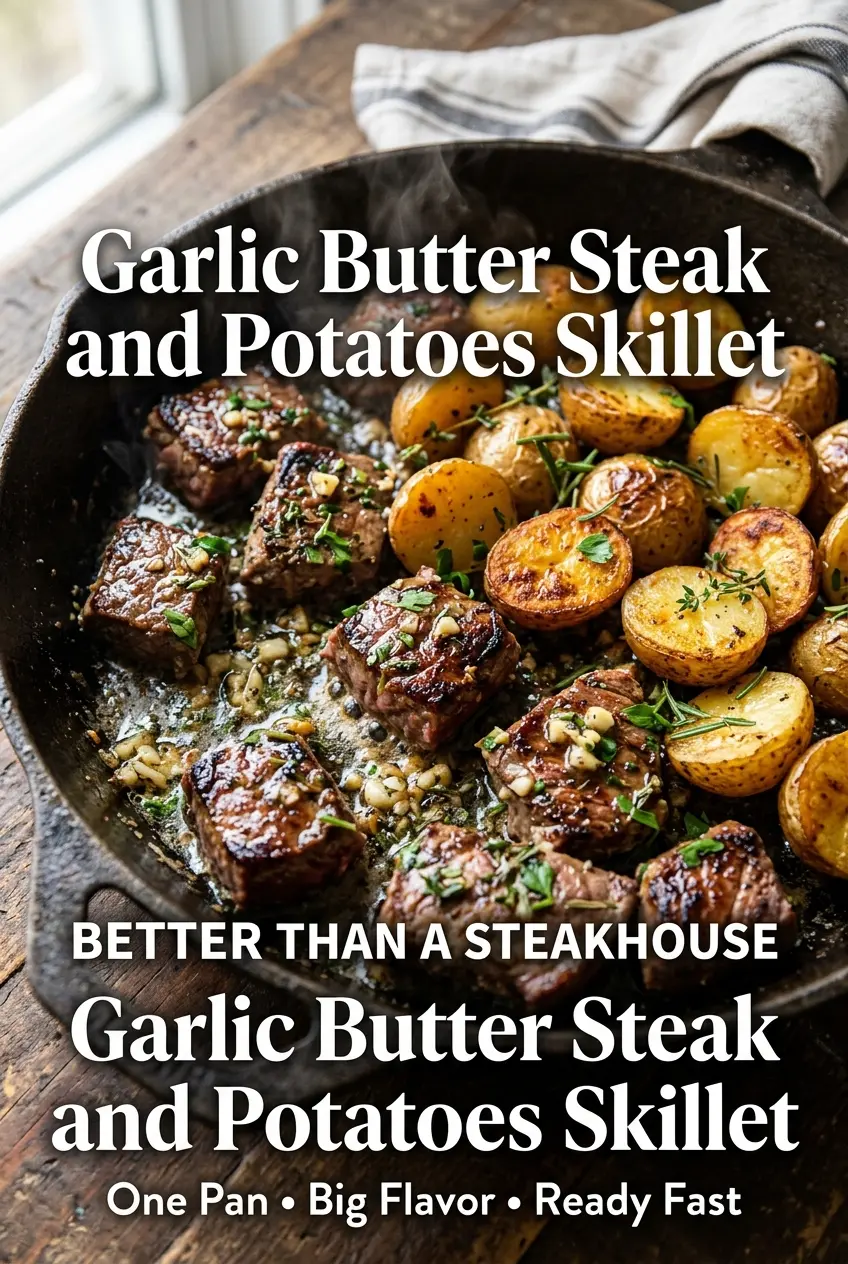
Garlic Butter Steak and Potatoes Skillet
Ingredients
Equipment
Method
- Toss the baby Yukon Gold potatoes with olive oil, Italian seasoning, paprika, salt, and black pepper until evenly coated and lightly seasoned.
- Heat a large cast iron skillet over medium-high heat until hot.
- Cook the potatoes for 15–18 minutes, stirring occasionally, until golden and fork-tender.
- Transfer the potatoes to a plate.
- Season the sirloin steak cubes with kosher salt, black pepper, smoked paprika, and garlic powder.
- Add olive oil to the skillet.
- Sear the steak in a single layer for 2–3 minutes per side until nicely browned.
- Lower the heat to medium.
- Add the unsalted butter, garlic, fresh thyme leaves, and chopped rosemary, then stir until the butter melts and the garlic becomes fragrant (about 30–60 seconds).
- Return the golden potatoes to the skillet and add Worcestershire sauce and lemon juice (if using).
- Toss everything together until coated in the garlic butter, then sprinkle with chopped fresh parsley.
- Serve immediately.
