

Loaded Baked Potato Casserole
When the edges of a potato casserole start bubbling, I always hope the spoon will find more than one texture: creamy potatoes, a little bite from the cheddar, and crisp…
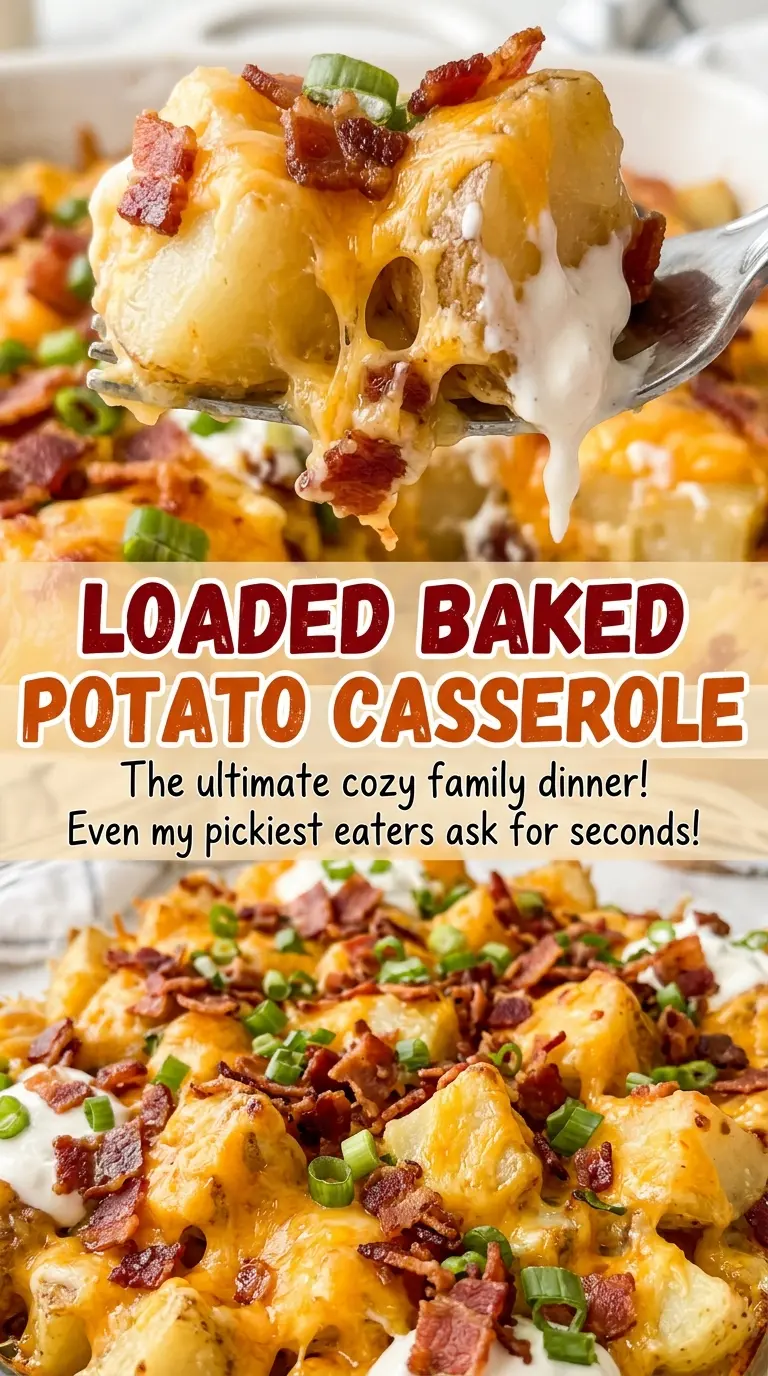
Tip: save now, cook later.When the edges of a potato casserole start bubbling, I always hope the spoon will find more than one texture: creamy potatoes, a little bite from the cheddar, and crisp bacon in the same scoop. That’s what makes this Loaded Baked Potato Casserole feel like a loaded baked potato turned into a dish you can bring to the table and serve by the spoonful.
I keep the potato pieces intact instead of mashing them smooth, and fold some of the cheddar and bacon through the middle so the topping isn’t doing all the work. Sour cream gives the potatoes a tangy coating, while green onions added at the end keep their fresh flavor. It’s hearty without losing the parts that make a loaded potato worth eating.

Kitchen Note
Give the casserole its full 10-minute rest before serving. The filling settles as it sits, so your first scoop is less likely to slide apart into a loose pile of potatoes and cheese.
Save this Loaded Baked Potato Casserole for a cozy dinner or potluck—creamy russet chunks, sharp cheddar, and bacon in every serving.
Why Baking the Russets Whole Keeps This Casserole From Going Waterlogged
Potatoes can make a casserole heavy in the wrong way when extra moisture gets trapped in the pieces. Baking the russets whole gives them time to turn tender without sitting in cooking water. Their centers become soft enough to cut, but the finished pieces still have a fluffy interior that can take on the sour cream, milk, and butter without feeling soggy.
That’s also why I cut the baked potatoes into chunks rather than mash them. A smooth mash and a loaded potato casserole aren’t quite the same thing: with chunks, you get distinct bites and the cheese has room to settle between them. Cut them too small or work them too hard in the bowl, though, and the pieces start to break down before they reach the baking dish.
Keep the knife cuts close to one inch and toss only until the coating reaches the potatoes. A few uneven edges are fine; they’ll soften during the second bake. The goal is a creamy casserole with recognizable potato pieces, not a stiff mound of mashed potatoes.
What Each Ingredient Brings to a Loaded Potato Casserole
- Russet potatoes — Their starchy centers turn fluffy when baked, which is a better match for this creamy casserole than a firm, waxy texture. Choose potatoes that feel firm and have no soft spots. Scrub them well; the skins stay on and give the pieces a little more texture.
- Bacon — Crisp bacon brings a salty, smoky contrast to the soft potatoes. Since some goes inside and some goes on top, cook it until crisp before crumbling; limp pieces won’t add the same contrast after baking.
- Unsalted butter — Melted butter helps coat the potato pieces and adds richness. Unsalted butter keeps the measured kosher salt in control, so stick with it if you want the seasoning to stay balanced.
- Sour cream and whole milk — Sour cream adds tang and body, while whole milk loosens it enough to coat the chunks. Whole milk is worth using here; a thinner milk won’t give the mixture quite the same richness.
- Sharp cheddar — Sharp cheddar has enough character to come through against the potatoes and sour cream. A block you shred yourself melts evenly, while pre-shredded sharp cheddar is a convenient option when you’re short on prep time.
- Green onions — Thin slices bring a fresh finish against the rich filling. Cut them just before serving so they stay bright, and scatter them over the casserole after its rest rather than baking them into the topping.
From Whole Baked Potatoes to a Bubbling Casserole
Bake the Potatoes Until a Knife Slides In Easily
Heat the oven to 400°F. Pierce the scrubbed potatoes several times with a fork, set them on a baking sheet, and bake for 55 to 70 minutes. The centers should be tender enough that a knife slides in easily; if it meets resistance, give the potatoes more time rather than trying to cut them while firm. This first bake is what gives the casserole its soft, fluffy pieces.
Cook and Crumble the Bacon
While the potatoes bake, cook the bacon in a 12-inch skillet over medium heat, turning it as needed, for 8 to 12 minutes. Look for crisp slices with rendered fat rather than pale, flexible bacon. Transfer the slices to paper towels to drain, then crumble them once they’re cool enough to handle. You’ll fold most of the crumbles into the potatoes and reserve the rest for the top.
Coat the Potato Chunks Gently
Let the baked potatoes cool until they’re easy to handle, about 10 to 15 minutes. Reduce the oven to 375°F and grease a 9×13-inch baking dish, then cut the potatoes into 1-inch chunks with their skins on. In a large bowl, gently toss them with the melted butter, sour cream, milk, kosher salt, and black pepper. Fold in 1 1/2 cups of cheddar and 6 slices’ worth of crumbled bacon; stop once the mixture is combined so the chunks don’t turn to mash.
Bake Until the Edges Bubble, Then Rest
Spread the potato mixture in the prepared dish and top it with the remaining 1/2 cup cheddar and 2 slices’ worth of crumbled bacon. Bake uncovered for 20 to 25 minutes, until it’s hot throughout and bubbling at the edges. If the middle still feels cool when you check it, give it additional time rather than relying on the browned cheese alone. Rest the casserole for 10 minutes, then scatter the thinly sliced green onions over the top before serving.
Three Ways to Change the Casserole Without Losing Its Loaded-Potato Feel
Make It Vegetarian by Leaving Out the Bacon
Omit the bacon and keep the rest of the casserole the same. The potatoes, sour cream, and cheddar still make a hearty dish, but you’ll lose the smoky, salty contrast and crisp bits that bacon brings.
Give the Top a Bigger Share of the Cheddar
Keep the total amount of cheddar the same, but reserve more of it for the surface and fold less into the potato mixture. You’ll get a more pronounced cheesy top and less cheddar distributed through the center.
Peel the Potatoes for a More Uniform Bite
For a casserole without potato skins, peel the russets after baking and before cutting them into chunks. The filling will feel softer and more uniform, though you’ll miss the extra texture that the skins give the original version.
Storage and Reheating
- Refrigerator: Store covered for 3 to 4 days. The potatoes will firm up as they chill, and the cheese topping won’t be as crisp after storage.
- Freezer: It freezes, though the potatoes may be a little grainier and the sour cream mixture less smooth after thawing. Cool completely, portion into airtight freezer-safe containers, and thaw in the refrigerator before reheating.
- Reheating: Reheat individual portions in the microwave in short bursts until steaming in the center. Long, uninterrupted heating can dry the edges before the middle warms through.
Questions That Come Up Before the Casserole Goes in the Oven
Loaded Baked Potato Casserole
Ingredients
Equipment
Method
- Heat the oven to 400°F.
- Pierce the potatoes several times with a fork and place them on a baking sheet.
- Bake for 55 to 70 minutes, until a knife slides easily into the centers.
- While the potatoes bake, cook the bacon in a 12-inch skillet over medium heat, turning as needed, until crisp, 8 to 12 minutes.
- Drain the bacon on paper towels and crumble it.
- Let the potatoes cool until easy to handle, about 10 to 15 minutes.
- Reduce the oven to 375°F and grease a 9x13-inch baking dish.
- Cut the potatoes into 1-inch chunks, leaving the skins on.
- Gently toss the potatoes with the melted butter, sour cream, milk, salt, and pepper.
- Fold in 1 1/2 cups of the cheddar and 6 slices' worth of the crumbled bacon.
- Spread the potato mixture in the prepared dish and top with the remaining 1/2 cup cheddar and 2 slices' worth of crumbled bacon.
- Bake uncovered for 20 to 25 minutes, until hot throughout and bubbling at the edges.
- Let the casserole rest for 10 minutes.
- Scatter the green onions over the top before serving.
