
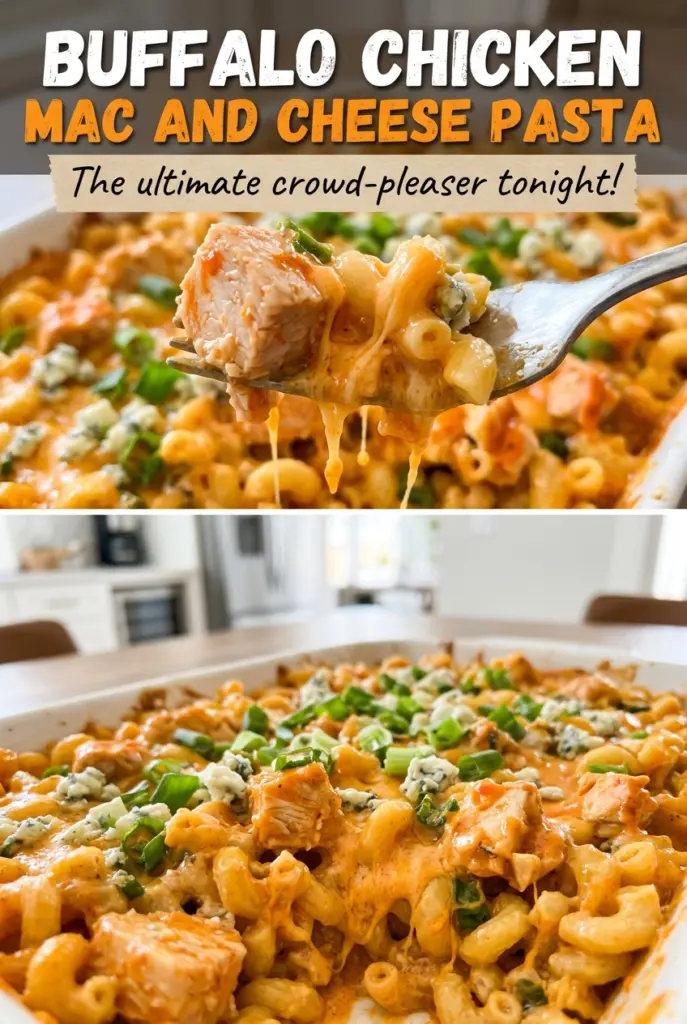
Buffalo Chicken Mac and Cheese Pasta
The chicken sizzles in the skillet while the macaroni drains, and the whole kitchen starts smelling like Buffalo wings. I like this version because the chicken and pasta both get…
Tip: save now, cook later.The chicken sizzles in the skillet while the macaroni drains, and the whole kitchen starts smelling like Buffalo wings. I like this version because the chicken and pasta both get coated in a creamy, tangy cheese sauce instead of relying on a drizzle at the end. You get a little heat in every forkful, with sharp cheddar bringing enough savory bite to keep the sauce from tasting like straight wing sauce.
I build the sauce in the pot I used for the pasta, starting with butter and flour before whisking in whole milk. That simple roux gives the cheese something substantial to cling to, so the sauce stays creamy around the elbows rather than pooling at the bottom of the bowl. Cream cheese smooths out the Buffalo sauce, while Monterey Jack melts gently alongside the cheddar.
The chicken cooks separately, then joins the macaroni at the end. Serve it hot, while the sauce is glossy and the noodles are still tender with a little bite.
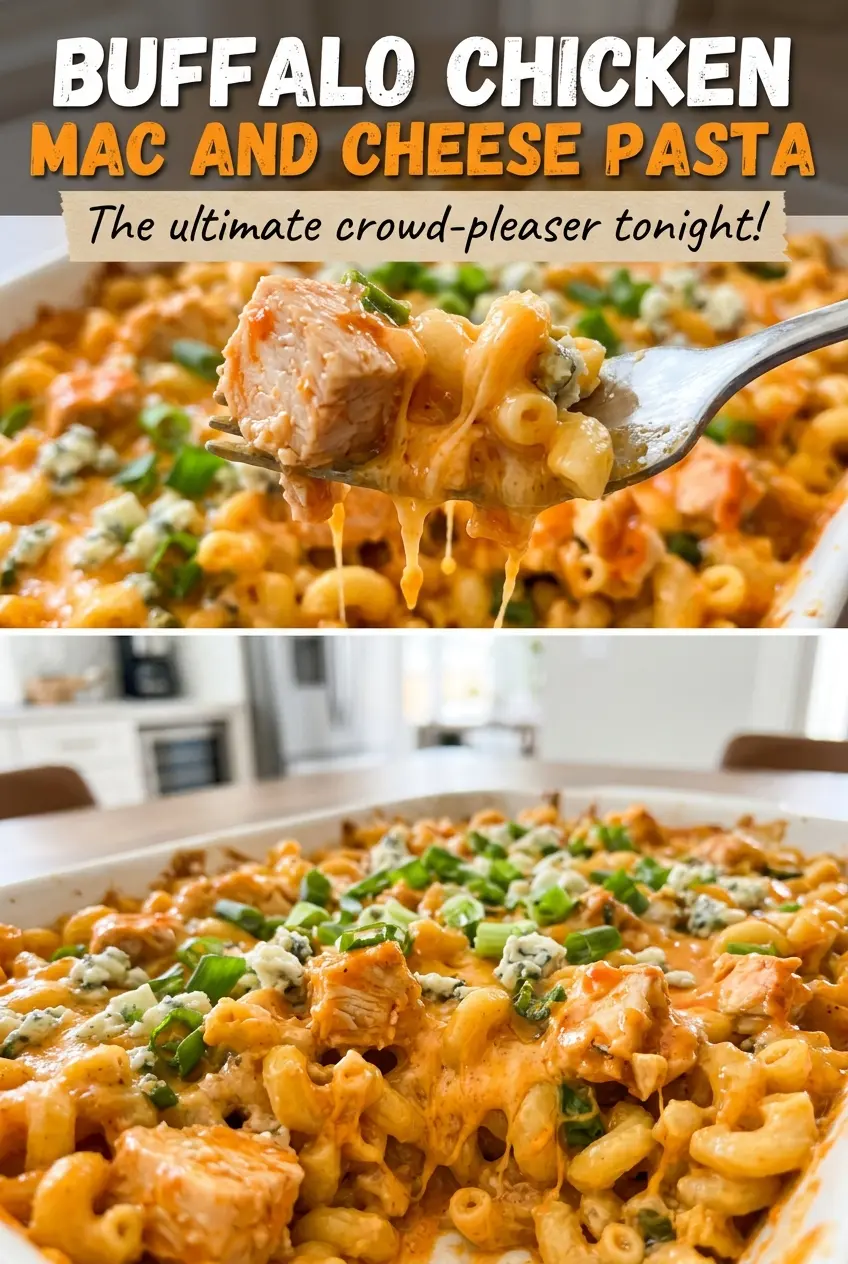
Kitchen Note
Cut the chicken into even 1/2-inch pieces before it hits the skillet. Uneven chunks make it harder to cook the centers through without drying out the smaller pieces.
Save this Buffalo Chicken Mac and Cheese for a cozy dinner with creamy sauce, sharp cheddar, and a Buffalo kick in every bite.
Why Buffalo Flavor Belongs in the Sauce, Not Just on the Chicken
Buffalo sauce coating only the chicken leaves some bites spicy and others tasting like plain macaroni and cheese. Here, it goes into the cheese sauce, so the tang and heat spread evenly over the noodles and chicken. The creamy base softens the sharp edge of the sauce without hiding it.
The chicken itself stays simply seasoned with salt, pepper, and garlic powder. That contrast matters: the chicken gives the dish savory bites, while the sauce carries the recognizable Buffalo flavor throughout. Sharp cheddar also brings a fuller, more savory taste than a mild cheese would, so the finished pasta doesn’t depend on adding more wing sauce at the table.
This balance is what makes the dish feel like both Buffalo chicken and mac and cheese. The sauce should taste tangy and cheesy, with a clear but manageable heat—not like a bowl of hot sauce with noodles underneath.
What the Cheese and Pasta Each Bring to This Buffalo Mac
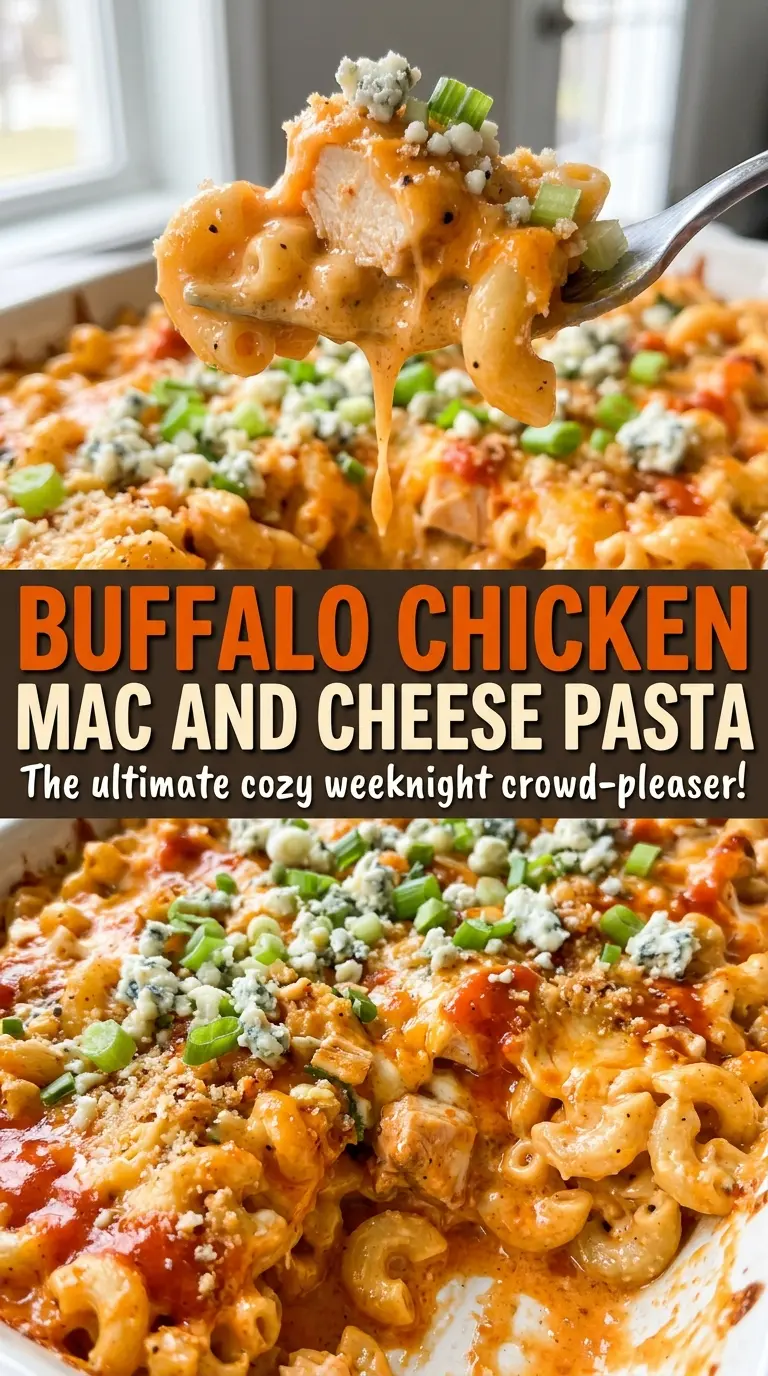
- Elbow macaroni — Its curved shape catches the thick sauce inside and out. Another short pasta, such as cavatappi, works too; choose one with ridges or curves that hold onto the cheese.
- Chicken breast — Boneless, skinless breast keeps the dish from feeling heavy beside the rich sauce. Fresh or thawed chicken is easiest to cut evenly; there’s no need for a special brand.
- Sharp cheddar and Monterey Jack — Sharp cheddar brings the more pronounced cheese flavor, while Monterey Jack melts into a smooth, mild base. Buy blocks and shred them yourself if you can; pre-shredded cheese often contains coating agents that can make a sauce less silky.
- Cream cheese — This adds body and a slight tang that helps the Buffalo sauce sit comfortably in the dairy sauce. Use softened cream cheese cut into pieces so it whisks in without leaving stubborn lumps.
- Buffalo wing sauce — Use a bottled wing sauce you enjoy on its own, since its tang and heat are easy to taste in the finished dish. Straight hot sauce isn’t a one-for-one replacement; it can make the sauce sharper and thinner.
- Whole milk, butter, and flour — Together they create the creamy base that holds the cheeses and coats the pasta. Whole milk gives the sauce a richer texture than lower-fat milk, and all-purpose flour thickens it reliably when cooked briefly in the butter.
Build the Sauce in Stages for Smooth, Evenly Coated Pasta
Cook the Elbows Until They Still Have a Little Bite
Bring the water to a boil in a 6-quart pot, stir in the tablespoon of kosher salt, and cook the macaroni according to the package directions until al dente. The pasta should be tender but still offer a slight bite in the center; it will be coated in hot sauce afterward. Drain it when it reaches that point rather than letting it sit in the cooking water.
Brown the Chicken Without Overcooking It
Heat the vegetable oil in a 12-inch skillet over medium-high heat, then add the chicken with the remaining salt, black pepper, and garlic powder. Stir often so the pieces cook evenly and seasonings don’t collect in one spot. Cook for 6 to 8 minutes, checking that the center of a piece reaches 165°F. Transfer the chicken to a plate once it’s cooked through.
Thicken the Milk Before Adding the Cheese
Melt the butter in the empty pasta pot over medium heat, whisk in the flour, and cook for 1 minute. Gradually whisk in the whole milk, stirring often as the mixture warms and thickens over 4 to 6 minutes. Look for a sauce that coats the back of a spoon; if it still looks watery, give it more time over the heat while stirring.
Melt the Cheeses Gently, Then Fold Everything Together
Lower the heat and whisk in the cream cheese and Buffalo wing sauce until the mixture is smooth. Take the pot off the heat before adding the cheddar and Monterey Jack, stirring them in a handful at a time until melted. High heat can make cheese sauce turn grainy, so don’t rush this part. Stir in the drained macaroni and cooked chicken until everything is evenly coated, then serve hot.
Easy Ways to Adjust the Heat, Pasta, or Ingredients
Choose a Milder Buffalo Sauce
Swap in a mild Buffalo wing sauce in the same amount for less heat while keeping the familiar tang. The dish will taste gentler, but the sauce will still coat the pasta in the same way.
Make It Gluten-Free
Use gluten-free elbow macaroni and a cup-for-cup gluten-free flour blend in place of the all-purpose flour. Cook the pasta to the package’s al dente cue; gluten-free noodles can soften quickly, and the sauce may have a slightly different texture depending on the flour blend.
Change the Pasta Shape
Cavatappi or small shells can take the place of elbow macaroni without changing the creamy, saucy character of the dish. Keep to the same weight of pasta and use the package timing to cook it al dente.
Storage and Reheating
- Refrigerator: Store in an airtight container within 2 hours and use within 3 to 4 days. The macaroni will absorb some sauce as it sits.
- Freezer: Freeze airtight portions for up to 2 months. The sauce may be a little less smooth after thawing, but the pasta is still fine to eat.
- Reheating: Warm gently on the stovetop over low heat or in the microwave, stirring partway through. If the sauce has tightened, stir in a small splash of milk; high heat can cause the cheese sauce to separate.
Questions That Come Up When Making Buffalo Chicken Mac and Cheese
Buffalo Chicken Mac and Cheese Pasta
Ingredients
Equipment
Method
- Bring the water to a boil in a 6-quart pot.
- Stir in 1 tablespoon of the salt.
- Cook the macaroni according to package directions until al dente, then drain.
- Heat the oil in a 12-inch skillet over medium-high heat.
- Add the chicken, remaining 1/2 teaspoon salt, pepper, and garlic powder.
- Cook, stirring often, for 6 to 8 minutes, until the chicken reaches 165°F in the center.
- Transfer the chicken to a plate.
- Melt the butter in the empty pasta pot over medium heat.
- Whisk in the flour and cook for 1 minute.
- Gradually whisk in the milk.
- Cook, stirring often, for 4 to 6 minutes, until the sauce thickens enough to coat a spoon.
- Reduce the heat to low and whisk in the cream cheese and Buffalo wing sauce until smooth.
- Remove the pot from the heat and stir in the cheddar and Monterey Jack a handful at a time until melted.
- Stir the drained macaroni and cooked chicken into the cheese sauce until evenly coated.
- Serve hot.
