
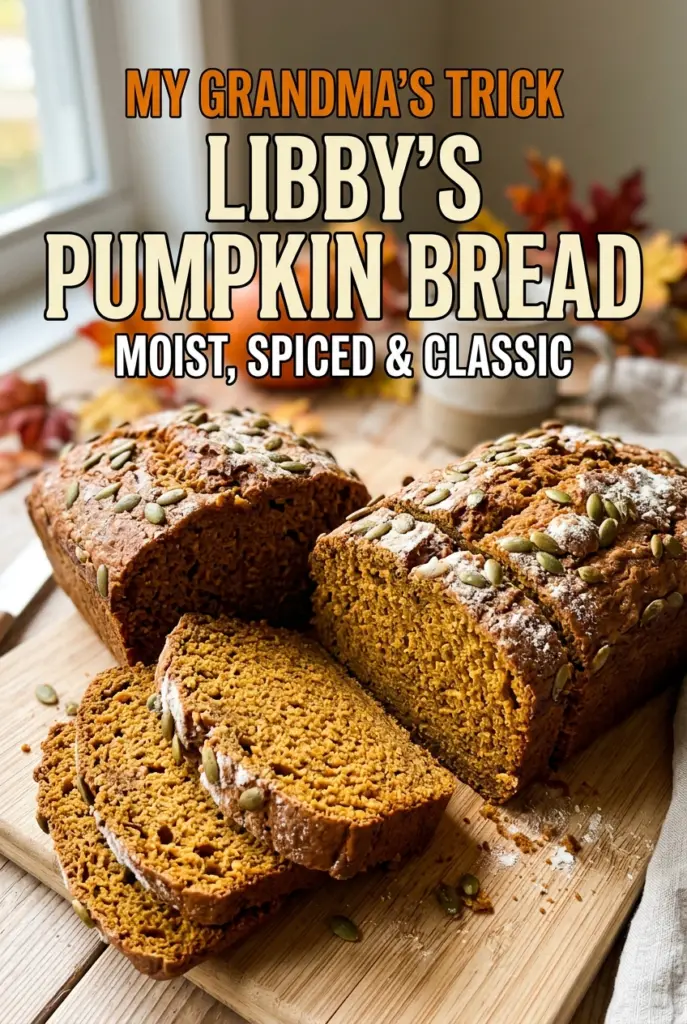
Libby’s Pumpkin Bread
Libby’s Pumpkin Bread bakes up with a dense, moist crumb and that unmistakable old-fashioned spice smell that fills the kitchen before the loaves even come out of the oven. It’s…
Tip: save now, cook later.Libby’s Pumpkin Bread bakes up with a dense, moist crumb and that unmistakable old-fashioned spice smell that fills the kitchen before the loaves even come out of the oven. It’s the kind of bread that slices cleanly, stays tender for days, and tastes even better after it has a little time to settle. The top turns deep golden, the middle stays soft, and the pumpkin flavor comes through without turning gummy or heavy.
What makes this version work is the balance of a strong, simple batter and a generous amount of pumpkin puree. The oil keeps the loaf soft long after baking, while the eggs give it structure so it doesn’t collapse into a wet center. The spices are classic and sturdy — cinnamon, nutmeg, and cloves — which means they stand up to the pumpkin instead of disappearing into it.
Below, I’ve laid out the technique that keeps the crumb even, plus a few practical notes on swaps, storage, and the small details that matter when you want two loaves that come out the same every time.
The loaves came out perfectly moist and the crumb stayed tight without being heavy. I added the pepitas on top and they gave it just enough crunch. It sliced cleanly the next day, which never happens with my pumpkin bread.
Libby’s Pumpkin Bread is the kind of old-school loaf that stays moist for days and slices like a dream.
The Batter That Stays Tender Instead of Heavy
The most common mistake with pumpkin bread is treating it like a quick cake batter and beating it until it looks smooth and airy. That works against you here. Once the flour goes in, the batter should look thick, rough, and just combined. Overmixing develops too much gluten, and that’s how you end up with a loaf that eats more like a brick than a slice of bread.
The other thing that matters is the ratio of pumpkin to liquid. Libby’s puree already brings a lot of body and moisture, so the water in this recipe is doing support work, not building the whole batter. That’s why the loaf stays dense in a good way — soft and sliceable, not wet in the center or dry at the edges.
- Mix the wet and dry bowls separately so the flour doesn’t get overworked while you’re still measuring.
- Stop stirring as soon as the last streaks of flour disappear. A few small lumps are fine.
- If your loaf has a sunken middle, the batter was likely underbaked or the oven ran cool. Pumpkin bread needs the center to set fully before it leaves the oven.
What Each Pantry Ingredient Is Actually Doing Here
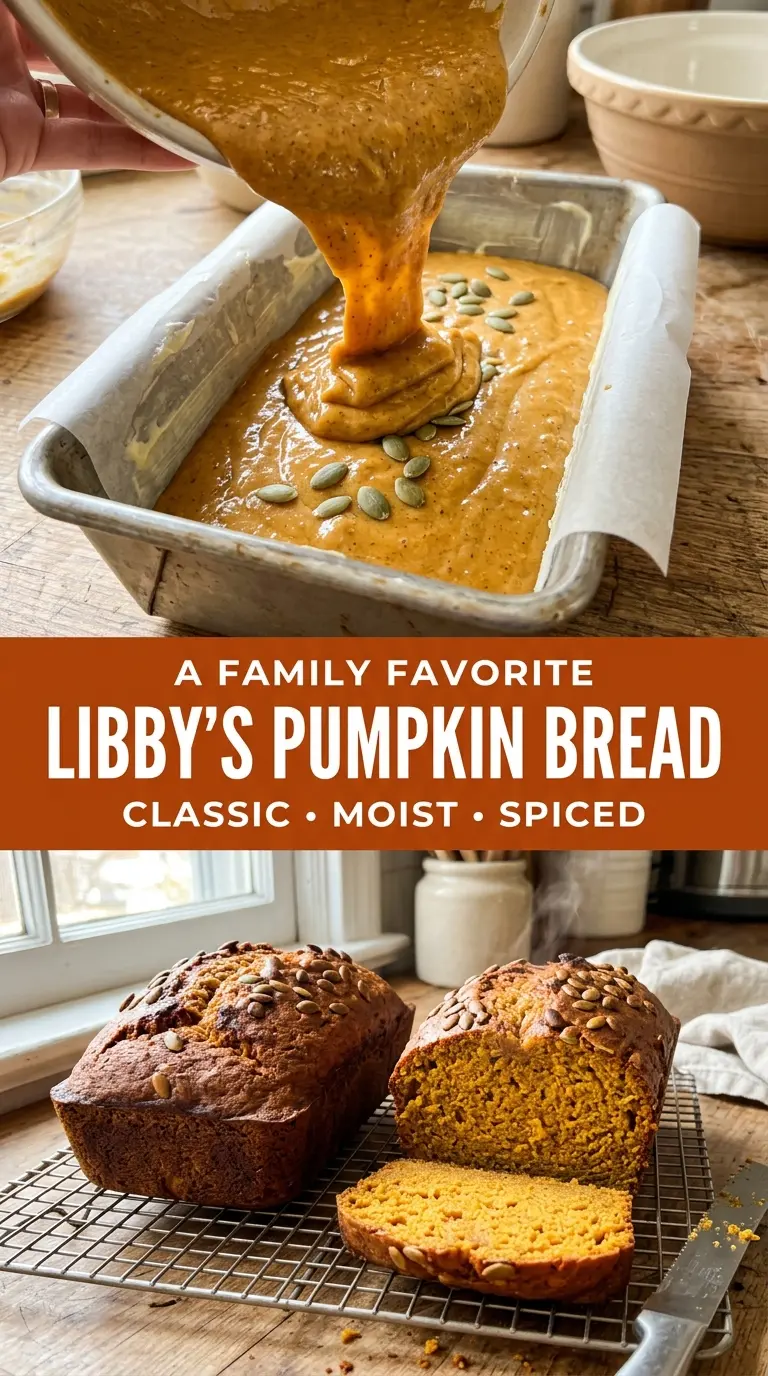
The pumpkin puree is the backbone of the loaf, and canned puree is the right choice here because it’s consistent in texture and moisture. Homemade pumpkin puree can work, but if it’s watery, the bread turns gummy. Libby’s gives you that thick, dependable base that bakes into a tender crumb instead of a soggy one.
Vegetable oil is the reason this bread stays soft after a day or two. Butter brings flavor, but oil gives a more even, plush texture in a loaf like this. The eggs add structure, so don’t reduce them unless you’re adjusting the whole recipe. The spices matter more than they look on paper; cinnamon alone won’t carry this bread, and the nutmeg plus cloves give it that familiar bakery warmth.
The turbinado sugar and pepitas are optional, but they add a nice finish. The sugar gives a faint crunch on top, and the seeds toast lightly as the loaf bakes. If you skip them, the bread still works exactly as intended.
- Libby’s pumpkin puree — This is the ingredient that gives the loaf its signature texture and consistency. If you use another brand, look for puree with a thick, smooth texture rather than anything watery.
- Vegetable oil — Neutral oil keeps the crumb soft and moist for days. Melted coconut oil can work, but it adds flavor and firms up as the loaf cools.
- Turbinado sugar — Optional, but it gives the top a light crackly finish without changing the inside of the loaf.
How to Mix, Pan, and Bake It Without Missing the Center
Whisk the Dry Ingredients First
Start by whisking the flour, baking soda, salt, cinnamon, nutmeg, and cloves in a large bowl until the color looks even. That keeps the spices from clumping in one bite and helps the baking soda spread through the batter. If the baking soda is unevenly mixed, you can get tunneling or a bitter spot near the bottom of the loaf.
Build the Wet Mixture Until It Looks Smooth
In the second bowl, whisk the sugar, oil, eggs, water, and pumpkin puree until the mixture looks glossy and fully blended. The pumpkin should disappear into the liquid base with no streaks. If you see oily patches, keep whisking a little longer so the batter bakes evenly.
Fold, Don’t Beat
Pour the wet mixture into the dry ingredients and stir only until the flour disappears. The batter will be thick and a little rustic. That’s right. If you keep going until it looks silky, you’re working too much air and gluten into it, which changes the crumb and makes the loaf tougher after baking.
Bake Until the Center Springs Back
Divide the batter between two greased 9×5-inch pans and smooth the tops before baking. At 350°F, the loaves usually need 60 to 70 minutes, but the real test is the center. A toothpick should come out clean or with a few dry crumbs, not wet batter. If the tops brown before the middle sets, tent them loosely with foil for the last stretch.
Let the Loaves Set Before Slicing
Cool the bread in the pans for 15 minutes, then move them to a wire rack. Slicing too soon compresses the crumb and makes the center seem underdone even when it’s baked through. Once fully cool, the slices hold together cleanly and the spice flavor comes through more clearly.
How to Change the Loaf Without Losing What Makes It Good
Make It Gluten-Free With a 1:1 Flour Blend
A good cup-for-cup gluten-free flour blend works here because the loaf doesn’t rely on yeast or a delicate crumb. The texture will be a little softer and more delicate, but the pumpkin and oil still keep it moist. Don’t use a single grain flour like almond or coconut flour on its own; the structure won’t hold.
Swap in Neutral Melted Coconut Oil for a Dairy-Free Loaf
This recipe already skips butter, so it’s close to dairy-free as written. If you want to change the oil, melted refined coconut oil works best because it doesn’t add much coconut flavor. Use it in the same amount and let the batter go into the pans right away before the oil starts to thicken.
Turn It Into Muffins for Faster Baking
The batter works well as muffins if you want grab-and-go portions. Fill lined muffin cups about two-thirds full and start checking around 18 to 22 minutes. You lose the tall loaf slice, but you gain faster baking and a little more browned edge in every portion.
Storage and Reheating
- Refrigerator: Store tightly wrapped for up to 5 days. The crumb gets a little firmer in the fridge, but the flavor deepens.
- Freezer: Freezes well for up to 3 months. Wrap whole loaves or individual slices tightly in plastic, then foil, and thaw at room temperature.
- Reheating: Warm slices in a toaster oven or microwave just until heated through. Overheating dries the edges fast, so start with short bursts and stop while the center is still soft.
Answers to the Questions Worth Asking
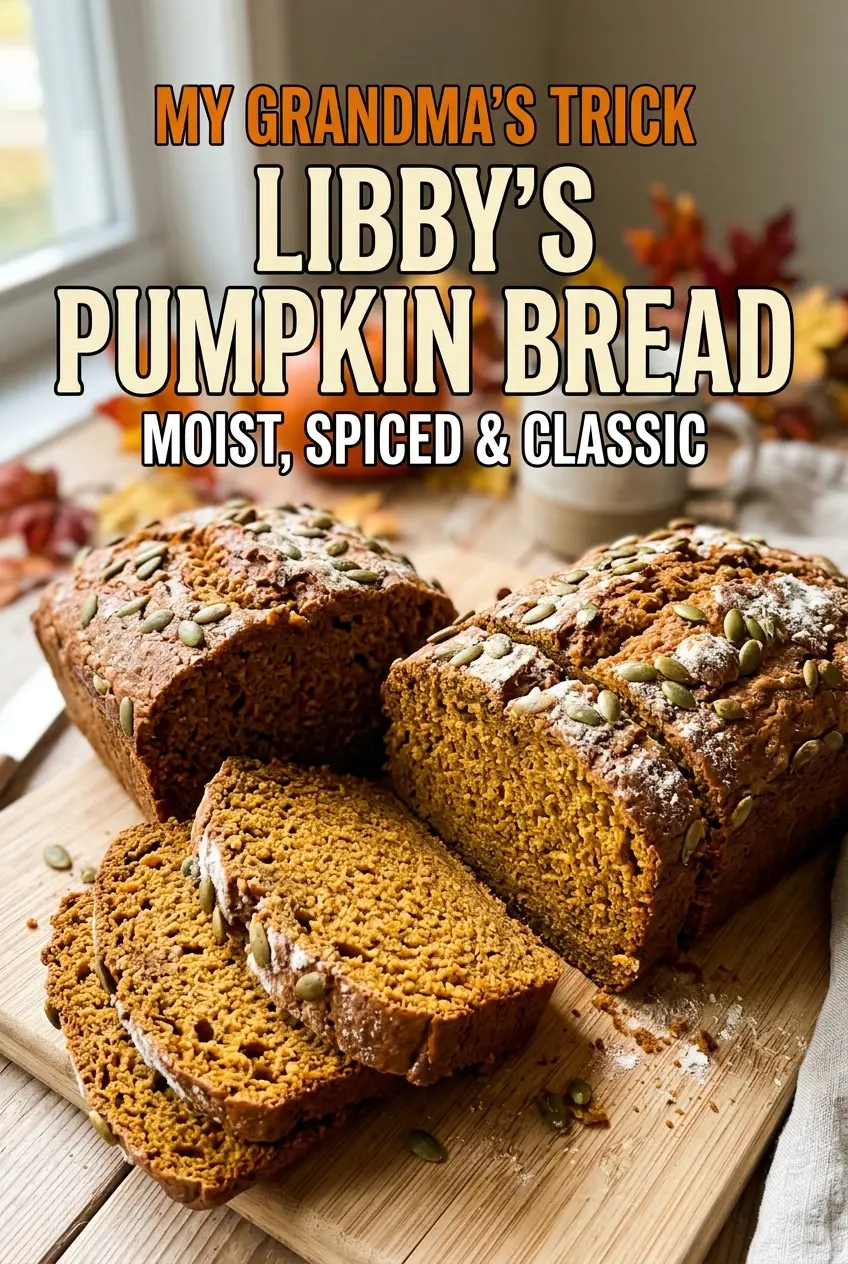
Libby's Pumpkin Bread
Ingredients
Equipment
Method
- Preheat the oven to 350°F, then grease two 9x5-inch loaf pans and set them aside. Keep the pans ready so the batter can go in right after mixing.
- In a large bowl, whisk together the all-purpose flour, baking soda, salt, ground cinnamon, ground nutmeg, and ground cloves. Whisk until the spices are evenly distributed.
- In a separate large bowl, whisk together the granulated sugar, vegetable oil, eggs, water, and Libby's pumpkin puree until smooth. Mix until no streaks of pumpkin remain.
- Pour the wet ingredients into the dry ingredients and stir gently until just combined. Do not overmix so the bread stays dense and moist.
- Divide the batter evenly between the prepared loaf pans and smooth the tops. Make the surface as level as possible for even baking.
- Sprinkle the raw pumpkin seeds (pepitas) and turbinado sugar over the tops if using. Lightly press them in so they adhere as the loaf rises in the oven.
- Bake for 60-70 minutes at 350°F, until a toothpick inserted into the center comes out clean. If the tops brown too quickly, tent with foil during baking.
- Let the loaves cool in the pans for 15 minutes at room temperature. This helps the centers set before unmolding.
- Transfer the loaves to a wire rack to cool completely before slicing. Wait for full cooling to get clean, tender slices.
