
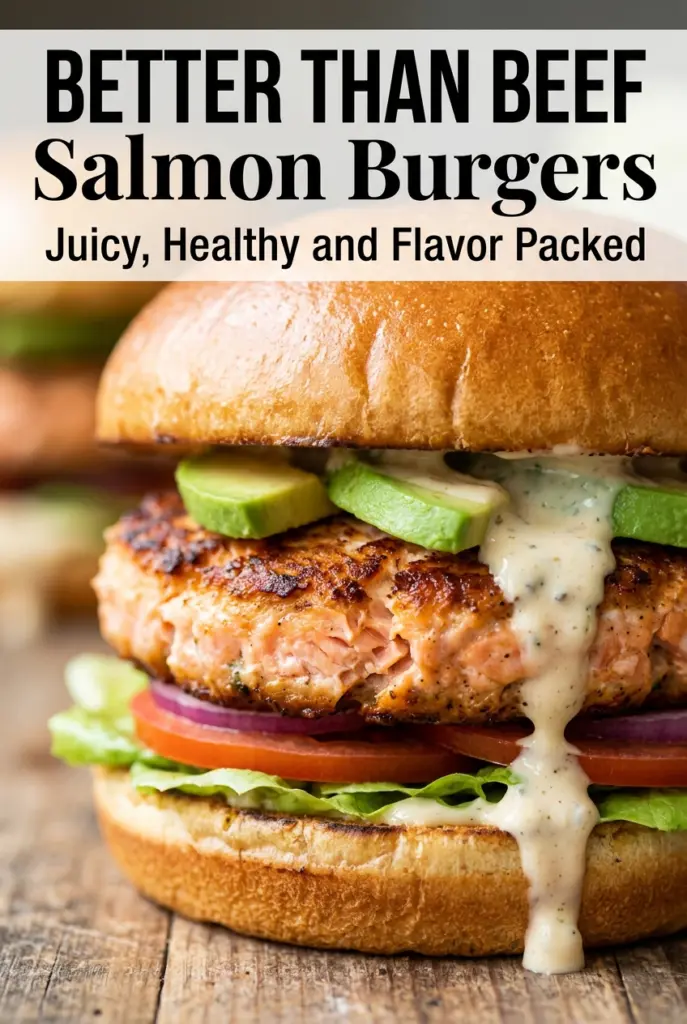
Juicy Homemade Salmon Burgers
Juicy salmon burgers live or die by texture. When they’re done right, they hold together in the pan, turn deeply golden on the outside, and stay tender in the middle…
Tip: save now, cook later.Juicy salmon burgers live or die by texture. When they’re done right, they hold together in the pan, turn deeply golden on the outside, and stay tender in the middle instead of cooking up dry and flaky like a sad fish cake. The best part is that you don’t need fancy ingredients to get there — just a little restraint when mixing and a short chill before the patties hit the skillet.
The trick is treating the salmon like burger meat, not a paste. You want it chopped fine enough to bind, but still visible in little pieces so the burgers keep that fresh salmon bite. A little mayonnaise and egg add moisture and structure, while panko gives the patties enough body without making them heavy. Dijon, lemon, and herbs keep the flavor bright, which matters because salmon can taste flat fast if you lean too hard on breadcrumbs and call it done.
Below, I’ll walk through the one step people usually rush, plus a few swaps that still give you a burger worth repeating. If you’ve had salmon burgers fall apart or dry out before, this version fixes both problems.
The patties held together beautifully after the chill time, and the outside got that crisp edge without overcooking the salmon inside. My husband kept talking about the Dijon and lemon combo.
These salmon burgers stay juicy inside and get those crisp golden edges that make them taste restaurant-worthy.
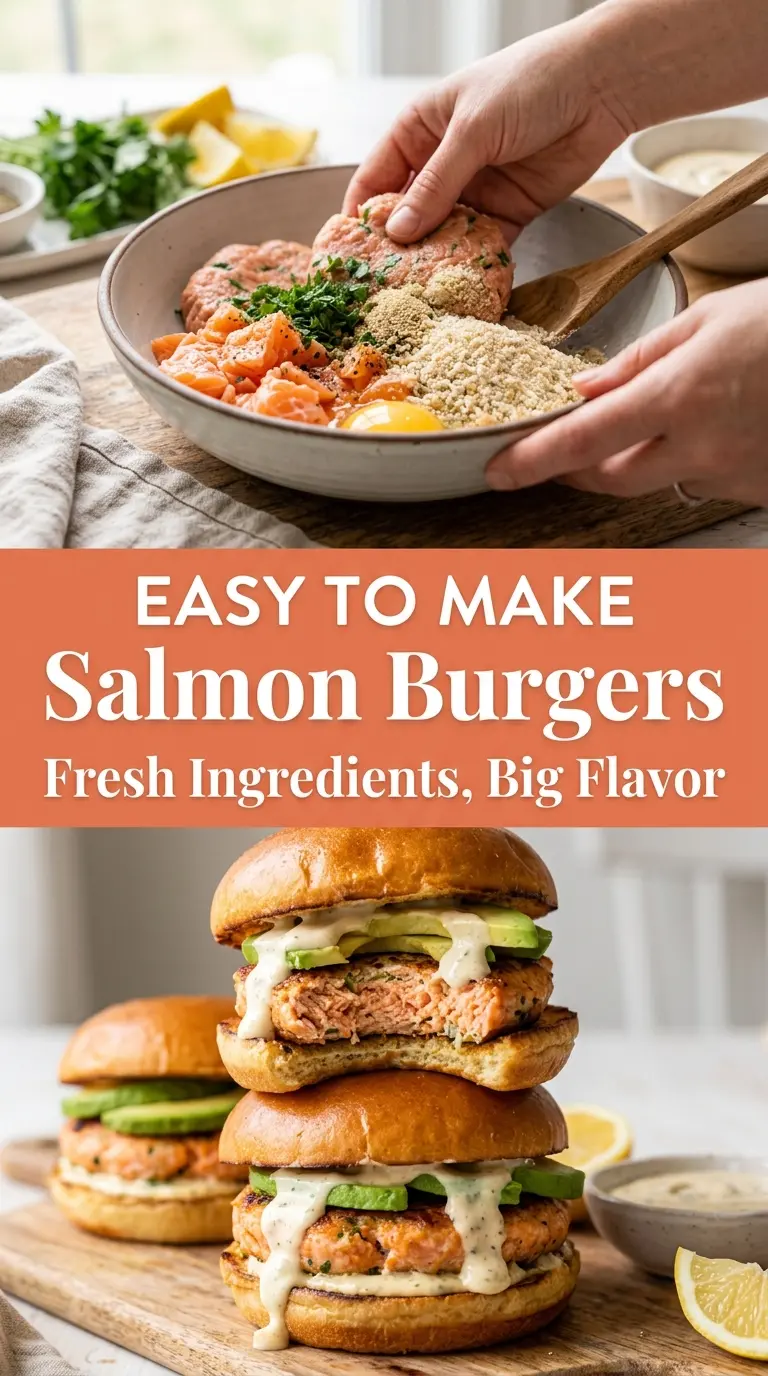
The Secret to Salmon Burgers That Don’t Turn Mushy in the Pan
The biggest mistake with salmon burgers is overprocessing the fish. If you pulse it until it looks like a smooth spread, the patties turn dense and paste-like once they cook. Chop it just enough to bind, and you keep the clean, flaky texture that makes salmon worth using in the first place.
Chilling the patties for 20 minutes isn’t a suggestion — it’s what helps the mixture tighten up so the burgers move from fragile to manageable. That short rest also gives the breadcrumbs time to hydrate, which helps the patties stay together when they hit the hot skillet. If they go into the pan warm and loose, you’ll fight them the whole way.
- Fresh salmon — This is the ingredient that carries the recipe. Use skinless fillets and trim away any dark bloodline if you want a milder flavor. Frozen salmon works in a pinch, but thaw it completely and pat it dry so extra water doesn’t weaken the mixture.
- Panko breadcrumbs — Panko keeps the burgers lighter than regular breadcrumbs. They absorb moisture without turning gummy. If you need a gluten-free version, use gluten-free panko or crushed gluten-free crackers with a similar dry, airy texture.
- Mayonnaise — This keeps the burgers moist and gives the salmon a little insurance in the pan. Don’t skip it unless you want a leaner, firmer patty. Greek yogurt can stand in, but the burgers will taste tangier and won’t brown quite the same way.
- Dijon mustard, lemon juice, parsley, and green onions — These are the flavor builders. Dijon adds sharpness, lemon lifts the fish, and the herbs keep the burgers from tasting heavy. Fresh parsley matters more than dried here because it stays bright and clean.
Getting the Patties Golden Without Overcooking the Salmon
Mix Just Until the Ingredients Come Together
Combine the salmon with the rest of the mixture using a light hand. You’re looking for a cohesive mixture that still looks a little loose and textured, not a uniform paste. Overmixing compresses the fish and makes the burgers tough. If the mixture feels sticky but still holds its shape when pressed, you’re in the right place.
Form the Patties and Let Them Chill
Divide the mixture into four equal portions and shape them into patties that are a little wider than your buns. Salmon burgers shrink some as they cook, and a thinner edge cooks faster than the center, so aim for even thickness. Refrigerate them until firm to the touch. If they’re still soft and slippery, wait a few more minutes instead of rushing them into the pan.
Sear Over Medium Heat, Not High Heat
Warm a lightly oiled skillet over medium heat and lay the patties in once the oil shimmers. High heat burns the outside before the center has a chance to set, especially with a fish-based burger. Cook the first side until it releases cleanly and has a deep golden crust, then flip once and cook the second side just until the salmon is cooked through. The center should be opaque and moist, not dry and chalky.
Three Smart Ways to Change These Salmon Burgers
Gluten-Free Salmon Burgers
Swap the panko for gluten-free panko or finely crushed gluten-free crackers. The goal is the same: enough dry binder to hold the patties together without making them heavy. If your substitute is salty, pull back slightly on the added salt so the seasoning stays balanced.
Dairy-Free and Lightened-Up
These burgers are already naturally dairy-free as written, which makes them an easy fit for a lot of tables. If you want to lighten them further, swap the mayonnaise for plain Greek yogurt. The patties will still stay moist, but the flavor turns tangier and the texture sets a little firmer.
Make Them Spicier
Add a pinch of cayenne or a little minced jalapeño to the mixture if you want more heat. This works best when you keep the mustard and lemon in place, because the acidity helps the spice read as bright instead of blunt. Use a light hand with extra heat so the salmon still tastes like salmon.
Storage and Reheating
- Refrigerator: Store cooked patties for up to 3 days. They’ll lose a little crispness but stay tender if wrapped well.
- Freezer: Freeze cooked or uncooked patties between parchment layers for up to 2 months. Thaw in the refrigerator before reheating or cooking.
- Reheating: Warm in a skillet over low to medium-low heat with a thin slick of oil. Microwaving makes the texture rubbery and dries out the edges fast.
Questions I Get Asked About This Recipe
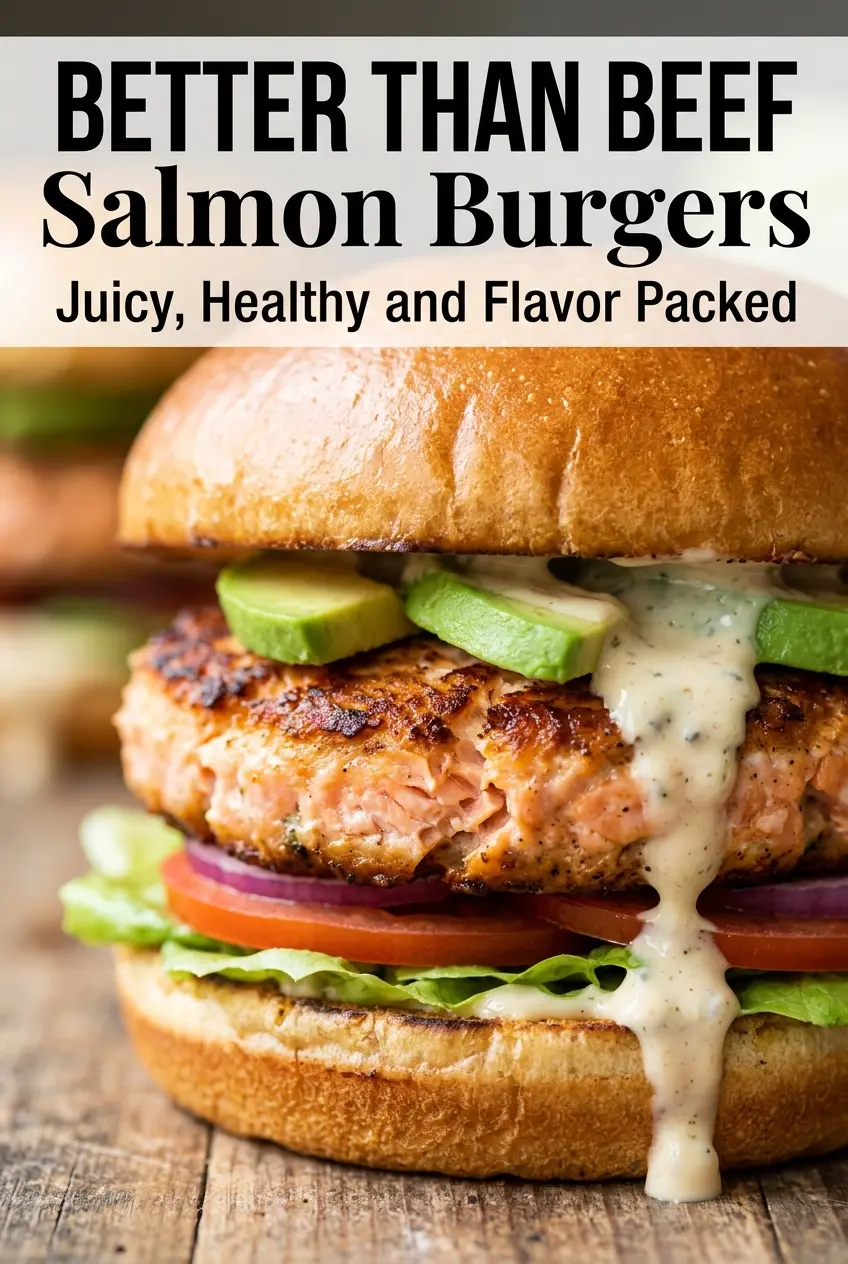
Juicy Homemade Salmon Burgers
Ingredients
Equipment
Method
- Cut the fresh salmon into chunks, then pulse in a food processor until finely chopped but not pureed. Stop as soon as it looks evenly chopped to keep the patties from turning dense.
- Transfer the chopped salmon to a bowl and add panko breadcrumbs, egg, mayonnaise, Dijon mustard, green onions, fresh parsley, garlic powder, paprika, salt, black pepper, and lemon juice. Mix gently just until combined so the patties stay tender.
- Form the mixture into 4 burger patties. Make them about the same thickness so they cook evenly.
- Refrigerate the patties for 20 minutes. This firms up the mixture for cleaner searing and better hold together.
- Heat a cast iron skillet with a lightly oiled surface over medium heat. Wait until it’s hot enough that the salmon sizzles on contact.
- Cook the patties for 4–5 minutes per side until golden and cooked through. Flip once halfway using a steady motion to avoid breaking the patties.
- Toast the brioche buns. Toast just until lightly golden for a sturdy base.
- Assemble each burger with lettuce leaves, sliced tomato, sliced red onion, avocado slices, and tartar sauce or garlic aioli. Serve immediately while the patties are hot.
