
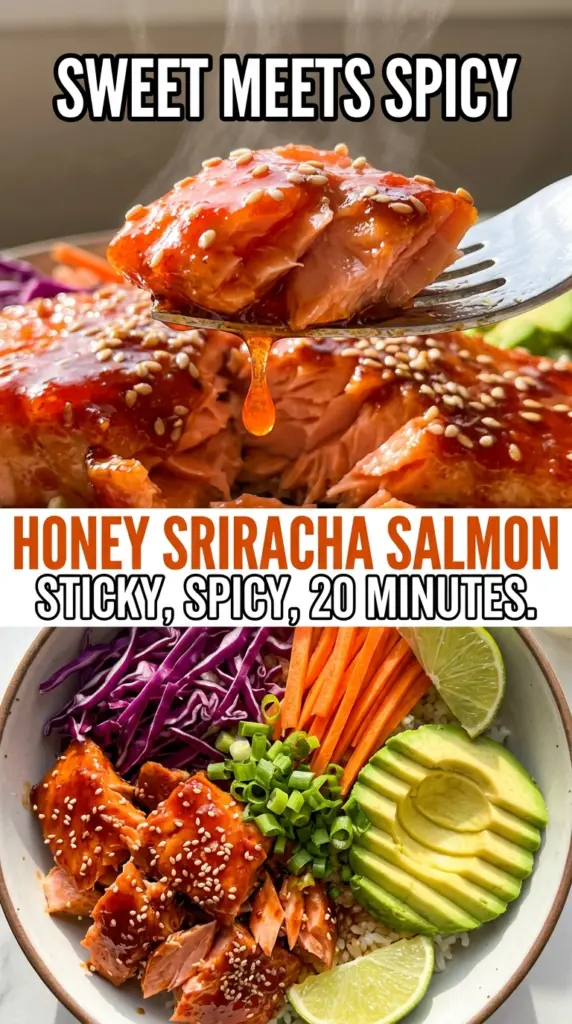
Honey Sriracha Salmon Bowls
Crispy-edged salmon glazed in sticky honey sriracha sauce turns into one of those dinners that disappears fast. The glaze clings to the fish instead of sliding off, the rice catches…
Tip: save now, cook later.Crispy-edged salmon glazed in sticky honey sriracha sauce turns into one of those dinners that disappears fast. The glaze clings to the fish instead of sliding off, the rice catches every drop, and the crunchy vegetables keep each bite bright instead of heavy. It tastes like something you’d order from a good takeout spot, but it’s on the table before delivery would’ve even left the restaurant.
The trick is keeping the salmon dry enough to sear properly before the sauce goes in. If the fish goes into the pan wet, it steams and the glaze never gets that glossy, caramelized finish. A hot skillet, a quick sear, and a short simmer in the sauce are all it takes to get those crisp edges and that sweet-spicy coating that sticks in the best way.
Below, you’ll find the timing that keeps the salmon tender, the one small detail that makes the glaze thicken instead of burn, and a few smart swaps if you want to change up the bowls without losing what makes them good.
The salmon got those perfect browned edges, and the sauce thickened just enough to coat every piece without burning. I added extra lime at the end and it tasted like a restaurant bowl.
Save these honey sriracha salmon bowls for a fast rice bowl night with sticky glaze, crisp vegetables, and barely any cleanup.
The Sear Comes First, or the Glaze Never Really Works
Honey sriracha sauce sounds like the main event, but the pan work before it matters more. Salmon needs direct contact with heat to develop those browned edges, and that only happens when the surface is dry and the pan is properly hot. If you start by pouring sauce over pale fish, you end up with steamed salmon and a thin glaze instead of that sticky coating that grips the fillet.
The other thing that trips people up is adding the sauce too early. Honey burns fast, and garlic can turn bitter in a heartbeat. Let the salmon cook most of the way first, then add the glaze for the last minute or two so it thickens in the pan and turns shiny without crossing into scorched territory.
What Each Ingredient Is Actually Doing in These Bowls
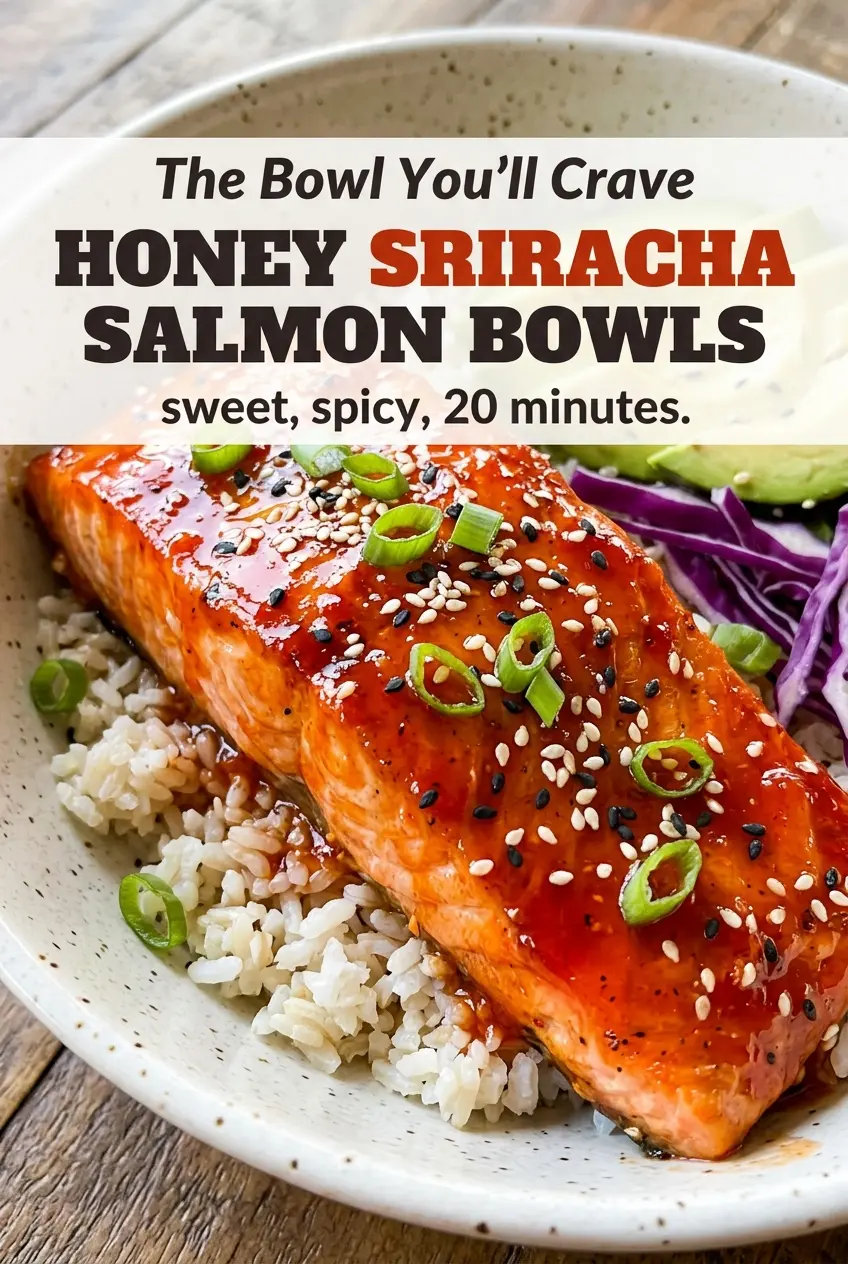
- Salmon — Rich, fatty salmon stands up to the sweet heat and stays tender while the outside sears. Skinless fillets are easier here because the glaze can coat every side, but if you only have skin-on, cook it skin-side down first and leave it there until the flesh is nearly done.
- Honey — This gives the glaze its body and helps it caramelize in the pan. Maple syrup can work in a pinch, but it thins the sauce a bit and changes the flavor, so expect a softer, less sticky finish.
- Sriracha — It brings heat, garlic, and a little vinegar all at once, which is why the sauce tastes balanced instead of one-note spicy. If you want less heat, reduce it a little and add a pinch of red pepper flakes only if you still want more bite.
- Soy sauce — This keeps the glaze from tasting flat and adds the salt that makes the honey and heat pop. Use tamari if you need gluten-free bowls; the result stays just as savory.
- Rice vinegar — A small amount brightens the sauce and keeps the glaze from feeling heavy. Lime juice can substitute, but add it at the end so it stays fresh and sharp.
- Jasmine rice — The fluffy, lightly fragrant rice is what makes the sauce feel complete instead of clumpy. Any long-grain rice works, but short-grain rice turns the bowls denser and less scoopable.
- Fresh cabbage, carrots, and avocado — These are there for crunch, coolness, and contrast. Pre-shredded vegetables work fine, but slice the avocado right before serving so it doesn’t go brown before the bowls hit the table.
Building the Glaze Without Burning the Garlic
Mix the Sauce Before the Pan Gets Hot
Whisk the honey, sriracha, soy sauce, rice vinegar, garlic, ginger, and sesame oil together before you start cooking the salmon. That way the sauce goes in ready to pour, and you won’t be fumbling with a whisk while the fish overcooks. The garlic and ginger should be finely minced or grated so they soften quickly in the pan instead of staying sharp and raw.
Sear the Salmon Until It Releases Cleanly
Lay the salmon in a hot skillet and leave it alone long enough to form a crust. If you try to move it too soon, it’ll stick; once the edges turn opaque and the fish releases with a nudge, it’s ready to flip. Cook the second side until the center still looks just barely translucent, because the sauce will finish the last bit of cooking.
Let the Sauce Bubble, Then Pull It Back
Pour the sauce into the skillet and spoon it over the salmon as it thickens. You want small, lively bubbles, not a hard boil. If the pan is too hot, the honey can go from glossy to bitter in seconds, so lower the heat the moment the glaze starts to darken quickly.
Assemble the Bowls While the Salmon Is Glossy
Spoon the rice into bowls first, then top with the glazed salmon and the fresh vegetables. The warm fish softens the rice just enough, while the cabbage and carrots stay crisp against the sticky sauce. Finish with green onions, sesame seeds, and a squeeze of lime right at the end so the whole bowl wakes up.
How to Change These Bowls Without Losing the Point
Make It Gluten-Free
Swap the soy sauce for tamari or coconut aminos. Tamari gives the closest match in salt and depth, while coconut aminos taste a little sweeter and lighter, so you may want an extra splash of rice vinegar to keep the glaze balanced.
Turn It Lower-Carb
Serve the salmon over cauliflower rice or shredded cabbage instead of jasmine rice. You’ll lose the cushion that rice gives the glaze, but you keep the sweet-spicy topping and the fresh crunch, which is what carries the bowl.
Use Chicken Instead of Salmon
Boneless chicken thighs work better than breasts because they stay juicy while the glaze reduces. Sear them until cooked through, then add the sauce the same way; the final dish will be a little less rich but still sticky and satisfying.
Storage and Reheating
- Refrigerator: Store the salmon and rice separately for up to 3 days. The vegetables stay crisp if you keep them packed apart from the warm components.
- Freezer: The cooked salmon and rice freeze well for up to 2 months, though the avocado and fresh vegetables should be added after thawing. Freeze in portions for the easiest reheating.
- Reheating: Warm the salmon gently in a covered skillet over low heat or in the microwave at short intervals. High heat dries the fish out and makes the glaze sticky in the wrong way, so use low, steady heat and add a splash of water if the rice seems dry.
Questions I Get Asked About This Recipe
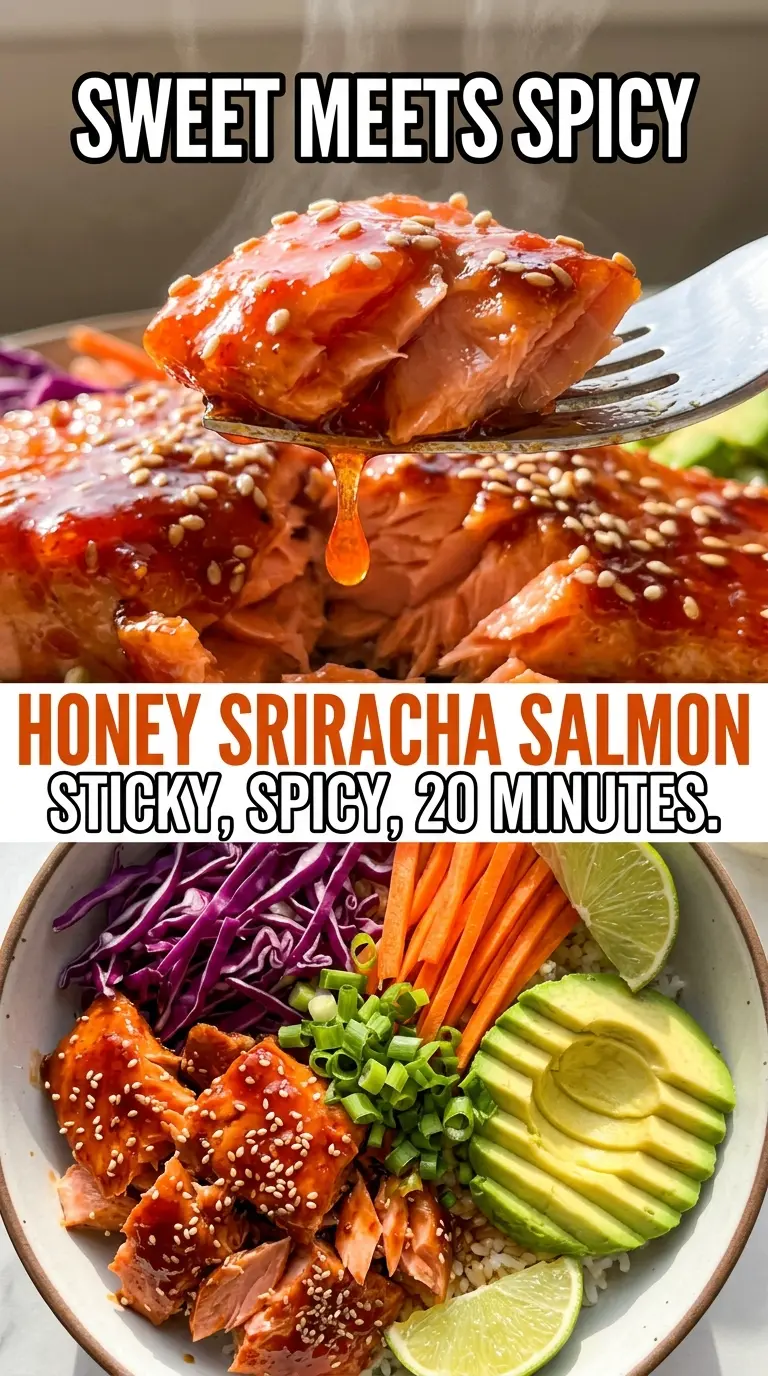
Honey Sriracha Salmon Bowls
Ingredients
Equipment
Method
- Whisk together honey, sriracha, soy sauce, rice vinegar, garlic, ginger, and sesame oil until smooth and glossy, about 30 seconds, and set aside.
- Heat a hot skillet over high heat, then add salmon fillets and sear for 3–4 minutes per side until golden and just cooked through, with crisping around the edges.
- Pour the honey sriracha sauce into the skillet and spoon it over the salmon as it thickens and caramelizes for 1–2 minutes, until sticky and lacquered with darkened caramel spots.
- Divide cooked jasmine rice among bowls, spreading it into an even base so toppings stay piled up.
- Top each bowl with glazed salmon, then add purple cabbage and carrots for crunch and color.
- Finish with sliced avocado, green onions, sesame seeds, and serve with a lime wedge; drizzle any extra glaze from the pan over the top.
