
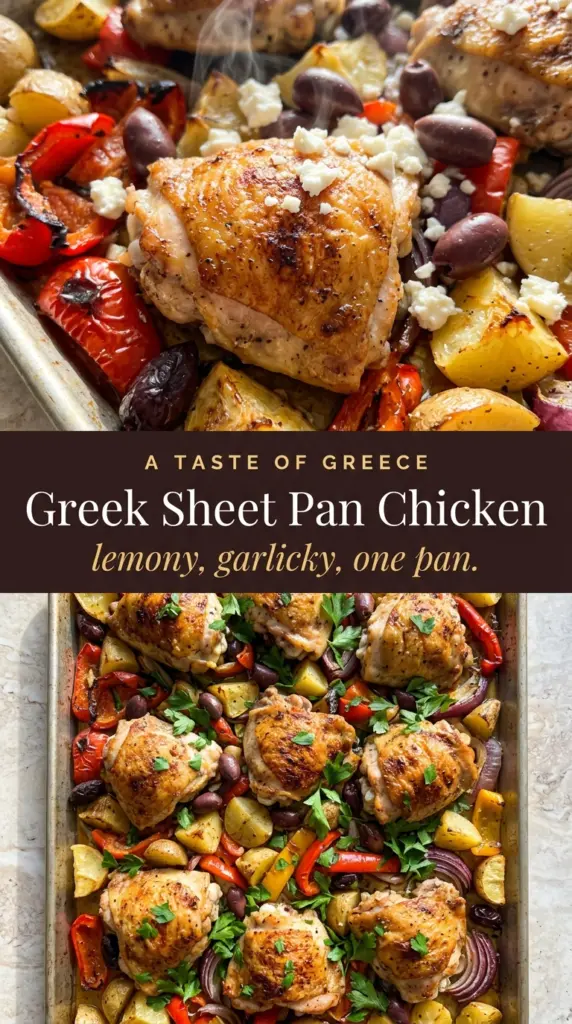
Greek Sheet Pan Chicken Dinner
Juicy chicken thighs, lemony potatoes, and caramelized peppers are the kind of sheet pan dinner that earns a permanent place in the rotation. The chicken stays tender under its seasoned…
Tip: save now, cook later.Juicy chicken thighs, lemony potatoes, and caramelized peppers are the kind of sheet pan dinner that earns a permanent place in the rotation. The chicken stays tender under its seasoned skin, the potatoes drink up the olive oil and lemon, and the onions turn sweet at the edges instead of soft and dull. Everything finishes in one pan, but it eats like you spent a lot more time on it.
What makes this version work is the way the marinade coats both the chicken and the vegetables before they hit the oven. The olive oil helps the potatoes roast instead of dry out, while the lemon and oregano keep the whole pan bright enough to balance the feta at the end. Bone-in, skin-on thighs hold up best here; they stay juicy through the longer roast and give you the kind of browned edges you don’t get from boneless chicken.
If you’ve ever had sheet pan chicken come out pale or watery, the fix is in the spacing and the heat. Below, I’ll show you how to keep the vegetables from steaming, when to add the feta so it softens without melting away, and the small finishing step that makes the whole pan taste complete.
The potatoes came out tender with those browned edges, and the chicken skin actually stayed crisp. I added the olives at the end like you said and the whole pan tasted bright, not heavy.
Save this Greek Sheet Pan Chicken Dinner for a night when you want crispy-edged potatoes, juicy thighs, and one pan to wash.
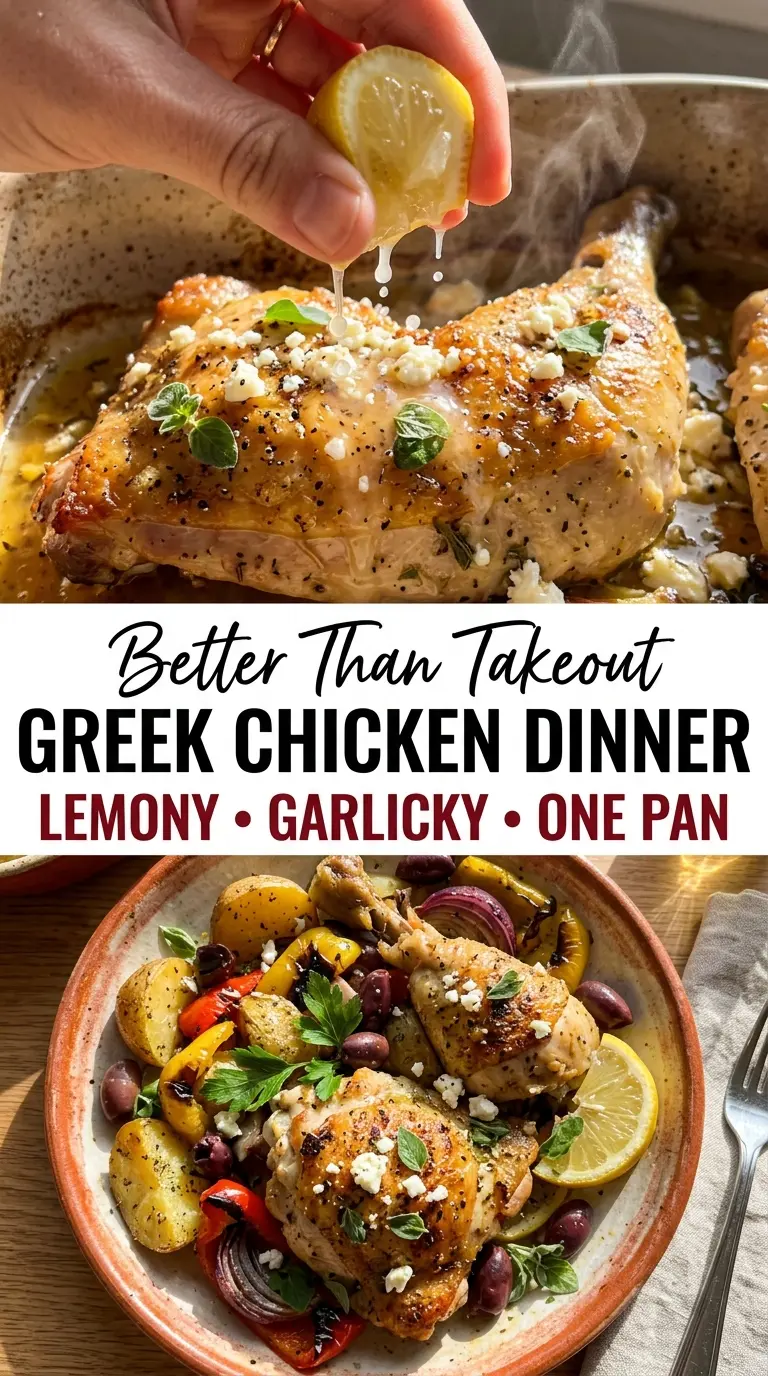
The Difference Between Roasting and Steaming on a Sheet Pan
The biggest mistake with a dinner like this is crowding the pan. When the chicken and vegetables sit too close together, the moisture has nowhere to go, so the potatoes soften before they brown and the peppers turn limp instead of caramelized. A hot oven only helps if the ingredients have room to breathe.
Another detail that matters here is the order of the ingredients on the pan. Potatoes need direct contact with the metal and enough oil to start browning early, while the chicken thighs can handle a little overlap of juices as they roast. If your chicken skin stays pale, it usually means the pan was overloaded or the oven wasn’t fully preheated before the tray went in.
- Chicken thighs — Bone-in, skin-on thighs are the right choice here because the longer roast renders the fat from the skin and keeps the meat juicy. Boneless thighs will work, but they finish faster and won’t give you the same browned, full-bodied result.
- Baby potatoes — Halving them gives you more cut surface, which means more roasted edges and less waiting around for the centers to turn tender. Larger potatoes can be used, but cut them into even chunks so they cook at the same pace.
- Olive oil and lemon juice — The oil carries the seasoning and helps the vegetables roast, while the lemon keeps the pan from tasting heavy. Use a decent olive oil here; this is one of the places it matters because the flavor is front and center.
- Feta and Kalamata olives — These go on near the end so they warm through without dissolving into the pan. If you add them too early, the feta dries out and the olives lose their punch.
How to Roast Everything So the Chicken Skin Stays Crisp
Mix the Marinade First
Whisk the olive oil, lemon juice, garlic, oregano, thyme, salt, and pepper until the mixture looks slightly emulsified and streaked with herb specks. That helps the seasoning cling to the chicken and potatoes instead of sliding to the bottom of the pan. If the lemon and oil separate immediately, keep whisking for another few seconds before you toss anything with it.
Coat the Pan, Not Just the Chicken
Toss the chicken, potatoes, onion, and peppers in the marinade on a large sheet pan, then spread everything into a single layer. The potatoes need to sit cut-side down where possible so the flat surface can brown against the hot metal. If pieces are piled on top of each other, they’ll steam and the edges won’t caramelize.
Roast Until the Thighs Are Deeply Colored
Slide the pan into a fully preheated 425°F oven and roast until the chicken is golden and the potatoes are fork-tender. Flip the vegetables and chicken halfway through so the exposed sides can brown evenly, but don’t keep turning them after that or you’ll lose the crust you worked for. If your chicken is done before the potatoes, move the thighs to a plate and let the vegetables finish for a few more minutes.
Finish with Feta, Olives, and Lemon
Scatter the feta and olives over the pan in the last 5 minutes so they soften and warm without drying out. A final squeeze of lemon and a handful of parsley brighten everything and pull the roasted flavors back into balance. If it tastes flat at the end, it usually needs either more lemon or a pinch of salt, not more oregano.
Three Ways to Adjust This Pan Dinner Without Losing What Makes It Work
Dairy-Free Version
Leave off the feta and finish with extra lemon, parsley, and a few more olives. You lose the salty creaminess, but you keep the bright, savory balance of the pan and the dish still feels complete.
Gluten-Free, Naturally
This recipe is already gluten-free as written, so nothing needs to change. Just check any packaged feta or olives if you’re cooking for someone with a serious sensitivity and want to avoid cross-contamination.
Vegetable Swap for a Different Pan
You can trade the bell peppers for zucchini or cauliflower, but cut the vegetables large enough that they don’t collapse before the chicken is done. Zucchini gives you a softer, juicier pan; cauliflower brings more browning and a nuttier edge.
Storage and Reheating
- Refrigerator: Store leftovers in an airtight container for up to 4 days. The potatoes soften a bit after chilling, but the flavor holds up well.
- Freezer: The chicken freezes fine, but the potatoes and peppers lose some texture. If you freeze it, pack the chicken separately and expect the vegetables to come back softer.
- Reheating: Warm leftovers in a 375°F oven until heated through, which brings back more of the roasted texture than the microwave. The common mistake is blasting it too hard, which dries out the chicken before the center is hot.
Questions I Get Asked About This Recipe
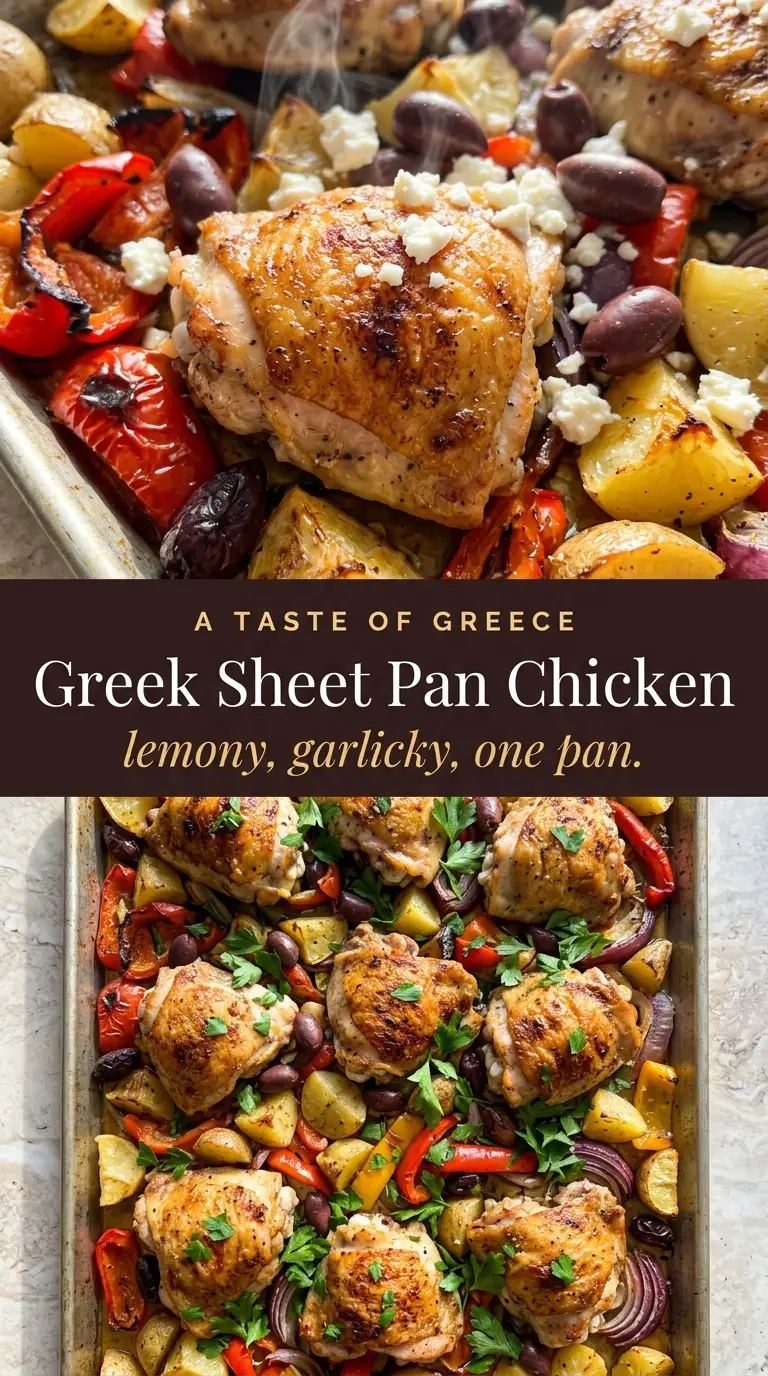
Greek Sheet Pan Chicken Dinner
Ingredients
Equipment
Method
- Preheat oven to 425°F (220°C).
- Whisk together olive oil, lemon juice, garlic, oregano, thyme, salt, and pepper until evenly combined.
- Toss chicken thighs, potatoes, onion, and peppers with the marinade on a large sheet pan, arranging in a single layer.
- Roast 35–40 minutes, until chicken is golden and cooked through and potatoes are fork-tender.
- Flip everything halfway through the roast so both sides caramelize.
- Scatter feta and Kalamata olives over the pan in the last 5 minutes of roasting.
- Garnish with fresh parsley and an extra squeeze of lemon before serving.
