

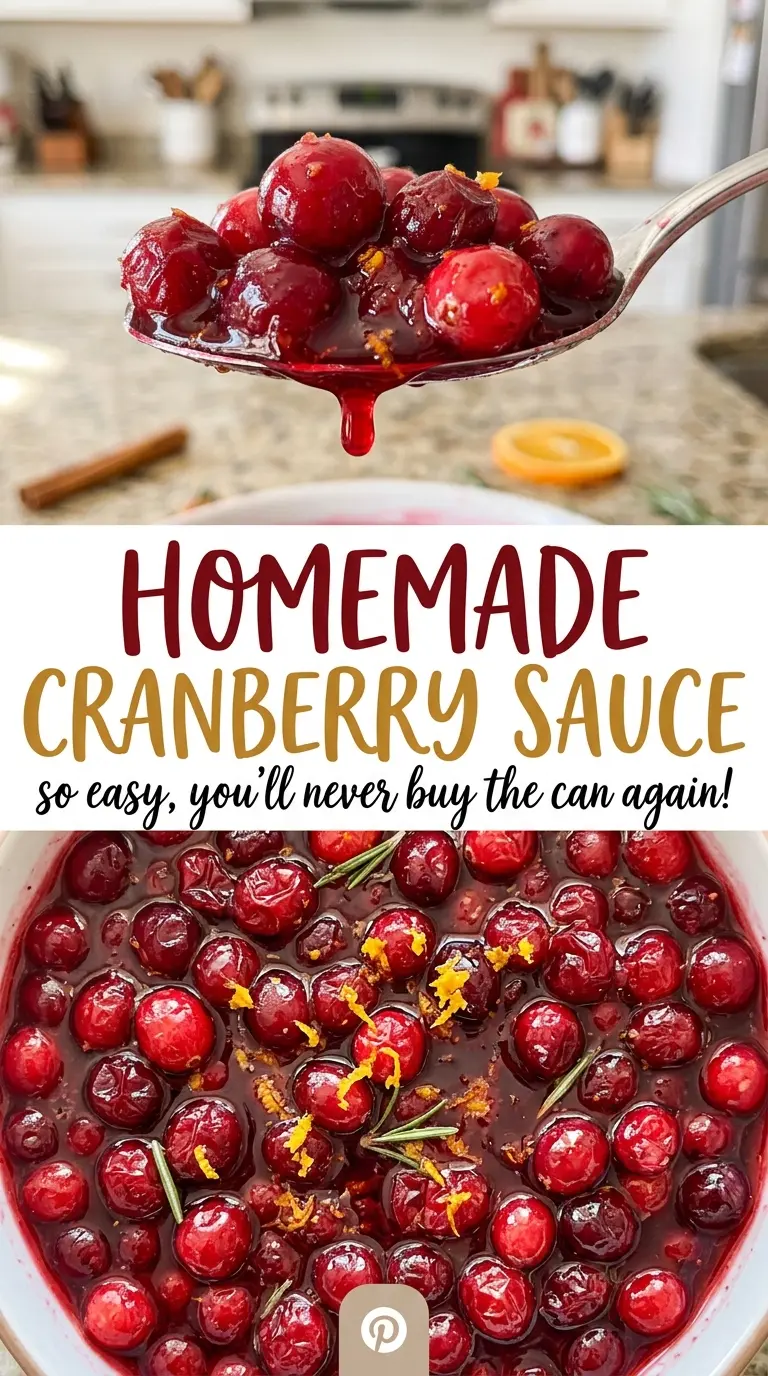
Homemade Cranberry Sauce
When cranberries start popping in the saucepan, the kitchen gets that sharp, fruity smell that tells me the berries are finally giving way. The first time I made cranberry sauce,…
Tip: save now, cook later.When cranberries start popping in the saucepan, the kitchen gets that sharp, fruity smell that tells me the berries are finally giving way. The first time I made cranberry sauce, I kept waiting for it to look as thick as the chilled kind from a can. It didn’t—until it cooled. Homemade cranberry sauce is meant to look a little loose while it’s hot, then settle into a glossy, spoonable consistency.
I keep this version simple: fresh cranberries simmer in water and sugar, with a pinch of kosher salt to balance their tartness. There’s no need to add a thickener or cook the berries until every one disappears. I stir occasionally and let most of them burst, leaving the finished sauce with a little fruit texture. Once cooled, it’s bright, tangy, and easy to serve alongside a meal.

Kitchen Note
I wait until the sugar has completely dissolved in the boiling water before adding the cranberries. If you can still see crystals on the bottom of the pan, keep stirring; the syrup should look clear before the berries go in.
Save this homemade cranberry sauce for a bright, tart side that thickens as it cools and takes just a few ingredients.
Why Cranberry Sauce Looks Too Loose Before It’s Ready
Hot cranberry sauce can look thinner than you expect, even when it’s cooked properly. Cranberries contain natural pectin, and as their skins split, the fruit releases juice and pectin into the syrup. That gives the sauce body without gelatin or another thickener, but the texture doesn’t finish developing over the heat.
Cooling is part of the cooking process here. As the sauce comes down to room temperature, the fruit mixture firms up and turns glossy. If you keep boiling it just to make it look thick in the pan, you’ll cook away more liquid and can end up with a denser, stickier sauce than you wanted. I look for most of the berries to have burst and for the sauce to cling lightly to a spoon, then let time do the rest. A few whole berries are welcome; they add little pockets of tartness instead of making the sauce feel uneven.
Why Four Simple Ingredients Give Cranberry Sauce Its Balance
- Fresh cranberries — Their tartness and naturally high pectin are what give this sauce its familiar sharp flavor and help it thicken as it cools. Choose berries that look plump and firm; rinsing and picking through them before cooking helps keep any damaged fruit out of the pan. A standard grocery-store bag works well.
- Granulated sugar — It sweetens the berries and dissolves cleanly into the water to make the syrup they simmer in. Regular granulated sugar is the right fit here; specialty sugar isn’t needed, and a liquid sweetener would change both the flavor and the way the sauce thickens.
- Water — Water gives the sugar a chance to dissolve and provides enough liquid for the cranberries to soften and burst. Tap water is fine. The finished sauce becomes more concentrated as the berries cook and the mixture cools.
- Kosher salt — A small pinch takes the edge off the cranberries’ tartness without making the sauce taste salty. Use the listed kosher salt rather than swapping in a larger amount of a finer-grained salt, which can taste stronger by volume.
From Dissolved Sugar to a Spoonable Cranberry Sauce
Build a clear syrup in the saucepan
Combine the water, granulated sugar, and kosher salt in a 2-quart saucepan. Set it over medium-high heat and stir as it comes to a boil. Keep stirring until the sugar dissolves; you shouldn’t see crystals clinging to the bottom of the pan. Starting with a clear syrup gives the cranberries an even, sweet base.
Simmer until most of the berries burst
Add the rinsed, picked-over cranberries and reduce the heat to medium. Simmer for 10 to 12 minutes, stirring occasionally, while the berries soften and pop. You’ll hear them split and see the liquid turn a deeper red as the fruit releases its juices. Stop when most berries have burst and the sauce has thickened; it doesn’t need to become a smooth puree in the pan.
Let the sauce cool before judging its texture
Transfer the hot sauce to a serving bowl and leave it to cool to room temperature, about 1 hour. It will thicken further as it cools, so don’t try to force a chilled-sauce texture while it’s still hot. Once cooled, it should be glossy and easy to spoon, with some berry pieces still visible. You can serve it at room temperature or chill it for later.
Two Texture Changes That Still Let the Cranberries Shine
Blend it smooth for a sleek sauce
For a smoother texture, let the cooked sauce cool first, then pulse it in a blender until the berry pieces disappear. Blending makes the sauce more uniform and a little less rustic; it won’t change the tart cranberry flavor. Work in batches if needed, and don’t blend the sauce while it’s hot.
Freeze small portions for later
Spoon cooled sauce into small silicone molds or an ice-cube tray when you want portions you can thaw individually. Once frozen, move the portions to a freezer-safe bag or container. This format is handy when you want just a little cranberry sauce instead of thawing the whole batch.
Storage and Reheating
- Refrigerator: Once the sauce has cooled, cover it and refrigerate within 2 hours of cooking. Keep it for 3 to 4 days; it will become firmer when cold.
- Freezer: Store it in an airtight, freezer-safe container for up to 2 months for best quality. Thaw it in the refrigerator; the texture may be a little softer afterward.
- Reheating: It’s good chilled or at room temperature. To serve it warm, stir gently in a saucepan over low heat; avoid a vigorous boil, which can make hot sugary sauce splatter.
Questions That Come Up While the Cranberries Simmer
Homemade Cranberry Sauce
Ingredients
Method
- Combine the water, sugar, and salt in a 2-quart saucepan and bring to a boil over medium-high heat, stirring until the sugar dissolves.
- Add the cranberries, reduce the heat to medium, and simmer for 10 to 12 minutes, stirring occasionally, until most of the berries have burst and the sauce has thickened.
- Transfer the sauce to a serving bowl and let cool to room temperature, about 1 hour; it will thicken further as it cools.
