

Hamburger Stew
Hamburger stew lands in that sweet spot between budget cooking and real comfort. The broth turns rich and savory as the beef simmers with tomato, onions, and herbs, while the…
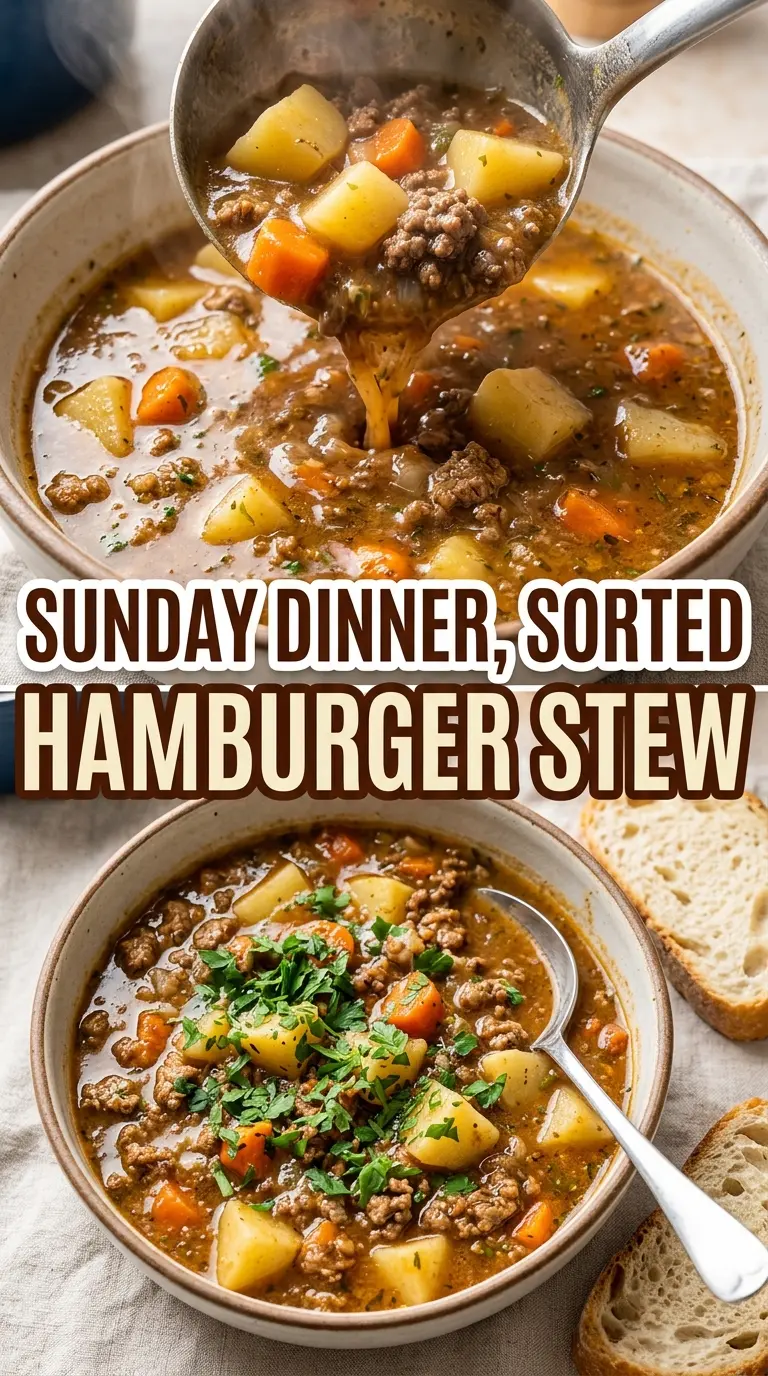
Tip: save now, cook later.Hamburger stew lands in that sweet spot between budget cooking and real comfort. The broth turns rich and savory as the beef simmers with tomato, onions, and herbs, while the potatoes soak up enough flavor to taste like they belonged there from the start. It’s the kind of one-pot meal that looks simple on paper and eats like something much more satisfying.
The part that matters most is building the base in layers. Browning the beef first gives you the deep, meaty flavor the stew needs, and cooking the tomato paste for a minute before adding liquid keeps it from tasting flat. The carrots, celery, and potatoes don’t need anything fancy; they just need enough time in the pot to soften without turning mushy.
Below, I’ve included the small details that keep the broth balanced and the vegetables tender instead of waterlogged. I’ve also added a few smart variations, because this is the kind of stew that should work with what you’ve got in the pantry.
The broth had that rich, slow-simmered taste even though it came together in under an hour, and the potatoes held their shape instead of falling apart. My husband went back for seconds and asked if I could make it again next week.
Save this hearty Hamburger Stew for a one-pot dinner with tender potatoes, rich beef broth, and leftovers that taste even better the next day.
The Secret to Keeping the Potatoes Tender Instead of Mushy
Hamburger stew goes wrong when the potatoes spend too long boiling hard in the broth. They start out sturdy, then the edges break down before the rest of the vegetables are fully tender, and the whole pot turns cloudy and soft in a way that feels more like mash than stew. The fix is simple: cut the potatoes into even chunks and keep the simmer gentle once the liquid goes in.
Tomatoes also matter here. Their acidity helps balance the richness of the beef, but if the stew boils aggressively after the broth and tomatoes are added, the vegetables lose their shape faster. A steady simmer gives the potatoes time to soften through while the broth thickens naturally.
- Even potato pieces cook at the same rate, so you don’t end up with half the pot falling apart while the other half is still firm.
- Gentle simmering keeps the broth clear enough to taste rich instead of muddy.
- Ground beef browned well gives the stew a deeper base than gray meat cooked straight into liquid.
What Each Ingredient Is Doing in This Pot
- Ground beef is the backbone of the stew. An 80/20 or 85/15 blend gives you enough fat for flavor without making the broth greasy. If you use a leaner package, keep a spoonful of the rendered fat in the pot after browning.
- Tomato paste adds concentrated depth that crushed tomatoes alone can’t give. Cooking it for a minute before the liquid goes in takes away the raw edge and makes the broth taste fuller.
- Potatoes should be waxy enough to hold together but not so firm they stay chalky. Yukon Golds are my first choice, though russets will work if that’s what you have; just expect them to soften a little more.
- Beef broth does the heavy lifting in the liquid. Use a broth you’d actually sip, because a weak carton will leave the stew tasting thin no matter how long it simmers.
- Smoked paprika and thyme round out the tomato-beef base without making the stew taste like chili. If you only have sweet paprika, use it, but the smoky note gives the pot a more old-fashioned, slow-cooked feel.
Building the Stew in the Right Order
Browning the Beef First
Cook the ground beef over medium-high heat until it loses its pink color and starts picking up browned bits on the bottom of the pot. Those bits are flavor, so don’t stir constantly; let the meat sit long enough to sear in places before breaking it up. If there’s a lot of fat in the pot, drain the excess, but leave enough behind to cook the onions.
Softening the Aromatics
Add the onion and garlic after the beef so they can pick up some of that flavor instead of cooking in a clean pot. The onion should turn translucent and lose its raw sharpness, and the garlic only needs a short time before it smells fragrant. If the garlic browns hard, it turns bitter fast, so keep the heat steady and move on once it smells sweet.
Letting the Tomato Paste Cook
Stir the tomato paste into the pot and let it cook for about a minute before adding the broth. It should darken slightly and smell richer, not raw or metallic. This tiny step is one of the biggest differences between a stew that tastes flat and one that tastes like it simmered much longer than it did.
Simmering Until the Vegetables Yield
Add the potatoes, carrots, celery, crushed tomatoes, broth, and seasonings, then bring the pot up to a boil before lowering it to a steady simmer. You want the liquid to move with small bubbles, not roil hard across the surface. Cook until the potatoes can be pierced cleanly with a fork and the carrots are tender but not falling apart.
How to Adapt This for a Bigger Pot, a Lighter Bowl, or Different Pantry Staples
Make it dairy-free and naturally gluten-free
This stew already fits both of those needs as written, which is one reason it’s such an easy weeknight staple. Just check that your beef broth is gluten-free, because some cartons include wheat-based flavoring. The texture stays the same; nothing needs to be swapped out.
Swap the potatoes for sweet potatoes
Sweet potatoes work well if you want a slightly sweeter, softer stew. They break down faster than yellow potatoes, so cut them larger and start checking for tenderness a few minutes early. The broth will taste a little rounder and less classic, but still hearty.
Stretch it with extra vegetables
A handful of peas, corn, or green beans can go in near the end if you want to bulk it up without changing the base flavor. Add quick-cooking vegetables in the last 5 to 10 minutes so they stay bright and don’t turn gray in the broth. This is the easiest way to feed more people without thinning the stew.
Use ground turkey instead of beef
Ground turkey makes a lighter stew, but it won’t bring the same depth unless you compensate. Brown it well, don’t skip the tomato paste, and consider adding an extra splash of broth or a pinch more smoked paprika. The result is still comforting, just a little leaner and cleaner-tasting.
Storage and Reheating
- Refrigerator: Store covered for up to 4 days. The broth thickens as it sits, and the potatoes soften a little more, which is normal.
- Freezer: This freezes well for up to 3 months, though the potatoes will be softer after thawing. Cool it completely before freezing in airtight containers.
- Reheating: Warm it gently on the stove over medium-low heat with a splash of broth or water if needed. Fast, hard boiling can break the potatoes apart and make the beef tough.
Questions I Get Asked About This Recipe

Hamburger Stew
Ingredients
Equipment
Method
- Brown ground beef in a large pot over medium-high heat, breaking it apart, about 5–6 minutes; drain excess fat. Look for no pink remaining and a browned, crumbly texture.
- Add onion and garlic, and cook for 3–4 minutes until softened. You want the onion to turn translucent and the garlic to smell fragrant.
- Stir in tomato paste and cook for 1 minute. Watch for the paste to darken slightly and smell toasted.
- Add potatoes, carrots, celery, crushed tomatoes, beef broth, thyme, smoked paprika, and bay leaf; stir to combine. Make sure everything is evenly distributed in the pot.
- Season with salt and pepper, bring to a boil, then reduce heat and simmer for 30–35 minutes until vegetables are tender. Check that potatoes easily pierce with a fork and the stew thickens slightly as it simmers.
- Remove bay leaf and adjust seasoning as needed. Taste and fine-tune so the broth is balanced and flavorful.
- Ladle into bowls and top with fresh parsley before serving. Add parsley right at the end for a fresh green finish.
