
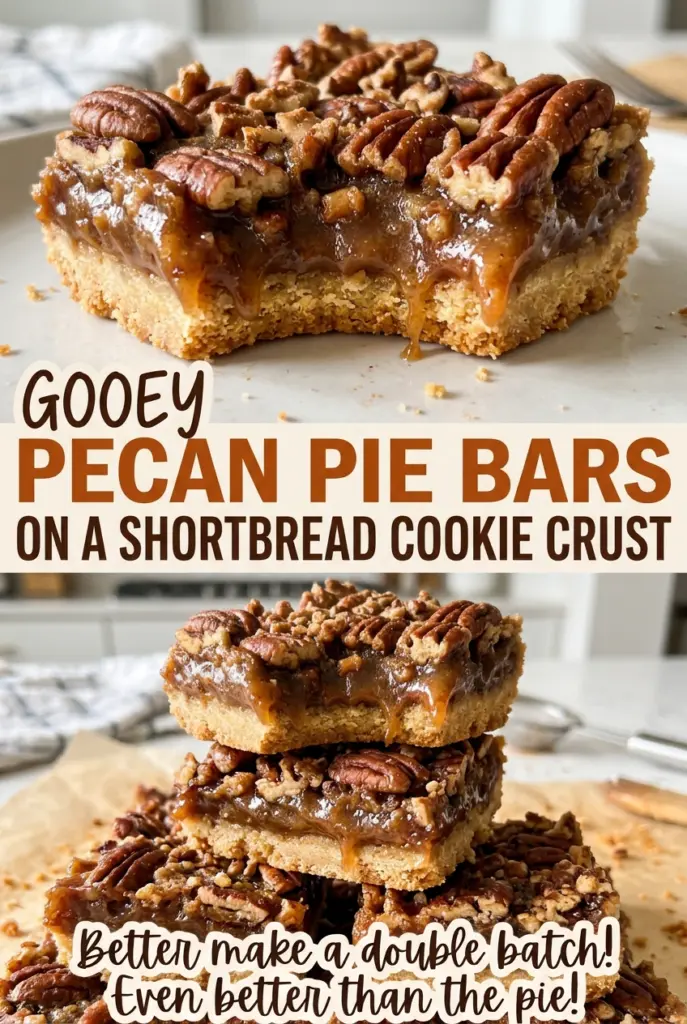
Gooey Pecan Pie Bars on a Shortbread Cookie Crust
The crust comes out of the oven with lightly golden edges and a tender, crumbly middle. That’s the moment I want to see before the filling goes on; a shortbread…
Tip: save now, cook later.The crust comes out of the oven with lightly golden edges and a tender, crumbly middle. That’s the moment I want to see before the filling goes on; a shortbread base needs its own time in the oven before it can support a gooey pecan layer. These pecan pie bars have the familiar brown-sugar-and-pecan center, but the buttery cookie crust makes them easier to cut and share than a whole pie.
I whisk the filling until the eggs and sugar are smooth, then stir in the pecans so they’re spread through every bite. Pouring it over the warm crust keeps the layers together as they bake. Once cooled, the bars hold their shape around a soft center, with plenty of pecans in each slice.
Kitchen Note
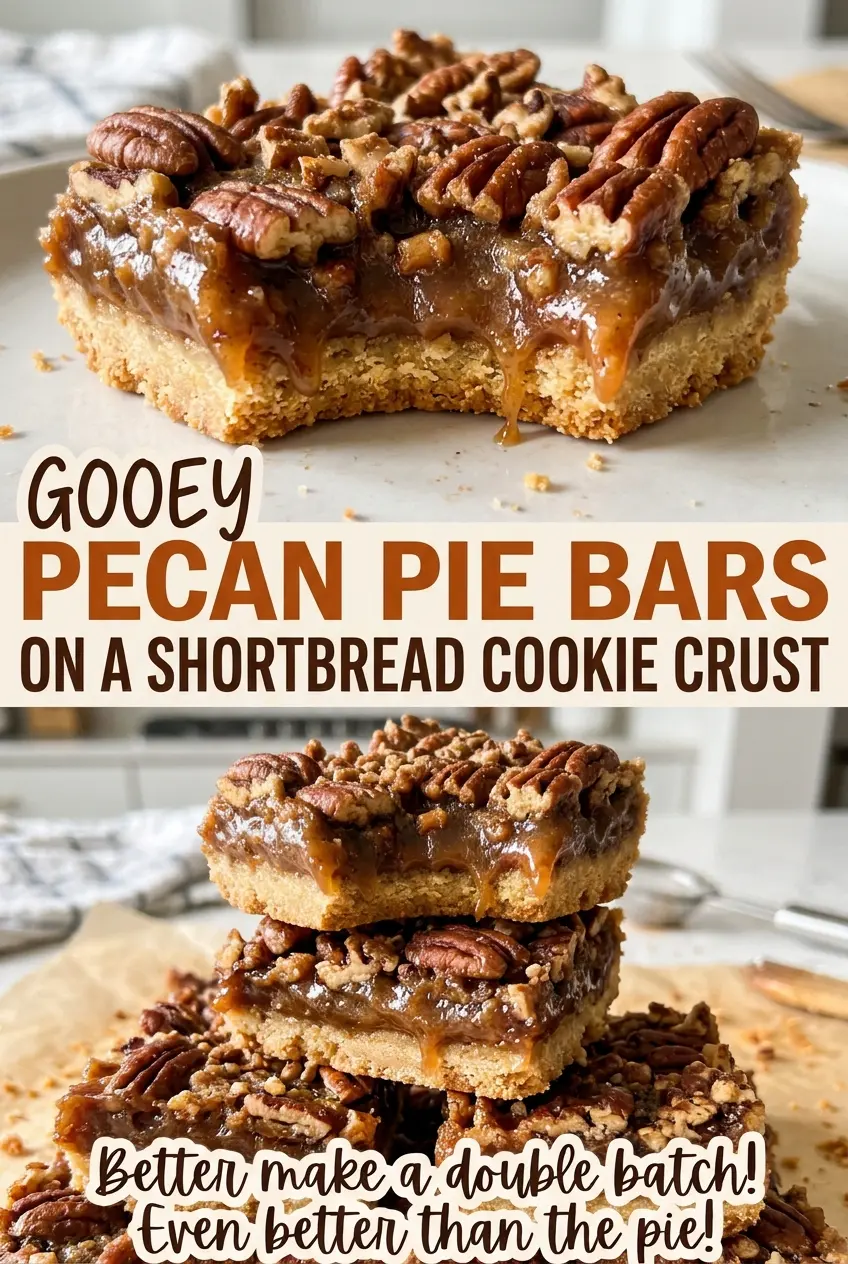
Give the pan its full cooling time before you lift the parchment. The filling needs that time to settle, and cutting too soon makes the gooey center drag against the knife instead of holding a clean edge.
Save these gooey pecan pie bars for a bake with a buttery shortbread base and a soft, pecan-packed center.
Why the Shortbread Crust Gets Baked Before the Gooey Filling
Pecan pie filling is heavy with eggs, sugar, and syrup. If it goes onto raw shortbread dough, the base has to bake at the same time as that wet topping, and it’s harder to get a firm crust beneath a soft center. Giving the crust a head start lets the butter-and-flour layer begin to set before the filling arrives.
Look for lightly golden edges rather than a deeply browned crust. The middle can still look pale at this point; it will bake again under the filling. This isn’t about making the base crisp all the way through before assembling the bars. It’s about giving it enough structure to hold its shape, so you get a distinct cookie layer instead of a soft, compressed bottom under the pecans.
The warm crust also makes the handoff between layers straightforward: pour the filling over it while it’s still warm, then return the pan to the oven. That timing keeps the process moving without asking you to cool the crust and handle it again.
Why Light Corn Syrup, Brown Sugar, and Pecans Each Matter
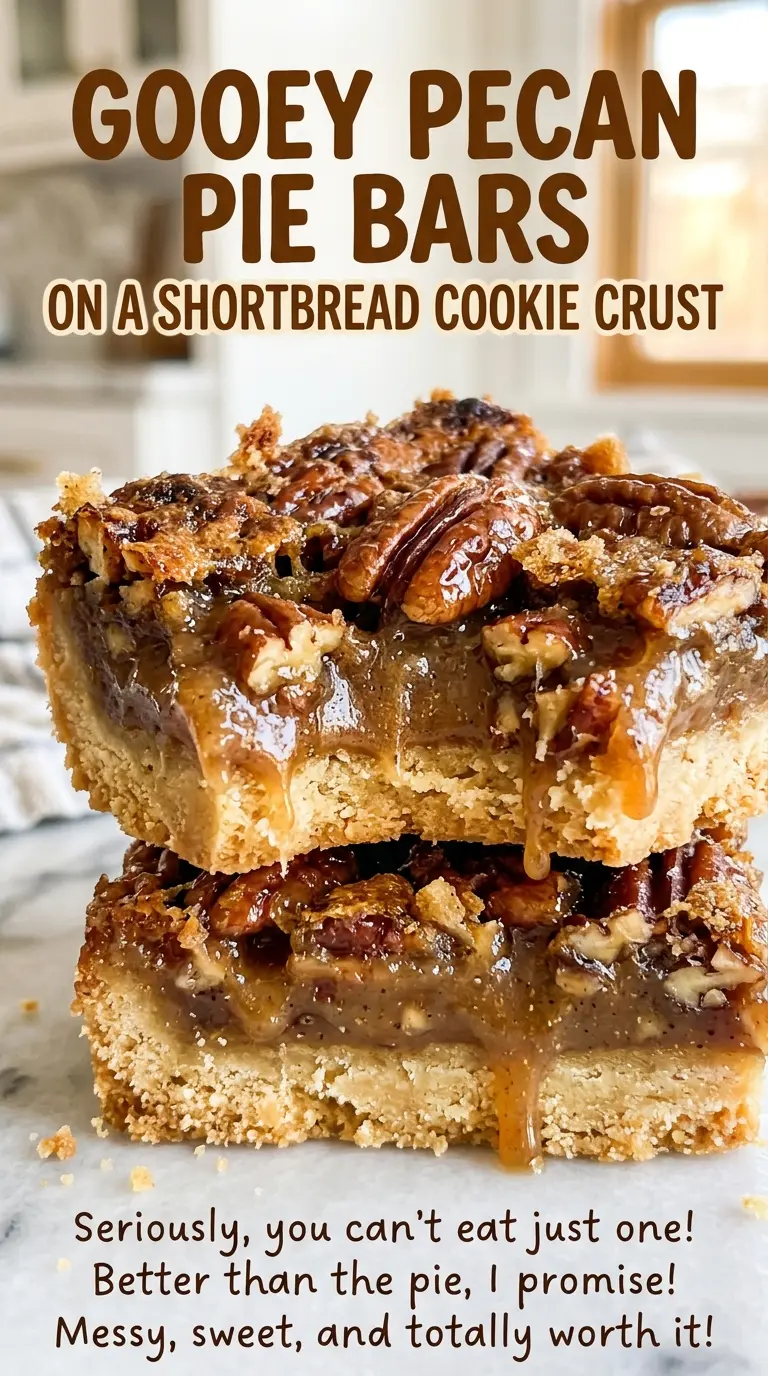
- All-purpose flour gives the crust enough structure to support the filling while keeping its shortbread texture. A cup-for-cup gluten-free baking flour is the most useful alternative; the crust may be more delicate, but the bars still work. Use a blend intended to replace wheat flour in baking.
- Butter brings the crust together and gives it its rich, tender bite. Use softened butter for the dough and melted butter in the filling, as they do different jobs in the two layers. If salted butter is what you have, leave out the kosher salt in the filling to keep the bars from tasting too salty.
- Light brown sugar brings a gentle molasses note and helps give the filling its chewy, gooey texture. Dark brown sugar can replace it measure for measure when you want a deeper caramel taste; the finished filling will be darker and more molasses-forward.
- Light corn syrup keeps the filling smooth and sticky without adding a strong flavor of its own. Golden syrup is the closest practical swap, used in the same quantity; it gives the center a slightly more buttery, caramel-like note.
- Eggs set the filling as it bakes. They’re doing important structural work here, so an egg-free substitute such as flax mixture won’t give you the same sliceable pecan center.
- Pecans bring the buttery flavor and crunch that make these bars taste like pecan pie. Fresh pecans have a cleaner, sweeter taste; walnuts can stand in at the same volume, though their flavor is more earthy and less buttery. Chop them coarsely so they’re easier to spread through the filling and cut into bars.
Build the Bars in Four Clear Stages
Prepare the Pan and Oven
Heat the oven to 350°F. Grease a 9×13-inch baking pan, then line it with parchment paper, leaving overhang on two sides for lifting the bars later. Grease the parchment, too, so the shortbread releases cleanly. Taking care with the overhang now gives you a useful handle once the bars have cooled.
Mix and Pre-Bake the Shortbread
Beat the softened butter with the granulated sugar in a large bowl until the mixture looks smooth. Add the flour and mix just until it turns crumbly; stop before it forms a smooth dough. Press the crumbs evenly into the prepared pan, paying attention to the corners so the base isn’t thicker at the edges. Bake for 20 to 23 minutes, until the edges are lightly golden.
Whisk the Filling Until Smooth
In a large bowl, whisk the eggs with the brown sugar until combined. Whisk in the corn syrup, melted butter, vanilla, and kosher salt, then stir in the coarsely chopped pecans. Keep the pecans moving through the mixture rather than leaving them in one mound, so each section of the pan gets a good share.
Bake Until the Edges Set
Pour the filling over the warm crust and return the pan to the oven for 30 to 35 minutes. The edges should look set while the center still has a slight jiggle; don’t wait for the middle to look firm like a cake. Set the pan on a wire rack and cool completely, about 3 hours. Lift the bars out by the parchment overhang and cut them once the filling has settled.
Three Easy Ways to Change the Bars Without Losing Their Character
Make the Shortbread Gluten-Free
Use a cup-for-cup gluten-free flour blend in place of the all-purpose flour, keeping the rest of the ingredients and method the same. The crust may be a little more tender and prone to crumbling, but it still makes a good base for the filling.
Use Dark Brown Sugar for a Deeper Center
Swap dark brown sugar for the light brown sugar in the filling, using the same quantity. The bars will have a darker color and a stronger molasses flavor, while keeping the familiar soft pecan-pie texture.
Trade Pecans for Walnuts
Use coarsely chopped walnuts in place of the pecans. The filling stays rich and the bars still slice well, but the nut flavor turns earthier and less buttery than the classic pecan version.
Storage and Reheating
- Refrigerator: Store the cooled bars in an airtight container for up to 4 days. The filling firms up when cold, while the crust stays tender.
- Freezer: Freeze well-wrapped bars in an airtight container for up to 2 months. Thaw them in the refrigerator before serving.
- Reheating: These bars are good chilled or at room temperature. If you want one warm, microwave an individual bar in short bursts just until barely warm; heating it too long can make the filling runny.
Questions That Come Up When Baking Pecan Pie Bars
Gooey Pecan Pie Bars on a Shortbread Cookie Crust
Ingredients
Equipment
Method
- Preheat the oven to 350°F.
- Grease a 9x13-inch baking pan, line it with parchment paper with overhang on two sides, and grease the parchment.
- Beat 1 cup softened butter with the granulated sugar in a large bowl until smooth.
- Mix in the flour just until crumbly.
- Press the mixture evenly into the prepared pan.
- Bake for 20 to 23 minutes, until the edges are lightly golden.
- Whisk the eggs and brown sugar in a large bowl.
- Whisk in the corn syrup, 2 tablespoons melted butter, vanilla, and salt.
- Stir in the pecans.
- Pour the filling over the warm crust.
- Bake for 30 to 35 minutes, until the edges are set and the center has a slight jiggle.
- Cool completely in the pan on a wire rack, about 3 hours.
- Lift out using the parchment and cut into bars.
