
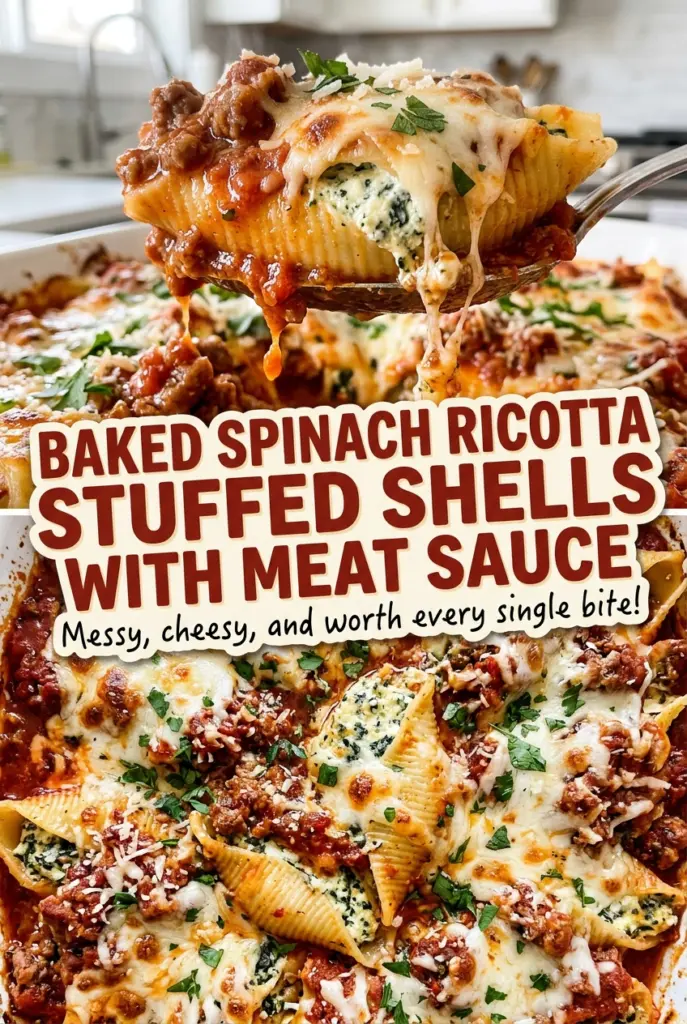
Baked Spinach Ricotta Stuffed Shells with Meat Sauce
When the foil comes off, the sauce should be bubbling around the shells, while the mozzarella still needs a little more time to color. That uncovered stretch is what turns…
Tip: save now, cook later.When the foil comes off, the sauce should be bubbling around the shells, while the mozzarella still needs a little more time to color. That uncovered stretch is what turns the top into a golden, stretchy layer. These baked spinach ricotta stuffed shells with meat sauce are hearty without being difficult to portion, and the jumbo shells hold their filling neatly on the plate.
One important note before you cook: although spinach appears in the recipe name, the ingredient list for this version doesn’t include spinach. The filling here is ricotta-based, with egg and Parmesan helping it hold together as it bakes. I like to simmer the meat sauce before assembling the dish so it has a chance to come together in the skillet, rather than relying on the oven to do all the work. The finished shells are tender, saucy, and capped with melted mozzarella.
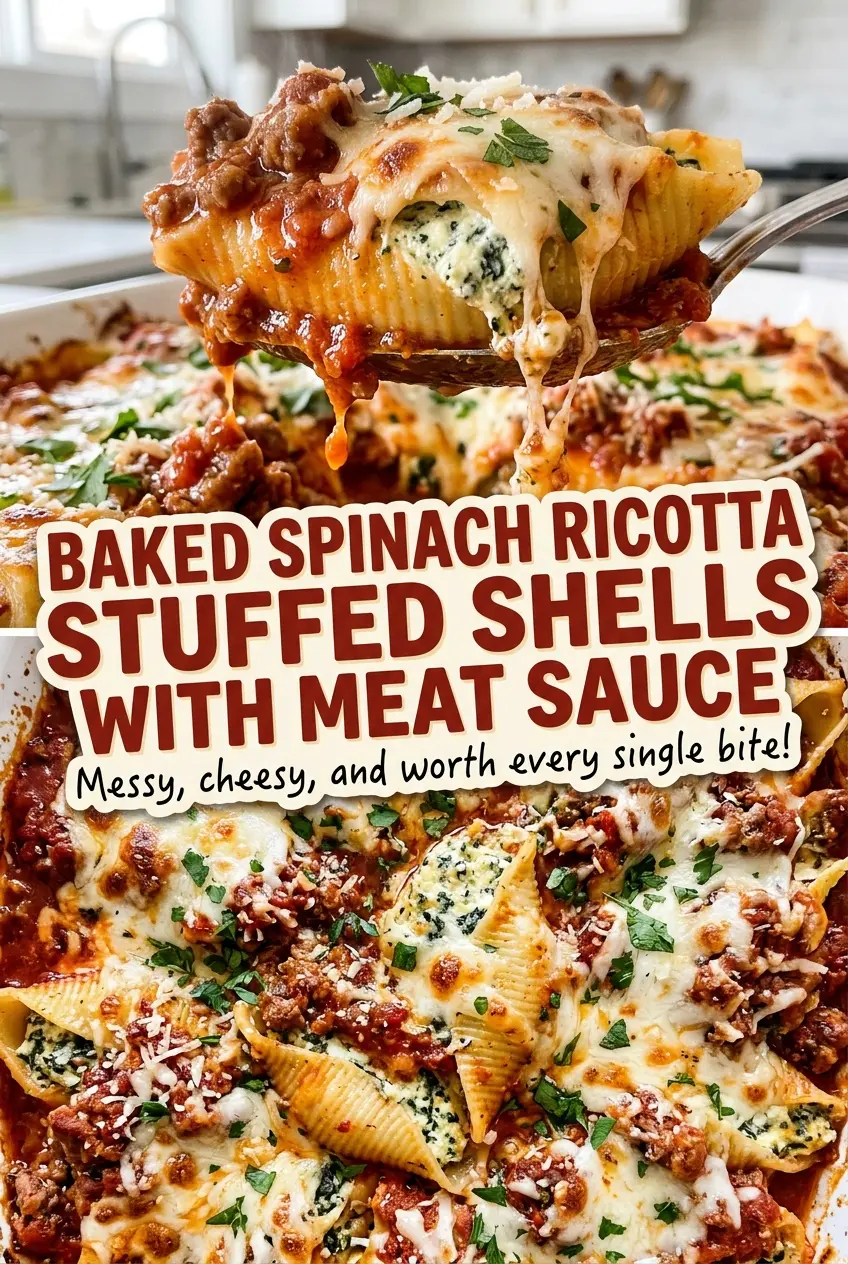
Kitchen Note
Rinse the shells under cool water as soon as you drain them. It stops the cooking and makes the shells easier to handle while you fill them.
Save these baked spinach ricotta stuffed shells with meat sauce for a bubbling, cheesy dinner that portions neatly straight from the pan.
Why the Meat Sauce Needs Its Own Simmer Before the Shells Go In
The sauce does more than add moisture to the baking dish. It carries the browned beef and softened onion through every layer, and a short simmer lets those flavors mingle before the pasta goes in. Marinara straight from the jar can taste a little separate from the meat; simmering it with the beef gives the sauce a more unified, savory taste.
That matters because the covered part of the bake traps steam rather than reducing the sauce much. Starting with a sauce that has already simmered means it can coat the shells without depending on the oven to cook away excess liquid. I spread some on the bottom of the dish, then spoon the rest over the filled shells. The lower layer keeps the pasta from sitting directly against the baking dish, while the top layer flavors the shells and gives the mozzarella something saucy to melt into.
Keep the simmer gentle after the marinara goes in. A hard boil can splash sauce around the skillet without improving it; a steady simmer is enough to bring everything together while you prepare the pasta and filling.
What Gives the Filling Its Creamy Texture and the Topping Its Stretch
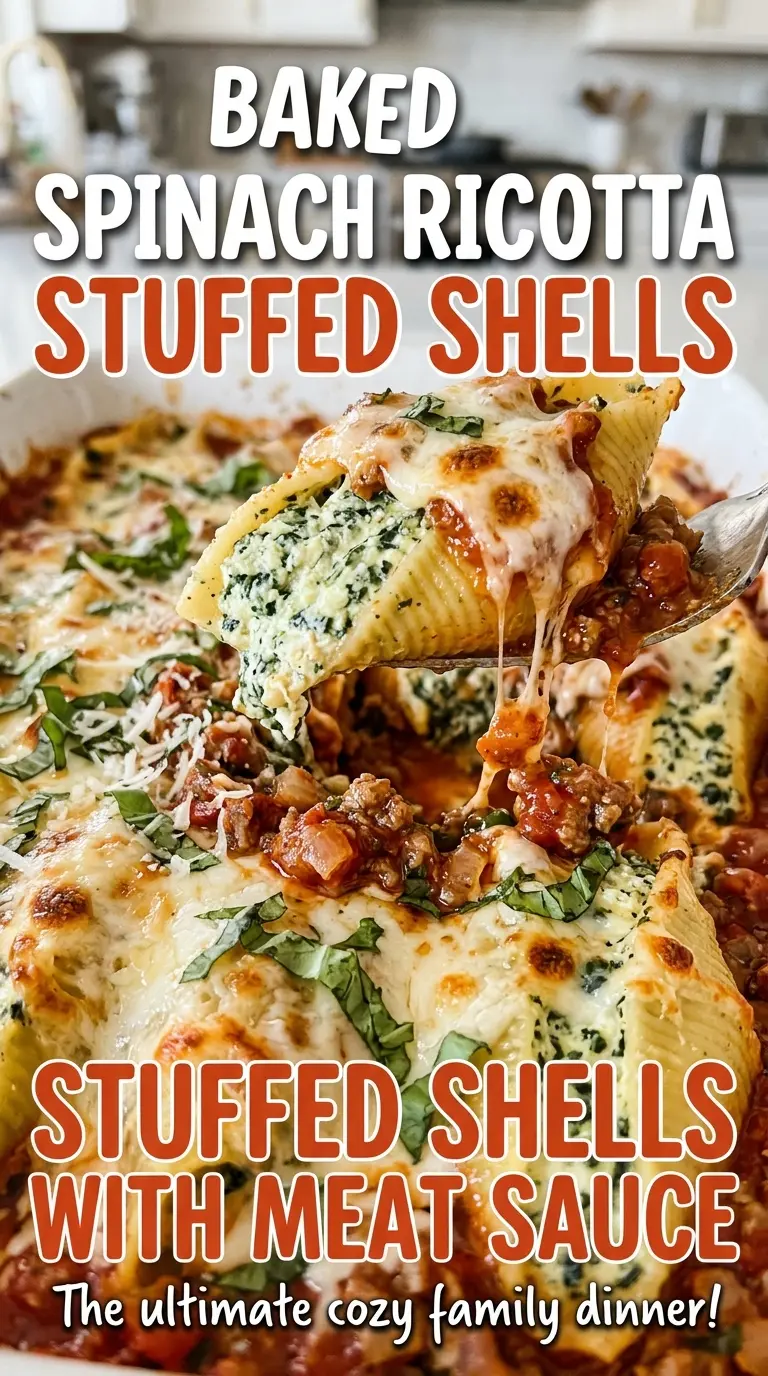
- Whole-milk ricotta — Its richer texture makes a soft, creamy filling. Part-skim ricotta is a workable swap, but the filling will be less rich and may set a little firmer. Choose a smooth container without a pool of liquid on top.
- Egg and Parmesan — The egg helps the ricotta mixture set as it bakes, while Parmesan brings a salty, savory edge. Finely grated Parmesan blends into the filling more evenly than large shreds.
- Low-moisture mozzarella — It melts into the stretchy, browned topping without adding as much moisture as fresh mozzarella. Pre-shredded is convenient; block mozzarella that you shred yourself usually melts more smoothly.
- Jumbo pasta shells — Their shape creates individual pockets for the filling. Check the shells as they cook, since a few may split; keeping them just al dente makes them easier to fill and sturdy enough for baking.
- Marinara sauce — A jarred sauce you already enjoy eating is the right choice here because its seasoning carries through the whole casserole. A spicy marinara is an easy swap if you want more heat without changing the filling.
- 85% lean ground beef — This gives the sauce a meaty texture without being as lean and dry as extra-lean beef. Brown it well, then drain excess fat if needed so the finished sauce doesn’t feel greasy.
From Skillet to Baking Dish: The Four Stages That Keep the Shells Intact
Simmer the beef and marinara together
Warm the olive oil in a large skillet over medium heat and cook the finely chopped onion for 4 to 5 minutes, until softened. Add the ground beef and break it up as it cooks for 6 to 8 minutes, until browned and at 160°F; drain excess fat if needed. Stir in the garlic for 30 seconds, then add the marinara, kosher salt, and black pepper. Let the sauce simmer for 10 minutes while you move on to the pasta.
Cook the shells just to al dente
Heat the oven to 375°F and lightly grease a 9×13-inch baking dish. Bring 4 quarts of water and 1 tablespoon kosher salt to a boil, add the jumbo shells, and cook them according to the package directions until just al dente. Drain and rinse the shells under cool water. If they cook until completely soft in the pot, they’re more likely to split when you fill them and bake them.
Stir together a filling that holds its shape
In a medium bowl, stir the ricotta with the egg, Parmesan, 1/2 cup of the mozzarella, chopped parsley, and Italian seasoning. Mix until the ingredients are evenly combined, without whipping the filling airy. The mixture should be thick enough to stay in a spoon as you work. Set the shells within reach so you can fill them without letting the pasta sit in a heap.
Layer, cover, and finish until bubbling
Spread 1 cup of meat sauce in the prepared dish, fill the shells with the ricotta mixture, and arrange them in the sauce. Spoon the remaining sauce over the shells and scatter the remaining 1 1/2 cups mozzarella on top. Cover with foil and bake for 25 minutes, then uncover and bake for 10 to 15 minutes, until bubbling and the filling reaches 160°F. Let the dish rest for 10 minutes before serving so the filling settles and the shells are easier to lift.
Easy Swaps That Change the Shells Without Losing Their Shape
Use spicy marinara for a warmer, bolder sauce
Swap the regular jarred marinara for a spicy marinara. It adds heat throughout the beef sauce without changing the filling or the assembly, so the dish stays familiar but has a livelier finish.
Make it gluten-free with gluten-free jumbo shells
Replace the regular pasta shells with gluten-free jumbo shells, then use the package directions to cook them just to al dente. Gluten-free pasta can be more delicate, so handle the shells gently as you drain and fill them; the sauce and ricotta filling stay the same.
Choose part-skim ricotta for a lighter filling
Part-skim ricotta can stand in for whole-milk ricotta. The filling will taste less rich and may have a firmer, less velvety texture, but the egg and Parmesan still help it hold together in the shells.
Storage and Reheating
- Refrigerator: Store covered leftovers for 3 to 4 days. The pasta softens a little as it sits, but the filling stays creamy.
- Freezer: Freeze cooled portions in airtight containers for up to 2 to 3 months. Thaw in the refrigerator before reheating for more even warming.
- Reheating: Cover a baking dish with foil and warm in a 350°F oven until hot throughout, or microwave individual portions in short intervals. Keep the dish covered in the oven so the shells don’t dry out around the edges.
Questions That Come Up While Making Stuffed Shells
Baked Spinach Ricotta Stuffed Shells with Meat Sauce
Ingredients
Equipment
Method
- Heat the olive oil in a large skillet over medium heat.
- Add the onion and cook for 4 to 5 minutes until softened.
- Add the ground beef and cook for 6 to 8 minutes, breaking it up, until browned and it reaches 160°F.
- Drain excess fat if needed.
- Stir in the garlic and cook for 30 seconds.
- Add the marinara sauce, kosher salt, and black pepper, then simmer for 10 minutes.
- Heat the oven to 375°F.
- Lightly grease a 9x13-inch baking dish.
- Bring the water and 1 tablespoon kosher salt to a boil in a large pot.
- Add the pasta shells and cook according to package directions until just al dente.
- Drain the shells and rinse under cool water.
- Stir together the ricotta, egg, Parmesan, 1/2 cup of the mozzarella, parsley, and Italian seasoning in a medium bowl.
- Spread 1 cup of the meat sauce in the prepared baking dish.
- Fill the shells with the ricotta mixture and arrange them in the dish.
- Spoon the remaining meat sauce over the shells.
- Sprinkle with the remaining 1 1/2 cups mozzarella.
- Cover the dish with foil and bake for 25 minutes.
- Uncover and bake for 10 to 15 minutes until bubbling and the filling reaches 160°F.
- Let the shells rest for 10 minutes before serving.
