
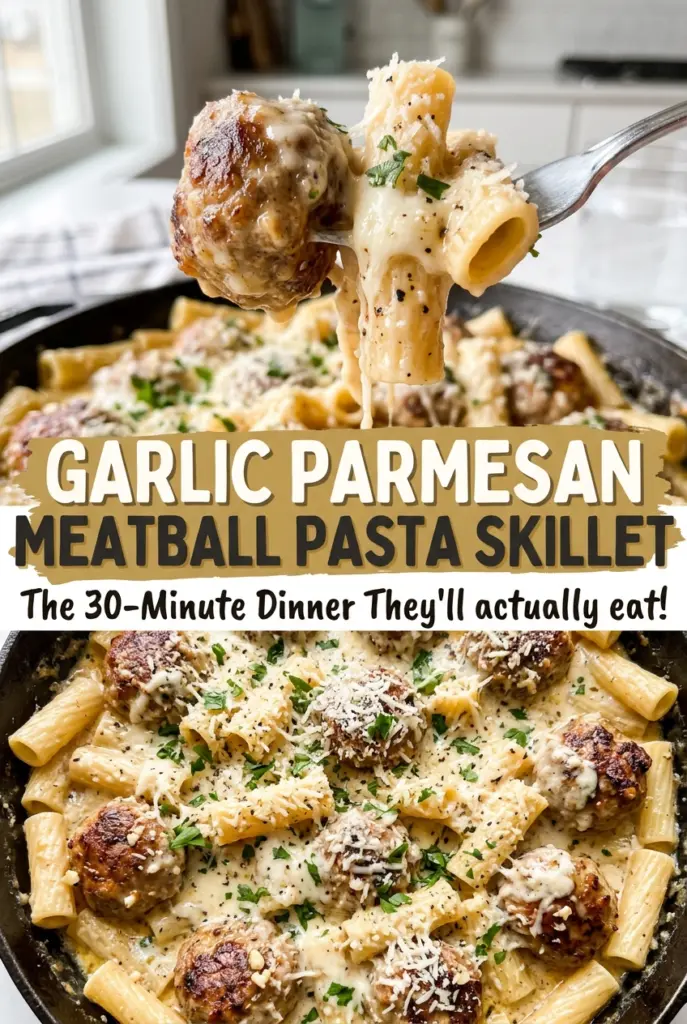
Garlic Parmesan Meatball Pasta Skillet
The first time I made pasta in the same skillet as the meatballs, I watched the broth turn cloudy and wondered if I’d misjudged the liquid. It hadn’t gone wrong:…
Tip: save now, cook later.The first time I made pasta in the same skillet as the meatballs, I watched the broth turn cloudy and wondered if I’d misjudged the liquid. It hadn’t gone wrong: the pasta was releasing starch, and that’s what gives this Garlic Parmesan Meatball Pasta Skillet its silky sauce. The short pasta cooks right in the seasoned broth, so there’s no second pot to drain and no flavor left behind in the pasta water.
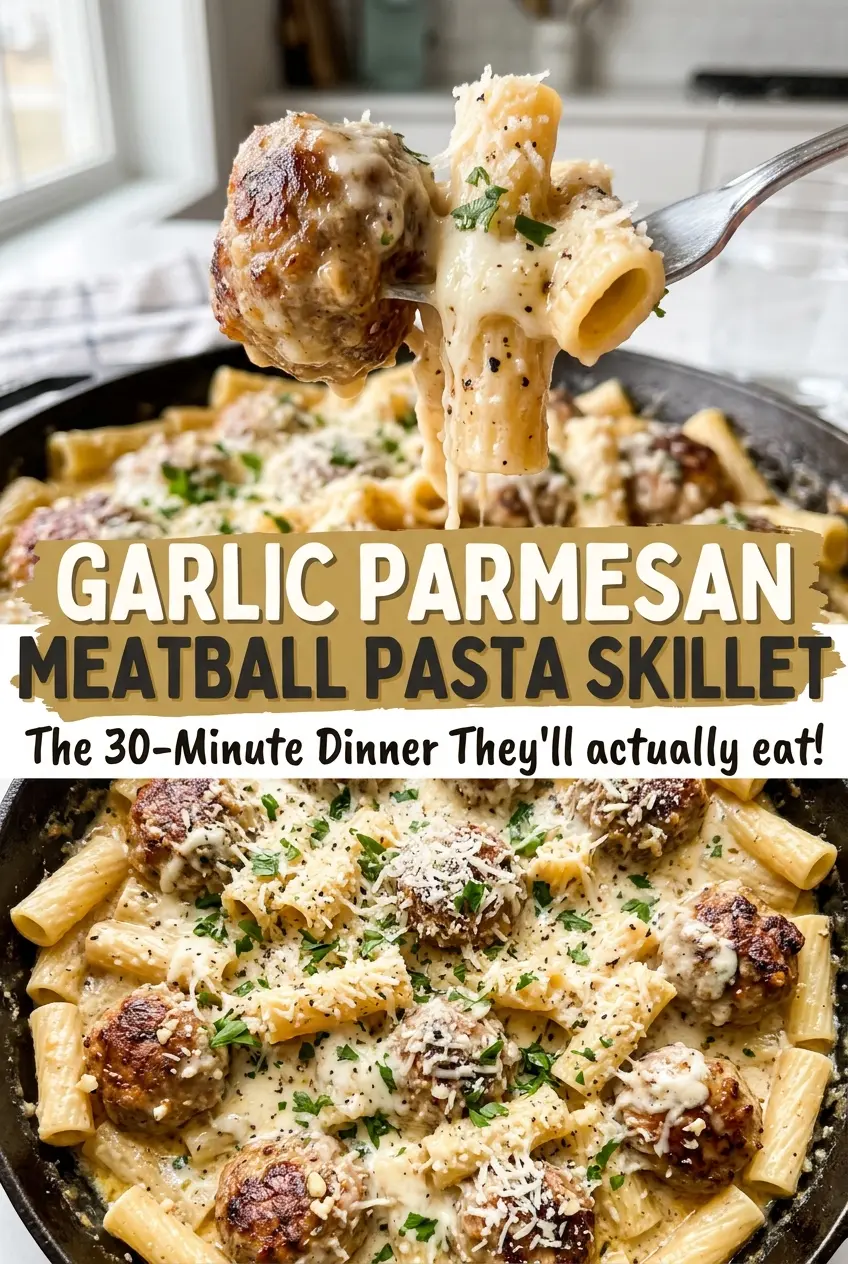
I keep the meatballs small, about an inch wide, so they brown quickly and finish cooking alongside the pasta. A gentle simmer matters here; a rolling boil can make the pasta cook unevenly before the meatballs are ready. Once the cream and Parmesan go in, the sauce turns rich and clings to every twist of rotini or piece of penne. Let the skillet rest before serving, and it settles into a creamy, hearty dinner for six.
Kitchen Note
Give the finished skillet its full five-minute rest off the heat. The sauce thickens as it settles, so it coats the pasta instead of running to the bottom of the bowl.
Save this Garlic Parmesan Meatball Pasta Skillet for a cozy dinner with tender meatballs and a creamy Parmesan sauce.
Why Cooking the Pasta in Broth Builds a Better Sauce
When pasta cooks in a large pot of water, most of its surface starch goes down the drain. Here, the short pasta simmers in chicken broth inside the skillet, and that starch stays in the cooking liquid. It gives the sauce a little body before the cream and Parmesan even enter the pan.
The amount of liquid is doing two jobs: it cooks the pasta and creates the base for the sauce. Keep the heat at a gentle simmer rather than letting the broth boil hard. A steady, covered simmer gives the pasta time to absorb liquid without reducing it too quickly. Stir once during the first covered stretch so the pasta doesn’t settle in one spot, then add the browned meatballs back with their juices. The result isn’t a separate cream sauce poured over pasta; it’s one skillet where the pasta, meatballs, and sauce finish together.
Why the Meatball Mix and Finely Grated Parmesan Matter
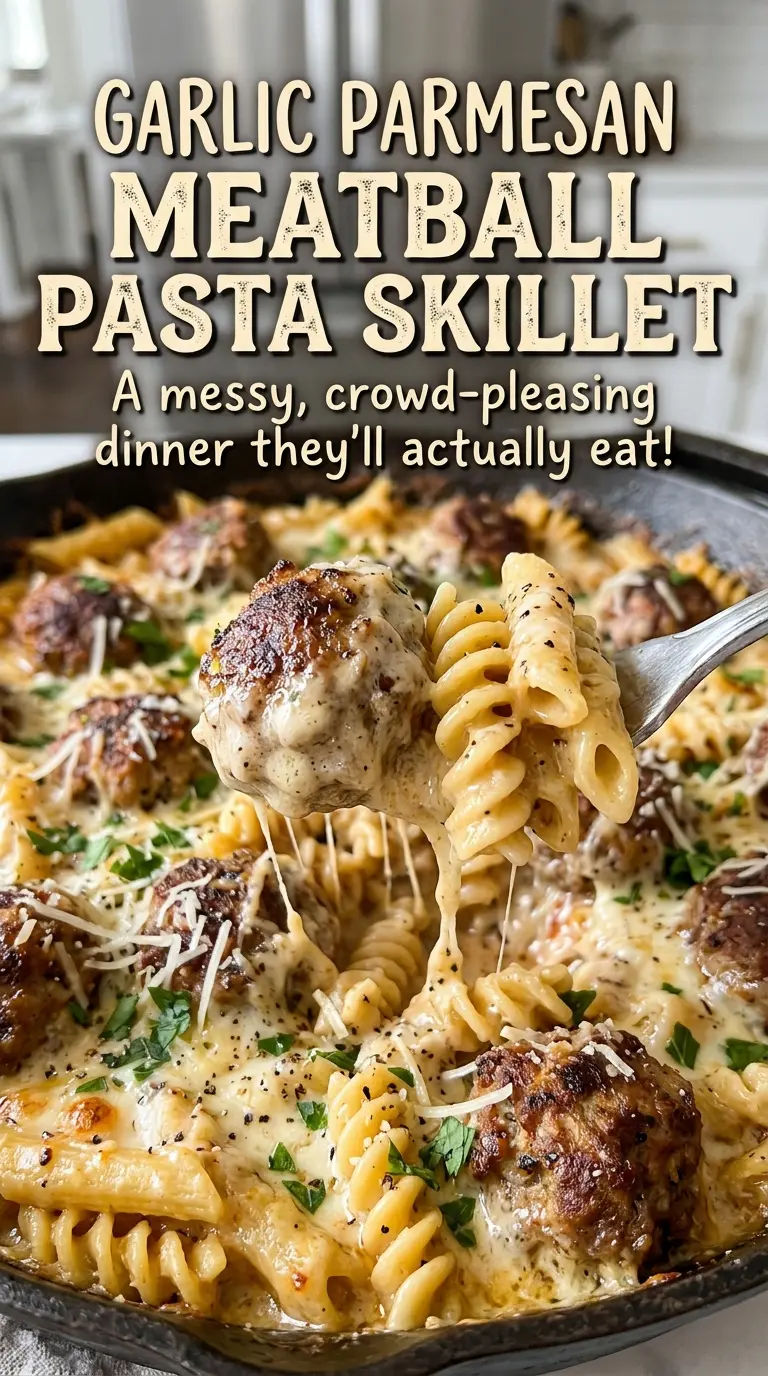
- 85% lean ground beef — The bit of fat keeps these small meatballs juicy while they brown. Extra-lean beef tends to make a firmer, drier meatball; ground pork is a workable swap if you’d like a milder, richer flavor.
- Panko, egg, and whole milk — Together, they keep the beef mixture tender and help it hold its shape. Plain breadcrumbs work instead of panko, though the finer crumbs make a slightly denser meatball. Two-percent milk also works, with a little less richness.
- Garlic, divided between the meatballs and skillet — Garlic in the meat mixture seasons each bite, while the rest perfumes the oil before the broth goes in. Mince it finely so the pieces distribute through the meatballs and cook quickly in the pan.
- Finely grated Parmesan — Fine shreds melt into the sauce more smoothly than thick, coarse shreds. A wedge grated just before cooking gives the cleanest melt; finely grated packaged cheese is convenient and works, too. Pecorino Romano can stand in, but it makes the sauce sharper and saltier.
- Low-sodium chicken broth — The broth reduces around the pasta, so starting with low-sodium gives you better control over the finished seasoning. Regular broth can make the skillet saltier than intended, especially with Parmesan in the sauce.
- Short pasta — Rotini and penne both hold sauce well and fit comfortably in a deep skillet. Choose a similar short shape if you switch; long noodles are harder to stir and keep submerged evenly.
- Heavy cream — Its richness gives the finished sauce body and helps it stay smooth as it simmers with Parmesan. There isn’t a direct dairy-free swap that gives the same result; a thinner substitute makes a looser sauce.
How to Brown the Meatballs and Finish the Pasta in One Skillet
Shape and Brown the Meatballs
Gently combine the beef, panko, egg, milk, part of the garlic, some Parmesan, and part of the salt and pepper. Stop mixing as soon as everything is evenly distributed; working the mixture hard makes the meatballs dense. Shape 16 meatballs about an inch wide. Brown them in olive oil in a 12-inch deep skillet over medium-high heat for 5 to 7 minutes, turning as they cook, then move them to a plate.
Wake Up the Garlic and Seasoning
Lower the heat to medium before adding the remaining garlic and Italian seasoning to the skillet. Stir for about 30 seconds, just until the garlic smells fragrant. Keep it moving across the pan; minced garlic can scorch quickly in the hot oil and leave a bitter taste. Add the broth, pasta, and remaining salt and pepper, then bring the liquid to a boil.
Simmer the Pasta with the Meatballs
Once the broth boils, reduce the heat to maintain a gentle simmer and cover the skillet. Cook for 6 minutes, stirring once during that stretch. Return the meatballs and any juices on the plate, cover again, and simmer for 6 to 8 minutes more. Check that the pasta is al dente and that the center of a meatball reaches 160°F; the skillet shouldn’t be boiling aggressively.
Make the Parmesan Cream Sauce
Stir in the heavy cream and remaining Parmesan, then simmer uncovered for 1 to 2 minutes, stirring gently. The sauce is ready when it lightly coats the pasta rather than looking watery around the edges. Take the skillet off the heat and let it rest for 5 minutes before serving. Stir gently as you portion it so each serving gets pasta, sauce, and meatballs.
Simple Ways to Adapt This Meatball Pasta Skillet
Make It Gluten-Free
Use gluten-free panko and a short gluten-free pasta in place of the regular versions. Gluten-free pasta can soften faster and absorb liquid differently, so start checking it early and use its texture—not the clock alone—to judge when it’s al dente.
Use Ground Pork for a Milder Meatball
Replace the beef with ground pork and keep the other meatball ingredients and shaping method the same. Pork gives the meatballs a softer, slightly sweeter flavor; cook them until the centers reach 160°F.
Make a Half Batch
Halve every ingredient and shape eight meatballs for a smaller dinner. Use a deep skillet with enough room for the pasta and broth to move when stirred. The smaller quantity may finish at a different pace, so follow the al dente and meatball temperature cues rather than cutting every cooking time in half.
Storage and Reheating
- Refrigerator: Store leftovers in an airtight container for 3 to 4 days. The pasta will continue to soften as it sits.
- Freezer: Freeze airtight for up to 2 months. The pasta may soften and the cream sauce may separate slightly after thawing, but gentle reheating brings it back together as much as possible.
- Reheating: Warm gently in a covered saucepan over low heat, stirring now and then with a splash of broth to loosen the sauce. Heat leftovers to 165°F throughout; high heat can make the cream sauce separate.
Questions That Come Up When Making This Skillet
Garlic Parmesan Meatball Pasta Skillet
Ingredients
Equipment
Method
- In a large bowl, gently mix the ground beef, panko breadcrumbs, egg, whole milk, 2 cloves of garlic, 1/4 cup Parmesan cheese, 1/2 teaspoon kosher salt, and 1/4 teaspoon black pepper.
- Shape the mixture into 16 meatballs about 1 inch wide.
- Heat the olive oil in a 12-inch deep skillet over medium-high heat.
- Brown the meatballs for 5-7 minutes, turning them as they cook.
- Transfer the meatballs to a plate.
- Reduce the heat to medium and cook the remaining 2 cloves of garlic and the Italian seasoning in the skillet for about 30 seconds, stirring until fragrant.
- Add the chicken broth, pasta, remaining 1/2 teaspoon kosher salt, and remaining 1/4 teaspoon black pepper.
- Bring the mixture to a boil, then reduce the heat to maintain a gentle simmer.
- Cover and simmer for 6 minutes, stirring once.
- Return the meatballs and any juices to the skillet.
- Cover and simmer for 6-8 minutes, until the pasta is al dente and the meatballs reach 160°F in the center.
- Stir in the heavy cream and remaining 1/2 cup Parmesan cheese.
- Simmer uncovered for 1-2 minutes, stirring gently, until the sauce lightly coats the pasta.
- Remove the skillet from the heat and let it rest for 5 minutes before serving.
