

Garlic Butter Shrimp Skewers
The shrimp take only a few minutes on a hot grill, which means the garlic butter needs to be ready before they go on. I learned to finish the butter…
Tip: save now, cook later.The shrimp take only a few minutes on a hot grill, which means the garlic butter needs to be ready before they go on. I learned to finish the butter first, then keep my attention on the skewers; there isn’t much time to step away once the shrimp hit the grate. These garlic butter shrimp skewers come off opaque and tender, with lemon and parsley stirred into warm butter for a quick finish.
Large shrimp are a good fit here because they’re easier to thread onto metal skewers and give you a little more room between perfectly cooked and overdone. I toss them with olive oil, salt, and pepper, then grill them over medium-high heat. The butter goes on after grilling, so its garlic stays fragrant instead of burning over the flame.

Kitchen Note
Cook the garlic just until it smells fragrant, about 30 seconds, then take the saucepan off the heat before adding the lemon juice and parsley. Garlic can go from fragrant to browned quickly, and browned garlic tastes sharp in this delicate butter.
Save these garlic butter shrimp skewers for the next time you want tender grilled shrimp with a bright lemon-parsley finish.
Why the Shrimp Go on the Grill Before the Garlic Butter
Garlic butter seems like it belongs on the grill with the shrimp, but direct heat can scorch the garlic before the seafood is cooked. I make the butter separately on medium-low heat and add it after grilling. That keeps the garlic’s mellow aroma in the sauce, while the shrimp get the direct heat they need for a quick cook.
Preheating the outdoor grill to medium-high, about 400–450°F, gives the skewers a hot cooking surface from the start. Shrimp are lean, so they don’t need a long stretch over the heat; the goal is opaque flesh and an internal temperature of 145°F. The 2–3 minutes per side is a useful guide, but the visual and temperature cues matter more than the clock if your shrimp vary a little in size.
There’s also a practical reason to use skewers: the shrimp stay together as you turn them instead of asking you to flip individual pieces over the grate. Eight metal skewers hold the batch in manageable portions. Once the shrimp are off the grill, the garlic butter takes seconds to drizzle over them, and the parsley stays fresh-looking rather than cooked down.
What the Butter, Lemon, and Shrimp Each Bring to the Skewers
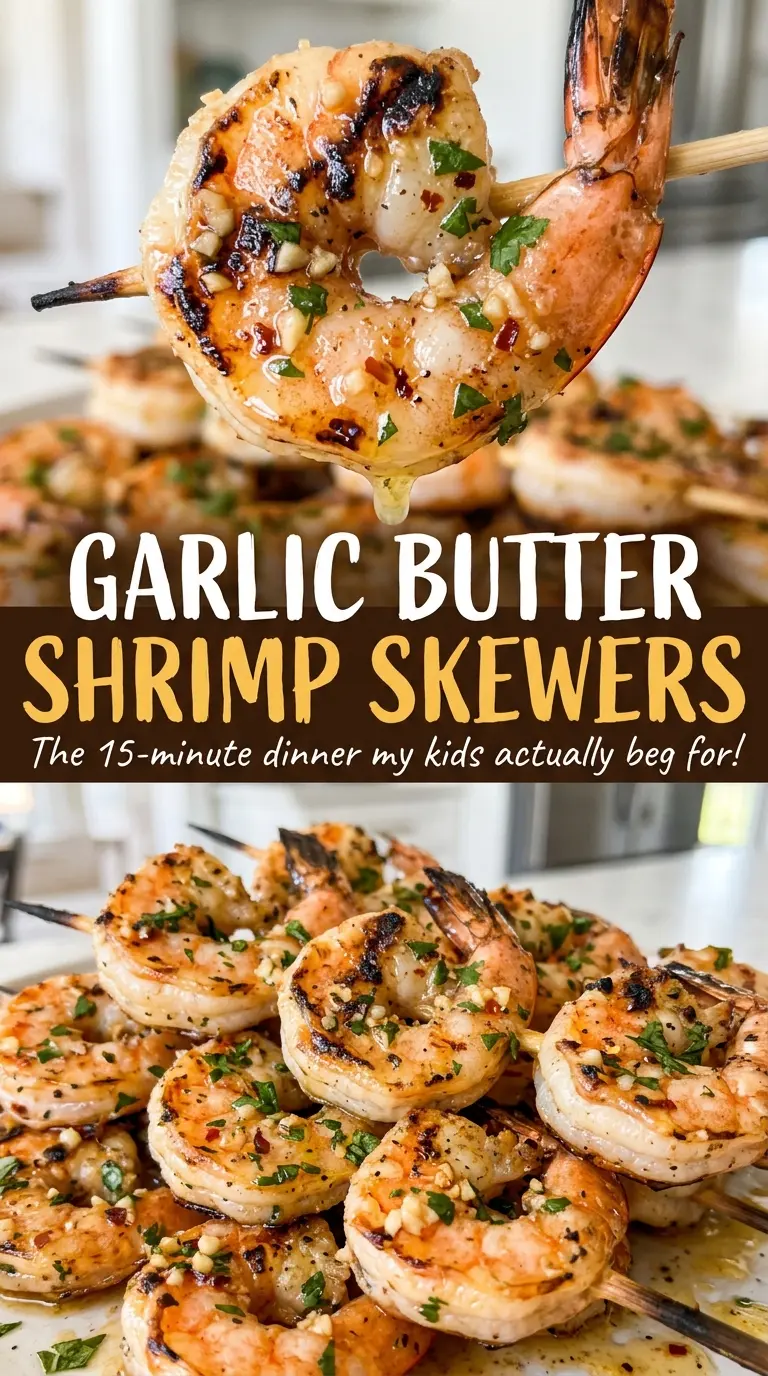
- Large shrimp: Shrimp in the 21–25-per-pound size range are sturdy enough to thread and easy to watch on the grill. Peeled and deveined shrimp keep prep straightforward; if you buy them frozen, thaw them fully and drain them well before tossing with the oil. Smaller shrimp cook faster and are harder to handle on skewers, so keep the large size for the timing and texture this recipe is built around.
- Unsalted butter: Butter gives the finish its smooth, rich body. Unsalted butter lets the kosher salt on the shrimp do its job without making the final dish hard to season; olive oil can replace the butter for a dairy-free finish, though it will taste lighter and less creamy.
- Garlic: Fresh minced cloves give the butter its central savory note. Mince the garlic finely so it releases its aroma quickly in the short cooking time. Jarred minced garlic is convenient, but its flavor is often less bright; fresh cloves are worth using here.
- Lemon juice and fresh parsley: Lemon juice cuts through the butter’s richness, while chopped parsley brings a clean herbal finish. Freshly squeezed lemon juice works well, and bottled lemon juice is a practical option when that’s what you have. Fresh parsley has a livelier flavor than dried parsley; if you leave it out, the sauce will still work but will lose that fresh green note.
- Olive oil: A light coating helps the shrimp take the salt and pepper evenly before grilling. A basic everyday olive oil is fine; there’s no need to use an expensive finishing oil because the shrimp are cooked over high heat.
From Fragrant Garlic Butter to Just-Cooked Shrimp
Finish the Garlic Butter First
Melt the butter in a small saucepan over medium-low heat. Add the minced garlic and cook for about 30 seconds, stopping when it smells fragrant rather than waiting for it to brown. Remove the saucepan from the heat, then stir in the lemon juice and chopped parsley. Setting the butter aside now means the shrimp can come straight off the grill and onto the platter without a pause.
Heat the Grill and Thread the Shrimp
Preheat an outdoor grill to medium-high, about 400–450°F, for 10–15 minutes. While it heats, toss the peeled and deveined shrimp with olive oil, kosher salt, and freshly ground black pepper. Thread the shrimp onto 8 metal skewers, arranging them securely so the pieces stay together when you turn them. If the grill isn’t fully hot, the shrimp may take longer to color and can lose moisture while you wait for them to cook through.
Grill Until Opaque, Then Dress
Grill the skewers for 2–3 minutes per side. Look for shrimp that have turned opaque, and check that they reach 145°F; translucent centers mean they need more time. Avoid leaving them over the heat after they’re cooked, since shrimp can turn firm and rubbery with extra grilling. Transfer them to a serving platter and drizzle with the prepared garlic butter while the shrimp are still hot.
Two Easy Ways to Adjust the Garlic Butter Shrimp
A Dairy-Free Olive Oil Finish
Replace the butter with the same volume of olive oil and warm it gently with the garlic, then stir in the lemon juice and parsley off the heat. The sauce will be dairy-free and lighter, with a less rounded, buttery texture. The shrimp still get the same olive oil, salt, and pepper before grilling.
A Brighter Lemon-and-Parsley Finish
For a sharper, more herbal finish, increase the lemon juice and chopped parsley in the butter. Add the lemon gradually and taste before adding more, since extra acidity makes the butter taste less rich. This version keeps the same garlic-butter method but puts the fresh, tangy notes more forward.
Storage and Reheating
- Refrigerator: Store leftover shrimp in an airtight container for 3–4 days. The shrimp will firm up after chilling, and the butter will solidify.
- Freezer: Cooked shrimp can be frozen, though they’ll be less tender after thawing. Pack them airtight and use within 3 months for best quality.
- Reheating: Warm gently in a covered skillet over low heat until hot, or reheat in the microwave in short bursts. Take care not to cook them for long; extra heat quickly makes leftover shrimp tough.
Questions That Come Up Before Grilling Shrimp Skewers
Garlic Butter Shrimp Skewers
Ingredients
Equipment
Method
- Melt the butter in a small saucepan over medium-low heat.
- Add the garlic and cook for about 30 seconds, until fragrant.
- Remove from the heat.
- Stir in the lemon juice and parsley.
- Preheat an outdoor grill to medium-high heat, about 400–450°F, for 10–15 minutes.
- Toss the shrimp with the olive oil, salt, and pepper.
- Thread the shrimp onto 8 metal skewers.
- Grill the shrimp for 2–3 minutes per side, until opaque and they reach 145°F.
- Transfer the shrimp to a serving platter and drizzle with the garlic butter.
