
French Onion Pasta Skillet
The onions start out piled high in the skillet, and it can seem like there’s no way they’ll cook down evenly. Keep them moving over medium heat and they slowly…
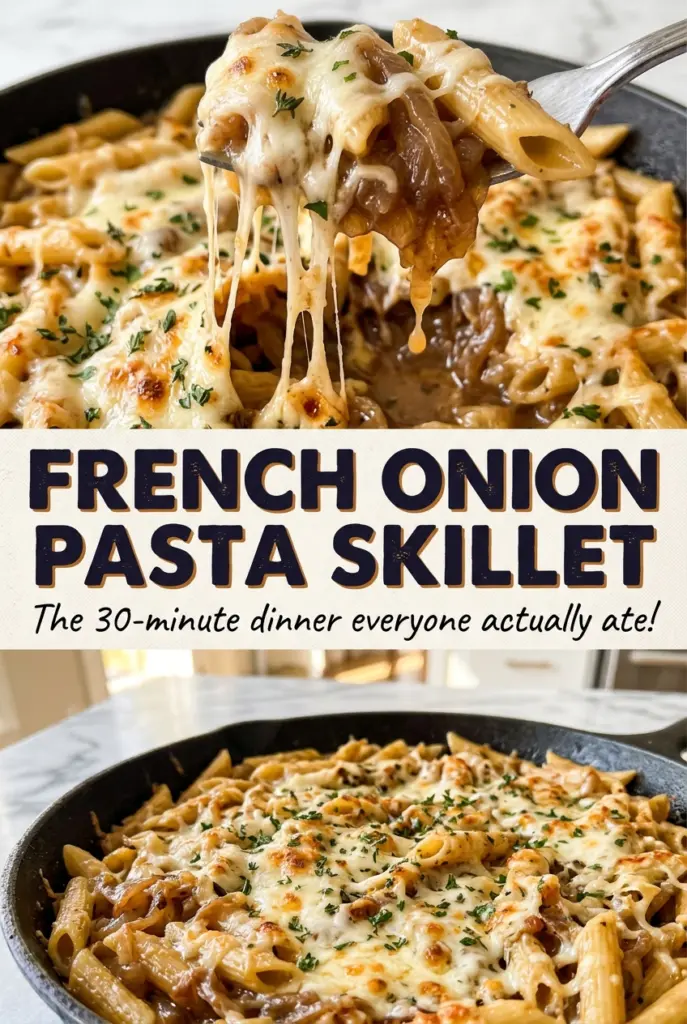
Tip: save now, cook later.The onions start out piled high in the skillet, and it can seem like there’s no way they’ll cook down evenly. Keep them moving over medium heat and they slowly soften, shrink, and turn deeply golden. That patient onion base is what gives this French onion pasta skillet its savory, familiar character.
I brown the beef first, then use the same skillet for the onions so the browned bits stay behind to flavor the broth. The dry pasta cooks right in that broth with the beef, which means it picks up the onion-rich liquid as it softens instead of being boiled in a separate pot.
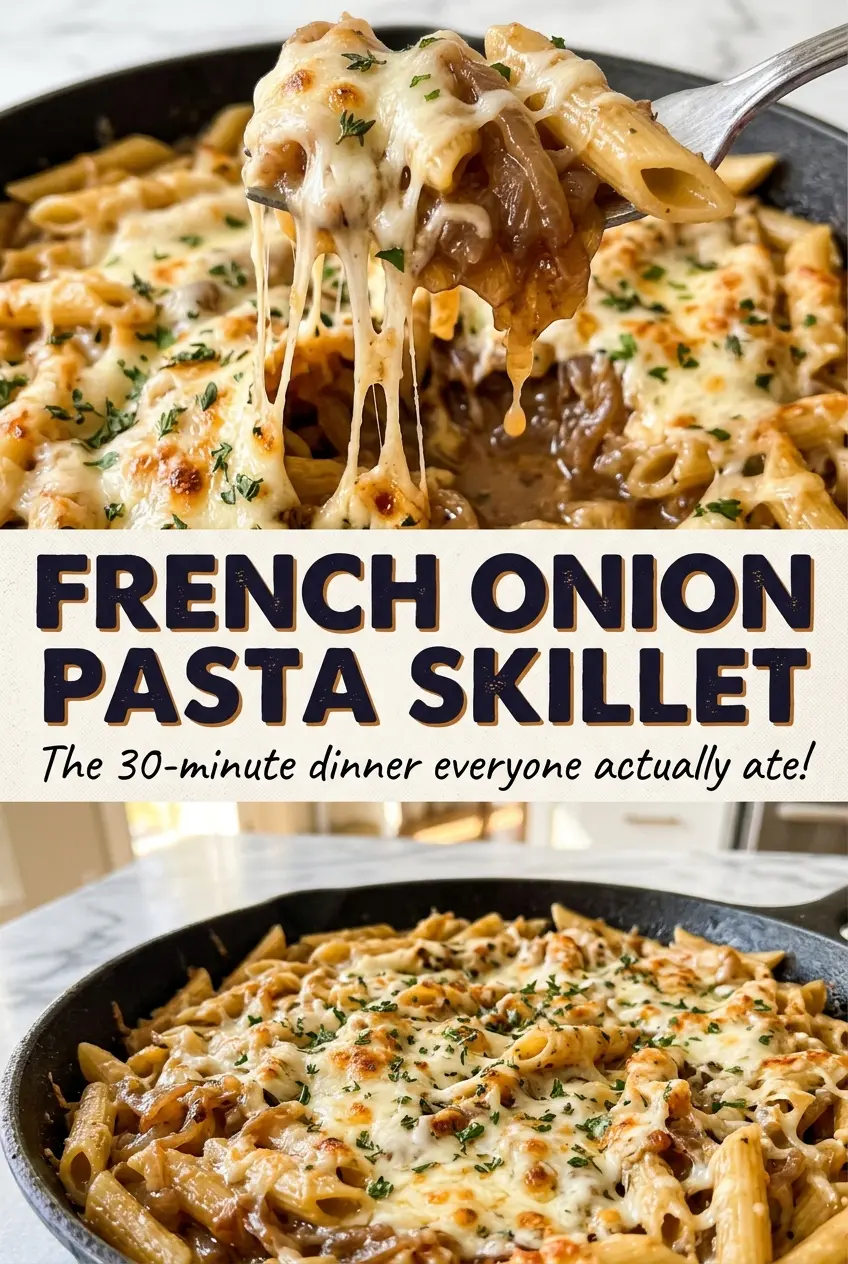
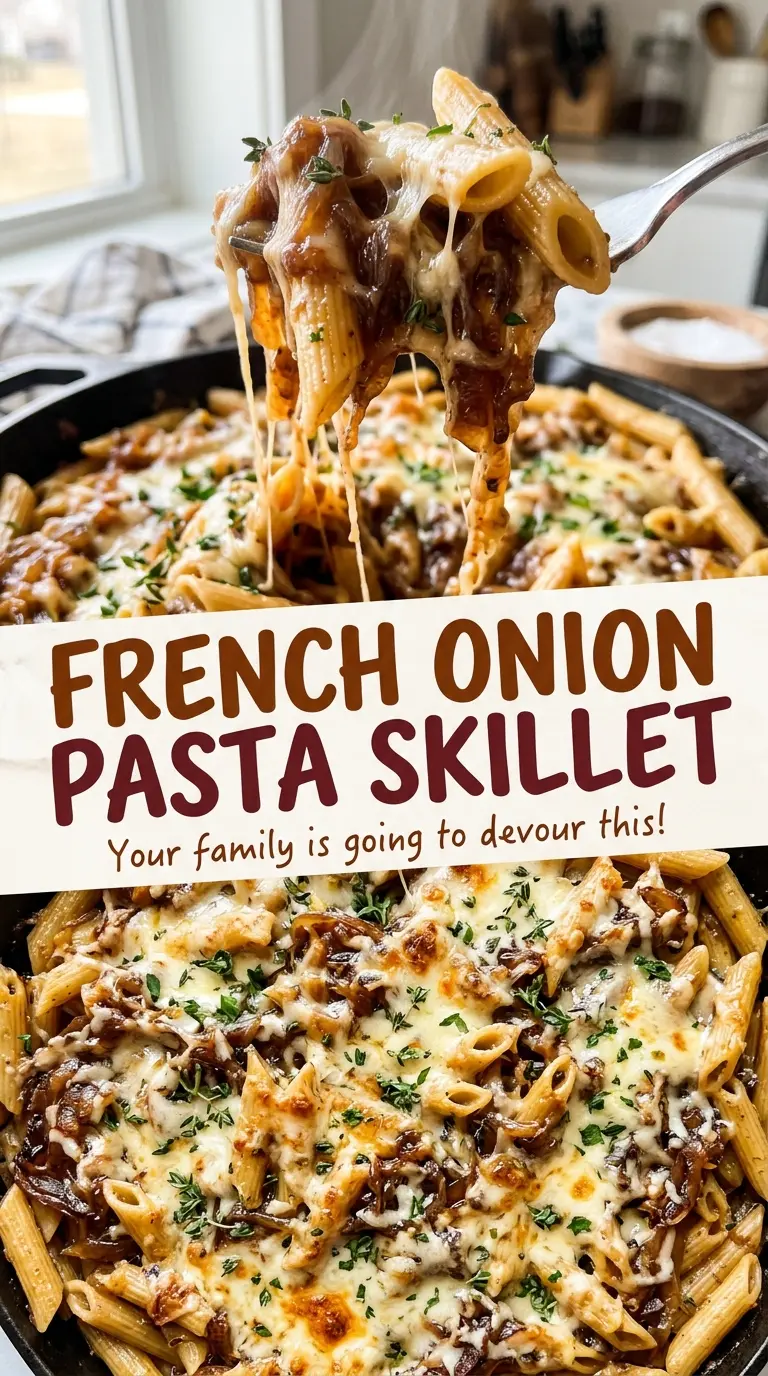
Once the Gruyère melts into the cream, the skillet turns glossy and rich, with tender pasta and beef tucked through every bite.
Kitchen Note
Take the skillet fully off the heat before stirring in the cream and Gruyère. The cheese melts in the residual warmth, and the three-minute rest lets the sauce settle around the pasta.
Save this French onion pasta skillet for its deeply browned onions, tender pasta, and creamy Gruyère finish.
Why Rushing the Onions Leaves This Pasta Flat
French onion flavor doesn’t come from tossing raw onion into the broth and hoping it softens enough. The onions need time in the butter to lose their sharp edge and develop a deep golden color. That slow change builds the savory sweetness that makes the finished skillet taste like more than beef and pasta in broth.
Give the onions room to cook in the 12-inch skillet, and stir often so the ones touching the pan don’t get too dark while the rest are still softening. Their color matters more than a quick shortcut: pale, just-soft onions make a gentler, less rounded base. The beef goes onto a plate after browning, but its flavorful browned bits stay in the skillet; the broth loosens them later and carries that flavor through the pasta.
This is also why I don’t try to do everything at once. The onions get their own stretch of cooking before the liquid and pasta go in, so they can develop their flavor instead of steaming in the broth.
How the Beef, Broth, and Gruyère Build the Skillet
- Ground beef — The 85% lean beef browns well without leaving the skillet swimming in fat. Breaking it into small pieces gives you beef throughout the pasta rather than a few large clumps.
- Yellow onions — Their mellow sweetness suits the long, slow skillet cook. Slice them thinly and as evenly as you can so they soften at a similar pace.
- Low-sodium beef broth — It supplies the liquid the dry pasta needs while keeping the final salt level more manageable alongside the kosher salt and Worcestershire sauce. Regular broth will make the result saltier, so low-sodium is the better choice here.
- Worcestershire sauce, thyme, and garlic — Worcestershire adds a savory, tangy note, while thyme and garlic round out the onions. Mince the garlic before it goes into the hot skillet; it cooks quickly and needs only a brief fragrant moment.
- Short pasta — Penne and cavatappi both work well because their shapes are sturdy enough for the covered simmer. Use dry pasta, not cooked pasta, so it can absorb the broth as it cooks.
- Heavy cream and Gruyère — Cream softens the broth’s savory edge, and Gruyère brings a nutty, rich finish. Shred the cheese so it melts evenly through the hot pasta; a block gives you control over the shred size.
Getting the Beef Brown and the Pasta Tender in One Skillet
Brown the Beef Without Crowding It
Heat the olive oil in a 12-inch deep skillet that holds at least 5 quarts over medium-high heat. Add the ground beef with half the salt and all the pepper, then break it up as it cooks for 6–8 minutes. Look for browned pieces throughout, not just gray crumbles, and cook until the beef reaches 160°F. Transfer it to a plate so the onions can cook in the same skillet.
Cook the Onions Until Deeply Golden
Melt the butter over medium heat, then add the thinly sliced onions and the remaining salt. Stir often as they soften and cook down; they’ll take 25–30 minutes to become deeply golden. If you see a few dark spots forming before the whole pan has softened, stir more frequently and keep the heat at medium. Wait for the onions to look richly colored rather than stopping when they’re merely translucent.
Build the Brothy Pasta Base
Stir in the thyme and minced garlic and cook for 30 seconds, just until fragrant. Add the beef broth, Worcestershire sauce, water, dry pasta, and cooked beef, scraping the browned bits from the bottom of the skillet as you stir. Bring the mixture to a boil over high heat, then cover the skillet, lower the heat to medium-low, and simmer for 12–15 minutes. Stir every 3–4 minutes so pasta doesn’t settle and stick, and stop when it’s al dente and most of the liquid has been absorbed.
Melt the Gruyère Into the Finish
Remove the skillet from the heat before adding the heavy cream and shredded Gruyère. Stir until the cheese melts and the sauce looks creamy throughout, with no dry shreds caught between the pasta. Let the skillet stand for 3 minutes before serving. That short pause gives the sauce a moment to cling to the noodles.
Three Practical Ways to Adapt This French Onion Pasta
Choose penne or cavatappi
Either short shape works in the skillet. Penne gives you neat tubes with a firm bite, while cavatappi’s curves catch more of the creamy sauce; keep the pasta dry and use the same simmering method.
Make a gluten-free skillet
Replace the dry wheat pasta with the same amount of sturdy gluten-free short pasta, and use gluten-free beef broth and Worcestershire sauce. Pick a pasta with a package cooking time close to the skillet’s simmer so it has a better chance of turning tender without falling apart; gluten-free pasta can release starch differently, so the sauce may be a little less cohesive.
Scale it down for a smaller meal
Halve every ingredient for a half batch. Keep an eye on the pasta as it simmers and use the al dente texture and absorbed liquid as your cues, since a smaller quantity may reach that point sooner. The onions still need time to turn deeply golden.
Storage and Reheating
- Refrigerator: Store leftovers in an airtight container for 3–4 days. The pasta will continue to absorb sauce and soften as it sits.
- Freezer: Freeze airtight portions for up to 2 months. The pasta may soften and the creamy sauce may lose some of its smooth texture after thawing.
- Reheating: Warm gently in a covered skillet with a small splash of broth or water, stirring now and then, until heated to 165°F. High heat can make the cheese sauce oily, so avoid bringing it to a hard boil.
Questions That Come Up When Making French Onion Pasta
French Onion Pasta Skillet
Ingredients
Equipment
Method
- Heat the olive oil in a 12-inch deep skillet (at least 5 quarts) over medium-high heat.
- Add the ground beef, 1/2 teaspoon of the salt, and the pepper, and cook for 6–8 minutes, breaking it up, until browned and 160°F.
- Transfer the beef to a plate.
- Melt the butter in the skillet over medium heat.
- Add the onions and remaining 1/2 teaspoon salt, and cook for 25–30 minutes, stirring often, until deeply golden.
- Stir in the thyme and garlic and cook for 30 seconds, until fragrant.
- Stir in the beef broth, Worcestershire sauce, water, pasta, and cooked beef, scraping up the browned bits.
- Bring the mixture to a boil over high heat.
- Cover the skillet and reduce the heat to medium-low.
- Simmer for 12–15 minutes, stirring every 3–4 minutes, until the pasta is al dente and most of the liquid is absorbed.
- Remove the skillet from the heat.
- Stir in the heavy cream and Gruyère until the cheese melts.
- Let the pasta rest for 3 minutes before serving.
