
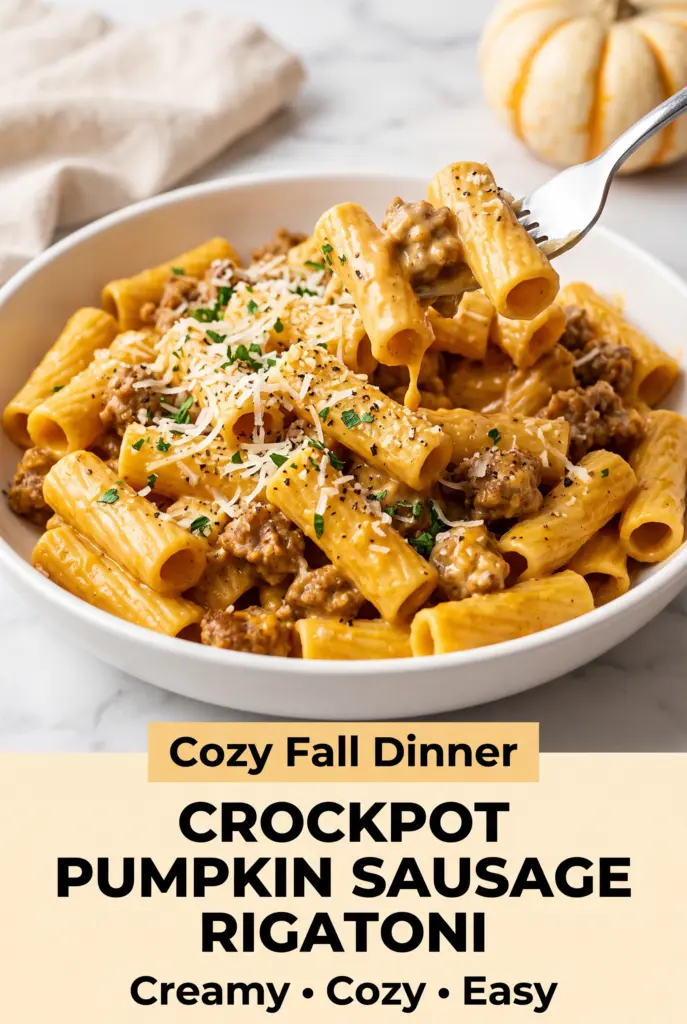
Crockpot Pumpkin Sausage Rigatoni
Rich, creamy pumpkin sauce clings to every ridge of rigatoni here, and the savory sausage keeps the whole pot from tasting sweet or one-note. The slow cooker does the quiet…
Tip: save now, cook later.Rich, creamy pumpkin sauce clings to every ridge of rigatoni here, and the savory sausage keeps the whole pot from tasting sweet or one-note. The slow cooker does the quiet work: it softens the onion, mellows the garlic, and turns pumpkin purée into a velvety base that tastes like it simmered all afternoon, even though most of the time is hands-off.
What makes this version hold together is the order. The sausage gets browned first so it brings a deep, meaty base into the pot, and the pasta goes in late so it cooks in the sauce instead of turning soft and waterlogged. Parmesan and butter finish the dish with body, but they also help the sauce settle into that glossy, spoon-coating texture you want from a one-pot pasta.
Below you’ll find the timing that keeps the rigatoni tender, the ingredient details that matter most, and a few smart swaps if you need to adapt the pot for what you have on hand.
The sauce stayed creamy right up until dinner, and the rigatoni kept its shape instead of getting mushy. My husband went back for seconds and asked if I could put this in the regular rotation.
Save this Crockpot Pumpkin Sausage Rigatoni for a cozy pasta night with creamy pumpkin sauce and tender rigatoni.
The Trick to Keeping Slow Cooker Pasta Creamy Instead of Soft
The biggest mistake in slow cooker pasta is dropping the noodles in too early. Rigatoni needs time in the sauce, but not hours of it. If it sits for the full cook, it swells, breaks down, and starts soaking up too much liquid before the sauce has finished developing.
The safer move is to build the pumpkin base first, then add the pasta only when the sauce is hot and seasoned. That keeps the noodles cooking in a rich liquid instead of plain broth, which is what gives you pasta that tastes integrated instead of rinsed clean. The stir halfway through matters too, because the pasta around the edges cooks faster than the pasta in the center.
What Each Ingredient Is Actually Doing in This Dish
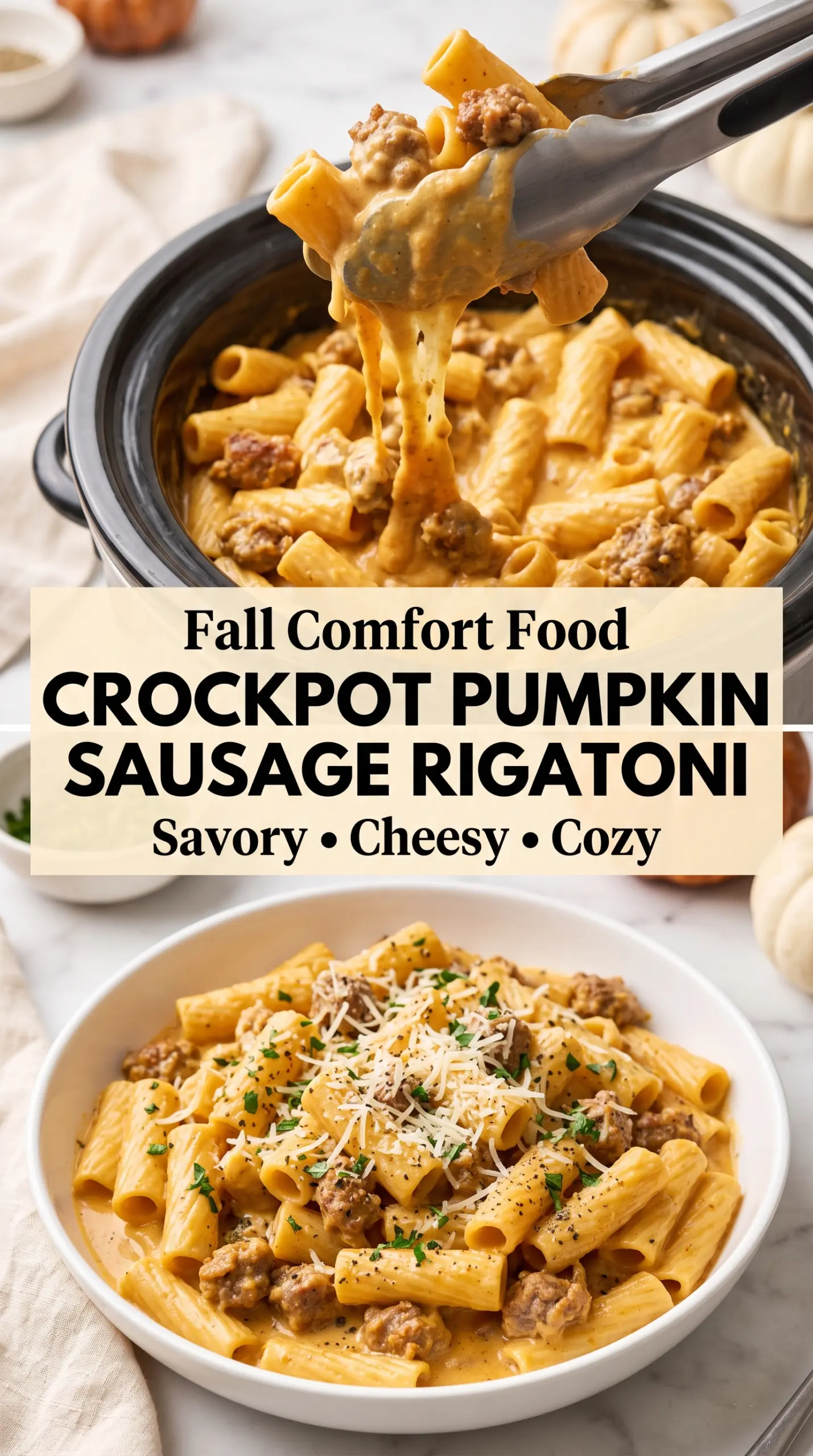
- Italian sausage — This is the backbone of the dish. Browning it first gives you fat, seasoning, and those caramelized bits that deepen the sauce. Mild or hot both work; hot sausage gives the pumpkin a little edge.
- Pumpkin purée — Use plain pumpkin purée, not pumpkin pie filling. Purée adds body and a subtle earthiness, but it needs sausage, broth, and Parmesan to keep it from tasting flat.
- Heavy cream — Cream softens the pumpkin and helps the sauce turn silky instead of thick and pasty. Half-and-half can work in a pinch, but the sauce will be lighter and a little less stable.
- Rigatoni — The ridges catch the sauce, and the tube shape holds up better than thinner pasta in a slow cooker. Penne is the closest swap if that’s what you have.
- Parmesan — Freshly grated Parmesan melts more smoothly than the bagged kind. Pre-shredded cheese can work, but it often leaves the sauce a little grainy because of the anti-caking starches.
Building the Pumpkin Base Before the Pasta Goes In
Browning the sausage
Cook the sausage until it’s deeply browned, not just no longer pink. That extra color gives you the savory base this pasta needs, and it keeps the pumpkin from tasting too sweet. Drain off excess grease if there’s a lot, but leave a little behind if the sausage is very lean. If you skip the browning step, the whole dish tastes flatter and less developed.
Letting the slow cooker do the heavy lifting
Stir the pumpkin, broth, cream, onion, garlic, and seasonings until the mixture looks smooth before the lid goes on. You want the onion pieces to soften completely and the spices to disappear into the sauce, not float on top. Cook until the onion is tender and the sauce smells rounded and savory. If the heat is too high, the cream can separate a bit around the edges, so low and slow gives you a cleaner finish.
Cooking the pasta at the end
Add the rigatoni only when the sauce is fully flavored and hot. Press the pasta down so it is covered as much as possible, then stir once halfway through so the top pieces don’t dry out. Start checking early, because slow cookers vary and overcooked rigatoni goes soft fast. You want it al dente with a slight bite in the center when you taste one.
Finishing with butter and Parmesan
Turn to butter and cheese only after the pasta is cooked. If the Parmesan goes in too early or over high heat, it can turn the sauce grainy instead of silky. Stir until the sauce looks glossy and thick enough to coat the pasta without pooling at the bottom. A final handful of parsley wakes up the whole pot and keeps the finish from feeling heavy.
Three Ways to Make This Crockpot Pasta Work for Your Kitchen
Dairy-Free Version
Swap the heavy cream for full-fat coconut milk and use a dairy-free Parmesan-style topping at the end. The sauce will still be creamy, but it picks up a faint coconut note, so this version works best if you lean into the savory sausage and sage.
Gluten-Free Swap
Use a sturdy gluten-free pasta made from brown rice or a rice-corn blend, and watch it closely during the final cook. Gluten-free pasta softens faster than wheat pasta, so it usually needs less time and a gentler stir to keep it from breaking apart.
Make It Meatless
Skip the sausage and use chopped mushrooms with a little extra olive oil and an extra pinch of sage. You lose the meaty richness, so add a little more Parmesan at the end and taste for salt before serving.
Stretch It for a Bigger Crowd
Add an extra cup of broth and a few more handfuls of pasta if you need to feed more people, but keep the sauce loose enough to move around the pot. Thick slow cooker pasta can seize up as it sits, so a little extra liquid keeps the texture creamy at serving time.
Storage and Reheating
- Refrigerator: Store in an airtight container for up to 4 days. The pasta will absorb more sauce as it sits, so expect a thicker texture.
- Freezer: It freezes, but the pasta softens a lot after thawing. For the best result, freeze the sauce without the pasta and cook fresh rigatoni when you’re ready to serve.
- Reheating: Warm gently on the stove or in the microwave with a splash of broth or cream. High heat can make the sauce look broken before it comes back together.
Answers to the Questions Worth Asking
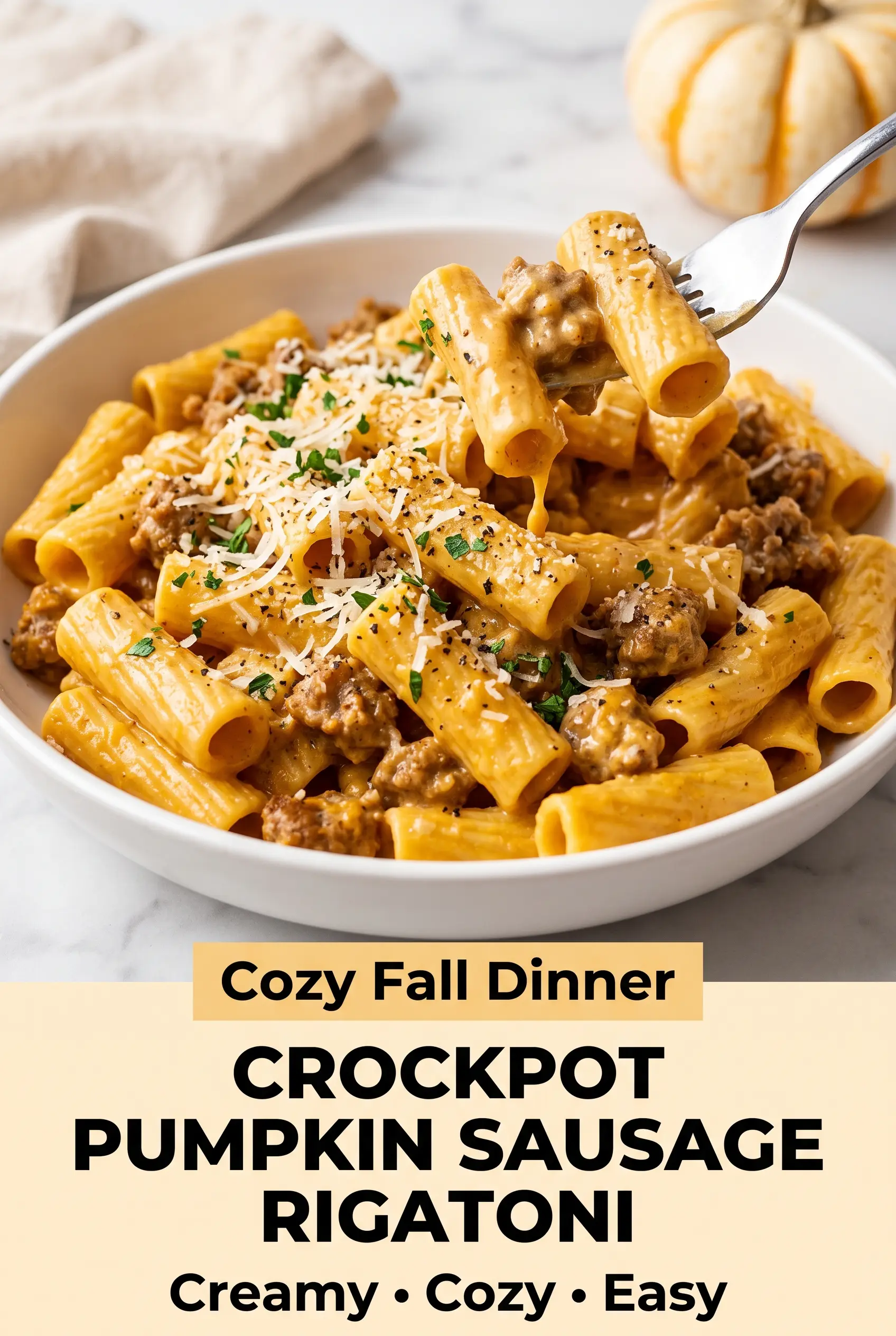
Crockpot Pumpkin Sausage Rigatoni
Ingredients
Equipment
Method
- Heat the olive oil in a skillet over medium-high heat. Cook the Italian sausage for 6–8 minutes, breaking it into crumbles until browned, then drain any excess grease.
- Transfer the browned sausage to a slow cooker, then add the diced onion and minced garlic. Add the pumpkin purée, chicken broth, heavy cream, Italian seasoning, dried sage, smoked paprika, salt, and black pepper.
- Stir the mixture until it looks smooth and evenly combined. Cover and cook on LOW for 4–5 hours or HIGH for 2–3 hours, until the onions are tender and the flavors have blended.
- Stir in the uncooked rigatoni, ensuring it is fully submerged in the sauce. Cover and cook on HIGH for 25–35 minutes, stirring once halfway through, until the pasta is al dente.
- Add the unsalted butter and Parmesan cheese, then stir until the cheese has melted into a thick, creamy sauce. Turn off the heat.
- Sprinkle the chopped fresh parsley over the top and serve immediately while hot, for the best texture contrast.
