
Crockpot Chicken Stew
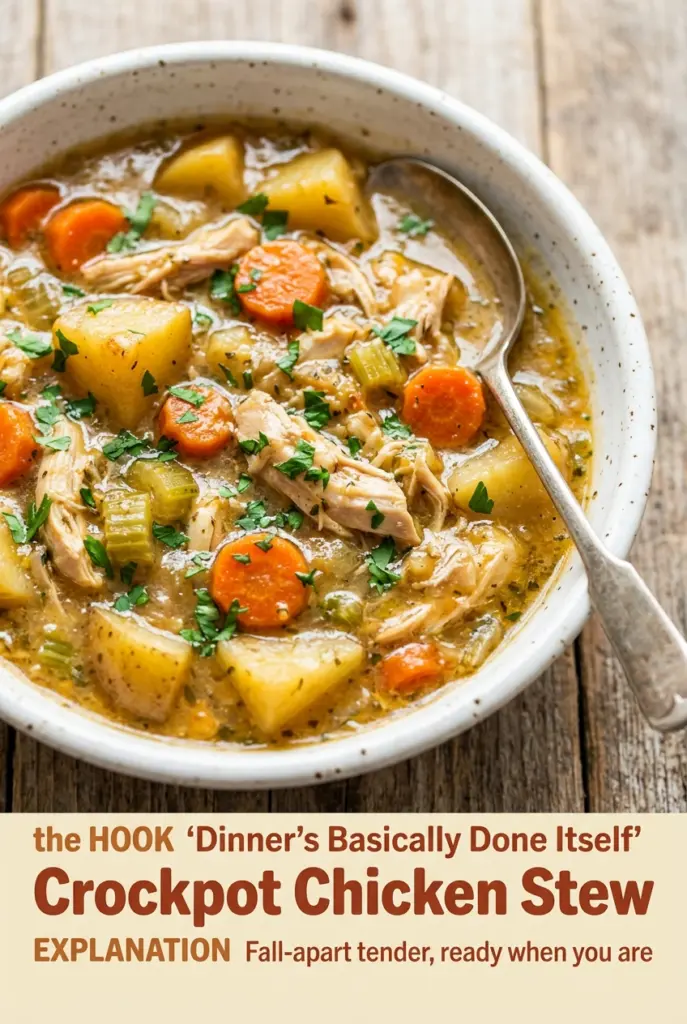
Thick, spoonable chicken stew from the slow cooker has a way of disappearing fast. The chicken turns tender enough to shred with almost no effort, the potatoes soak up the…
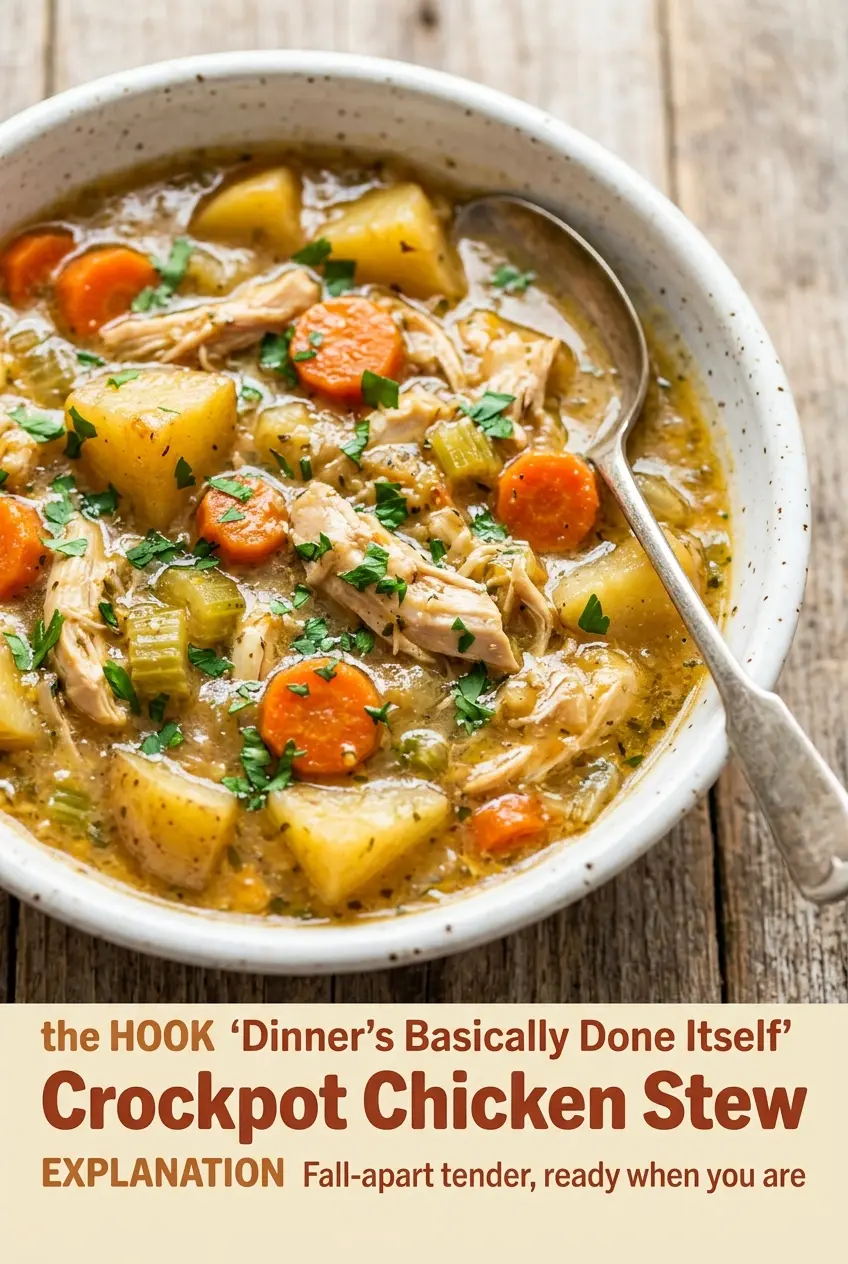
Tip: save now, cook later.Thick, spoonable chicken stew from the slow cooker has a way of disappearing fast. The chicken turns tender enough to shred with almost no effort, the potatoes soak up the herby broth, and the carrots soften without losing their shape. What sets this version apart is the finish: a butter-and-flour paste stirred in at the end gives the broth a real stew-like body instead of a thin soup texture.
The slow cooker does the long work here, but the order matters. The vegetables go in first so they sit in the broth and soften evenly, while the chicken cooks on top and stays easy to lift out for shredding. Tomato paste adds quiet depth, and a bay leaf with thyme and rosemary gives the whole pot that familiar chicken stew backbone without making it taste muddy.
Below, you’ll find the trick for thickening the broth cleanly, plus a few smart swaps if you want to make this with what you have on hand. It’s the kind of dinner that tastes even better the next day, which is exactly what a good stew should do.
The potatoes held their shape, the chicken shredded cleanly, and that butter-flour paste thickened the broth in about 15 minutes without any lumps. My husband went back for a second bowl before I’d even sat down.
Save this Crockpot Chicken Stew for the nights when you want tender chicken, soft potatoes, and a broth that thickens into a real stew.
The Part That Keeps Crockpot Chicken Stew from Turning Watery
The mistake people make with slow cooker stew is expecting the broth to reduce the way it would on the stove. It won’t. A slow cooker traps moisture, so if you start with too much liquid or skip the thickener at the end, you end up with chicken soup that tastes like stew ingredients instead of actual stew.
This recipe fixes that in two ways. First, the tomato paste adds body and a deeper savory note from the start. Second, the beurre manié — that butter-and-flour paste — goes in after the chicken is shredded, when the stew is hot enough to activate it but not so aggressively boiling that it turns clumpy. That late addition is what gives you a glossy, spoon-coating broth.
- Chicken thighs stay tender through a long cook and shred cleanly. Breast meat can work, but it dries out faster and gives you less forgiving timing.
- Yukon gold potatoes hold their shape better than russets. They turn creamy at the edges instead of falling apart into starch.
- Tomato paste doesn’t make the stew taste like tomato. It deepens the broth and gives the finished pot more color and savoriness.
What Each Ingredient Is Doing in This Stew

- Chicken thighs are the right cut for a long, gentle cook. They stay juicy and break apart into soft shreds instead of stringy dry bits.
- Yukon gold potatoes hold their shape and give the stew a creamy interior. If you only have russets, cut them a little larger so they don’t disappear.
- Carrots, celery, and onion build the base. Chop them into even pieces so they soften at the same pace and don’t leave you with crunchy celery in the finished stew.
- Tomato paste adds concentration and depth. It matters more than you think in a broth-based stew because it gives the liquid a fuller, rounder taste.
- Dried thyme, crushed rosemary, and bay leaf are the herb backbone. Crushing the rosemary helps it release flavor in the slow cooker instead of tasting sharp and twiggy.
- Butter and flour are the thickener. The paste is important here because it disperses better than raw flour tossed in at the end, which can leave you with little white lumps.
The Slow Cooker Timing That Gives You Tender Chicken and Soft Vegetables
Building the Vegetable Layer
Start with the potatoes, carrots, celery, onion, and garlic in an even layer. They sit closest to the heat and need the full cook to soften properly. If the potato cubes are cut too small, they’ll collapse before the stew is finished, so keep them at about 1-inch pieces.
Setting the Chicken on Top
Lay the chicken thighs over the vegetables, then pour in the broth and stir in the tomato paste and seasonings. The chicken doesn’t need to be buried; it just needs contact with the hot liquid and steam as the pot cooks. Keeping it on top makes it easier to fish out for shredding later.
Letting the Slow Cooker Do Its Work
Cook until the chicken pulls apart easily with a fork and the potatoes are tender all the way through. On Low, that usually takes 7 to 8 hours; on High, plan for 3.5 to 4 hours. If the vegetables still feel firm, give it more time instead of cranking the heat, which doesn’t help the stew thicken and can make the chicken stringy.
Thickening Without Lumps
Mash the softened butter and flour together first, then stir that paste into the hot stew after the chicken goes back in. The hot liquid melts the butter and distributes the flour before it has a chance to clump. Let the stew cook on High for another 15 to 20 minutes until the broth turns glossy and lightly coats the back of a spoon.
How to Adapt This for What You Have on Hand
Make It Dairy-Free
Swap the butter for a neutral dairy-free butter or use a cornstarch slurry at the end. The texture will still thicken, but the finish will be a little less rich and glossy than the butter-flour paste version.
Use Chicken Breasts Instead
You can use boneless, skinless chicken breasts, but add them only for the last 3 to 4 hours on Low so they don’t dry out. Thighs are still the better choice because they stay tender through the full cook and shred with less effort.
Make It Gluten-Free
Use a gluten-free all-purpose flour blend in the butter paste, or thicken with cornstarch mixed with cold water. The cornstarch route thickens fast, so stir it in near the end and give it a few minutes to cook out the raw taste.
Change the Vegetables Without Losing the Stew Feel
Parsnips, turnips, or frozen peas all work well here. Add peas near the end so they stay bright, and cut firmer root vegetables to the same size as the potatoes so the texture stays balanced.
Storage and Reheating
- Refrigerator: Keep in an airtight container for up to 4 days. The stew thickens as it chills, so it may look even heartier the next day.
- Freezer: It freezes well for up to 3 months. Cool it completely first, then freeze in portions; the potatoes soften a little after thawing, but the flavor stays solid.
- Reheating: Warm gently on the stove over medium-low or in the microwave in short bursts, stirring between rounds. Add a splash of broth if it has tightened up too much, because aggressive boiling can break the potatoes and make the chicken stringy.
Questions I Get Asked About This Recipe
Crockpot Chicken Stew
Ingredients
Equipment
Method
- Add the potatoes, carrots, celery, onion, and garlic to the crockpot in an even layer.
- Place the chicken thighs on top of the vegetables and pour in the chicken broth.
- Stir in the tomato paste, thyme, rosemary, salt, and black pepper, then tuck in the bay leaf.
- Cover and cook on Low for 7–8 hours or High for 3.5–4 hours, until the chicken is fork-tender and the vegetables are soft.
- Remove the chicken thighs, shred with two forks, then return the shredded chicken to the crockpot and discard the bay leaf.
- Mash the softened butter and flour together into a paste (beurre manié) and stir it into the hot stew.
- Cover and cook on High for an additional 15–20 minutes until visibly thickened.
- Taste the stew and season with more salt and black pepper as needed.
- Ladle into bowls and garnish with chopped fresh parsley.
