
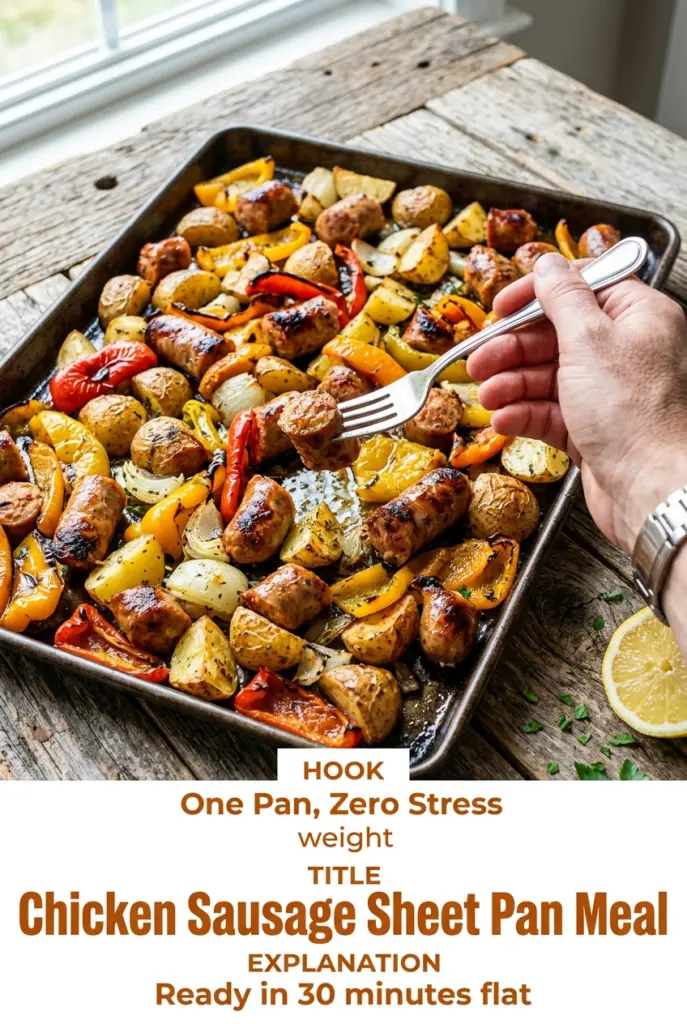
Chicken Sausage Sheet Pan Meal
Smoky chicken sausage, caramelized peppers, and golden baby potatoes make this sheet pan dinner the kind of meal that disappears fast and doesn’t leave you with a sink full of…
Tip: save now, cook later.Smoky chicken sausage, caramelized peppers, and golden baby potatoes make this sheet pan dinner the kind of meal that disappears fast and doesn’t leave you with a sink full of dishes. The potatoes get a head start so they can turn crisp at the edges instead of staying pale and underdone, and the sausage slices pick up just enough color to taste roasted, not steamed. A squeeze of lemon at the end wakes everything up and keeps the pan from feeling heavy.
The trick is treating the potatoes and the rest of the ingredients differently. Potatoes need more time and direct heat to get that creamy center and browned skin, while the sausage and vegetables only need enough time to soften and char. I also like the garlic going in with the second round of ingredients, not from the start, so it perfumes the pan without burning.
Below, I’ve included the exact roasting order that keeps the vegetables from turning mushy, plus a few smart swaps if you want to use what you already have on hand.
The potatoes came out with crispy edges and the sausage had those browned spots I usually only get in a skillet. I added the lemon at the end like you said and it made the whole pan taste brighter.
Save this chicken sausage sheet pan meal for the nights when you want browned sausage, roasted potatoes, and almost no cleanup.
The Reason the Potatoes Go in First
The most common mistake in a sheet pan dinner like this is tossing everything together at the same time and hoping the potatoes catch up. They usually don’t. By the time the potatoes are tender, the peppers have collapsed and the sausage has dried out. Giving the potatoes a head start changes the whole pan. They need that first blast of heat to start browning before the moisture from the sausage and vegetables lands on the tray.
Spacing matters just as much as timing. If the pan is crowded, the vegetables steam and the potatoes stay soft on the bottom. Use a large sheet pan and spread everything into a single layer with a little breathing room. If your pan looks packed, split it between two pans. That small decision is the difference between roasted and soggy.
What Each Ingredient Is Doing in This Dish
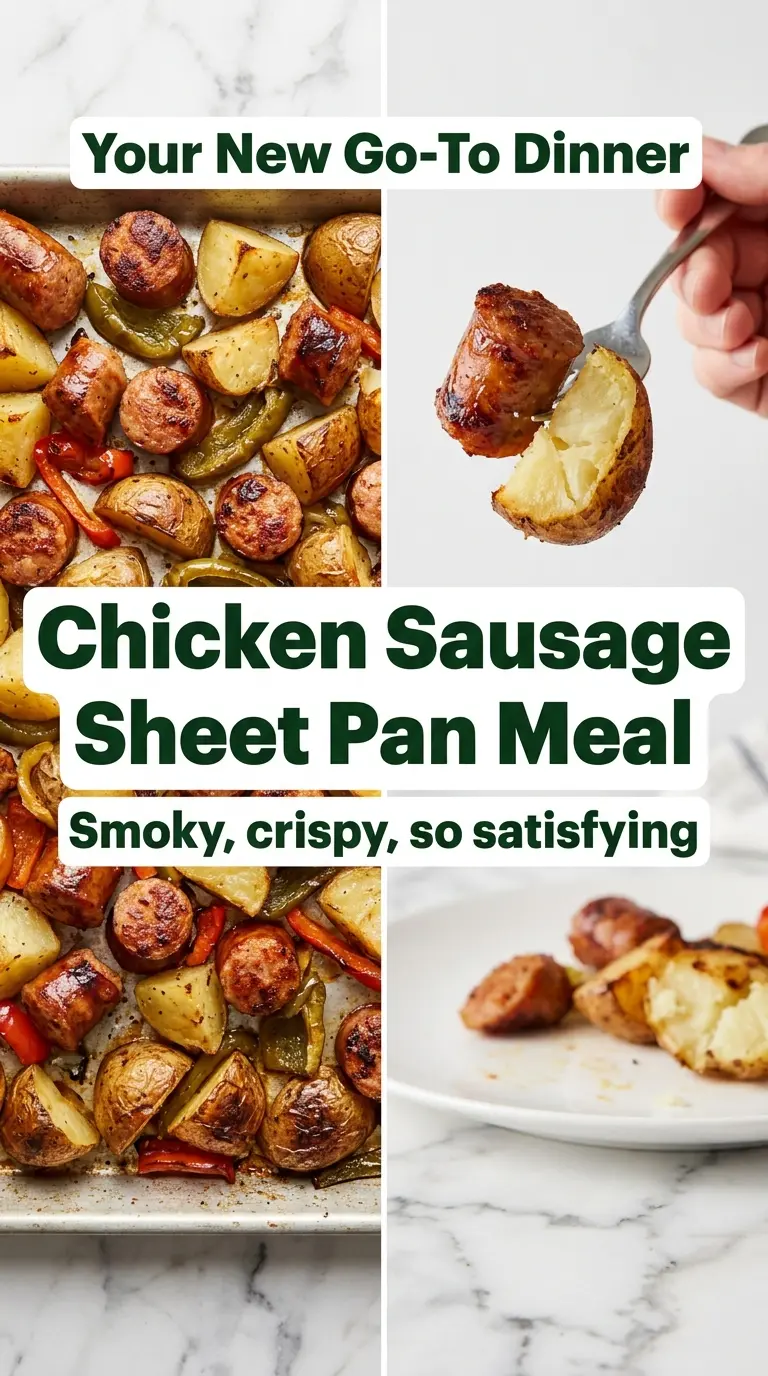
- Chicken sausage — This brings the smoky, seasoned backbone of the meal. Pre-cooked sausage works best here because it browns on the edges without releasing a lot of liquid. If your sausage is especially lean, the olive oil in the pan keeps it from turning dry.
- Baby potatoes — These hold their shape and roast into creamy centers with crisp skins. Halving them gives you more cut surface, which means more browning. If you swap in larger potatoes, cut them into 1-inch pieces so they cook at the same pace as everything else.
- Bell peppers and red onion — These add sweetness and color as they roast. The onion wedges soften and caramelize at the edges, while the peppers stay a little structured instead of melting away. If you only have one color of pepper, use it. The recipe still works.
- Garlic, smoked paprika, and oregano — This is the flavor layer that makes the pan taste built, not thrown together. Smoked paprika gives you that roasted depth without needing a long cook time. Add the garlic with the second round of ingredients so it roasts gently instead of burning during the potato head start.
- Lemon and parsley — These finish the dish. Lemon cuts through the richness and makes the sausage taste more vivid, while parsley brings a fresh note right before serving. Skip either one and the pan will still be good, but both together keep it from feeling flat.
Building the Pan So Everything Finishes at the Same Time
Give the Potatoes the Head Start
Toss the halved potatoes with a little oil, salt, pepper, and part of the smoked paprika, then spread them cut-side down on the pan. Roast them first so they can begin browning before the sausage and vegetables go in. You’re looking for the edges to turn matte and just start to color; that early browning tells you the surface moisture is gone and the potatoes are on their way to crisping.
Add the Sausage and Vegetables in One Layer
When the potatoes have had their time, add the sausage, peppers, onion, garlic, oregano, garlic powder, and the rest of the paprika. Toss everything with the remaining oil before it hits the pan so the seasonings coat the food instead of sitting in little piles. Keep everything in a single layer. If pieces are stacked on top of each other, they steam and lose that roasted edge.
Roast Until the Edges Color, Then Stop
Roast until the sausage is browned at the edges and the potatoes give easily when pierced with a fork. Stir once halfway through so the bottom side gets color too, but don’t keep moving everything around. Too much stirring slows browning. The vegetables should look tender and slightly charred, not collapsed or glossy with steam.
Finish With Lemon and Parsley
Let the pan sit for a few minutes after it comes out of the oven, then scatter parsley over the top and serve with lemon wedges. That short rest lets the juices settle, so the sausage stays juicy instead of spilling out on the cutting board. The lemon should go on at the table, not before roasting, because fresh citrus at the end sharpens all the savory parts you just built.
Three Smart Ways to Change This Pan Dinner
Make It Dairy-Free and Gluten-Free Without Changing a Thing
This recipe is naturally both, as long as your chicken sausage is certified gluten-free. That makes it one of those rare dinners that works for a mixed table without any special handling. Just check the sausage label, since some brands use fillers or spice blends that include wheat.
Use Different Vegetables Without Throwing Off the Roast
Broccoli, zucchini, Brussels sprouts, or chunks of carrots all work here, but they don’t all cook at the same speed. Add fast-cooking vegetables like zucchini with the sausage, and give denser vegetables like carrots a head start with the potatoes. That keeps the pan from ending with half the vegetables soft and the other half still firm.
Swap the Sausage Based on What You Have
Smoked turkey sausage or kielbasa both work, but each changes the final dish. Turkey sausage keeps things lighter and a little leaner, while kielbasa adds more fat and a stronger smoky flavor. If you use raw sausage, cook it through before adding it to the pan, or slice it thin enough that it can finish in the oven safely.
Storage and Reheating
- Refrigerator: Store leftovers in an airtight container for up to 4 days. The potatoes soften a bit, but the flavor holds well.
- Freezer: It freezes, though the peppers and onions will soften more after thawing. Freeze in portions for up to 2 months, and expect a slightly softer texture when reheated.
- Reheating: Reheat in a 400°F oven or air fryer until hot and the potatoes re-crisp at the edges. The biggest mistake is microwaving it straight from the fridge, which makes the potatoes rubbery and the sausage dull.
Answers to the Questions Worth Asking
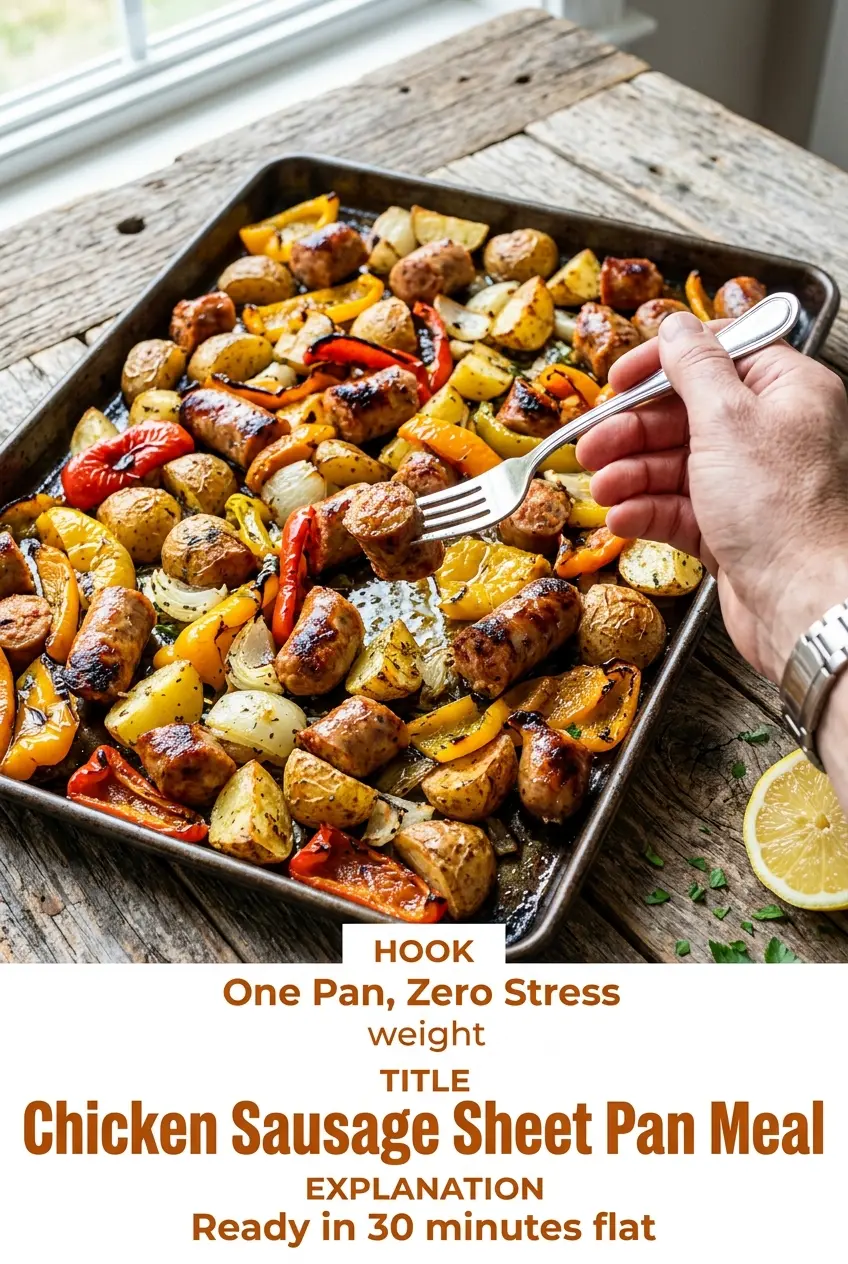
Chicken Sausage Sheet Pan Meal
Ingredients
Equipment
Method
- Preheat the oven to 425°F and line a large sheet pan with parchment paper or lightly grease it, so the potatoes roast evenly.
- Toss the halved baby potatoes with 1 tbsp olive oil, half the smoked paprika, salt, and black pepper, then spread them on the sheet pan and roast for 15 minutes to give them a head start.
- Toss the chicken sausage, bell peppers, and red onion with the remaining 2 tbsp olive oil, garlic, oregano, garlic powder, and the remaining smoked paprika.
- Add the sausage and vegetables to the sheet pan with the potatoes, spreading everything into a single layer so it browns instead of steams.
- Roast for 20–25 minutes, stirring once halfway through, until the sausage is browned at the edges and the potatoes are fork-tender with crispy spots.
- Let the pan sit for 3 minutes, then scatter chopped fresh parsley over the top so it stays bright.
- Serve hot with lemon wedges on the side for squeezing over the top right before eating.
