
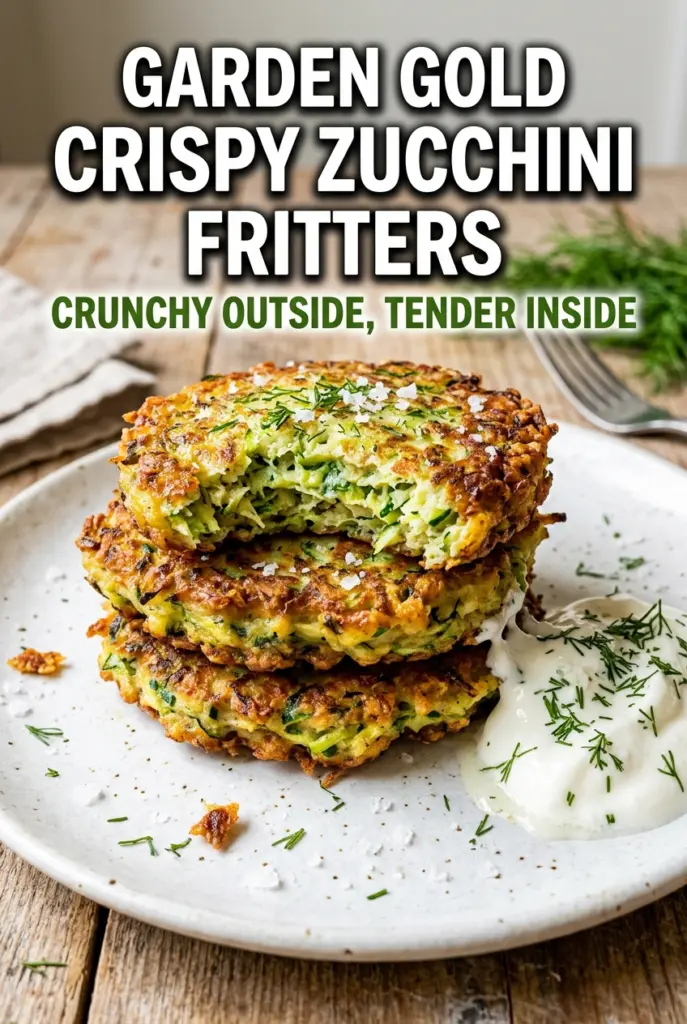
Crispy Zucchini Fritters
Golden zucchini fritters with a crisp, lacy edge and a tender center don’t last long once they hit the table. The contrast is what makes them worth frying: a shattering…
Tip: save now, cook later.Golden zucchini fritters with a crisp, lacy edge and a tender center don’t last long once they hit the table. The contrast is what makes them worth frying: a shattering crust from well-drained zucchini, sharp cheddar melted into the batter, and fresh dill that keeps the whole thing bright instead of heavy. Served hot with a cool sour cream dipping sauce, they land somewhere between snack, side dish, and the kind of appetizer people keep hovering over.
The part that matters most is getting the zucchini dry before anything else. Shredded zucchini holds a surprising amount of water, and if that moisture stays in the bowl, the fritters steam in the pan instead of browning. Salt helps pull out the liquid, but the real difference comes from squeezing it hard in a towel until it feels almost squeaky. After that, the batter only needs enough flour and egg to hold together; too much flour makes them dense, while too little leaves them fragile.
You’ll find the exact method below, along with the small timing details that keep the fritters crisp and the dip balanced. I’ve also included a few swaps for the cheese, herbs, and sauce so you can work with what you have without losing the texture that makes these good.
I followed the towel-squeeze step and the fritters actually got crisp instead of soggy. The cheddar gave them great flavor, and the dill-garlic dip was the perfect cool contrast. My kids ate them faster than I could fry the second batch.
Crispy Zucchini Fritters with that salty-cheesy center and dill-garlic dip are worth saving for your next zucchini surplus.
The Moisture Problem That Makes Zucchini Fritters Fall Apart
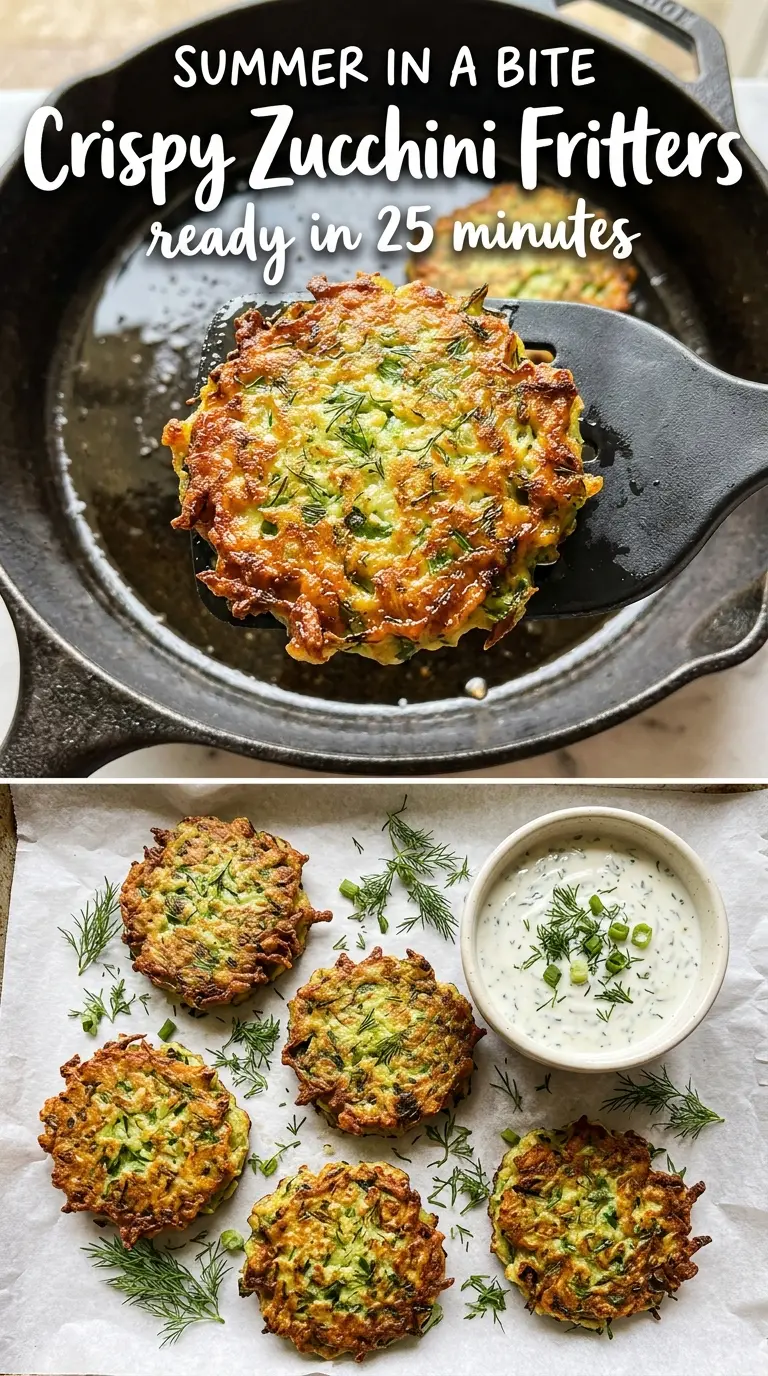
Zucchini is the reason fritters either turn crisp and light or slide into a soft, pale mess. The vegetable looks harmless, but it carries enough water to thin the batter, soften the exterior, and keep the centers from setting before the outside overbrowns. If you’ve ever had fritters that looked perfect in the pan and then collapsed on the plate, moisture was the issue.
Salt does part of the job by drawing liquid out of the shreds, but squeezing is what changes the result. Press the zucchini hard enough that it shrinks down noticeably and the towel comes away damp, not dripping. That step also concentrates the vegetable flavor, which matters here because the batter is lean and depends on the zucchini itself to carry the dish.
- Shredded zucchini — Medium zucchini works best because it’s tender and less seedy than oversized ones. If yours are large, scrape out the watery core before shredding.
- Cheddar cheese — Sharp cheddar brings salt and body, and it helps the fritters brown. A mild cheese works in a pinch, but the flavor will be flatter.
- Flour — Just enough flour binds the mixture without making it cakey. For a gluten-free version, use a 1:1 gluten-free flour blend; almond flour won’t hold the batter together the same way.
- Dill or parsley — Dill gives these fritters their fresh edge, while parsley keeps the flavor cleaner and more neutral. Use whatever herb tastes freshest, not whatever is oldest in the crisper.
- Sour cream or Greek yogurt — Either one makes a cool, tangy dip. Greek yogurt is a little thicker and sharper; sour cream is softer and rounder.
How to Fry Them So the Outside Turns Crisp Before the Center Cooks Through
Salting and Squeezing the Zucchini
Start by tossing the shredded zucchini with salt and letting it sit long enough to pull out a visible amount of liquid. Then squeeze it in a clean towel until it feels dry and compact. If the zucchini still drips when you press it, the batter will loosen in the bowl and the fritters will spread too much in the pan.
Mixing the Batter Without Overworking It
Add the eggs, cheddar, flour, green onions, garlic, herbs, pepper, and paprika to the dried zucchini and stir just until everything is evenly coated. The mixture should look sticky and hold together when you press it with a spoon. If it seems wet, add a spoonful of flour; if it seems dry and crumbly, the zucchini wasn’t squeezed enough, and a little extra egg won’t fix that as cleanly.
Getting the First Side Deep Golden
Heat the oil until it shimmers, then drop in heaping spoonfuls and flatten them gently into thick rounds. Don’t crowd the pan, or the temperature drops and the fritters start drinking oil instead of browning. Leave them alone until the edges look set and the bottom releases without tugging; that’s the signal the crust has formed.
Flipping and Finishing the Center
Turn the fritters once and cook the second side until it matches the first in color. The centers should be tender but not wet, with the cheese melted through and the herbs still green. If the outside is browning too quickly, lower the heat slightly; a lower flame for a minute is better than a dark crust with a raw middle.
What to Change When You Want Different Herbs, Cheese, or a Lighter Finish
Gluten-Free Fritters That Still Hold Together
Swap the all-purpose flour for a 1:1 gluten-free blend. The texture stays close to the original, but the batter may need an extra minute in the pan before flipping because gluten-free flour often sets a little more slowly.
A Lighter Dairy-Free Version
Use a dairy-free shredded cheese that melts well and replace the sour cream dip with unsweetened coconut yogurt or a dairy-free plain yogurt. The fritters will still crisp up, but the flavor will be less rich, so add a little extra salt and lemon to the dip.
No Frying, Just Brushing
You can cook these on a lightly oiled sheet pan at a high temperature, but they won’t get quite the same shattering edge as the skillet version. They still taste good; they just land softer and more like a baked vegetable cake than a true fritter.
Storage and Reheating
- Refrigerator: Store leftovers in an airtight container for up to 3 days. They’ll soften a bit as they sit, but the flavor stays good.
- Freezer: They freeze well. Lay cooked fritters in a single layer until firm, then move them to a freezer bag with parchment between layers.
- Reheating: Reheat in a 400°F oven or air fryer until the edges crisp back up. The biggest mistake is microwaving them, which turns the crust soft and rubbery.
The Questions People Usually Ask Before They Start Frying
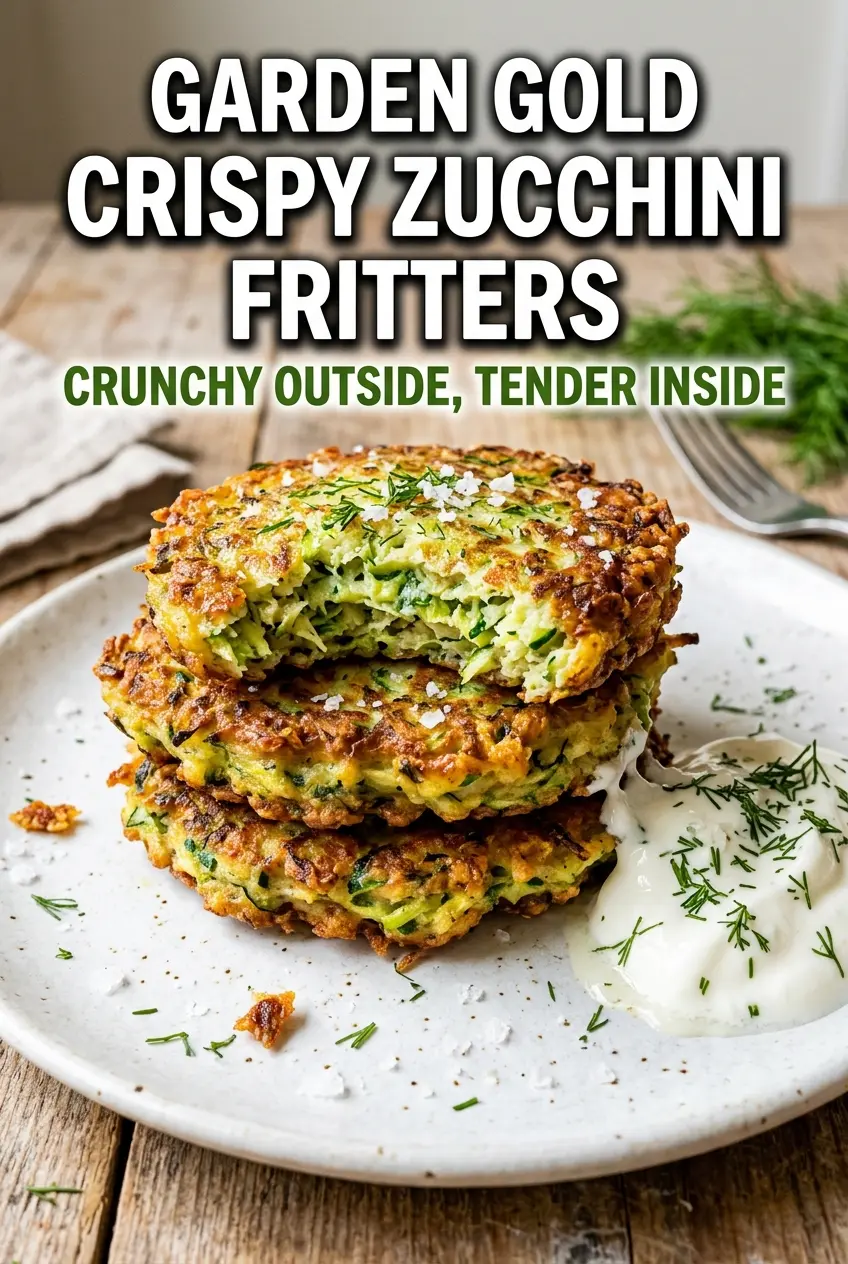
Crispy Zucchini Fritters
Ingredients
Equipment
Method
- Shred the zucchini using a box grater and place it into a large bowl. Sprinkle with 1 tsp salt, toss to coat, and let sit for 10 minutes to release moisture.
- Line a clean bowl with a kitchen towel or several layers of paper towels and squeeze the shredded zucchini firmly to remove as much liquid as possible. Transfer the squeezed zucchini to a clean bowl.
- Add the eggs, shredded cheddar cheese, flour, green onions, minced garlic, chopped dill, black pepper, and paprika to the zucchini. Mix until a thick, sticky batter forms.
- Heat 2 tbsp olive oil in a large non-stick or cast iron skillet over medium-high heat until shimmering. Keep the oil hot before adding each batch.
- Scoop heaping tablespoons of batter into the hot pan, then gently press each mound into a flat round about 1/2 inch thick. Do not crowd the pan, and add more olive oil between batches as needed.
- Fry for 3–4 minutes on the first side without moving until the edges are golden and the bottoms release easily. Flip and cook another 2–3 minutes until deep golden brown and cooked through.
- Transfer the cooked fritters to a paper-towel-lined plate to drain excess oil. Repeat frying until all batter is used.
- Whisk together the sour cream, fresh dill, minced garlic, lemon juice, salt, and black pepper until smooth and seasoned to taste. Refrigerate until ready to serve.
- Serve the fritters hot and crispy with the cool dill-garlic dipping sauce. Garnish with extra fresh dill and a few green onion slices.
