
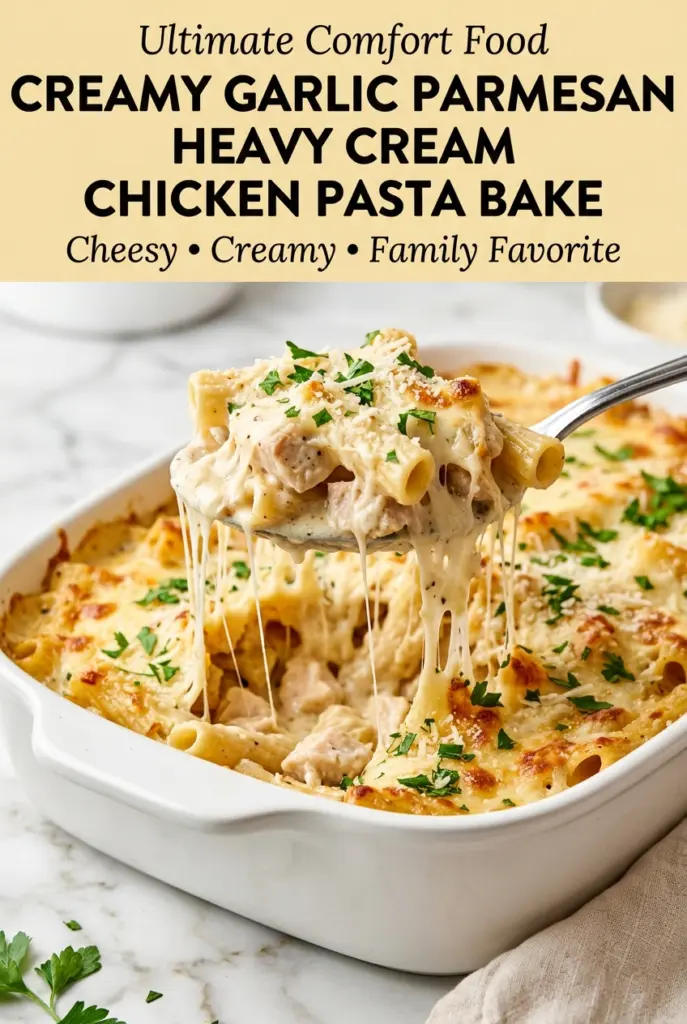
Creamy Garlic Parmesan Heavy Cream Chicken Pasta Bake
Creamy Garlic Parmesan Heavy Cream Chicken Pasta Bake lands in the sweet spot between comforting and impressive: tender chicken, pasta that holds its shape, and a garlicky Parmesan sauce that…
Tip: save now, cook later.Creamy Garlic Parmesan Heavy Cream Chicken Pasta Bake lands in the sweet spot between comforting and impressive: tender chicken, pasta that holds its shape, and a garlicky Parmesan sauce that bakes into a bubbling, golden top instead of turning watery in the oven. The heavy cream gives the sauce body, while the cream cheese helps it stay smooth and cling to every ridge of pasta.
What makes this version work is the balance of richness and structure. The pasta gets pulled from the pot just before it’s fully done, so it finishes in the oven without going soft. The cheese goes into a warm sauce, not a raging boil, which keeps it silky instead of grainy. That’s the difference between a bake that eats like a casserole and one that turns heavy or split.
Below, you’ll find the small details that matter most: how to keep the sauce creamy, which cheeses actually help the texture, and the one timing trick that keeps the pasta from overcooking while the top turns deeply browned.
The sauce stayed creamy after baking and the pasta didn’t get mushy at all. I used the broiler for two minutes at the end and the top came out beautifully golden.
Love a creamy baked pasta with a browned cheese lid? Save this heavy cream chicken pasta bake for the nights when you want something rich, cozy, and oven-bubbly without a lot of fuss.
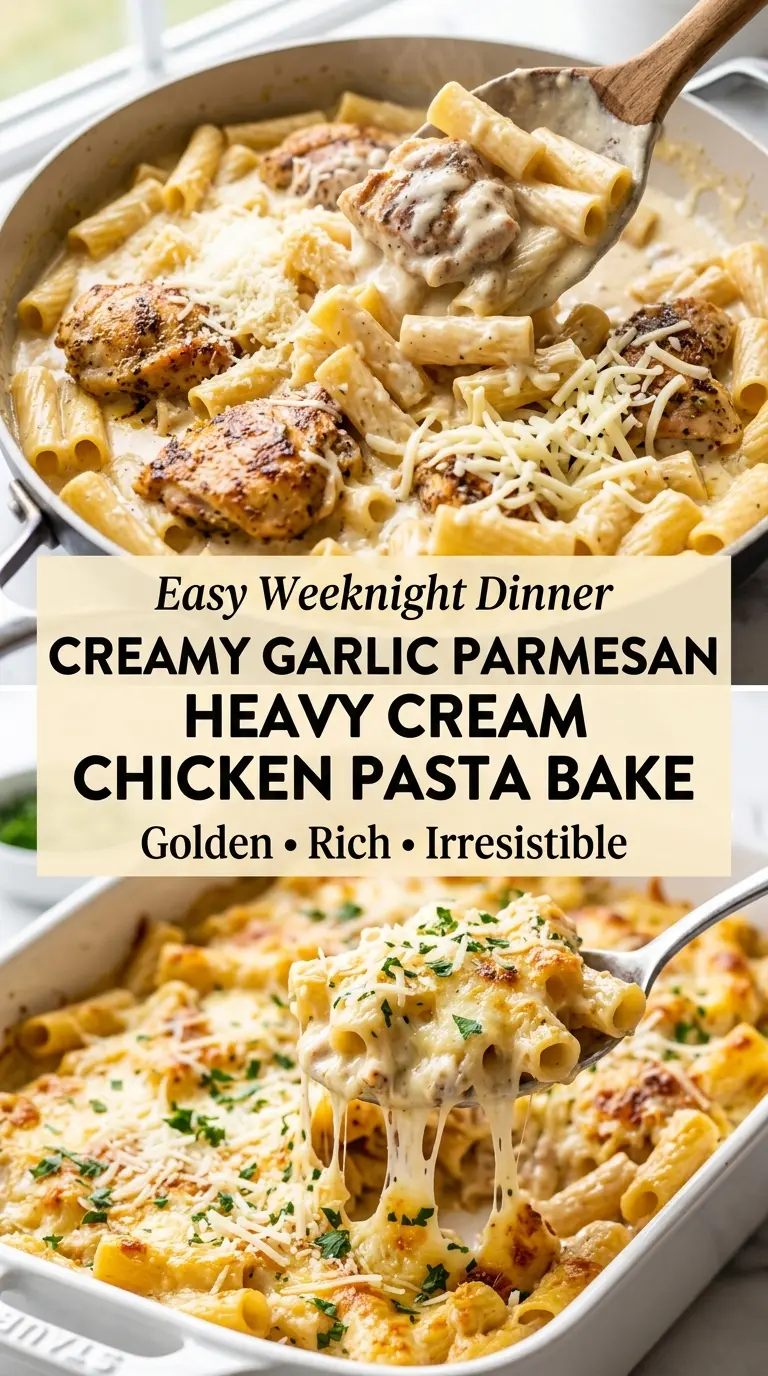
The Reason the Sauce Stays Creamy Instead of Breaking
The biggest risk in a pasta bake like this is assuming the oven will “finish” the sauce for you. It won’t. Once dairy starts boiling hard, the fat can separate from the liquid and the sauce turns greasy or grainy. The fix is to build the sauce gently on the stove first, then use the oven for what it does best: melting the top and marrying the flavors.
Heavy cream is the backbone here because it has enough fat to stay stable through baking. Cream cheese adds a little insurance, giving the sauce a tighter, silkier texture that survives the trip to the oven. Parmesan brings salt and sharpness, but it needs to be added off a hard boil so it melts into the cream instead of clumping.
- Heavy cream — This is what gives the sauce its rich, stable base. Half-and-half will work in a pinch, but the sauce will be thinner and more likely to loosen in the oven.
- Cream cheese — It melts into the sauce and helps it hold together after baking. Soften it first so it disappears smoothly instead of leaving little lumps behind.
- Freshly grated Parmesan — Pre-shredded Parmesan doesn’t melt as cleanly because of the anti-caking coating. Freshly grated cheese gives you a smoother sauce and a better finish on top.
- Mozzarella and provolone — Mozzarella brings stretch, while provolone adds a little more character. Together they make the sauce feel like a baked casserole instead of a straight cream pasta.
- Rigatoni or penne — You want a shape with enough structure to trap sauce. Long, thin pasta gets lost here and softens too fast in the oven.
Building the Sauce Before the Bake
Cooking the Pasta a Minute Too Early
Boil the pasta until it’s just shy of al dente, then drain it right away. It should still have a firm center because it’s going back into hot sauce and into the oven. If you cook it all the way through on the stovetop, it will turn too soft by the time the cheese on top is browned. That tiny bit of undercooking protects the texture.
Getting Color on the Chicken
Cook the chicken in a hot skillet with the oil and butter until the pieces are golden at the edges and no longer pink in the center. Don’t crowd the pan or the chicken will steam and go pale. The browned bits left behind are important; they add depth to the sauce once the garlic and dairy go in.
Turning the Skillet Into a Sauce
Lower the heat before the garlic hits the pan. Garlic burns fast, and burnt garlic makes the whole dish taste harsh. Add the cream and milk once the garlic is fragrant, then let the mixture come up to a gentle simmer before adding the cream cheese and grated cheeses. If the sauce looks lumpy, keep stirring over low heat until it smooths out instead of trying to rush it with higher heat.
Finishing in the Oven
Stir the pasta and chicken into the sauce until every piece is coated, then transfer it to the baking dish and cover the top with mozzarella and Parmesan. Bake until the edges are bubbling and the center is hot, then broil just long enough to spot the top with golden brown patches. If you broil too long, the cheese goes from browned to dry in a hurry.
How to Adapt This for a Different Pantry or Diet
Gluten-Free Pasta Bake
Use a sturdy gluten-free pasta shape that holds up after boiling, and pull it even earlier than you would regular pasta. Gluten-free noodles can soften quickly, so stop when they still have a clear bite in the center. The sauce and bake work the same way, but the texture depends on not overcooking the pasta before it ever reaches the oven.
Lighter Cream Swap
You can replace part of the heavy cream with whole milk, but don’t remove all of the cream or the sauce loses its body. The finished bake will be a little looser and less rich, which is fine if you want something lighter. Just keep the cheese amount the same so the sauce still sets up properly.
Chicken Thigh Version
Boneless chicken thighs work well here and bring a little more juiciness than breasts. Cut them into the same bite-sized pieces and cook until the edges are browned and the centers are fully done. The bake will taste a touch richer and hold up well if you’re reheating leftovers.
Storage and Reheating
- Refrigerator: Store leftovers in an airtight container for up to 4 days. The sauce will thicken as it chills, which is normal.
- Freezer: This freezes, but the sauce may separate a little after thawing. For the best texture, freeze it in portions and expect a softer, less silky finish.
- Reheating: Reheat covered in the oven at 325°F until hot, or warm single portions in the microwave at medium power. Add a splash of milk before reheating if the pasta has absorbed too much sauce. High heat is the fastest way to dry out the cheese and make the sauce look split.
Answers to the Questions Worth Asking
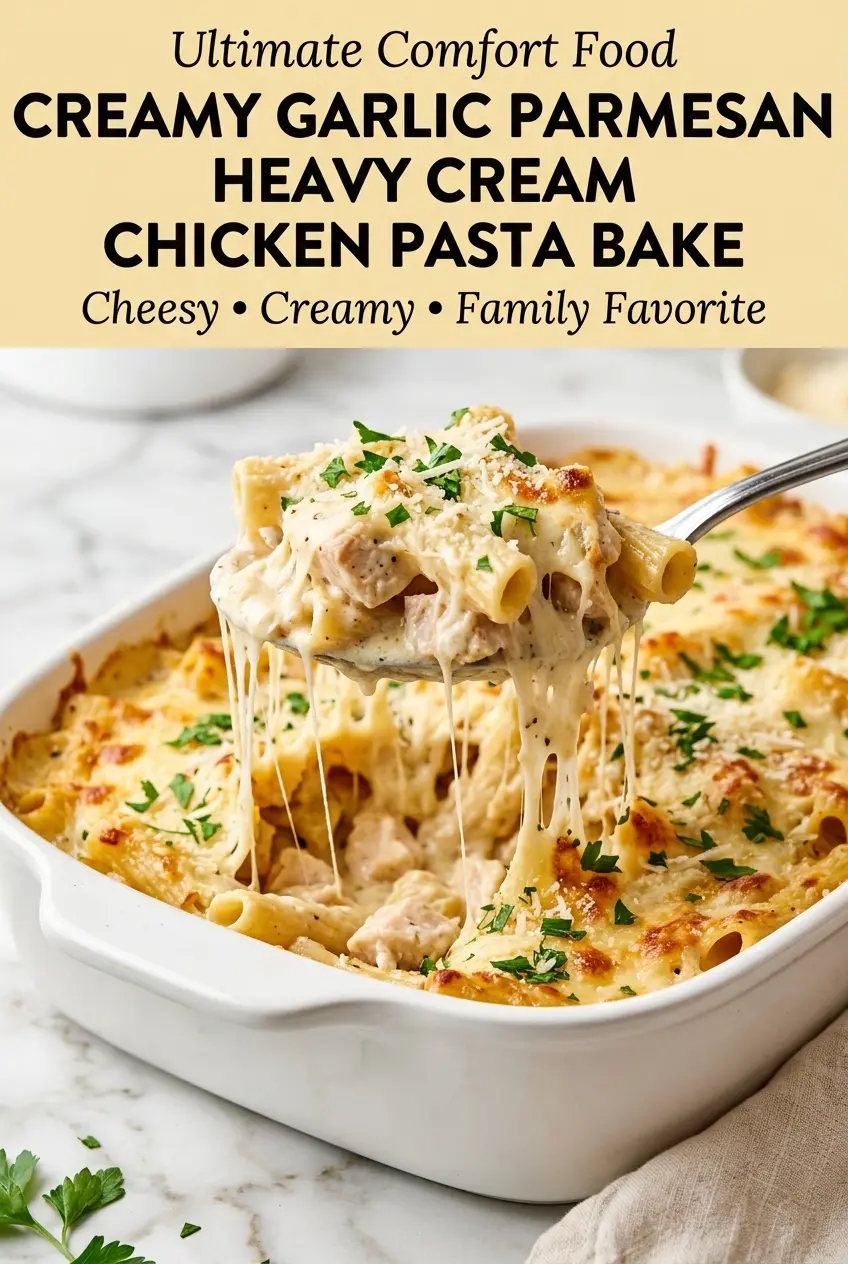
Creamy Garlic Parmesan Heavy Cream Chicken Pasta Bake
Ingredients
Equipment
Method
- Preheat the oven to 375°F (190°C) and grease a 9×13-inch baking dish.
- Cook the rigatoni or penne until 1–2 minutes less than al dente, then drain and set aside.
- Heat the olive oil and unsalted butter in a large skillet over medium-high heat.
- Season the chicken with kosher salt, black pepper, Italian seasoning, garlic powder, and onion powder.
- Cook the chicken for 5–6 minutes, stirring occasionally, until golden and fully cooked, then transfer to a plate.
- Reduce the heat to medium and sauté the garlic for 30 seconds until fragrant.
- Pour in the heavy cream and whole milk and bring to a gentle simmer for 3–4 minutes.
- Stir in the cream cheese until smooth.
- Add the Parmesan, mozzarella, and provolone and stir until melted into a silky sauce.
- Season with crushed red pepper flakes if using.
- Return the chicken to the skillet and stir in the cooked pasta until evenly coated.
- Transfer the mixture to the prepared baking dish.
- Sprinkle the mozzarella and Parmesan evenly over the top.
- Bake for 20–25 minutes, until bubbly and lightly golden.
- Broil for 2–3 minutes until the cheese topping is beautifully browned.
- Garnish with fresh parsley and serve hot.
