
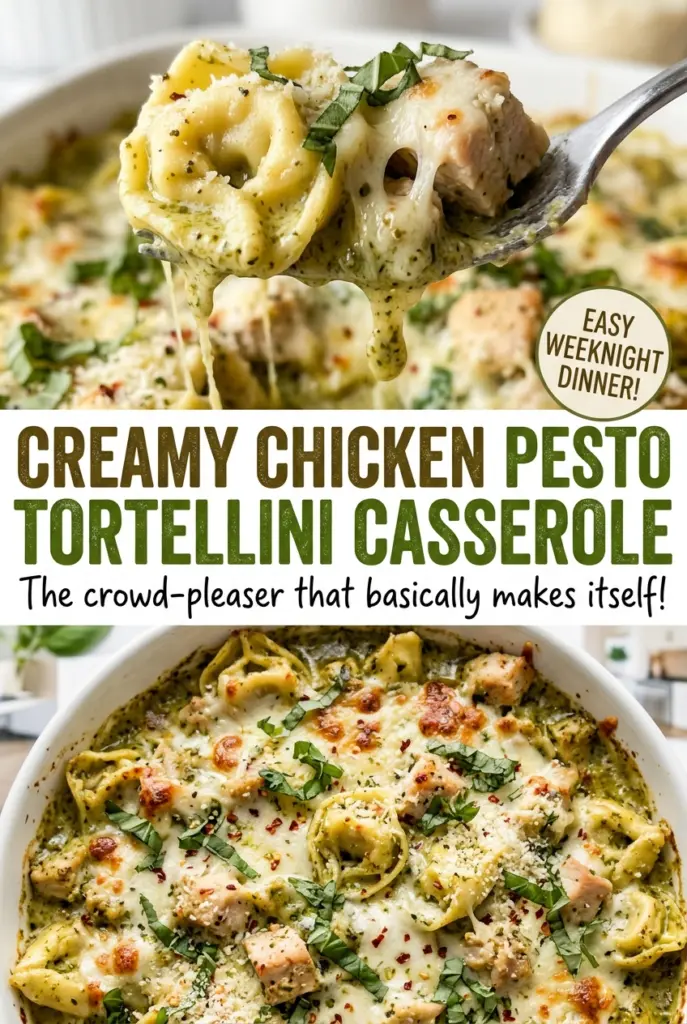
Creamy Chicken Pesto Tortellini Casserole
When the foil comes off, the casserole is already bubbling around the edges, but the center still needs a little time to catch up. That’s why I give the covered…
Tip: save now, cook later.When the foil comes off, the casserole is already bubbling around the edges, but the center still needs a little time to catch up. That’s why I give the covered dish its full bake before uncovering it: the tortellini and chicken warm through gently, then the cheese gets a few minutes exposed to the oven. This Creamy Chicken Pesto Tortellini Casserole is a good fit when you want a hearty dinner without building a sauce in the baking dish.
I cook the refrigerated tortellini just shy of its package timing, then coat it with shredded or bite-size cooked chicken and a creamy pesto sauce. Cream cheese gives the sauce body, while heavy cream keeps it rich and smooth. A layer of mozzarella and Parmesan melts over the top, and after a short rest the casserole is easy to serve in generous portions.
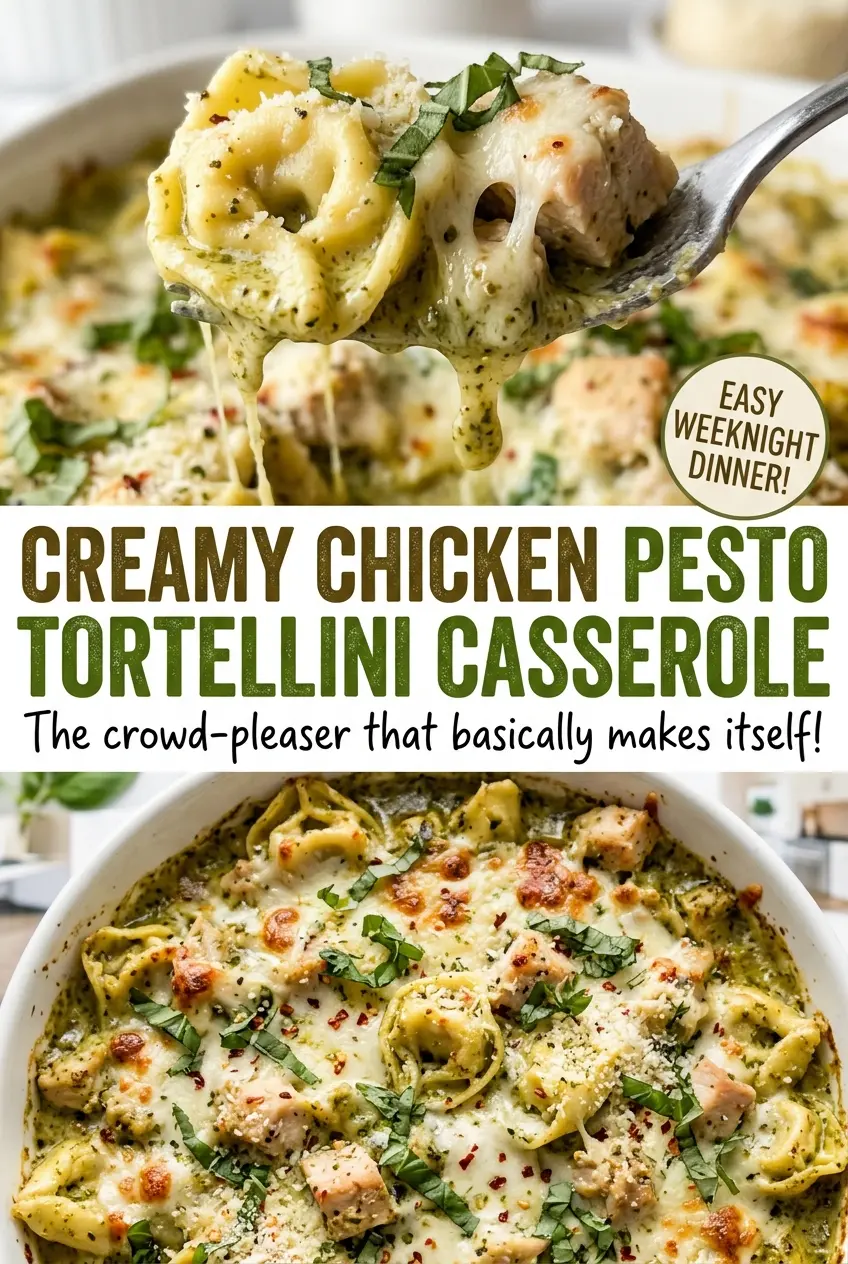
Kitchen Note
Drain the tortellini well before it goes into the casserole. Any water clinging to the pasta thins the pesto sauce, so give the colander a good shake instead of rushing straight to assembly.
Save this Creamy Chicken Pesto Tortellini Casserole for a bubbling, cheesy dinner with tender pasta and a creamy pesto sauce.
Why the Pesto Sauce Should Steam, Not Boil
A cream cheese sauce can turn grainy if it gets too hot. Here, the broth and softened cream cheese are whisked together first, which gives the cheese time to blend into the liquid before the richer ingredients go in. Once the cream and pesto are added, gentle heat is all the sauce needs.
Watch for steam rising from the saucepan rather than a rolling boil. Boiling can make a creamy sauce separate or scorch at the bottom, and there’s no benefit to pushing it that far before baking. The casserole will spend more time in the oven, where the sauce heats around the tortellini and chicken. Starting with a smooth, gently warmed sauce helps it coat everything evenly instead of breaking into oily patches.
This is also why I use a saucepan rather than mixing everything cold in the baking dish. The cream cheese has a chance to smooth out before the pasta goes in, so you aren’t trying to chase lumps through a full casserole.
What Makes the Pesto, Cream, and Cheese Work Together
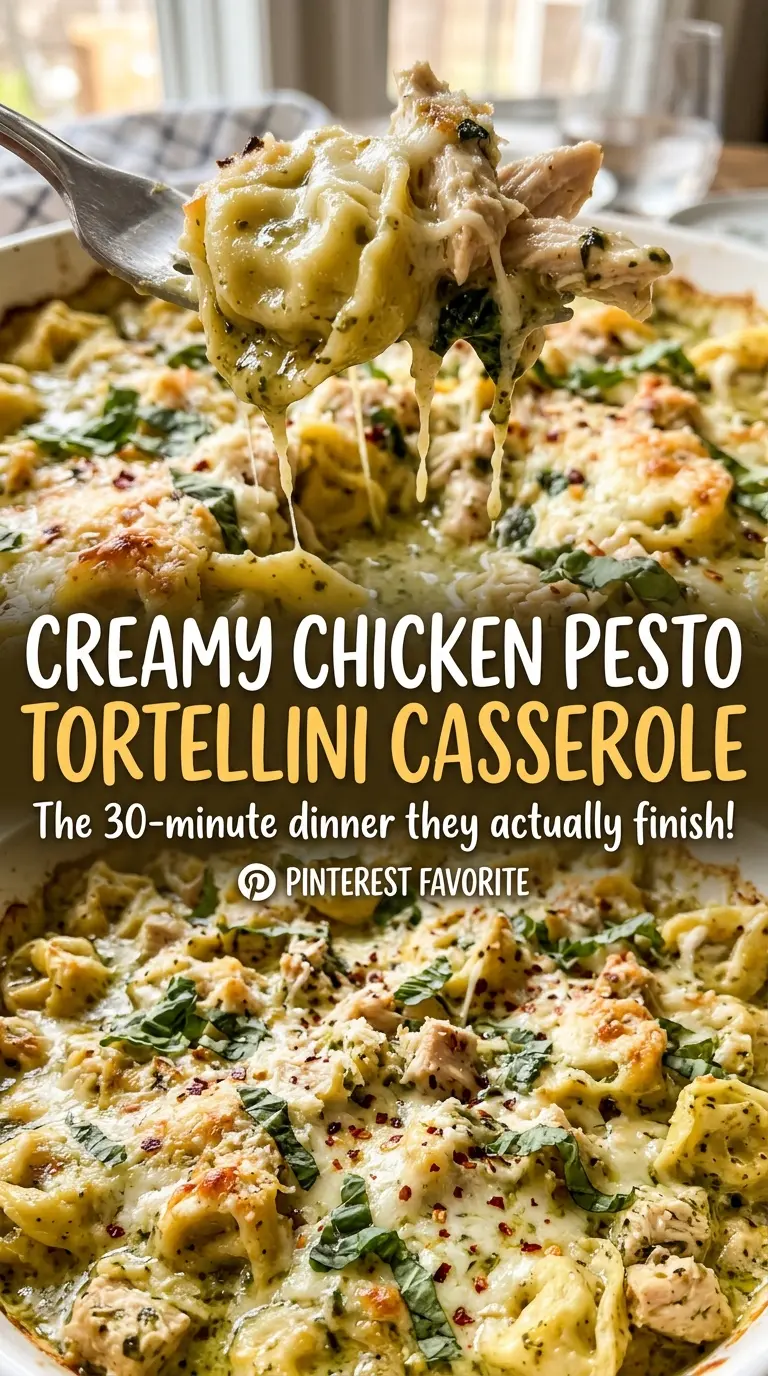
- Refrigerated cheese tortellini — Its filled pasta brings a tender bite and cooks quickly, so keep to the short pre-cook in this method rather than boiling it until fully tender. Choose a package that stays cold and is within its use-by date; there’s no need for a specialty brand.
- Cooked chicken — Shredded chicken disappears into the creamy sauce, while bite-size pieces give you a more distinct chicken bite in each serving. Use chicken that’s already cooked and cut or shred it before assembly so it distributes evenly.
- Cream cheese, heavy cream, and broth — These make the sauce rich but still pourable. Softened cream cheese cut into cubes is easier to whisk smooth than a cold block, and low-sodium broth keeps the sauce from getting overly salty alongside pesto and Parmesan.
- Prepared pesto — Pesto supplies the herb and garlic character without needing extra chopping or seasoning. Use a prepared pesto you enjoy eating on its own; the basil, oil, and cheese in the jar carry through the whole casserole.
- Mozzarella and Parmesan — Mozzarella melts into the soft, stretchy top layer, while grated Parmesan adds a sharper, savory finish. The combination gives the casserole more character than using mozzarella alone.
From Slightly Firm Tortellini to a Bubbly Casserole
Butter the Dish and Stop the Pasta Early
Heat the oven to 375°F and grease a 9×13-inch baking dish with the softened butter. Bring a large pot of water to a boil and cook the refrigerated tortellini for 1 minute less than the package’s shortest stated cooking time. It should be just shy of fully tender because it will continue cooking in the oven. Drain it well before moving on.
Whisk the Cream Cheese Into the Broth
In a 3-quart saucepan over medium heat, whisk the broth and softened, cubed cream cheese until the mixture is smooth. Don’t add the cream cheese in one large cold piece; the cubes soften and blend more readily. Stir in the heavy cream, pesto, and black pepper, then heat until the sauce is steaming without boiling. Keep the whisk moving if you see cream cheese along the sides of the pan.
Coat the Chicken and Tortellini Before Topping
Put the drained tortellini and cooked chicken in the buttered baking dish. Pour the warm pesto sauce over the top and gently toss until the pasta and chicken are coated. Spread the mixture evenly so the center isn’t piled higher than the edges. Finish with the shredded mozzarella and grated Parmesan across the surface.
Bake Covered, Then Uncover to Finish
Cover the dish tightly with foil and bake for 20 minutes. Remove the foil and continue baking for 5 to 10 minutes, until the casserole is bubbling and the center reaches 165°F. If the edges bubble before the center is ready, keep baking until the center reaches that temperature. The uncovered finish lets the cheese on top melt and take on a little color.
Give It a Short Rest
Let the casserole rest for 5 minutes before serving. The sauce settles around the tortellini during that pause, making portions easier to lift without drying out the pasta. Use a wide serving spoon to reach through the melted cheese and scoop from the bottom of the dish.
Two Useful Ways to Adapt the Casserole
A Gluten-Free Tortellini Version
For a gluten-free adaptation, use a 20-ounce package of refrigerated gluten-free cheese tortellini. Cook it for 1 minute less than the shortest time on its package, since gluten-free pasta brands can have different cooking times and textures. The filling and creamy pesto sauce stay the same.
A Chicken-Free, Pasta-Forward Casserole
Leave out the cooked chicken for a chicken-free version. The tortellini and creamy pesto sauce still bake together well, but each portion will be more pasta-forward and less filling than the chicken version.
Storage and Reheating
- Refrigerator: Refrigerate within 2 hours, covered, and keep for 3 to 4 days. The tortellini will soften as it sits in the sauce.
- Freezer: Freeze cooled portions in airtight containers for up to 2 months for best quality. The cream sauce may separate slightly after thawing, and the pasta will be softer.
- Reheating: Reheat individual portions in the microwave until steaming hot throughout, or cover a larger portion and warm it in the oven. Avoid leaving leftovers uncovered while reheating; the pasta can dry out before the middle warms.
Questions That Come Up While Making This Tortellini Casserole
Creamy Chicken Pesto Tortellini Casserole
Ingredients
Equipment
Method
- Heat the oven to 375°F.
- Grease a 9x13-inch baking dish with the softened butter.
- Cook the tortellini in a large pot of boiling water for 1 minute less than the package’s shortest stated cooking time.
- Drain the tortellini well.
- In a 3-quart saucepan over medium heat, whisk the broth and cream cheese until smooth.
- Stir in the heavy cream, pesto, and black pepper, and heat until steaming without boiling.
- Put the tortellini and chicken in the prepared baking dish, pour the sauce over them, and gently toss to coat.
- Spread the mixture evenly and top with the mozzarella and Parmesan.
- Cover the dish tightly with foil and bake for 20 minutes.
- Uncover and bake for 5 to 10 minutes, until bubbling and the center reaches 165°F.
- Let the casserole rest for 5 minutes before serving.
