
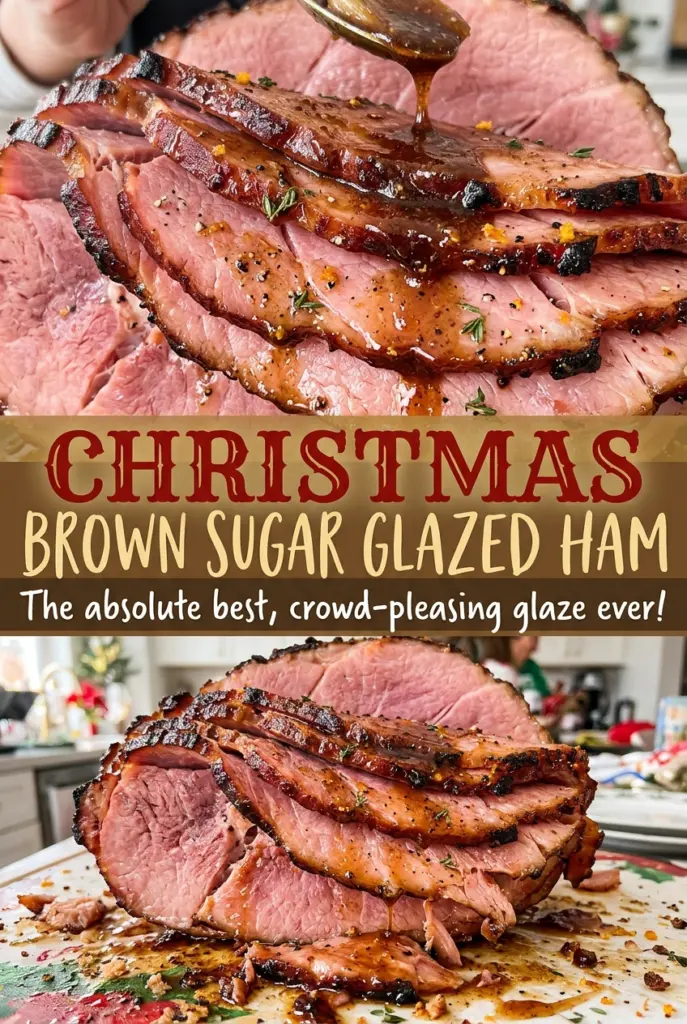
Christmas Brown Sugar Glazed Ham
The glaze looks thin when it first comes off the stove, but it turns shiny and clings to the ham as it bakes. I keep the ham covered for most…
Tip: save now, cook later.The glaze looks thin when it first comes off the stove, but it turns shiny and clings to the ham as it bakes. I keep the ham covered for most of its time in the oven, then brush on the brown sugar glaze near the end. That timing gives the meat time to warm through without leaving a sugary coating in the oven for hours.
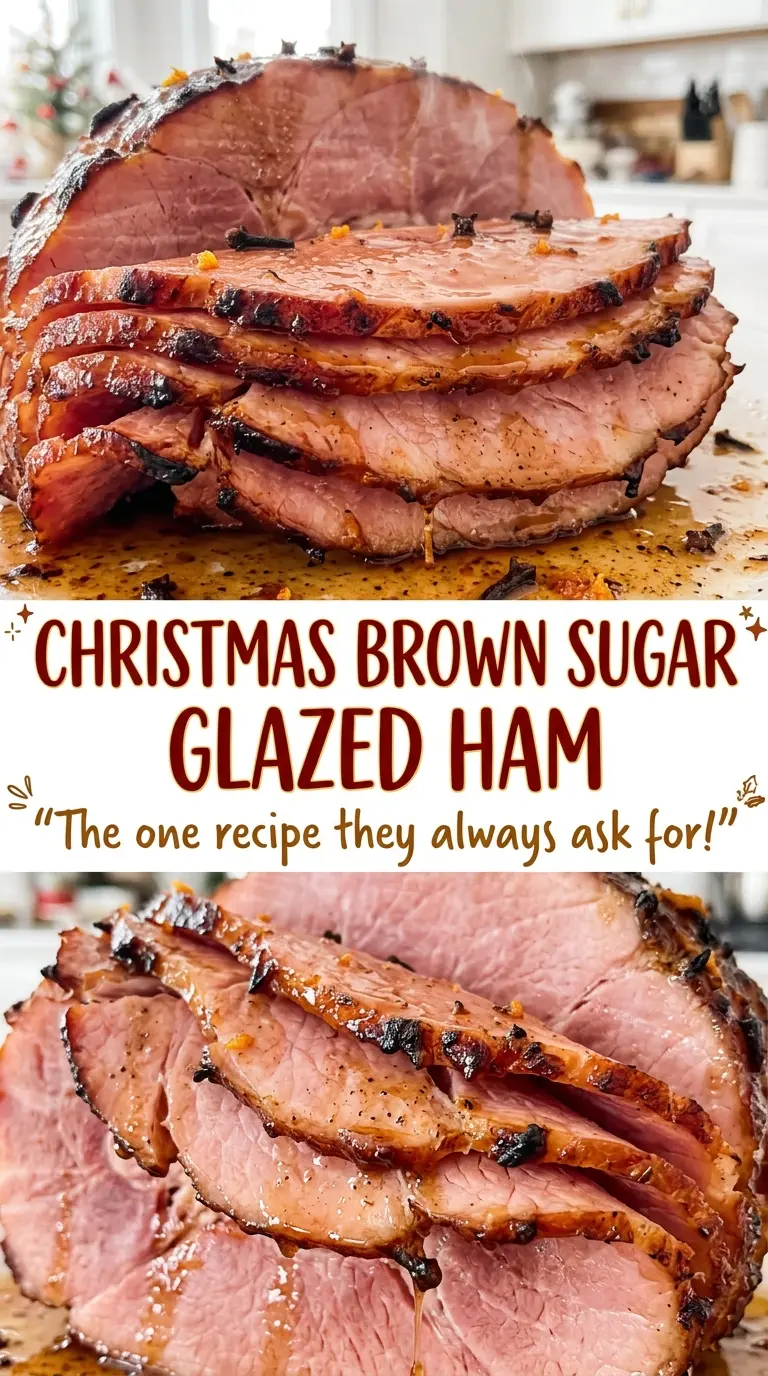
This Christmas Brown Sugar Glazed Ham starts with a fully cooked, bone-in ham that hasn’t been spiral-sliced. The intact surface is easier to glaze, and the slices stay together when it’s time to carve. Brown sugar and honey bring sweetness, while Dijon mustard and apple cider vinegar keep the glaze from tasting flat. The finished ham is glossy at the edges, tender through the middle, and ready to carve after a short rest.
Kitchen Note
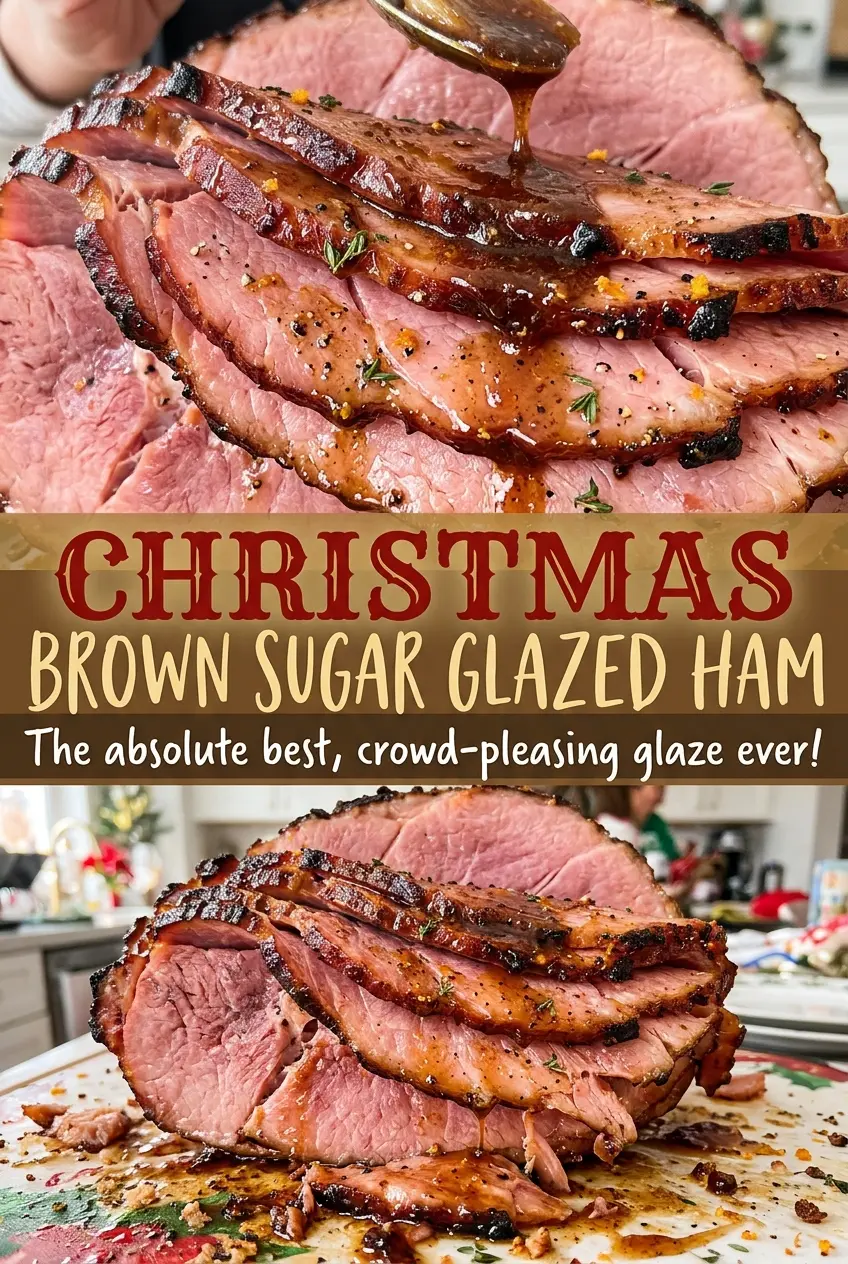
Give the ham its full 15-minute rest before carving. The slices come away more neatly, and you won’t have to chase a hot ham around the cutting board.
Save this Christmas Brown Sugar Glazed Ham for a glossy, sweet-tangy centerpiece that serves 14.
Why a Whole, Uncut Ham Takes the Glaze Better
A spiral-cut ham has many cut surfaces exposed before it even reaches the oven. Those slices can dry along their edges, and glaze can run between them instead of coating one continuous exterior. An unsliced ham gives you a more even surface to brush and keeps the meat in one piece while it warms.
The bone-in cut also asks you to pay attention to where you check the temperature. The thickest part away from the bone is the useful spot; a thermometer touching bone won’t tell you what the meat itself is doing. The oven time is only a guide because an 8-pound ham and a 10-pound ham won’t warm at the same pace. Let the temperature, rather than the clock alone, tell you when it’s ready for the glaze. That combination—a whole surface and a thermometer check in the meat—makes the finish much easier to judge.
The Glaze Ingredients That Balance Sweetness and Tang
- Light brown sugar — It gives the glaze its familiar molasses note and helps it thicken as it cooks. Pack it firmly when measuring so the sweetness stays consistent.
- Honey — Honey loosens the brown sugar into a brushable glaze and adds shine. A standard honey works well here; a distinctive variety will bring its own taste forward.
- Unsalted butter — Butter rounds out the sharp edges of the mustard and vinegar. Unsalted keeps the glaze’s seasoning from being dictated by the butter brand.
- Dijon mustard — Dijon brings a smooth, savory bite that keeps the glaze from tasting like plain candy. Yellow mustard has a different sharpness and won’t give the same balance.
- Apple cider vinegar — Its tartness cuts through the sugar and honey. Keep it in the mix; leaving out the acid makes the glaze noticeably sweeter and heavier.
- Fully cooked, bone-in ham — Choose a commercially packaged ham in the stated size range, and keep it unsliced. The glaze and roasting timing are built around that cut.
- Water — Water in the roasting pan helps create a moist covered roasting environment. It isn’t part of the glaze, so pour it into the pan rather than the saucepan.
Warm the Ham First, Then Build the Glossy Brown Sugar Coat
Cook the glaze until smooth
Combine the brown sugar, honey, butter, Dijon, and apple cider vinegar in a 1-quart saucepan over medium heat. Stir as the butter melts so the sugar and liquid come together instead of sticking at the bottom. Once the mixture reaches a gentle simmer, keep it there for 2 minutes, stirring. Take it off the heat when it looks smooth; a hard boil isn’t needed.
Set the ham up for gentle roasting
Heat the oven to 325°F. Remove the ham from its packaging and discard the plastic bone guard before it goes into the pan. Set it cut side down on a rack in a roasting pan, then pour the water into the pan. Placing it this way gives the ham a stable base while it warms.
Warm it under a tight foil cover
Cover the roasting pan tightly with foil so the moisture stays in the pan. Bake until the thickest part of the ham, away from the bone, reaches 110°F; plan on about 1 1/2 to 2 1/2 hours. The wide range comes from the ham’s size and how quickly your oven heats it. If the foil is loose, steam can escape and the surface may dry before the center is warm.
Brush in layers and let the ham rest
Remove the foil and brush the ham with some of the glaze. Bake uncovered for 20 to 30 minutes, brushing on more glaze every 10 minutes, until the outside is glossy and the thickest part reaches 140°F. Keep an eye on the surface as it darkens; the point is a shiny coating, not a scorched one. Transfer the ham to a cutting board and let it rest before carving.
Three Ways to Adjust This Ham Without Losing Its Balance
Choose the 8-pound or 10-pound ham for your table
Both sizes work with this glaze. The smaller ham will generally reach its temperature sooner and leave fewer leftovers; the larger one gives you more to carve. Keep the glaze ingredients the same and use the thermometer to judge the heating time.
Use a lighter glaze coating
For a less-sweet bite, brush on thinner coats of the prepared glaze rather than trying to change its ingredient balance. The ham will still get a sheen, but the brown sugar and honey won’t sit as thickly on each slice. Keep brushing at the same intervals and stop when the surface looks glossy.
Make it gluten-free with compatible packaged ingredients
Choose a fully cooked ham and Dijon mustard specifically labeled gluten-free, then keep the brown sugar, honey, butter, and apple cider vinegar as listed. This keeps the same sweet-tangy glaze; the important change is selecting packaged ham and mustard made for a gluten-free diet.
Storage and Reheating
- Refrigerator: Store carved ham in an airtight container for 3 to 4 days. The glaze will firm up when cold.
- Freezer: Freeze carved portions in airtight freezer-safe packaging for up to 1 to 2 months for best quality. Thaw in the refrigerator.
- Reheating: Put slices in a covered baking dish with a small splash of water and warm in a 325°F oven until they reach 165°F. Keep the dish covered; uncovered reheating dries the cut surfaces quickly.
Answers to the Ham Questions That Come Up at the Carving Board
Christmas Brown Sugar Glazed Ham
Ingredients
Equipment
Method
- Combine the brown sugar, honey, butter, Dijon mustard, and apple cider vinegar in a 1-quart saucepan over medium heat, stirring until melted and smooth.
- Bring the glaze to a gentle simmer and cook for 2 minutes, stirring, then remove it from the heat.
- Heat the oven to 325°F.
- Remove the ham from its packaging and discard any plastic bone guard.
- Place the ham cut side down on a rack in a roasting pan, then pour the water into the pan.
- Cover the pan tightly with foil and bake until the thickest part of the ham, away from the bone, reaches 110°F, about 1 1/2 to 2 1/2 hours.
- Remove the foil and brush the ham with some of the glaze.
- Bake uncovered for 20 to 30 minutes, brushing with more glaze every 10 minutes, until the glaze is glossy and the ham reaches 140°F.
- Transfer the ham to a cutting board and rest for 15 minutes before carving.
