
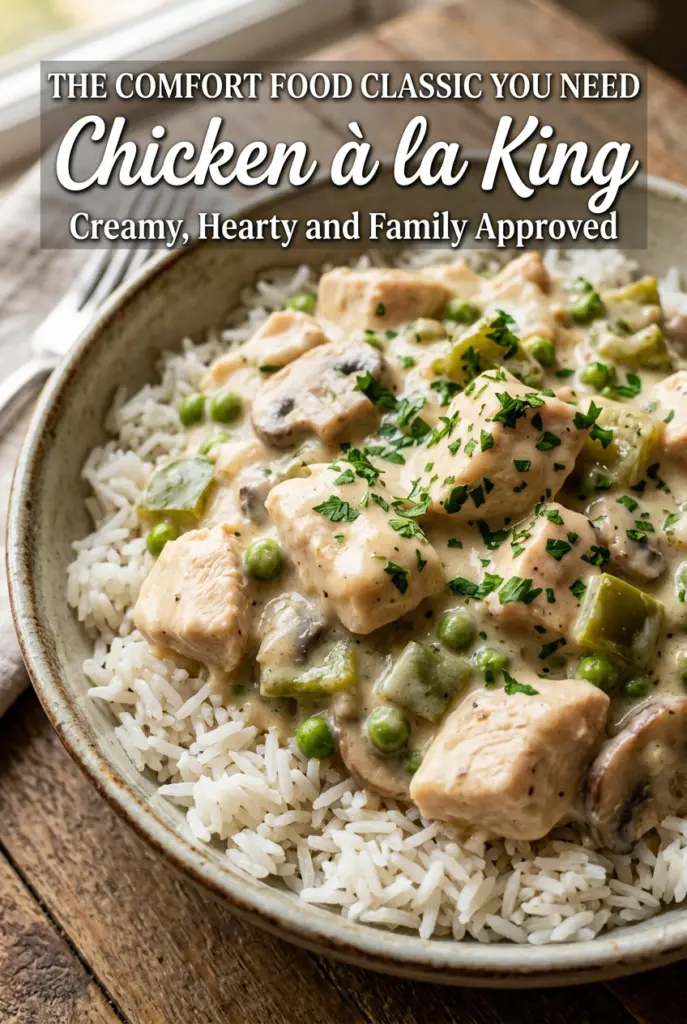
Creamy Chicken à la King
Velvety, savory, and packed with tender bites of chicken, mushrooms, peppers, and peas, Chicken à la King earns its place in the dinner rotation because the sauce clings to every…
Tip: save now, cook later.Velvety, savory, and packed with tender bites of chicken, mushrooms, peppers, and peas, Chicken à la King earns its place in the dinner rotation because the sauce clings to every spoonful without feeling heavy. It’s the kind of dish that tastes like comfort food from the first bite, with enough texture from the vegetables to keep each mouthful interesting.
What makes this version work is the order: the vegetables cook down first, then the flour blooms in the butter and vegetables before the broth goes in. That gives the sauce body without any raw flour taste. The milk and cream go in after the broth has been whisked smooth, which keeps the sauce silky instead of grainy, and the peas and chicken are added at the end so they stay intact and the chicken doesn’t dry out.
Below, I’ve included the small details that matter most: how to keep the sauce from turning pasty, what to serve it over, and the swaps that still give you a proper creamy finish.
The sauce thickened up beautifully and stayed creamy even after I reheated leftovers the next day. I served it over toast points, and my husband went back for seconds immediately.
Save this Chicken à la King for a creamy skillet dinner that works over rice, biscuits, toast, or noodles.
The Reason This Sauce Stays Creamy Instead of Turning Gluey
The biggest mistake in Chicken à la King is adding the liquid before the flour has had a chance to cook in the fat. That leaves you with a sauce that tastes dusty or goes lumpy as soon as it thickens. Here, the butter-coated vegetables create the base, and the flour gets stirred around long enough to lose that raw edge before the broth goes in.
Another common problem is boiling the sauce once the dairy is added. High heat can make the milk separate or give the sauce a chalky texture. Keep the simmer gentle. You want small bubbles around the edges and a sauce that thickens enough to coat a spoon, not a rolling boil.
What Each Ingredient Is Actually Doing in This Dish
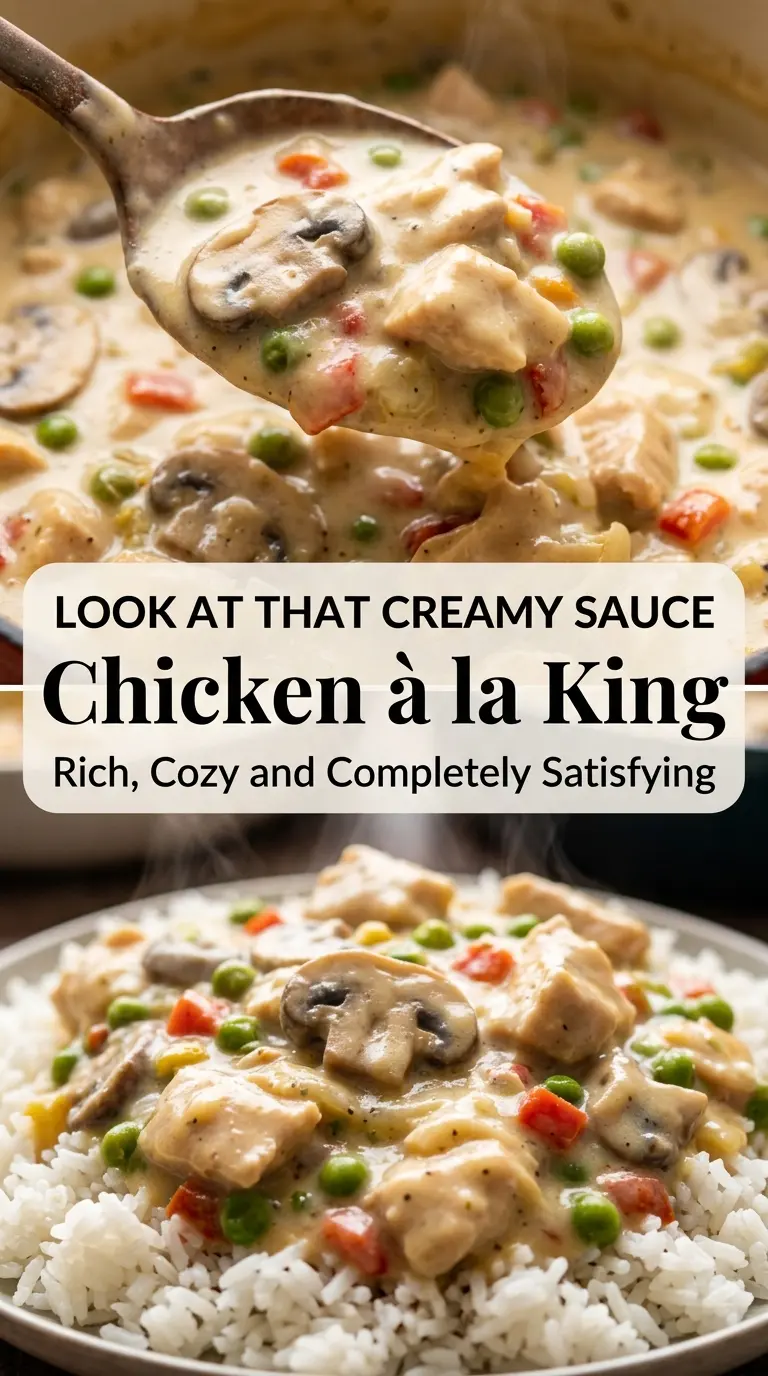
- Cooked chicken — Leftover roasted or rotisserie chicken works best because it already has flavor and stays tender in the sauce. Dice it into bite-sized pieces so it warms through quickly without falling apart.
- Mushrooms — These bring the earthy, savory note that gives the dish depth. White button mushrooms work fine, but cremini add a little more richness.
- Green bell pepper and onion — They soften into the sauce and add the classic Chicken à la King backbone. Dice them small so they melt into the base instead of staying crunchy.
- Flour — This is what gives the sauce body. Flour needs to cook in the butter and vegetable mixture for about a minute before the broth goes in; that step keeps the finished sauce smooth and not pasty.
- Whole milk and heavy cream — Milk builds the body, while cream gives the sauce its lush finish. If you want a lighter version, use all milk, but the sauce will be thinner and less silky.
- Frozen peas — Add them straight from the freezer near the end. They keep their sweetness and bright color when they only cook long enough to heat through.
Building the Sauce, Then Folding Everything In
Softening the Vegetables First
Start by melting the butter in a large skillet and cooking the mushrooms, onion, and bell pepper until they’re soft and the mushrooms have given up most of their moisture. You should see the pan go from wet to glossy, with the vegetables starting to pick up a little color. If you rush this stage, the sauce tastes flat because the vegetables never develop that cooked-down sweetness.
Cooking Out the Flour
Sprinkle the flour over the vegetables and stir constantly for about a minute. The mixture will look thick and a little sandy, and that’s exactly what you want. This short cook time removes the raw flour taste and helps the flour coat the vegetables evenly so the broth can whisk in without lumps.
Whisking in the Dairy
Pour in the chicken broth slowly while whisking so the mixture stays smooth, then add the milk and cream. Keep the heat at a gentle simmer. If the sauce looks thin at first, that’s normal; it thickens as it heats, and pushing it too hard is what causes splitting or graininess.
Finishing With Chicken and Peas
Stir in the chicken, peas, garlic powder, salt, and pepper, then let everything warm through for a few minutes. The sauce should be thick enough to mound slightly on a spoon but still flow easily. Add the parsley at the end so it stays fresh and green instead of disappearing into the sauce.
Three Practical Ways to Adapt Chicken à la King
Dairy-Free Version With a Softer Finish
Use a neutral unsweetened non-dairy milk and replace the cream with full-fat coconut milk or an oat-based cooking cream. The sauce won’t taste exactly the same, but you’ll still get a creamy body if you keep the simmer gentle and don’t let it boil hard.
Gluten-Free Without Losing the Thick Sauce
Swap the all-purpose flour for a 1:1 gluten-free flour blend, or use cornstarch slurry at the end if that’s what you have. Cornstarch gives a glossier finish but needs just a minute or two of simmering; gluten-free flour behaves more like the original and keeps the texture closer to classic.
Turn It Into a Broader Dinner
Add extra peas, diced carrots, or sautéed celery if you want more vegetables in the mix. Just keep the pieces small and cook them until tender before the flour goes in, or the final sauce will feel crowded instead of cohesive.
Storage and Reheating
- Refrigerator: Store for up to 4 days. The sauce will thicken as it chills.
- Freezer: It freezes, but dairy sauces can separate a little when thawed. Freeze in portions if you want convenience, then whisk well after reheating.
- Reheating: Warm it slowly over low heat with a splash of broth or milk. High heat is the mistake here; it tightens the sauce and can make the dairy look broken.
Answers to the Questions Worth Asking
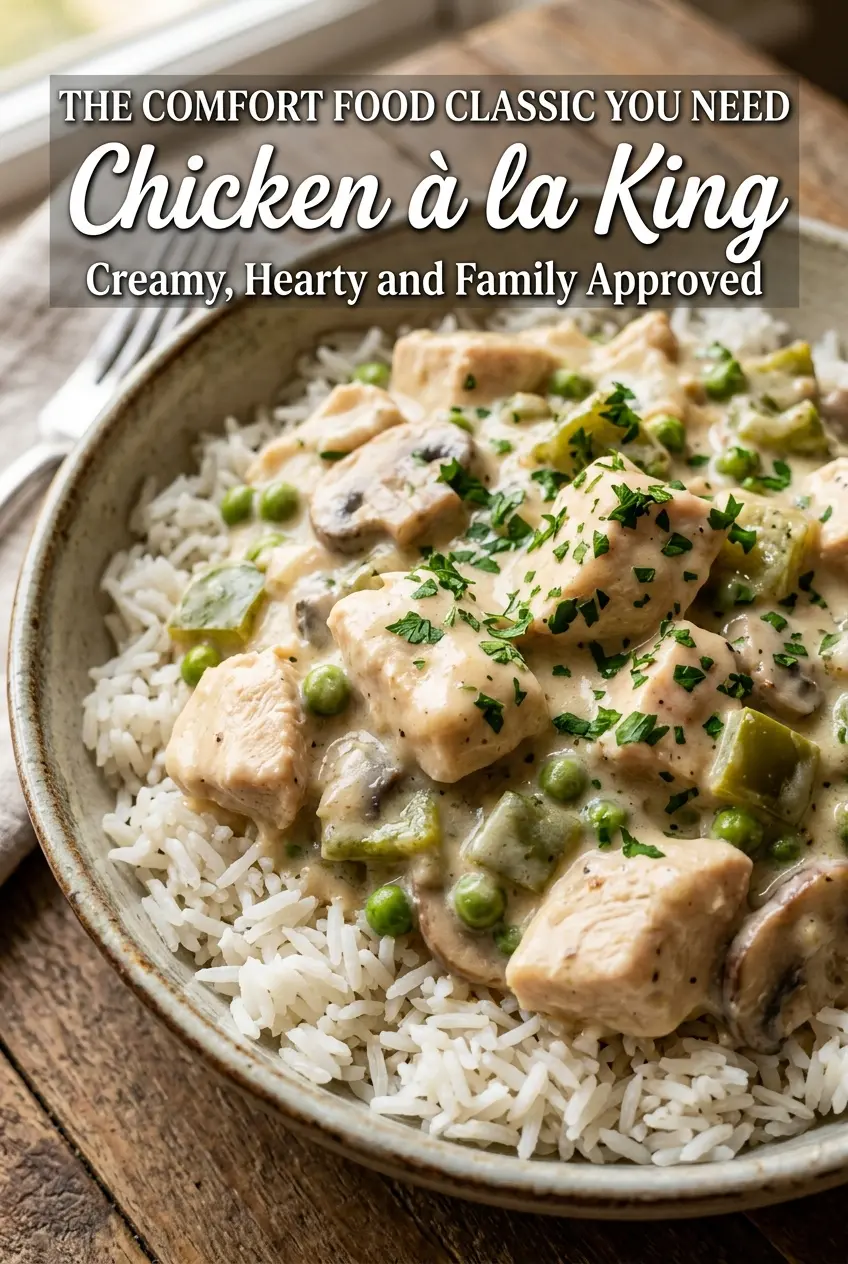
Creamy Chicken à la King
Ingredients
Equipment
Method
- Melt the butter in a large skillet over medium heat until it foams slightly (about 1 minute).
- Add mushrooms, onion, and bell pepper, then cook for 5–6 minutes until softened and lightly browned at the edges.
- Sprinkle the flour over the vegetables and stir for 1 minute until the mixture looks smooth and slightly paste-like.
- Gradually whisk in the chicken broth, scraping the pan to lift any browned bits.
- Add the milk and heavy cream, then bring the sauce to a simmer.
- Simmer for 5 minutes until thickened and glossy, stirring every so often so it doesn’t catch.
- Stir in the cooked chicken, frozen peas, garlic powder, salt, and black pepper until evenly combined.
- Cook for another 5 minutes until the peas are hot and the chicken is heated through (sauce should bubble gently).
- Garnish with the chopped parsley and serve immediately.
- Serve over rice, toast points, biscuits, or egg noodles.
