

Creamy Cajun Chicken
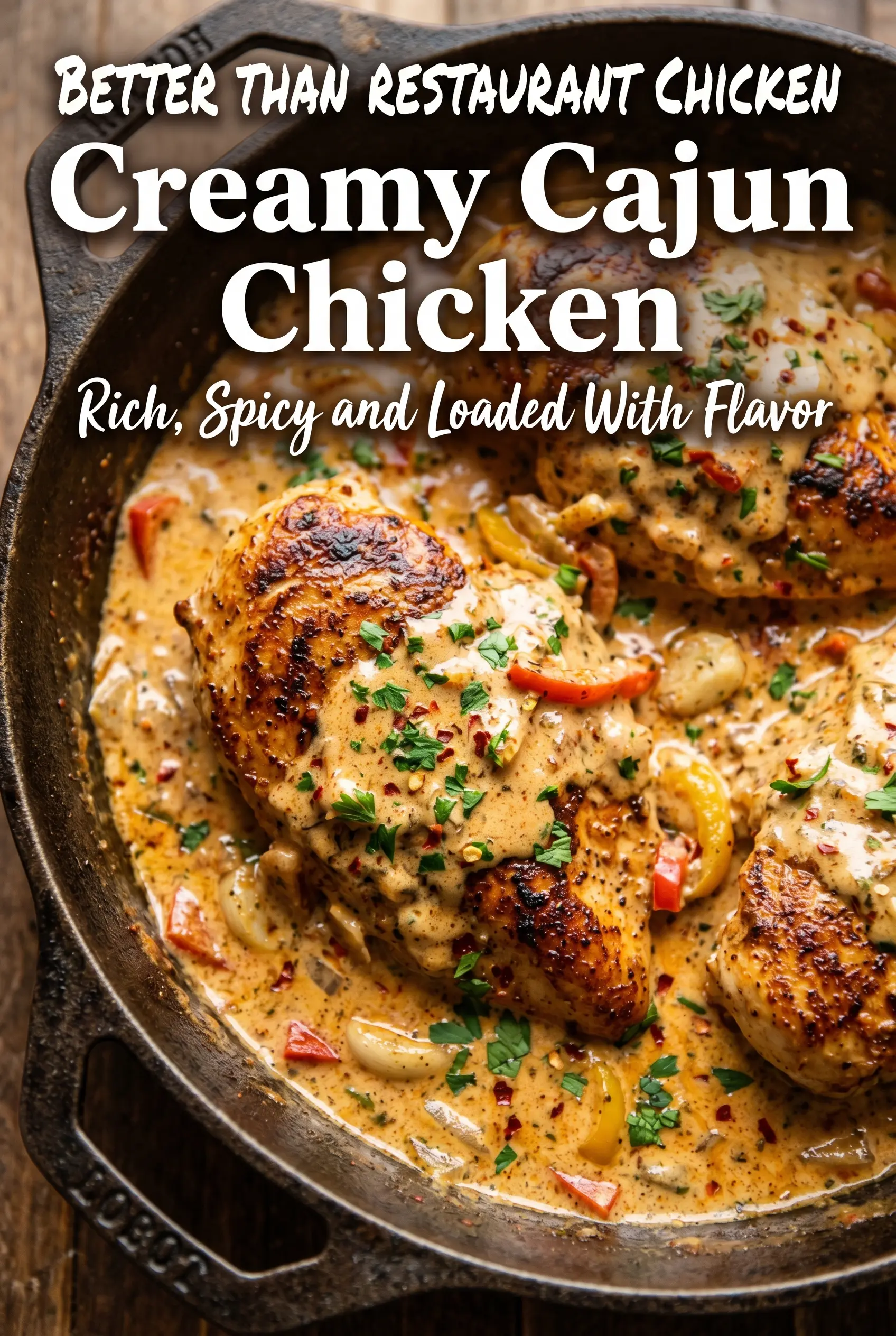
Golden seared chicken tucked into a creamy Cajun sauce is the kind of dinner that tastes like you did a lot more work than you did. The chicken stays juicy,…
Tip: save now, cook later.Golden seared chicken tucked into a creamy Cajun sauce is the kind of dinner that tastes like you did a lot more work than you did. The chicken stays juicy, the sauce clings in a glossy layer, and the Cajun seasoning brings just enough heat to keep every bite interesting without drowning out the Parmesan and garlic. It lands in that sweet spot between comfort food and weeknight-friendly cooking, which is why it ends up back on the menu again and again.
What makes this version work is the way the sauce starts in the same skillet as the chicken. Those browned bits left behind after searing carry most of the savory flavor, and a quick splash of broth lifts them cleanly into the sauce. Heavy cream keeps everything silky, while Parmesan thickens the sauce as it simmers instead of turning it into something gluey. The only real trick is keeping the heat moderate once the dairy goes in; high heat is how creamy sauces turn grainy or separate.
Below, I’ll walk through the sear that gives the chicken its color, the simple sauce technique that keeps it smooth, and a few smart ways to adapt it if you want to serve it with pasta, rice, or a lighter side.
The sauce coated the chicken beautifully and didn’t break at all. I served it with rice, and my husband kept going back for more because the Cajun spice had just enough kick without being too hot.
Save this Creamy Cajun Chicken for a skillet dinner with a silky Parmesan sauce and just enough heat to keep the plate interesting.
The Secret to Keeping Cajun Chicken Juicy Under a Cream Sauce
Chicken breasts dry out fast when they’re rushed over high heat for too long. The fix here is simple: pat them dry, season them well, and sear them only until the outside turns deeply golden and the center hits done. Once they go back into the sauce, they only need a short simmer to pick up flavor and stay tender.
The other common failure is a sauce that turns greasy or grainy after the cream and Parmesan go in. That usually happens when the heat is too aggressive or the cheese is added too quickly. Pull the pan down to a steady simmer before stirring in the cream, then add the Parmesan gradually so it melts into the liquid instead of clumping on contact.
What Each Ingredient Is Actually Doing in This Dish

- Chicken breasts — Boneless, skinless breasts keep this meal quick and lean, but they need even thickness so they cook at the same rate. If one side is much thicker, pound it lightly before seasoning. That small step keeps the outside from overcooking while the center finishes.
- Cajun seasoning — This is where the dish gets its backbone, so use a blend you like on its own. Some brands are saltier than others, which means you may not need much extra seasoning beyond what the recipe already includes. If your blend is very salty, back off a little and taste the sauce at the end.
- Butter and garlic — Butter carries the garlic flavor and helps the sauce feel richer than broth and cream alone. Garlic burns fast, so it only needs a short cook before the liquid goes in. If it turns dark in the pan, start over; burnt garlic will stick out in the final sauce.
- Chicken broth — The broth loosens the browned bits from the skillet and gives the sauce its savory base. Use low-sodium broth if your Cajun seasoning is already seasoned heavily. Water works in a pinch, but the sauce will taste flatter.
- Heavy cream — This is what makes the sauce cling instead of just pooling under the chicken. Half-and-half can work, but the sauce will be thinner and less stable. If you use it, simmer a little longer and keep the heat low.
- Parmesan cheese — Freshly grated Parmesan melts best and thickens the sauce without turning stringy. The pre-grated kind often has anti-caking agents that keep it from melting as smoothly. If you only have it on hand, add it very slowly and expect a slightly less silky finish.
How to Build the Sauce So It Stays Smooth
Getting the Sear First
Heat the olive oil until it shimmers, then lay the chicken in the pan and leave it alone long enough to build color. If you move it too early, it sticks and tears instead of releasing with a crust. You want a deep golden surface, not pale steamed chicken, because that browning is what gives the sauce its depth later.
Pulling Flavor From the Pan
When the chicken comes out, the skillet should still hold those browned bits on the bottom. Add the butter and garlic, then pour in the broth and scrape the pan while the liquid is hot. That deglazing step lifts up the concentrated flavor from the sear, and it keeps nothing good stuck behind on the skillet.
Finishing the Cream Sauce
Once the broth is simmering, lower the heat before adding the cream and Parmesan. Stir slowly until the sauce looks smooth and slightly thickened, then return the chicken to the pan. If the sauce boils hard, the fat can separate and the cheese can get grainy, so keep it at a gentle simmer and let the chicken finish in the sauce.
Three Ways to Adjust This Without Losing the Point
Make It Dairy-Free
Use a full-fat unsweetened coconut cream or a dairy-free cooking cream, then finish with a dairy-free Parmesan-style cheese if you want that same salty edge. The sauce won’t taste exactly the same, but it can still be rich and spoonable. Keep the heat low, because non-dairy creams can split just as easily as regular cream.
Turn It Into a Gluten-Free Dinner
This recipe is naturally gluten-free as written if your Cajun seasoning and broth are certified gluten-free. The only place people get tripped up is the seasoning blend, since some brands add fillers or anti-caking agents. Check that label once and you’re set.
Use Thighs Instead of Breasts
Boneless thighs work well here and stay juicy even if they cook a minute or two longer. They bring a little more richness to the dish and hold up nicely in the sauce. Watch the color more than the clock, because thighs can look done before the center has fully cooked through.
Stretch It for a Crowd
Add sliced mushrooms or sautéed onions after the garlic to build more volume without changing the character of the dish. The sauce will coat the extras and give you more servings without watering anything down. If you do that, add a small splash of extra broth so the sauce stays loose enough to spoon.
Storage and Reheating
- Refrigerator: Store leftovers in an airtight container for up to 3 days. The sauce thickens as it chills, and the chicken can firm up a little.
- Freezer: It freezes, but the cream sauce may separate a bit after thawing. For the best texture, freeze only if you’re okay with a slightly less silky sauce.
- Reheating: Rewarm gently on the stove over low heat with a splash of broth or cream. High heat is the fastest way to break the sauce and toughen the chicken.
The Things That Trip People Up With This Dish
Creamy Cajun Chicken
Ingredients
Equipment
Method
- Pat the chicken dry with paper towels to help it sear properly and stay juicy.
- Season both sides of the chicken with Cajun seasoning, paprika, garlic powder, and black pepper.
- Heat the olive oil in a large skillet over medium-high heat until shimmering.
- Sear the chicken for 5–6 minutes per side until golden and cooked through, then remove and set aside.
- Melt the butter in the same skillet.
- Add the minced garlic and cook for 30 seconds until fragrant.
- Pour in the chicken broth and scrape up browned bits from the bottom of the pan.
- Stir in the heavy cream and grated Parmesan cheese.
- Simmer for 3–4 minutes until slightly thickened.
- Return the chicken to the skillet and spoon sauce over the chicken.
- Simmer for 2 minutes, then garnish with chopped parsley and serve.
