
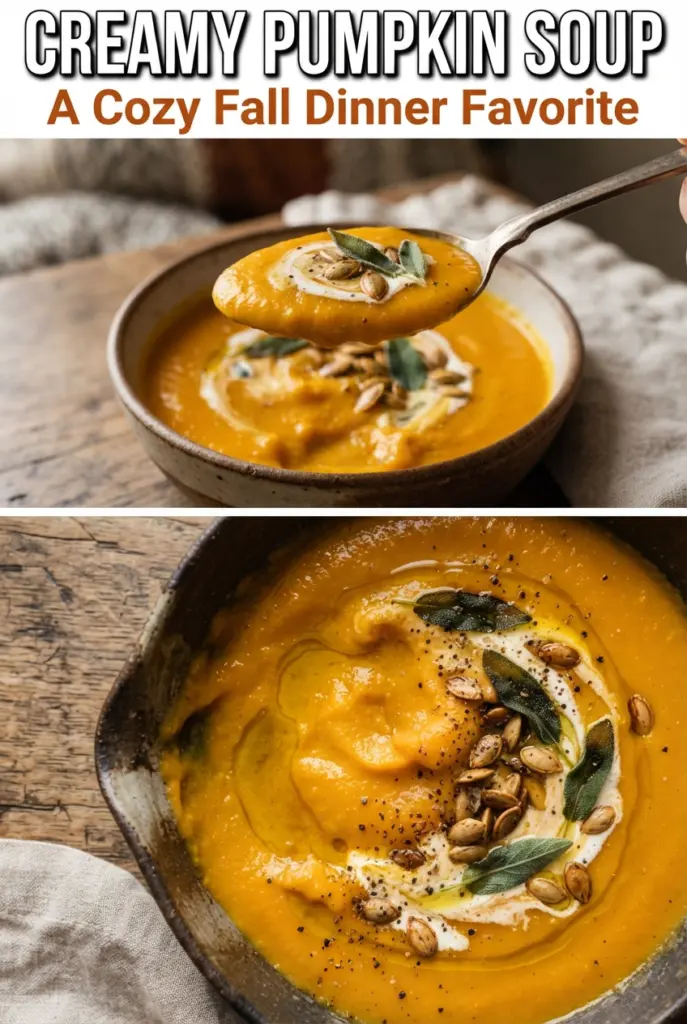
Classic Creamy Pumpkin Soup
Pumpkin soup should taste smooth, warmly spiced, and rich enough to stand on its own without getting heavy. This version does exactly that. The pumpkin puree gets cooked with onion…
Tip: save now, cook later.Pumpkin soup should taste smooth, warmly spiced, and rich enough to stand on its own without getting heavy. This version does exactly that. The pumpkin puree gets cooked with onion and garlic first, then loosened with broth and finished with cream and a little maple so the flavor lands round and savory instead of flat or overly sweet.
The texture comes from a few small choices that matter. Cooking the onion until soft gives the soup a sweeter base. Whisking the broth in slowly keeps the puree from clumping. A short simmer after the spices go in gives everything time to meld, and the cream goes in at the end so the soup stays silky instead of breaking.
Below, you’ll find the one step that keeps the soup velvety, plus the best way to adapt it if you want to swap the broth, skip the dairy, or make it ahead for a holiday meal.
The soup turned out silky and the maple at the end kept it from tasting flat. I loved how the cinnamon and ginger stayed gentle instead of turning it into dessert soup, and it reheated perfectly for lunch the next day.
Creamy pumpkin soup with maple and sage is the kind of cozy dinner that tastes even better the next day.
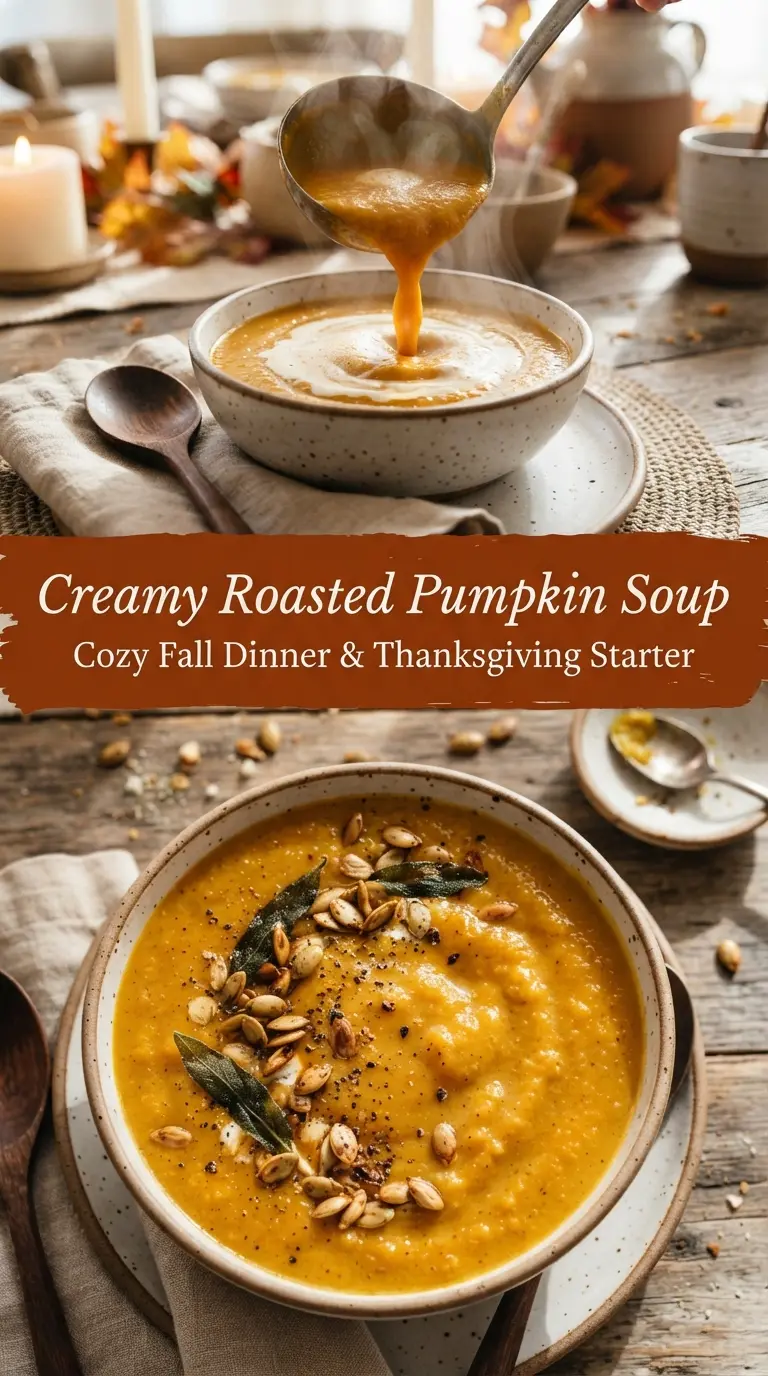
The Trick to Keeping Pumpkin Soup Silky Instead of Gluey
Pumpkin puree is already cooked, so the main job here is building flavor without overworking it. If you dump cold broth straight into the pot all at once, the puree can look streaky and take longer to smooth out. Whisking it in gradually gives you a cleaner texture from the start.
The other place people go wrong is boiling the soup hard after the cream goes in. That can make the dairy taste thin or separate around the edges. Keep the final simmer gentle. You want the soup to look glossy and slightly thickened, not bubbling aggressively.
- Pumpkin puree — Use pure pumpkin puree, not pumpkin pie filling. Pie filling already contains sugar and spices, which throws off both the flavor and the texture.
- Broth — Vegetable broth keeps the soup vegetarian, while chicken broth gives it a slightly fuller savory base. Use low-sodium broth so you can control the salt after blending.
- Heavy cream — This is what gives the soup its velvety finish. Half-and-half works in a pinch, but the soup will be a little lighter and less rich.
- Maple syrup — Just a tablespoon rounds out the spices without making the soup sweet. Honey will work, but it tastes a little sharper and less earthy.
- Sage and pepitas — These are the finishing details that make the bowl taste complete. The sage adds a savory, woodsy note, and the pepitas give you a much-needed crunch against the smooth soup.
Building the Base Without Losing the Pumpkin Flavor
Softening the Onion First
Melt the butter over medium heat and cook the diced onion until it turns soft and translucent, with no raw edge left in the smell. If the heat is too high, the onion browns before it has a chance to sweeten the base, and that can make the soup taste heavier than it should. Add the garlic only at the end of this stage so it stays fragrant instead of bitter.
Whisking the Pumpkin and Broth Together
Stir in the pumpkin puree first, then whisk in the broth gradually until the mixture looks smooth and even. This is the point where lumps can happen, especially if the pumpkin is cold from the can, so keep whisking until the texture loosens. The pot should look like a thick, matte orange base before the spices go in.
Letting the Spices Bloom in the Soup
Add the cinnamon, ginger, nutmeg, cayenne, salt, and pepper, then bring the pot to a boil before lowering it to a simmer. The brief simmer wakes up the spices and lets the soup thicken a little. If it starts spitting or reducing too fast, lower the heat; you want a steady bubble, not a hard boil.
Finishing With Cream and Maple
Blend the soup until completely silky, then stir in the maple syrup and cream over low heat. The final two minutes should be gentle, just enough to warm everything through and bring the soup to a glossy finish. Taste before serving, because pumpkin soup usually needs one last pinch of salt after the cream goes in.
Three Ways to Adapt This Pumpkin Soup
Make It Dairy-Free
Swap the butter for olive oil or vegan butter, and use full-fat coconut milk instead of heavy cream. Coconut milk keeps the soup rich and smooth, but it adds a faint coconut note, so this version tastes a little more tropical and less classic.
Keep It Vegetarian
Use vegetable broth instead of chicken broth. The soup still tastes full and savory because the onion, garlic, and spices carry most of the flavor, so you won’t miss the meat stock if the broth is well seasoned.
Make It a Little Lighter
Use half-and-half instead of heavy cream and reduce the maple syrup to 2 teaspoons. The soup will still be smooth, but it will have a thinner body and a less luxurious finish, which works well if you’re serving it as a starter rather than a main.
Storage and Reheating
- Refrigerator: Store in an airtight container for up to 4 days. It thickens a little as it chills, which is normal.
- Freezer: This soup freezes well for up to 3 months. Cool it completely first, then portion it into freezer-safe containers with a little room at the top for expansion.
- Reheating: Rewarm slowly on the stovetop over low heat, stirring often. If it looks too thick after chilling, add a splash of broth or water instead of cranking up the heat, which can dull the cream and make the texture grainy.
Answers to the Questions Worth Asking
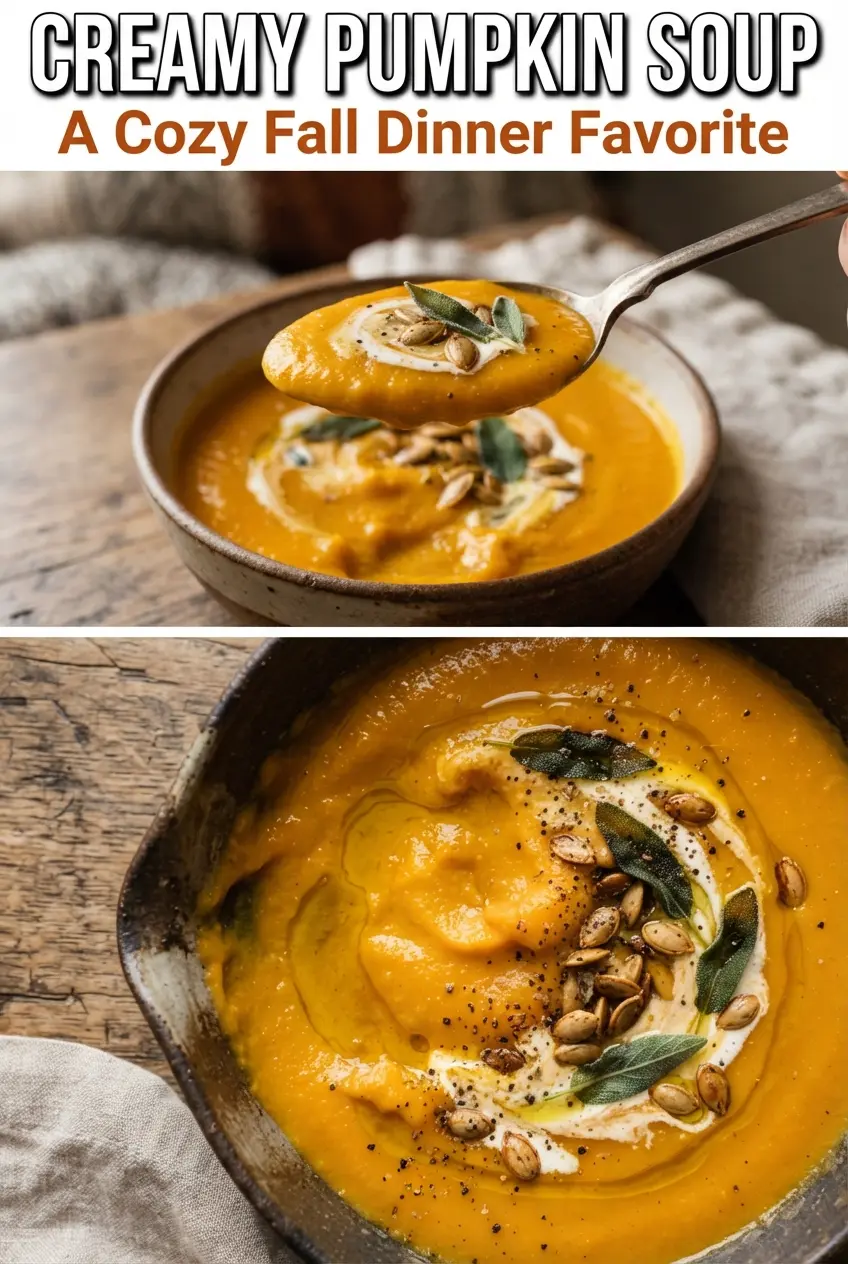
Classic Creamy Pumpkin Soup (30-Minute One Pot Recipe)
Ingredients
Equipment
Method
- Melt the butter in a large pot over medium heat. Cook until the butter is fully melted and shimmering (about 30 seconds).
- Add the diced onion and cook for 5–6 minutes, stirring occasionally, until soft and translucent. Visual cue: the onion should look glossy and no longer opaque.
- Add the minced garlic and cook for 1 minute, until fragrant. Visual cue: the garlic smell turns sweet and toasty without browning.
- Whisk in the pumpkin puree, then slowly whisk in the broth until smooth. Visual cue: no orange lumps remain before you heat further.
- Stir in the cinnamon, ginger, nutmeg, cayenne if using, salt and pepper, then bring to a boil. Visual cue: small bubbles cover the surface.
- Lower to a simmer and cook uncovered for 12–15 minutes, stirring occasionally, until the flavors meld and the soup thickens slightly. Visual cue: the soup coats a spoon lightly.
- Blend with an immersion blender until completely silky and smooth. Visual cue: the soup texture becomes uniform with no visible specks.
- Stir in the maple syrup and cream and simmer gently for 2 minutes, until velvety. Visual cue: the soup looks smoother and slightly glossy.
- Taste and adjust the seasoning. Visual cue: add a pinch of salt or more pepper only if needed for balance.
- Ladle the soup into bowls and swirl in a little extra cream. Visual cue: create thin cream streaks on the surface.
- Top with toasted pepitas and fresh sage leaves, then serve hot. Visual cue: pepitas add a crunchy green-gold finish.
