
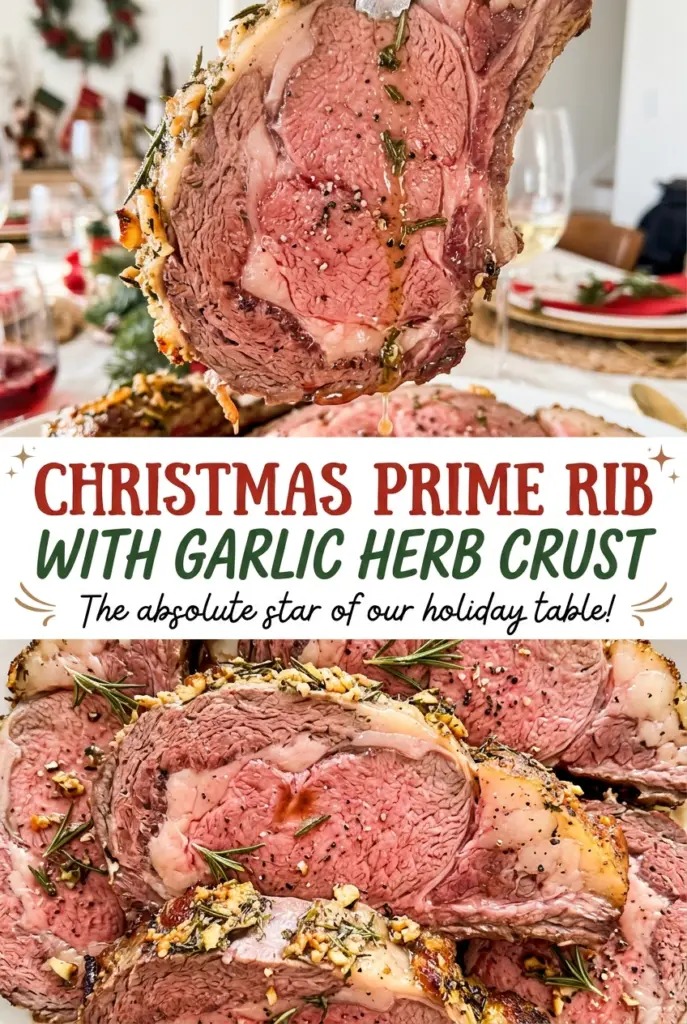
Christmas Prime Rib with Garlic Herb Crust
A six-pound bone-in roast takes up most of the roasting pan, and it deserves a little more attention than a quick weeknight cut. I like that this one gets its…
Tip: save now, cook later.A six-pound bone-in roast takes up most of the roasting pan, and it deserves a little more attention than a quick weeknight cut. I like that this one gets its seasoning in place before the oven is even on, leaving the cooking itself straightforward. A garlic-herb butter coats the beef, and the roast gets a hot start before finishing at a lower temperature.
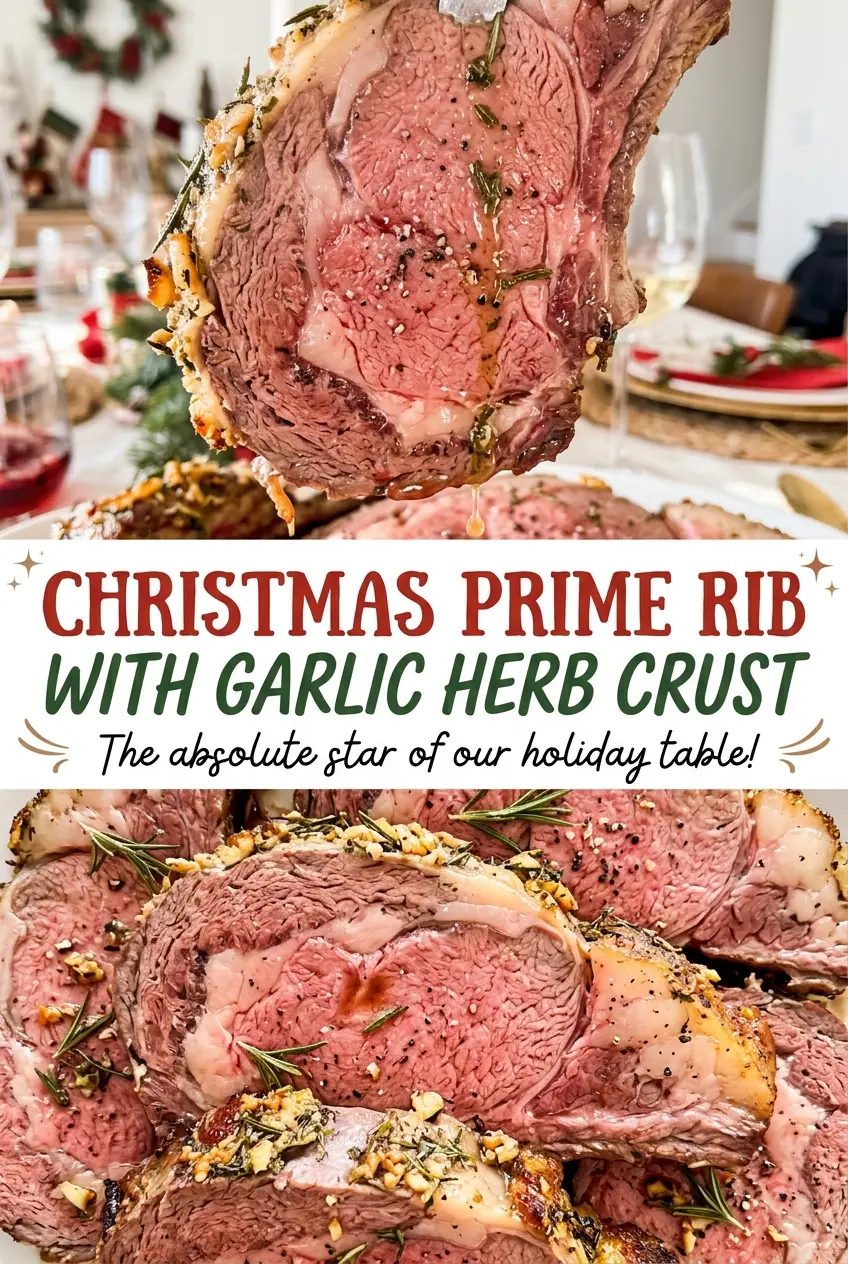
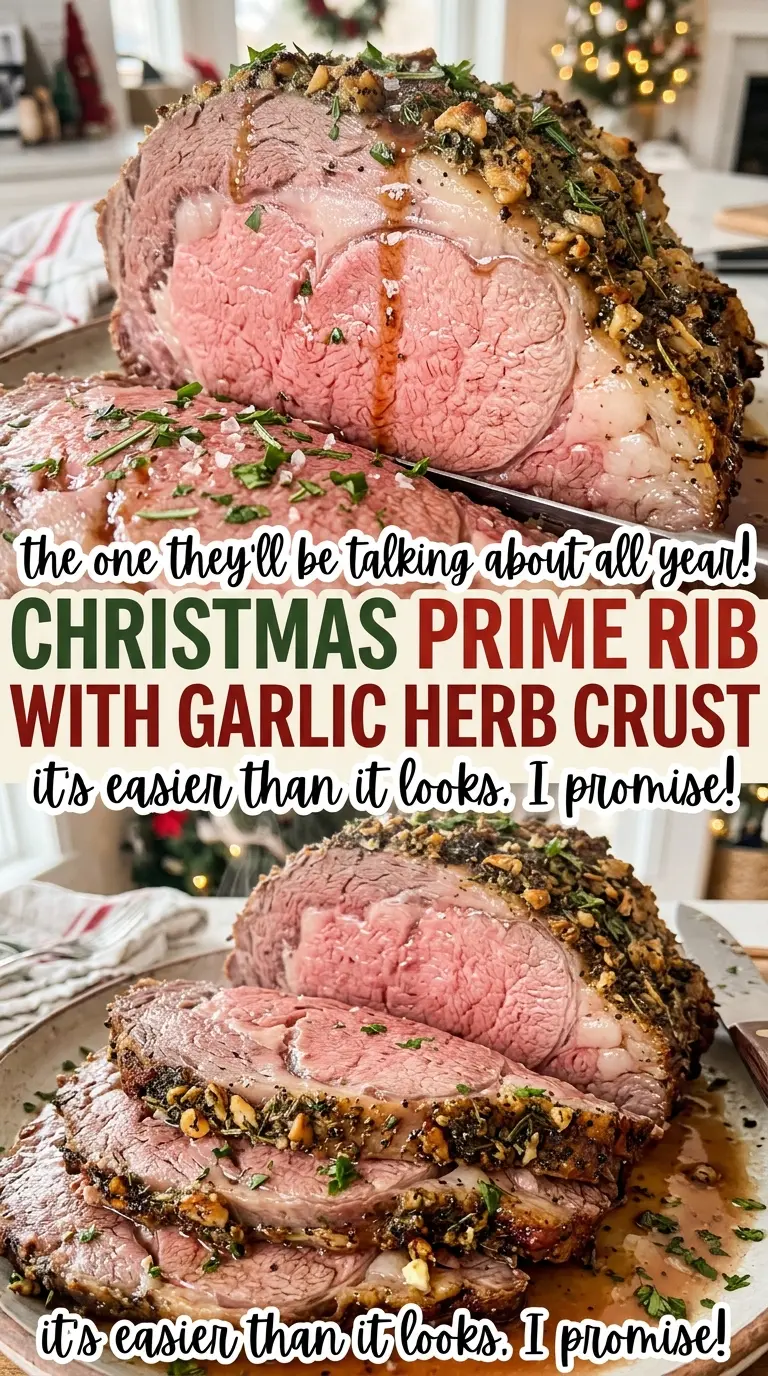
Christmas Prime Rib with Garlic Herb Crust is made for slicing at the table: the bones separate cleanly, and the meat slices across the grain. I keep the seasoning simple so the beef still tastes like beef, with rosemary, thyme, garlic, and black pepper in every bite. Give the roast time to rest after it comes out of the oven, and the slices stay juicy with a fragrant, savory coating.
Kitchen Note
When you check the roast, slide the thermometer into the thickest part of the meat and keep the tip away from the bone. A probe touching bone can give you a misleading reading, so reposition it if you aren’t sure.
Save this Christmas Prime Rib with Garlic Herb Crust for a centerpiece roast with a fragrant butter coating and simple, confident carving.
Why the Uncovered Refrigerator Rest Changes the Roast
Salting the roast well before it goes into the oven does more than season the outside. During the uncovered refrigerator rest, salt first draws a little moisture to the surface, then that seasoned moisture has time to move back into the meat. Meanwhile, the exposed surface dries, which helps the butter coating sit on the roast instead of sliding over a damp exterior.
That uncovered part matters. Covering the roast traps moisture around it, so the outside stays wet rather than drying in the refrigerator. Set the roast bone-side down on a rack in the roasting pan, with enough room for air to move around it. The 12-to-24-hour window gives you flexibility, but the roast still needs to be refrigerated; don’t leave it out overnight on the counter. The result is more even seasoning and a better starting surface for the garlic-herb coating.
What the Beef, Butter, and Fresh Herbs Each Bring
- Bone-in beef rib roast — Choose a roast with an even shape so it cooks more evenly from end to end. This method is timed for a six-pound bone-in roast; a boneless roast has a different shape and won’t necessarily follow the same cooking window.
- Kosher salt — Its coarse grains are easy to spread across the broad surface of the roast. Stick with kosher salt for the stated measurement; fine table salt is denser by volume and can make the seasoning too salty if swapped one-for-one.
- Unsalted butter — Softened butter makes a spreadable base for the garlic and herbs and keeps the seasoning together on the roast. Unsalted butter also lets the kosher salt do the seasoning without the salt level varying from one butter brand to another.
- Garlic — Finely minced cloves disperse through the butter, so the coating gets garlic throughout instead of a few large, strong pockets. Fresh cloves give the brightest flavor here; mince them finely rather than leaving chunky pieces.
- Fresh rosemary and thyme — These herbs provide the defining woodsy aroma of the crust. Fresh herbs are the best fit for the soft butter mixture; if you only have dried herbs, use one-third as much dried rosemary and thyme as the listed fresh amounts.
- Black pepper — Pepper adds a warm, savory edge alongside the herbs. Freshly ground pepper has a more pronounced aroma, but pre-ground black pepper works in the same amount.
Getting the Garlic-Herb Coating From Pan to Perfectly Rested Roast
Dry the surface and let the salt work
Pat the roast dry, then season it all over with kosher salt. Set it bone-side down on a rack in a roasting pan and refrigerate it uncovered for 12 to 24 hours. The surface should look dry rather than damp when you take it out. Keep the roast on the rack so air can circulate around the exposed meat.
Bring the roast out and mix the butter
Take the roast out of the refrigerator one hour before cooking and heat the oven to 450°F. Stir the softened butter with the finely minced garlic, chopped rosemary, chopped thyme, and black pepper until the mixture looks evenly speckled. Spread it over the roast in an even layer, working it across the top and sides. If the butter is too firm to spread, it can drag against the surface; let it soften more before you coat the meat.
Start hot, then finish at a lower temperature
Roast for 20 minutes at 450°F, then reduce the oven to 325°F. Continue roasting for 1 1/2 to 2 1/2 hours, checking the thickest part of the meat away from the bone with a thermometer. Take the roast out when that spot reads 145°F; the clock gives you a range, but the thermometer tells you when this roast is ready. The butter and herbs should form a browned coating on the outside.
Rest before separating the bones
Transfer the roast to a cutting board and tent it loosely with foil for a 20-minute rest. The roast must rest at least 3 minutes after it reaches 145°F; the full rest also gives you time to set up for carving. Cut between the bones to separate them, then slice the meat across the grain. Use a sharp carving knife and steady strokes so the slices stay neat instead of getting pulled apart.
Two Flavorful Ways to Adapt the Herb Crust
Make the crust dairy-free
Replace the softened butter with olive oil, stirring it into the garlic, rosemary, thyme, and pepper until the herbs cling together. The coating will be looser and less rich than the butter version, but it still carries the same savory aromatics across the roast. Spread it carefully so the oil-and-herb mixture covers the surface evenly.
Give rosemary the lead
For a more pronounced piney herb note, leave out the thyme and use rosemary as the only fresh herb in the butter. The crust will taste more direct and woodsy, with less of thyme’s gentle, earthy background. Keep the garlic and black pepper in the mixture so the roast still has its full savory base.
Storage and Reheating
- Refrigerator: Store leftover roast in an airtight container for 3 to 4 days. Sliced meat will lose some juiciness as it sits, so keep larger pieces intact when practical.
- Freezer: Freeze leftover portions in airtight freezer packaging for 2 to 3 months. Thaw them in the refrigerator before reheating; freezing can soften the texture slightly.
- Reheating: Warm slices in a covered baking dish at 325°F until they reach 165°F. Avoid reheating uncovered for a long stretch, which dries the cut edges before the center warms.
Questions That Come Up When Cooking Prime Rib
Christmas Prime Rib with Garlic Herb Crust
Ingredients
Equipment
Method
- Pat the roast dry.
- Season the roast all over with the salt.
- Set the roast bone-side down on a rack in a roasting pan.
- Refrigerate uncovered for 12 to 24 hours.
- Take the roast out of the refrigerator 1 hour before cooking.
- Heat the oven to 450°F.
- Stir together the butter, garlic, rosemary, thyme, and black pepper.
- Spread the butter mixture over the roast.
- Roast for 20 minutes at 450°F.
- Reduce the oven to 325°F.
- Roast for 1 1/2 to 2 1/2 hours, until a thermometer inserted into the thickest part away from the bone reads 145°F.
- Transfer the roast to a cutting board and tent loosely with foil.
- Rest for 20 minutes; ensure it rests at least 3 minutes after reaching 145°F.
- Cut between the bones to separate them.
- Slice the roast across the grain and serve.
