
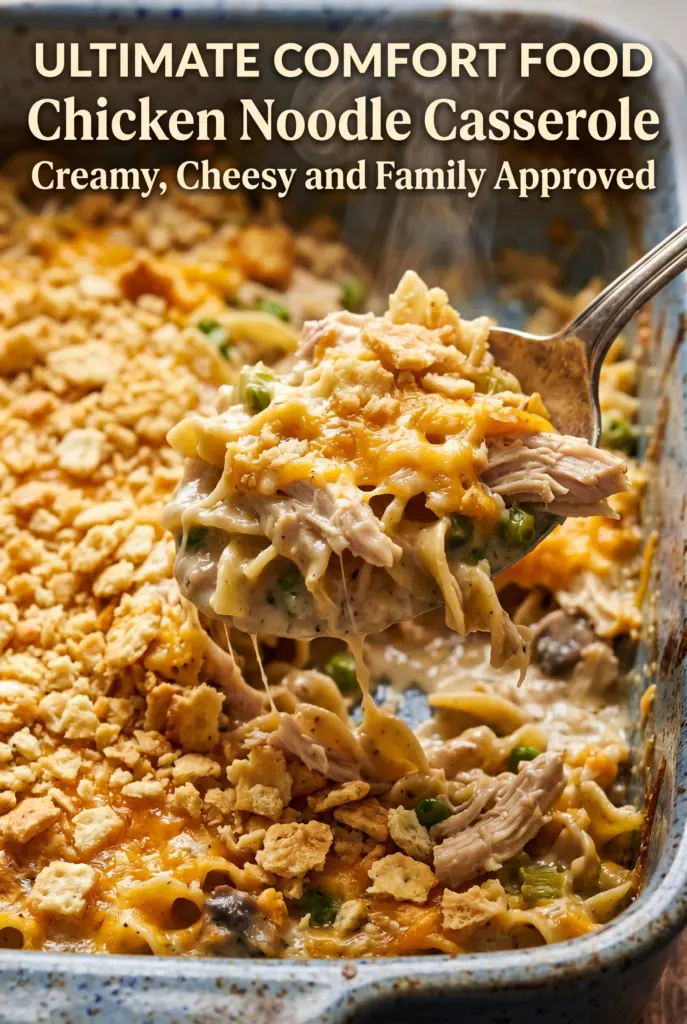
Chicken Noodle Casserole
Creamy chicken noodle casserole lands on the table with the kind of comfort that gets quiet at dinner. The noodles stay tender, the sauce turns rich and savory without becoming…
Tip: save now, cook later.Creamy chicken noodle casserole lands on the table with the kind of comfort that gets quiet at dinner. The noodles stay tender, the sauce turns rich and savory without becoming gluey, and the buttery cracker topping gives you that crisp, golden finish that keeps every bite interesting. It’s the kind of bake that tastes like it took more effort than it actually did.
What makes this version work is balance. The sour cream and cream of chicken soup build a thick, clingy sauce, but the milk loosens it just enough so the noodles can absorb some of that flavor as they bake. Using cooked shredded chicken keeps the casserole fast and keeps the meat from drying out in the oven, and folding in the cheese instead of piling it all on top gives you that creamy stretch throughout the dish instead of just on the surface.
Below, I’ve included the small details that keep the casserole from turning heavy or dry, plus a few smart swaps if you need to work with what’s in the pantry.
The sauce was creamy all the way through and the cracker topping stayed crisp even after reheating. My kids usually pick around casseroles, but they went back for seconds on this one.
Save this creamy Chicken Noodle Casserole for the nights when you want a buttery cracker topping and a rich, no-fuss dinner in one pan.
The Reason This Casserole Stays Creamy Instead of Turning Heavy
The biggest mistake with chicken noodle casserole is letting the noodles drink up too much liquid before the dish even hits the oven. If the noodles are cooked past al dente, they keep softening in the bake and the whole casserole can go from creamy to mushy. Pull them when they still have a little bite, then mix them with the sauce while they’re warm so they absorb flavor without falling apart.
The other thing that makes or breaks this dish is the sauce consistency before baking. It should look loose and glossy in the bowl, not stiff like a dip. The oven will tighten it up, the cheese will melt into it, and the noodles will finish the job. If it looks thick before it goes in, it usually comes out dry.
What Each Ingredient Is Doing in This Dish
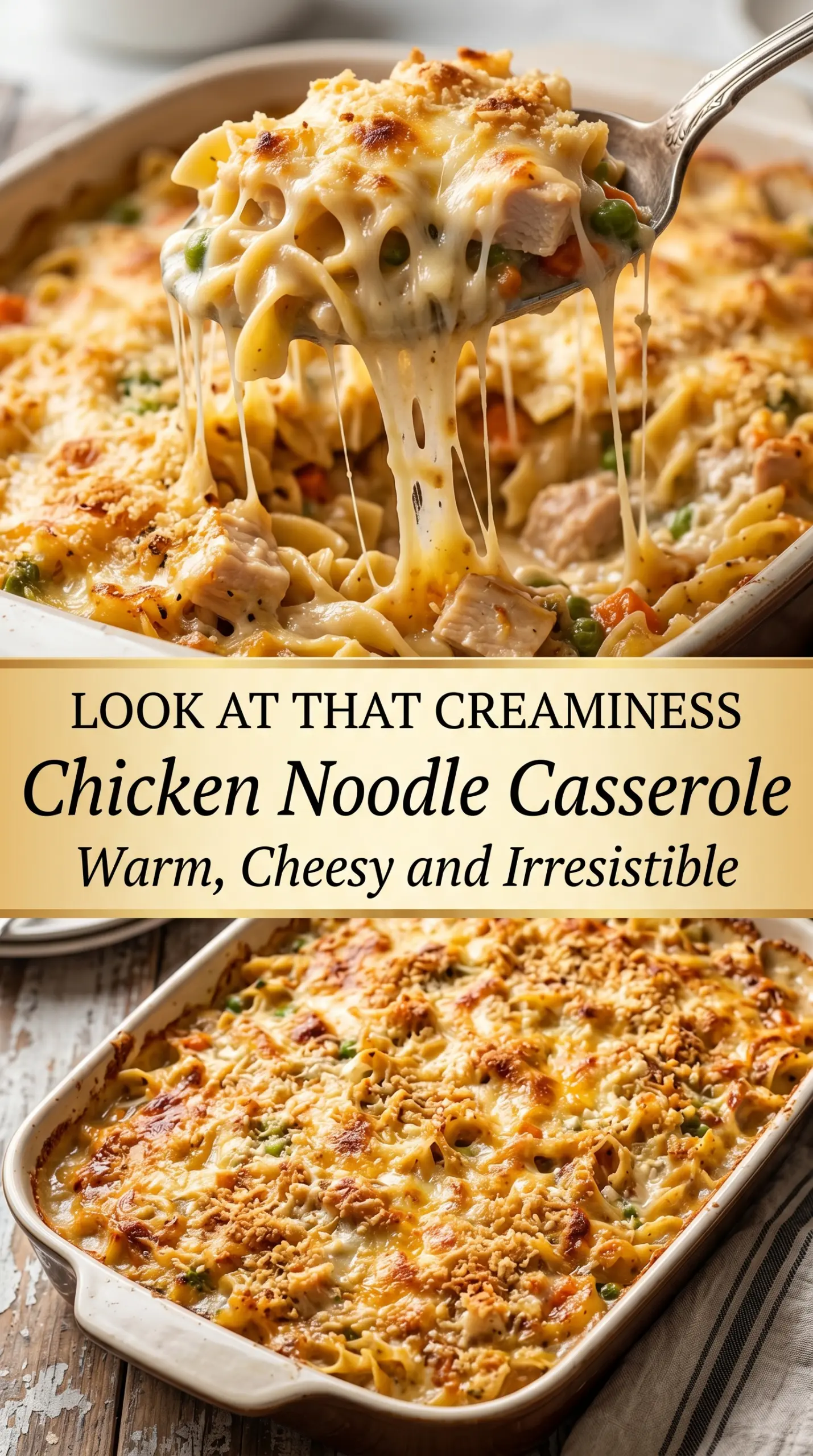
- Egg noodles — These hold onto the sauce better than a smooth pasta shape and give the casserole its classic texture. Cook them just to al dente so they can finish in the oven without turning soft.
- Cooked shredded chicken — Rotisserie chicken works well here because it’s seasoned and stays juicy. Leftover roasted chicken or poached chicken both work; just shred it into small pieces so every bite gets some meat.
- Cream of chicken soup — This is the shortcut that gives the casserole its body and that familiar savory base. If you swap it for a different condensed cream soup, the flavor shifts, but the texture will still work.
- Sour cream — This is what keeps the sauce tangy and plush instead of flat. Plain Greek yogurt can stand in, but it tastes a little sharper and can curdle more easily if the casserole is overbaked.
- Cheddar cheese — Use a medium or sharp cheddar for the best flavor. Pre-shredded cheese melts fine here, though freshly shredded cheese gives a smoother finish because it doesn’t carry anti-caking starch.
- Buttery crackers and melted butter — The topping needs both for that crisp, browned lid. Crushed crackers alone can bake dry and dusty; the butter helps them toast and cling together.
Getting Everything Into the Dish at the Right Time
Cook the noodles just short of done
Boil the egg noodles according to the package directions, then drain them when they still have a little firmness in the center. They’re going back into the oven, so they need room to finish cooking without collapsing. If they’re soft in the pot, they’ll turn pasty in the casserole.
Build the sauce before adding the pasta
Stir the cream of chicken soup, sour cream, milk, garlic powder, onion powder, and black pepper together until the mixture looks smooth and evenly blended. That base should be pourable and thick enough to coat a spoon. If it looks lumpy at this stage, keep stirring before the noodles go in so the finished casserole isn’t streaky.
Fold gently so the noodles stay intact
Add the chicken, peas and carrots, noodles, and most of the cheddar, then stir just until everything is coated. Overmixing breaks the noodles and mashes the vegetables, which gives you a dense casserole instead of a creamy one. Spread the mixture into the baking dish in an even layer so it bakes consistently from edge to center.
Finish with cheese and the cracker crust
Scatter the remaining cheddar over the top, then mix the crushed crackers with melted butter and sprinkle that over the casserole. The butter helps the topping brown instead of drying out. Bake until the edges are bubbling and the top is deeply golden, then let it sit for a few minutes so the sauce settles and slices cleanly.
How to Adapt This for Different Kitchens and Different Nights
Dairy-Free Version
Use a dairy-free condensed cream soup, unsweetened plant-based yogurt, and a good melting dairy-free cheese. The casserole still turns creamy, but the flavor will be a little less rich and a little more neutral, so the seasonings matter more. Choose a topping that doesn’t need butter to crisp, or brush the crumbs with olive oil instead.
Gluten-Free Swap
Use gluten-free egg noodles and a certified gluten-free condensed soup. The casserole structure stays the same, but gluten-free noodles can soften faster, so check them a minute early and don’t overbake the dish. Crushed gluten-free crackers work for the topping if you want the same buttery crunch.
Use What You Have for the Chicken
Rotisserie chicken is the fastest option, but leftover turkey works just as well if that’s what’s in the fridge. If you cook chicken fresh, season it lightly before shredding so the casserole doesn’t taste flat. The smaller the pieces, the better they disappear into the sauce.
Make-Ahead Assembly
Assemble the casserole without the cracker topping, cover it, and refrigerate it for up to a day. Add the buttery crackers right before baking so they stay crisp and don’t turn soggy in the fridge. If the dish goes into the oven cold, add a few extra minutes so the center heats through.
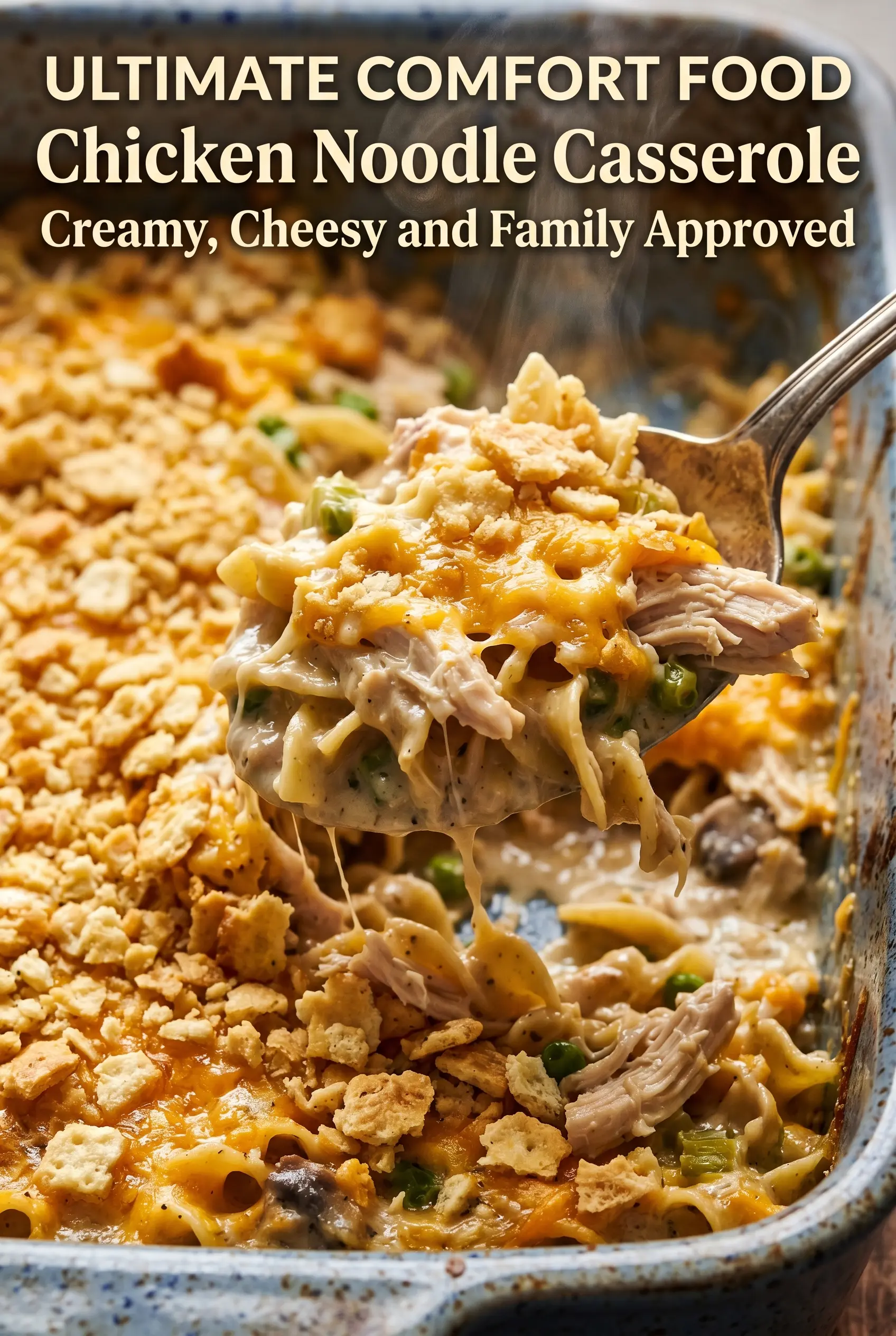
Chicken Noodle Casserole
Ingredients
Equipment
Method
- Preheat oven to 350°F (175°C). Set out a greased 9×13-inch baking dish.
- Cook egg noodles according to package directions and drain. Keep them warm so they fold in smoothly.
- In a large bowl, combine cream of chicken soup, sour cream, milk, garlic powder, onion powder, and black pepper. Stir until smooth and evenly seasoned.
- Stir in cooked shredded chicken, frozen peas and carrots, noodles, and 1½ cups shredded cheddar cheese. Mix until everything is coated and distributed.
- Spread the mixture evenly into the prepared baking dish. Press lightly to level the surface for even baking.
- Sprinkle the remaining shredded cheddar cheese over the top. Make sure it reaches the edges for a more golden finish.
- Mix crushed buttery crackers with melted butter. Stir until the crumbs look evenly coated.
- Sprinkle the cracker mixture evenly over the casserole. Pat down very lightly so it adheres during baking.
- Bake for 30–35 minutes until bubbly and golden. Let it rest 5 minutes before serving so the sauce thickens.
- Garnish with fresh parsley and serve warm. Slice and dish while still hot.
- Pro tip: For the thickest, sliceable casserole, rest 5–10 minutes after baking before serving. Refrigerate leftovers in an airtight container up to 3–4 days; reheat in the oven at 325°F (160°C) until warmed through (microwave works for quick portions). Freezing is not recommended because the dairy sauce can separate after thawing. For a lighter option, use reduced-fat sour cream and milk and swap in a reduced-fat cheddar (texture remains creamy).
