
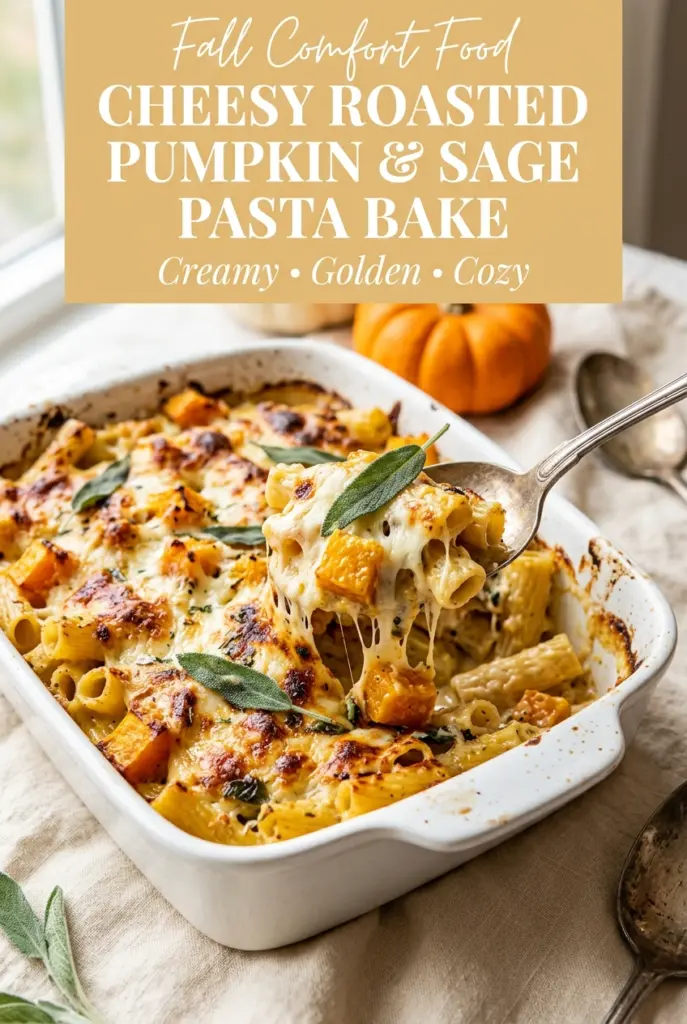
Cheesy Roasted Pumpkin & Sage Pasta Bake
Roasted pumpkin gives this pasta bake a sweetness and depth that canned puree just can’t match. Once the cubes hit a hot oven, the edges caramelize and the centers turn…
Tip: save now, cook later.Roasted pumpkin gives this pasta bake a sweetness and depth that canned puree just can’t match. Once the cubes hit a hot oven, the edges caramelize and the centers turn soft enough to melt into the cheese sauce without disappearing completely. The result is creamy, savory, and a little rustic in the best way, with pockets of tender pumpkin tucked through every bite.
The trick here is roasting the pumpkin first instead of boiling or steaming it. That little bit of browning keeps the bake from tasting flat, and it keeps the sauce from turning watery. Sage and thyme do their best work when they’re stirred into the warm sauce, where their fragrance can bloom without getting harsh. Use a sturdy pasta shape like rigatoni or penne so the sauce clings to the ridges and the whole dish bakes up with some structure.
Below, I’ve laid out the part that matters most: how to keep the sauce smooth, what to watch for when the cheese goes in, and the best way to adapt this bake if you need a gluten-free or vegetarian version.
The pumpkin roasted up sweet and caramelized, and the sauce stayed smooth instead of grainy. I baked it for the full 25 minutes and the top came out bubbling with those golden cheese spots everyone fought over.
Save this Cheesy Roasted Pumpkin & Sage Pasta Bake for a bubbling pasta dinner with caramelized pumpkin and a golden cheese crust.
The Reason Roasted Pumpkin Stays Sweet Instead of Watery
Pumpkin can go wrong fast if it’s treated like a squash that only needs heat. On the stove, it sheds moisture and turns soft before it gets any real flavor. In the oven, those cut surfaces dry out just enough to brown, and that browning is what gives this bake its backbone. You want the edges taking on color and the centers tender enough to collapse when you stir them into the pasta.
The other place this dish can slip is in the cheese sauce. If the heat is too high when the dairy and cheese go in, the sauce can turn grainy or greasy instead of smooth. A gentle simmer after the flour goes in, then lower heat once the cheese is added, keeps everything velvety. The pasta also needs to be pulled early so it finishes cooking in the oven without going mushy.
What Each Ingredient Is Actually Doing in This Dish
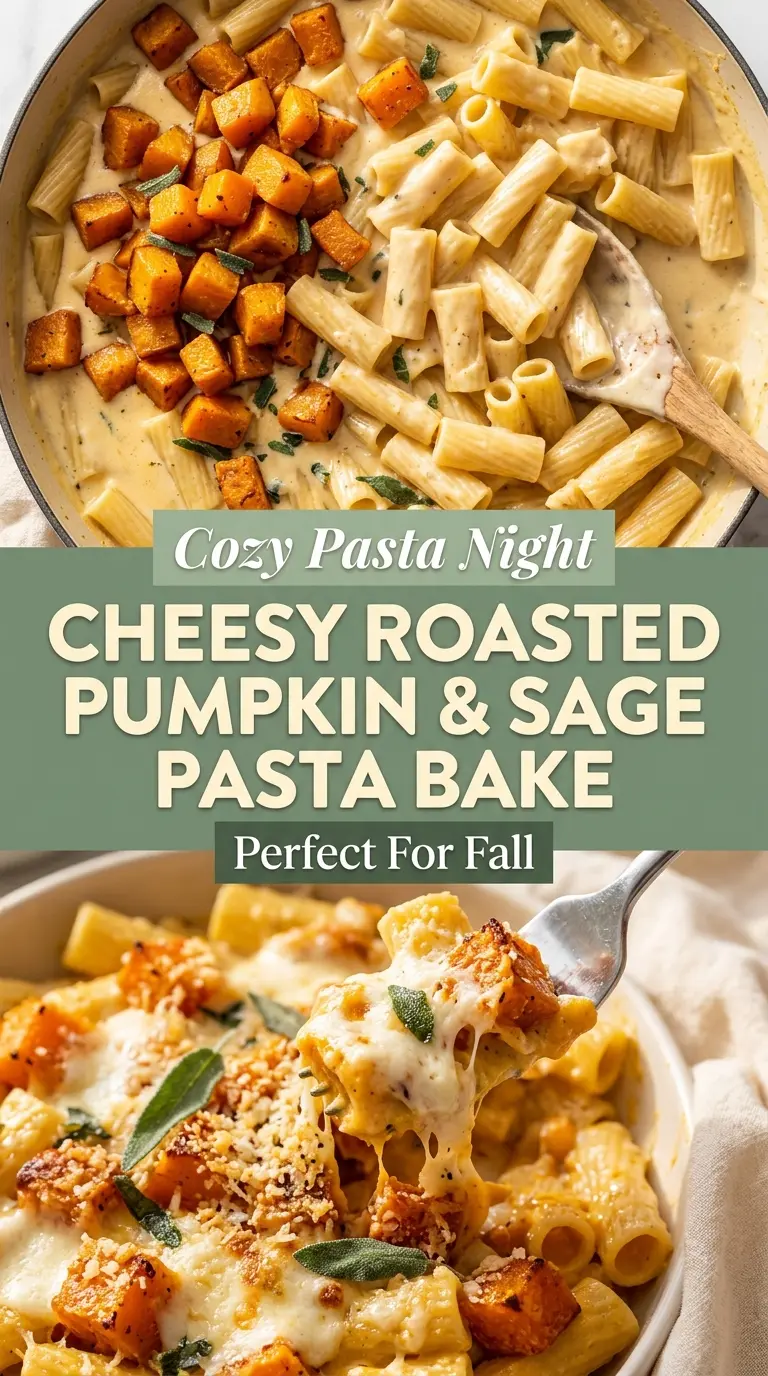
- Pumpkin — Use a firm, sweet cooking pumpkin if you can. It roasts into tender pieces that hold their shape, which gives the bake texture instead of turning it into a puree. Butternut squash works well if pumpkin is hard to find, and the method stays exactly the same.
- Rigatoni or penne — These shapes catch the sauce inside and around the edges. Long pasta won’t give you the same sturdy, scoopable finish. Pull it just before fully tender so it can finish in the oven without softening too much.
- Whole milk and heavy cream — This combination gives the sauce body without making it gluey. You can swap in 2% milk in a pinch, but the sauce will be thinner and a little less luxurious. If you use all milk, let the sauce simmer an extra minute before adding the cheese.
- Sharp cheddar, mozzarella, and Parmesan — Cheddar brings the flavor, mozzarella brings the melt, and Parmesan brings salt and a nutty edge on top. Pre-shredded cheese will work, but freshly shredded melts smoother because it doesn’t carry the anti-caking starches. Save the extra Parmesan for the top so it bakes into that crisp, salty crust.
- Fresh sage and thyme — Sage is the defining note here, and fresh is worth using if you have it. Dried sage can taste dusty if you overdo it, so if you only have dried, cut the amount in half and add it earlier to the sauce so it has time to soften. Thyme fills in the background and keeps the dish from leaning too sweet.
- Nutmeg — Just a small amount rounds out the cheese sauce and makes the pumpkin taste more pumpkiny. It shouldn’t jump out. If you skip it, the bake will still work, but it loses a little of that warm, cozy finish.
Building the Bake Without Breaking the Sauce
Roasting the Pumpkin Until It Actually Browns
Spread the pumpkin on the pan in a single layer so the pieces roast instead of steam. If the cubes are piled up, they’ll soften before they color and you’ll miss the sweet, caramelized edges that make this dish worth it. Turn them once halfway through, and pull them when the outside is deep gold and the centers yield easily to a fork.
Making the Sauce Smooth Before the Cheese Goes In
Start with butter and garlic, then whisk in the flour long enough to lose the raw taste. When the milk and cream go in, keep whisking until the sauce looks glossy and lightly thickened. If it starts looking lumpy, don’t panic — keep whisking and lower the heat. The cheese should go in with the pan at a gentle simmer, never a hard boil, or it can seize and turn grainy.
Combining Everything for the Right Final Texture
Fold the roasted pumpkin and pasta into the sauce while both are still warm so they coat evenly. Transfer everything to the baking dish while the sauce is still loose; it thickens more in the oven, and a sauce that seems a touch thin now usually bakes up perfectly. Finish with Parmesan on top, then bake until the edges are bubbling and the surface has browned in spots, not just melted into a pale layer.
Three Ways to Make This Bake Fit Your Table
Gluten-Free Pasta Bake
Use a sturdy gluten-free pasta that can handle baking, and cook it just shy of al dente. The sauce itself is already thickened with flour, so swap in a 1:1 gluten-free flour blend for the roux if needed. Bake it uncovered and keep an eye on the edges, because gluten-free pasta can go from tender to soft a little faster in the oven.
Dairy-Light Version
You can replace the heavy cream with more whole milk and still get a good result, though the sauce will be a little less rich. Keep the cheddar and Parmesan, since they carry the flavor here, and add an extra tablespoon of flour if you want a slightly thicker base. The final bake will be a little lighter and less lush, but still comforting.
Add Protein Without Changing the Structure
Fold in cooked Italian sausage, shredded rotisserie chicken, or crisp bacon after the sauce is finished. That keeps the meat from drying out while the bake finishes in the oven. Use about 2 cups total so the pasta still has room to stay coated instead of crowded out.
Storage and Reheating
- Refrigerator: Store covered for up to 4 days. The sauce will tighten as it chills, but it loosens again when reheated.
- Freezer: It freezes well if you cool it completely first and wrap it tightly. The pasta softens a little after thawing, but the flavor holds up nicely.
- Reheating: Cover and warm in a 350°F oven until hot in the center, or reheat smaller portions in the microwave with a splash of milk. The biggest mistake is blasting it uncovered, which dries the top before the middle is heated through.
Answers to the Questions Worth Asking
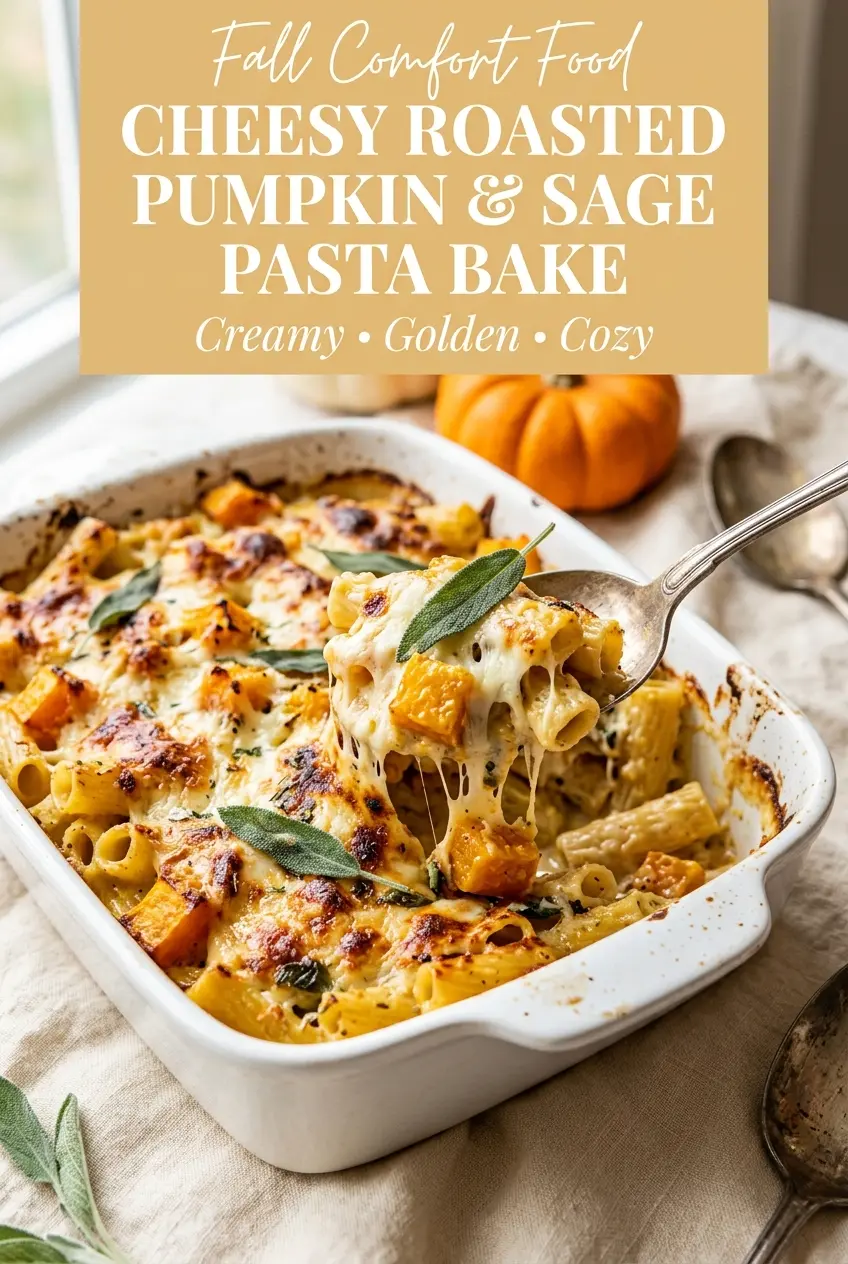
Cheesy Roasted Pumpkin & Sage Pasta Bake
Ingredients
Equipment
Method
- Preheat the oven to 425°F. Toss the pumpkin cubes with olive oil, kosher salt, and black pepper until evenly coated.
- Spread the pumpkin on a baking sheet in a single layer. Roast for 25–30 minutes, turning once, until golden and tender.
- Bring a pot of salted water to a boil. Cook rigatoni or penne for 1–2 minutes less than the package directions, then drain and set aside.
- Melt the butter in a saucepan over medium heat. Add the minced garlic and cook for 30 seconds until fragrant.
- Whisk in the flour and cook for 1 minute. Gradually whisk in the whole milk and heavy cream until smooth.
- Simmer the sauce for 4–5 minutes until slightly thickened. Stir until the mixture coats the back of a spoon.
- Add chopped fresh sage, dried thyme, shredded sharp cheddar cheese, shredded mozzarella cheese, 1/4 cup Parmesan cheese, and ground nutmeg. Stir until the cheeses melt into a smooth, creamy sauce.
- Fold the roasted pumpkin and cooked pasta into the cheese sauce until evenly coated. Use a spatula to distribute the pumpkin throughout.
- Transfer the mixture to a greased 9×13-inch baking dish. Sprinkle the remaining Parmesan cheese over the top.
- Bake at 375°F for 20–25 minutes, until bubbling with a golden cheese topping. Let it rest briefly for easier serving.
- Garnish with chopped fresh parsley and serve warm. Plate while the top is still set and glossy.
