
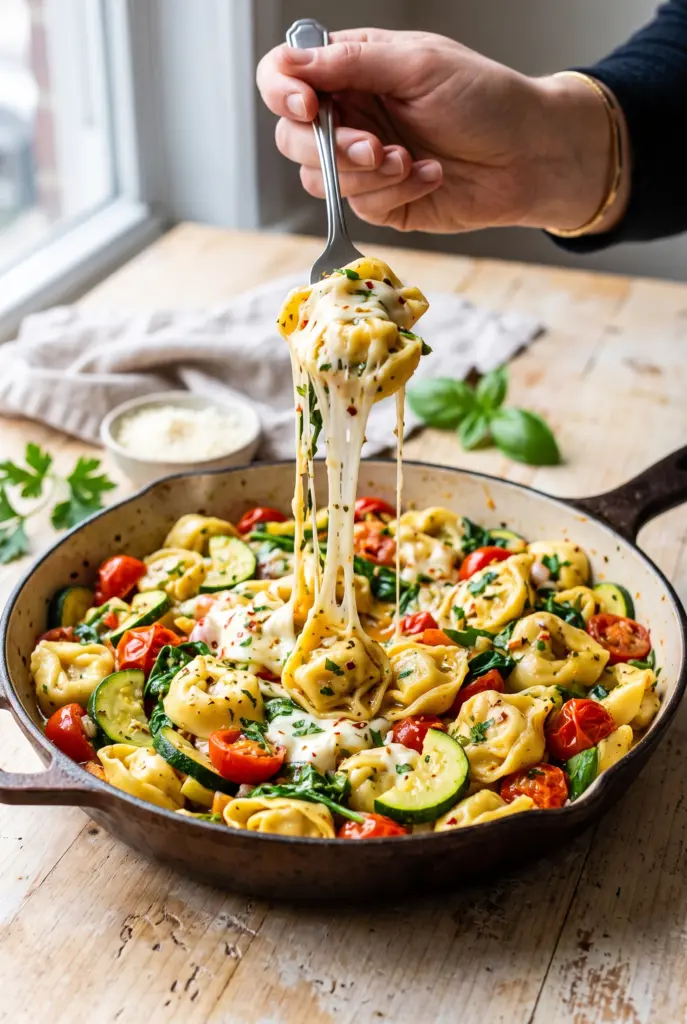
Cheese Tortellini with Vegetables
Tender cheese tortellini turns into a complete dinner when it gets tossed with crisp-tender zucchini, sweet bell pepper, burst cherry tomatoes, and a handful of spinach. The pasta catches just…
Tip: save now, cook later.Tender cheese tortellini turns into a complete dinner when it gets tossed with crisp-tender zucchini, sweet bell pepper, burst cherry tomatoes, and a handful of spinach. The pasta catches just enough garlicky Parmesan butter to coat everything without turning heavy, and the whole pan tastes bright, savory, and fresh in the way a good weeknight pasta should. It’s the kind of meal that disappears fast because it looks colorful on the plate and eats like you put in far more effort than you did.
What makes this version work is the balance of timing and heat. The vegetables need enough contact with the skillet to pick up a little color, but not so much that the zucchini collapses or the tomatoes turn to sauce before the pasta goes in. The reserved pasta water matters too. It helps the butter and Parmesan cling to the tortellini instead of pooling at the bottom of the pan, which is what keeps the finish glossy instead of greasy.
Below, I’ll walk through the one place this dish can go sideways if you rush it, plus the swaps that still keep the pan balanced when you don’t have every vegetable on hand.
The tortellini stayed tender, the vegetables kept a little bite, and the Parmesan butter coated everything without turning clumpy. Even my picky eater went back for seconds.
Save this cheesy tortellini skillet for the nights when you want a colorful pasta dinner with a glossy garlic-Parmesan finish.
The Trick to Keeping Tortellini from Going Soft in the Skillet
Cheese tortellini cooks fast, and that’s exactly why it can turn mushy if it sits around while you finish the vegetables. The pasta should be drained the moment it’s tender and added back only when the skillet is ready. If it waits too long, it keeps absorbing moisture and loses that gentle bite that makes the dish feel finished instead of heavy.
The other thing that matters is what happens in the pan before the tortellini goes in. You want the zucchini and bell pepper to pick up color first, because once the pasta lands in the skillet, the goal shifts from browning to coating. That’s where people often go wrong: they keep cooking after the tortellini is added and end up with split butter, soggy vegetables, and pasta that looks tired.
What Each Ingredient Is Actually Doing in This Dish
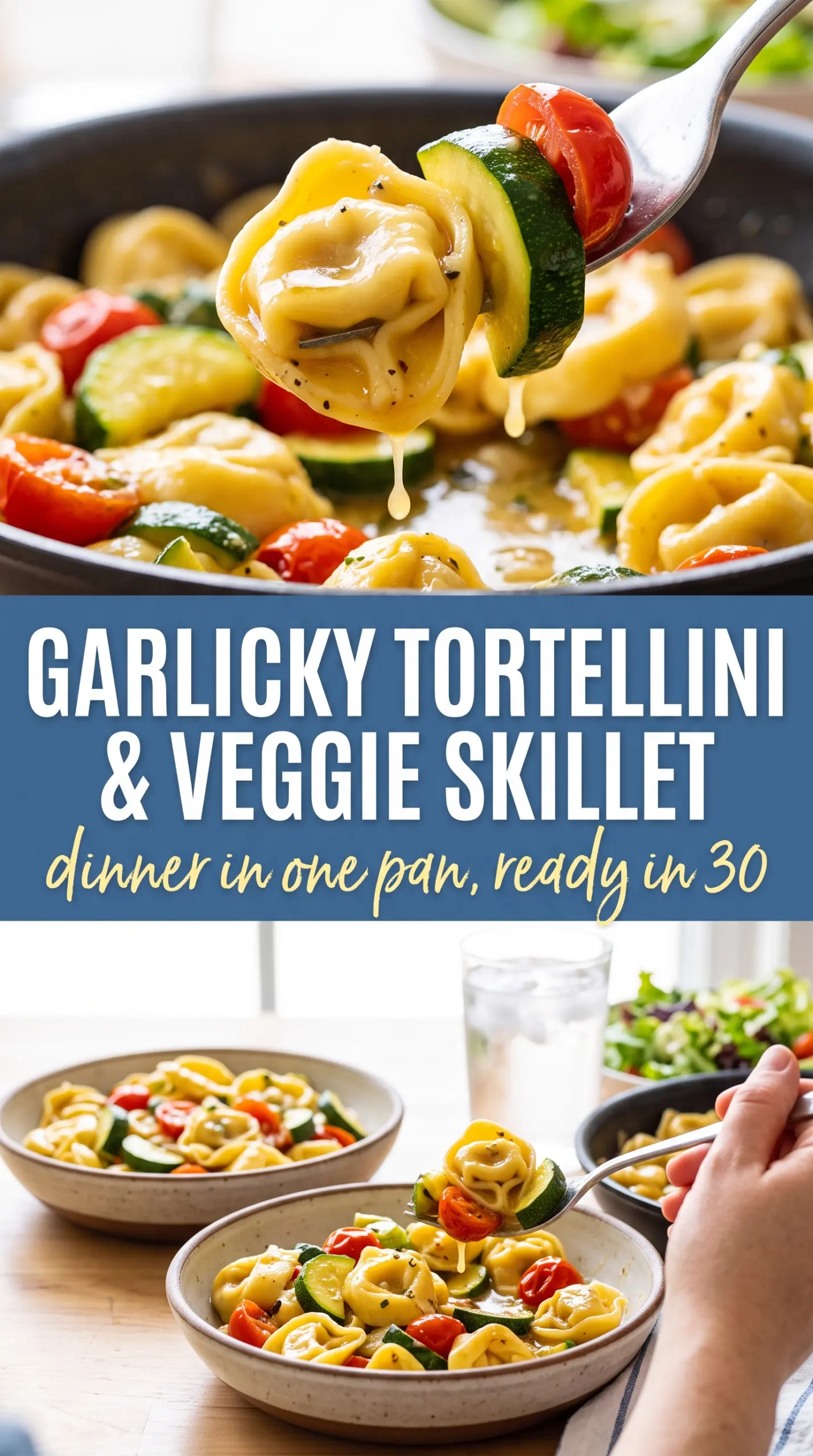
- Refrigerated cheese tortellini — This is the backbone of the meal, so use a brand you trust for texture. Fresh or refrigerated tortellini stays tender and cooks in minutes; frozen works too, but it usually needs a little longer and can shed more starch into the pot.
- Butter and olive oil — The olive oil keeps the butter from browning too fast, while the butter gives the sauce its round, rich finish. Using both is what lets the vegetables brown without tasting oily.
- Zucchini and bell pepper — These are there for texture and sweetness. Slice the zucchini into half-moons and the pepper thinly so they soften quickly but still keep a little shape by the time the pasta is added.
- Cherry tomatoes — They break down just enough to release juice and help start the sauce. Larger tomatoes tend to water the pan down; cherry tomatoes are better here because they soften fast and stay bright.
- Garlic, Italian seasoning, and red pepper flakes — Garlic gives the dish its backbone, while the seasoning and pepper flakes add enough lift to keep the butter from tasting flat. Add the garlic after the vegetables have started to brown so it doesn’t burn and turn bitter.
- Parmesan and reserved pasta water — This is what turns the skillet juices into a real sauce. Parmesan melts best off the heat or on very low heat, and the starchy pasta water helps it emulsify instead of clumping.
- Spinach and herbs — Spinach disappears into the pan in seconds, which adds color without muddying the texture. Parsley or basil at the end keeps the whole dish tasting fresh.
Building the Sauce in the Same Pan Without Breaking It
Brown the vegetables first
Heat the olive oil and one tablespoon of butter in a large skillet, then cook the zucchini and bell pepper over medium-high heat until the edges turn golden and the centers are still firm. That early browning gives the whole dish depth. If the pan looks crowded, the vegetables will steam instead of sear, so use a skillet large enough that they can sit in a loose layer.
Wake up the garlic in the tomato juices
Once the vegetables have some color, stir in the tomatoes, garlic, Italian seasoning, and red pepper flakes. The tomatoes should start to soften and slump, releasing just enough liquid to keep the garlic from scorching. If the garlic goes in too early, it can burn before the tomatoes have a chance to protect it, and that bitter edge will follow the whole dish.
Finish with pasta, butter, and cheese
Add the drained tortellini and the remaining butter, then toss gently until the pasta is coated. Splash in the reserved pasta water a little at a time until the sauce looks glossy and lightly clings to the tortellini. Pull the skillet off the heat before adding Parmesan if the pan is very hot; that keeps the cheese from turning grainy instead of melting smoothly.
Fold in the spinach at the very end
Spinach needs only a minute or so in the skillet. Stir until it just wilts and turns dark green, then season and finish with fresh herbs. If it cooks too long, it disappears into the sauce and loses the fresh note that keeps the pasta from tasting heavy.
What to Change When the Fridge Doesn’t Match the Recipe
Make it vegetarian-friendly but heartier
This recipe already lands in vegetarian territory, but you can bulk it up with mushrooms, asparagus, or peas if you want more substance. Mushrooms add a savory, almost meaty depth, while peas keep the dish sweeter and lighter. Add firmer vegetables with the zucchini and quick-cooking ones near the end so everything finishes at the same time.
Make it gluten-free without losing the skillet feel
Use gluten-free tortellini if you can find it, or swap in a sturdy gluten-free ravioli. Cook it just until tender, because gluten-free pasta can turn soft fast once it’s tossed with hot vegetables and sauce. Keep the reserved pasta water, since that starch is what helps the cheese and butter come together.
Add protein without changing the balance
Grilled chicken, Italian sausage, or shrimp all fit here, but they work best if cooked separately and folded in at the end. That keeps the vegetables from overcooking while you wait on the protein. Sausage gives the richest result, while shrimp keeps the dish light and fast.
Storage and Reheating
- Refrigerator: Store in an airtight container for up to 3 days. The tortellini will soften a bit as it sits, and the vegetables will lose some of their edge.
- Freezer: Freezing isn’t ideal here. The pasta texture changes and the vegetables turn soft when thawed, so this dish is better made fresh.
- Reheating: Warm it in a skillet over medium-low heat with a splash of water to loosen the sauce. Microwaving works in a pinch, but stir halfway through so the cheese doesn’t seize and the tortellini heat unevenly.
Answers to the Questions Worth Asking
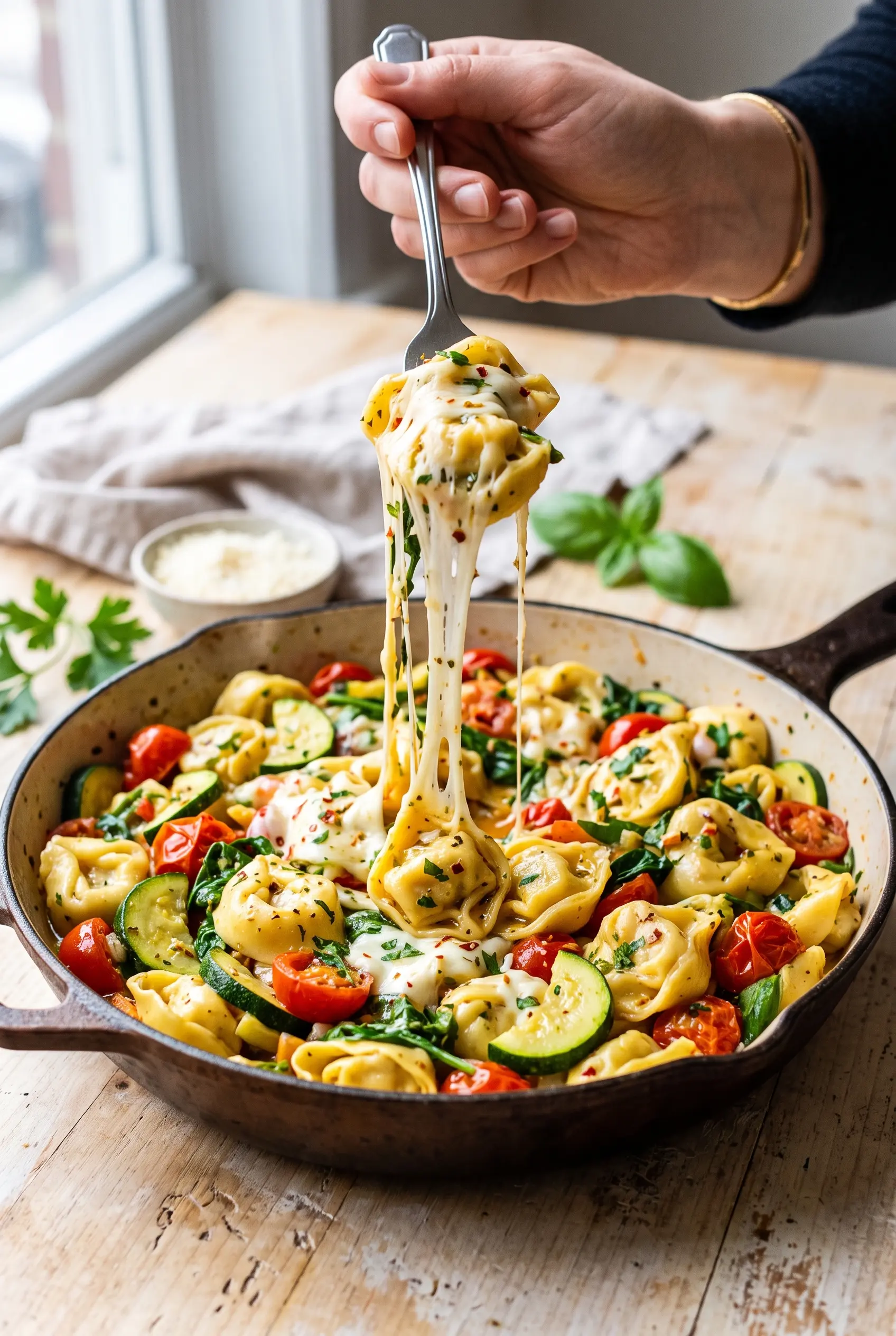
Cheese Tortellini with Vegetables
Ingredients
Equipment
Method
- Bring a large pot of salted water to a boil. Cook tortellini according to package directions until they float and are tender, about 3–4 minutes, then reserve 1/4 cup pasta water and drain.
- In a large skillet, heat olive oil and 1 tbsp butter over medium-high heat until shimmering. Add zucchini and bell pepper and cook 4–5 minutes until crisp-tender and lightly browned at the edges.
- Stir in cherry tomatoes, garlic, Italian seasoning, and red pepper flakes. Cook 2 minutes until tomatoes soften and garlic is fragrant.
- Add baby spinach to the skillet and toss until just wilted, about 1 minute (it should turn bright green).
- Add drained tortellini and the remaining 2 tbsp butter to the skillet. Toss gently and add reserved pasta water a splash at a time to create a light glossy sauce.
- Sprinkle in grated Parmesan and toss until melted and coating everything. Season with salt and black pepper to taste.
- Top with chopped fresh parsley or basil and extra Parmesan, then serve immediately while hot.
