
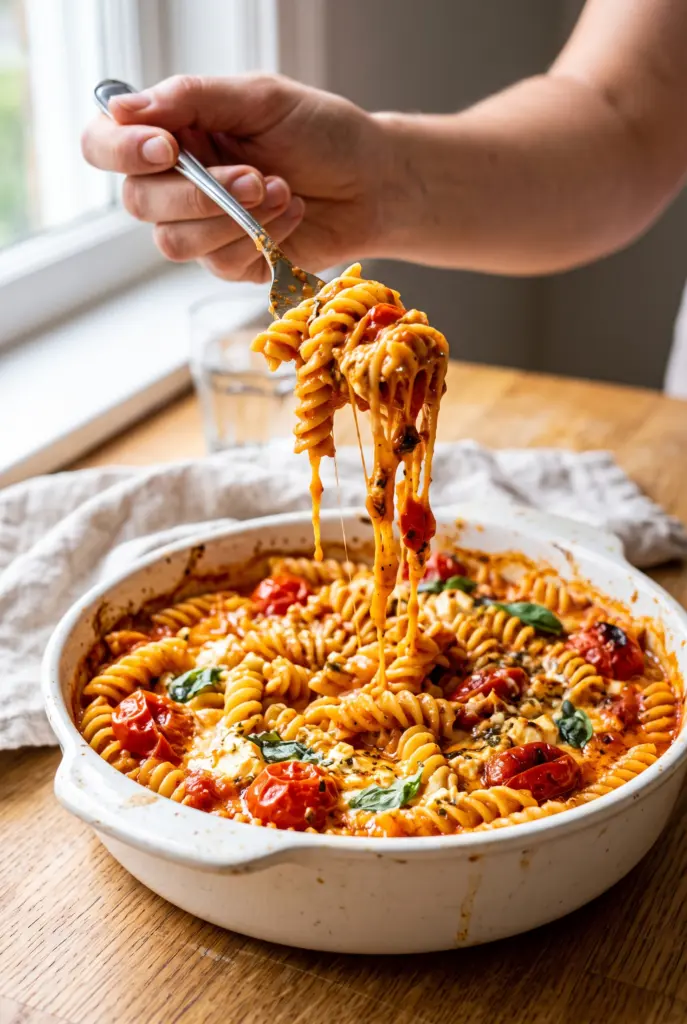
Baked Feta Pasta
Baked feta pasta earns its place because the sauce comes together with almost no effort, yet it still tastes like you spent time building it from the ground up. The…
Tip: save now, cook later.Baked feta pasta earns its place because the sauce comes together with almost no effort, yet it still tastes like you spent time building it from the ground up. The tomatoes slump into jammy little bursts, the feta softens into a salty cream, and the pasta gets coated in a sauce that clings instead of pooling at the bottom of the bowl. That combination is what makes people go back for a second helping before they’ve even finished the first.
The trick is in the bake. Let the tomatoes and olive oil do the heavy lifting first, then add the feta block right in the center so it warms slowly instead of drying out. Garlic, oregano, and red pepper flakes bloom in the hot oil and tomato juices, which keeps the finished sauce from tasting flat. A little reserved pasta water matters here too; it loosens the mash just enough to turn it silky without watering it down.
Below, I’ve included the small details that keep this dish from turning grainy or greasy, plus the swaps that still give you a good result when you’re missing one ingredient.
The tomatoes collapsed into the prettiest sauce and the feta stayed creamy instead of dry. I tossed in a splash more pasta water at the end and it coated every noodle perfectly.
Creamy baked feta pasta with jammy tomatoes and silky garlic sauce
The Reason the Sauce Turns Creamy Instead of Chalky
Feta is the whole story here, and it behaves best when it’s given heat, time, and a little moisture from the tomatoes. If you’ve ever ended up with a sauce that tasted salty but dry, the issue was usually too much heat or not enough tomato juice to soften the cheese. The goal isn’t to melt the feta into oblivion. It’s to warm it until it breaks down into a thick, spoonable base that still tastes bright.
The other common miss is crowding the dish with too little oil or underbaking the tomatoes. The tomatoes need to collapse and release their juices, because that liquid is what helps the feta turn creamy when you mash everything together. Once the pasta goes in, the sauce should look glossy and loose enough to coat the noodles without clumping.
What Each Ingredient Is Actually Doing in This Dish
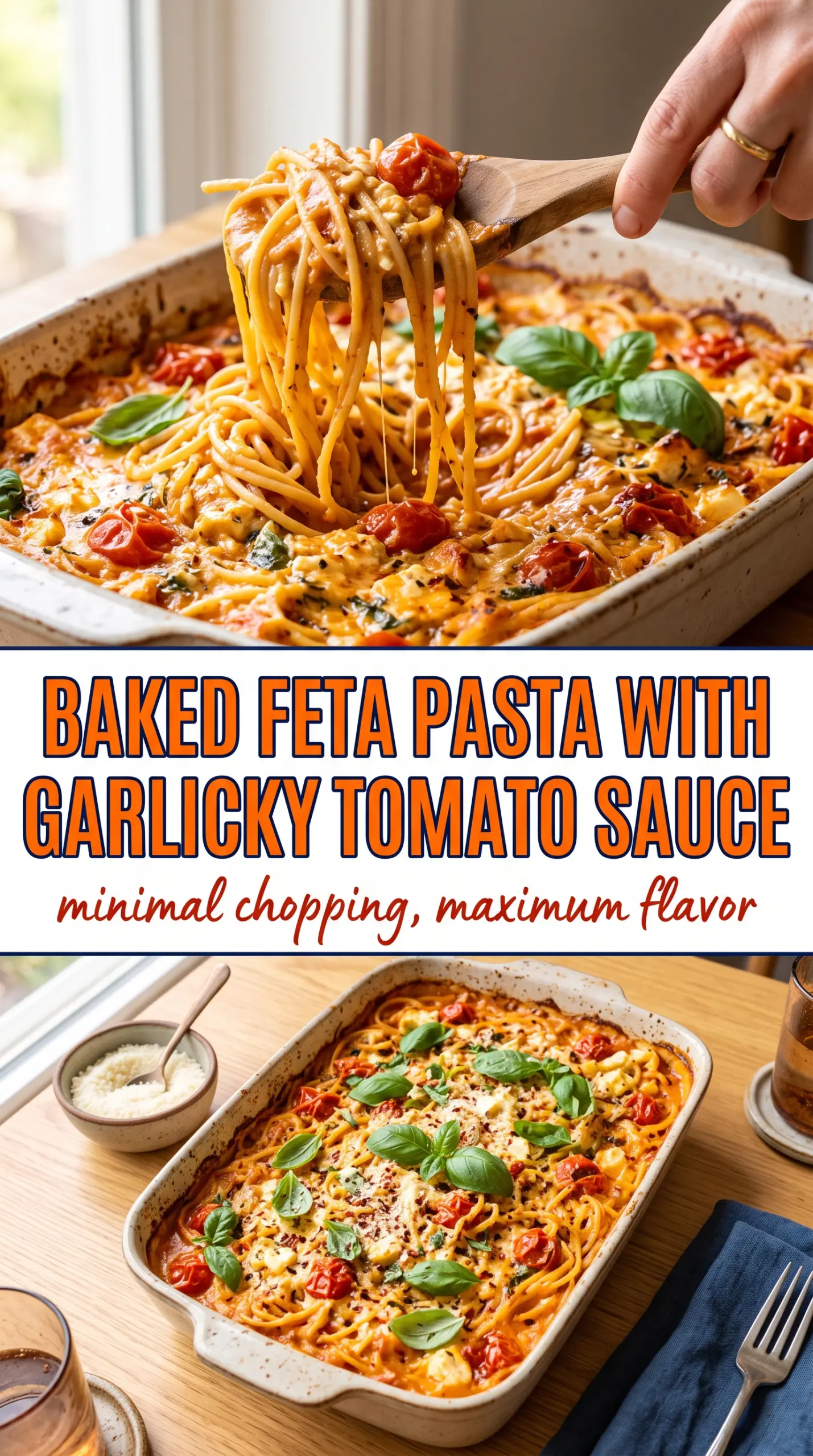
- Cherry or grape tomatoes — These are the engine of the sauce. They burst into sweet, concentrated juices that balance the saltiness of the feta. Larger tomatoes can work, but they release more water and usually take longer to soften.
- Extra-virgin olive oil — This carries the heat, helps the tomatoes roast instead of dry out, and gives the sauce a smooth finish. Don’t cut it too far; the oil becomes part of the sauce once everything is mashed together.
- Feta cheese — Use a block of feta, not pre-crumbled feta. The block softens into a creamy mass; the crumbles tend to dry out and stay grainy. If you can choose, buy feta packed in brine for the best texture and tang.
- Garlic — Fresh minced garlic gives the dish its backbone. It softens in the oven and tastes sweet instead of sharp. If you use jarred garlic, add a little less, since it can taste harsher after baking.
- Red pepper flakes and oregano — These keep the sauce from tasting one-note. The pepper flakes add a little heat; the oregano brings a familiar savory note that works well with tomato and feta.
- Reserved pasta water — This is what turns the mash into sauce. The starch helps the tomato-feta mixture coat the pasta instead of sitting in a thick mound at the bottom of the dish.
The 15 Minutes That Turn It Into Dinner
Building the Tomato Base
Start by tossing the tomatoes with olive oil in a 9×13-inch baking dish so every tomato has a slick surface to roast against. They should sit in a single layer with enough room to blister and split, not steam in a crowded pile. If the dish is too small, the tomatoes will soften without browning and the sauce will taste flatter. The olive oil should pool lightly around them, not disappear.
Settling the Feta in the Middle
Place the feta block in the center of the tomatoes and scatter the garlic, oregano, red pepper flakes, salt, and black pepper over everything. That center placement matters because the cheese warms gently while the tomatoes burst around it. If you bury the feta under tomatoes, it won’t soften evenly. The top should look slightly glossy by the time it goes into the oven.
Roasting Until the Edges Brown
Bake until the tomatoes are wrinkled, split wide open, and starting to caramelize at the edges, and the feta is soft with a few golden spots. If the feta is still crumbly and the tomatoes are tight-skinned, give it more time. You want the mixture to smell savory and sweet, not just hot. A good sign is when the oil around the edges has turned orange-red from the tomato juices.
Mashing, Loosening, and Tossing
Use a fork to mash the feta and tomatoes together right in the baking dish. The sauce should look thick and rustic at first, then turn smoother as you stir in a splash of reserved pasta water. Add the drained pasta while the sauce is still hot so it grips each piece instead of cooling into clumps. If it looks too tight, add another spoonful of pasta water rather than more oil.
How to Adapt This for Different Diets and Leftovers
Gluten-Free Pasta
Use your favorite gluten-free short pasta, but cook it just until it still has some bite. Gluten-free pasta can go soft fast once it hits the hot sauce, so pulling it early keeps the final dish from turning mushy.
Dairy-Free Version
Swap the feta for a firm plant-based feta-style block that can handle oven heat. The result won’t be as tangy or creamy as the original, so add a squeeze of lemon at the end to brighten the sauce and keep it from tasting flat.
Add Protein Without Changing the Sauce
Stir in shredded rotisserie chicken, cooked shrimp, or chickpeas after the pasta is coated. Add the protein at the very end so it warms through without overcooking, and keep the sauce loose enough with pasta water that everything stays coated.
Storage and Reheating
- Refrigerator: Store leftovers in an airtight container for up to 4 days. The pasta will absorb some sauce as it sits, so expect it to thicken.
- Freezer: It freezes, but the sauce loses some of its creamy texture after thawing. If you do freeze it, portion it first and thaw overnight in the fridge.
- Reheating: Warm it gently on the stove or in the microwave with a splash of water to bring the sauce back. The common mistake is blasting it over high heat, which tightens the feta and dries out the pasta.
Answers to the Questions Worth Asking
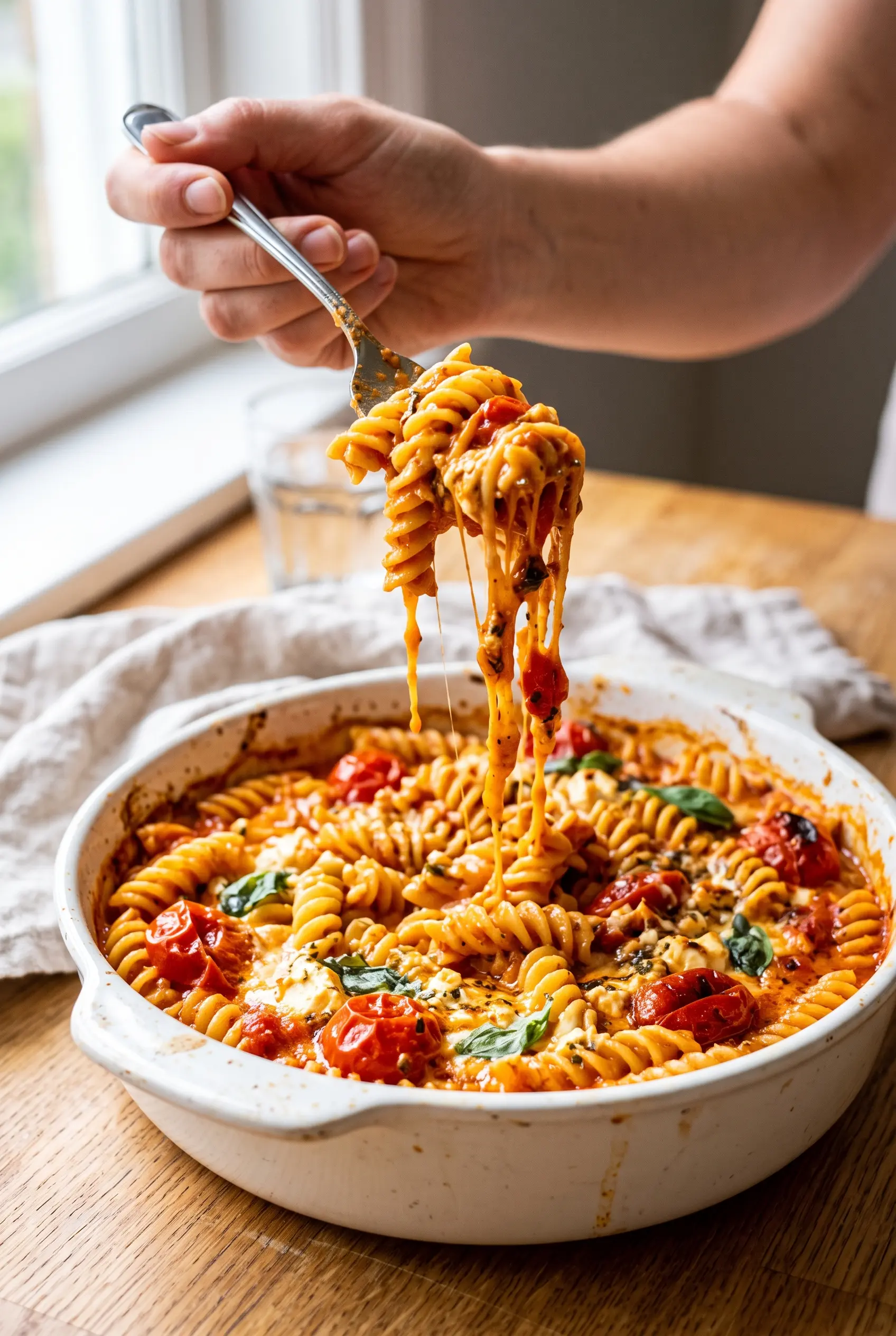
Baked Feta Pasta
Ingredients
Equipment
Method
- Preheat oven to 400°F. Add tomatoes and olive oil to a 9x13-inch baking dish and toss to coat.
- Nestle the feta block in the center of the tomatoes. Scatter garlic, red pepper flakes, oregano, salt, and black pepper over everything.
- Bake at 400°F for 35–40 minutes, until the tomatoes have burst and the feta is soft with lightly golden edges. Watch for bubbling around the edges as a visual cue.
- While the dish bakes, cook pasta in salted boiling water until al dente. Reserve 1/4 cup pasta water, then drain.
- Remove the baking dish from the oven. Use a fork to mash the feta and tomatoes together into a creamy, thick sauce, stirring in reserved pasta water to loosen it.
- Add the drained pasta directly to the baking dish and toss until every piece is coated in the tomato-feta sauce. Keep tossing until the sauce looks glossy and clings to the noodles.
- Top with fresh basil, a crack of black pepper, and Parmesan if using. Serve hot.
