
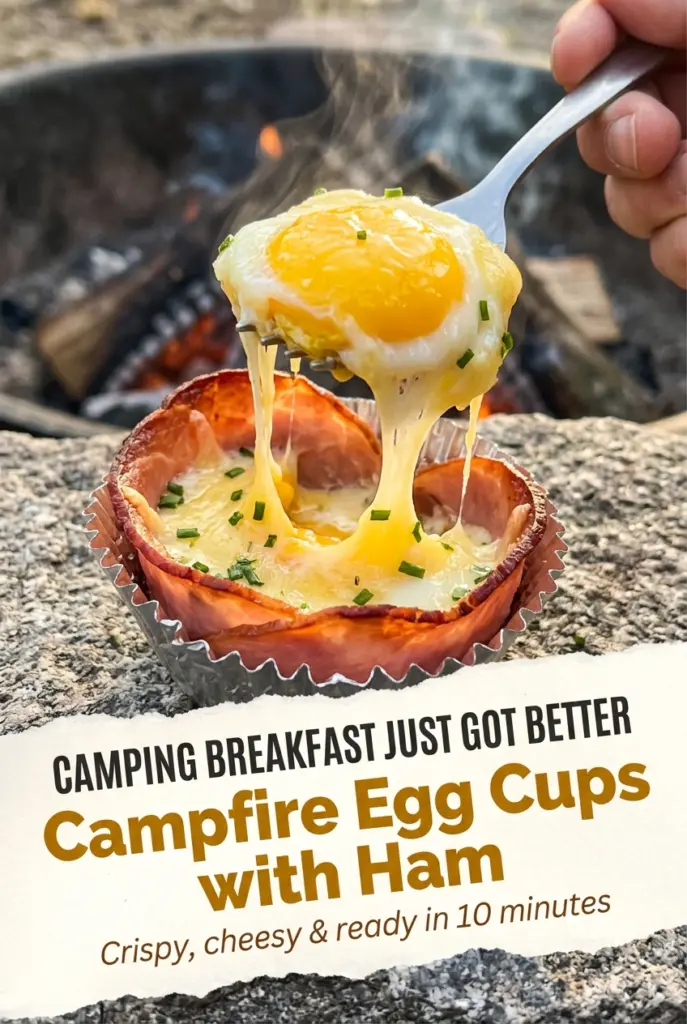
Campfire Egg Cups with Ham
Campfire Egg Cups with Ham hit that sweet spot between rustic and practical: crisp edges of ham, a gently set egg, and melted cheddar all in one handheld breakfast. The…
Tip: save now, cook later.Campfire Egg Cups with Ham hit that sweet spot between rustic and practical: crisp edges of ham, a gently set egg, and melted cheddar all in one handheld breakfast. The ham does the work of the cup, so you get a little salty chew at the edges and a savory base that holds together over the fire without needing a skillet full of extra cleanup.
What makes this version work is the heat control. You want glowing embers or steady medium grill heat, not a lively flame, because eggs set slowly and cheese melts best when the outside isn’t racing ahead of the center. A light coat of oil or butter keeps the foil from grabbing, and pressing the ham firmly into the cup helps it brown instead of slump.
Below, I’ve added the small details that matter most: how to shape the foil so the cups hold, how to tell when the whites are just set, and a few ways to adapt these for different fillings or a camp breakfast crowd.
The ham got crisp around the edges and the eggs cooked through without turning rubbery. I used the foil cups on the grill, and cleanup was a total non-issue.
Save these smoky Campfire Egg Cups with Ham for an easy-fire breakfast with crisp ham, melty cheddar, and soft-set eggs.
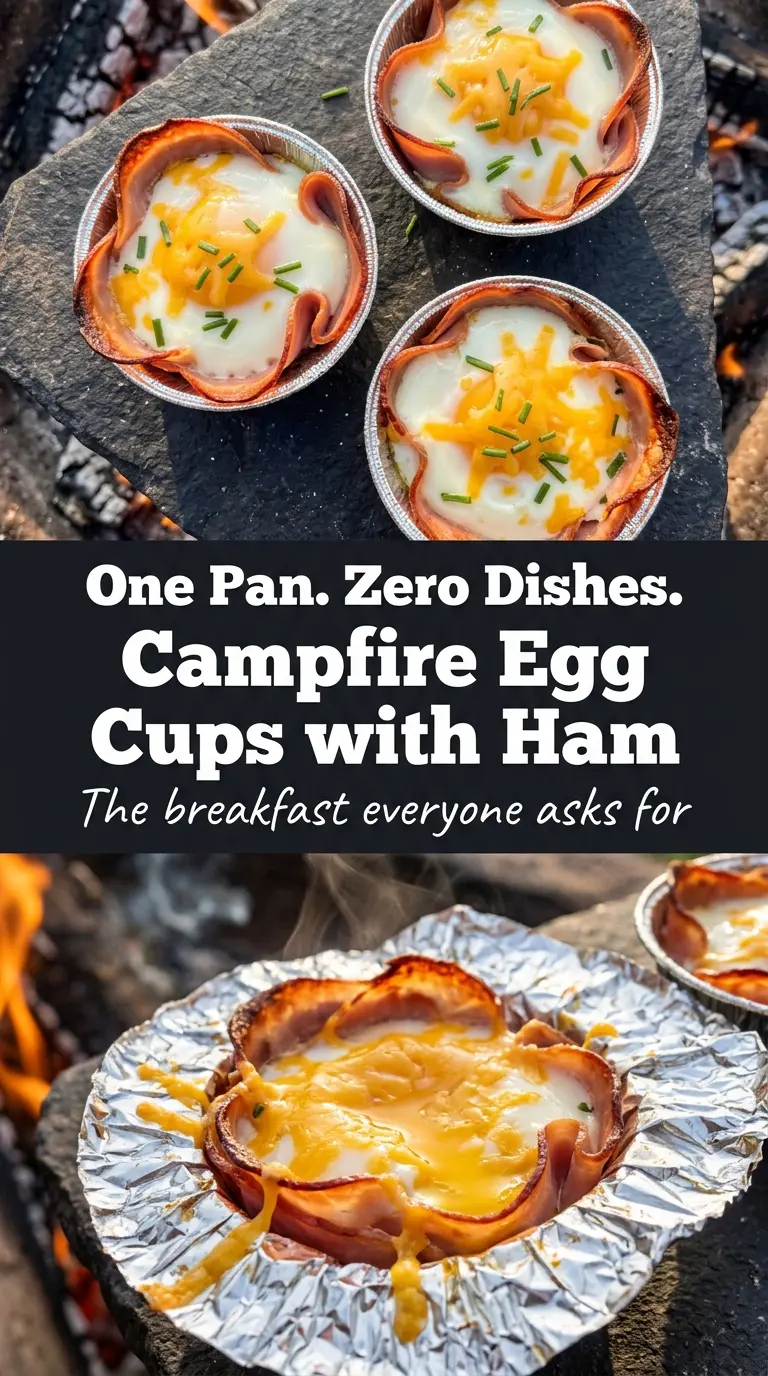
The Part Most Campfire Egg Cups Get Wrong
The mistake with campfire egg cups is assuming the ham will brown fast enough to cook the egg at the same pace. It won’t. Ham needs steady heat to crisp at the edges, and eggs need gentle heat to set without turning grainy or bouncing out of the cup. If the fire is too hot, the bottom cooks before the top and the cheese turns oily before the whites are done.
That’s why medium heat and a covered cooking setup matter here. The foil cup gives the ham structure, but the real trick is letting the embers do the work instead of putting the cups directly over active flame. The result is a cleaner shape, better texture, and an egg that sets evenly from the edges inward.
- Ham slices — Thick-cut, round ham slices hold their shape better than thin deli slices. If the ham is sliced too thin, it tears when you press it into the cup and won’t crisp into a sturdy base.
- Cheddar — Sharp cheddar gives the most punch here. Pre-shredded works, but freshly shredded melts a little smoother and doesn’t clump as much on top of the egg.
- Smoked paprika — This adds a subtle campfire note even if you’re cooking on a grill. If you skip it, the cups still work, but they taste flatter and less grounded in that smoky, savory direction.
- Heavy-duty foil — Regular foil is too flimsy for this. Heavy-duty foil holds the bowl shape better and keeps the cups from folding inward when you lift them with tongs.
Building the Cups Over Steady Heat
Shaping the Foil and Ham
Press each square of heavy-duty foil into a bowl shape before adding the ham. You want a cup with enough structure to hold an egg without sagging when it warms up. Spray or butter the inside first so the ham releases cleanly after cooking. Line each cup with ham all the way up the sides; any gaps can let the egg leak through and stick to the foil.
Adding the Egg and Seasoning
Crack the egg directly into the ham cup and keep the yolk intact if you want a softer center. Sprinkle the garlic powder, smoked paprika, salt, and pepper over the top so the seasoning lands on the egg instead of getting lost under it. The cheese goes on last because it acts like a lid, helping the top set while staying melted and bubbly. If the cups are overfilled, the whites spill out before they can set, so stop at one egg per cup.
Cooking Until the Whites Just Set
Set the cups over glowing embers or a medium grill grate and cover loosely if you can. You’re looking for whites that are opaque all the way through and a yolk that still jiggles if you want it soft. The biggest failure point is heat that’s too aggressive; if the bottom looks done but the top is still clear, move the cups farther from the heat and give them a few more minutes. Pull them when the cheese is melted and the ham edges are deepened and crisp.
How to Adapt These for Different Camps and Preferences
Dairy-Free Without Losing the Savory Finish
Leave off the cheddar and finish the cups with extra chives and a crack of black pepper. The eggs and ham still carry the dish, and the result is lighter and a little less rich, but still deeply savory.
Extra Smoky Version
Swap the cheddar for smoked gouda or a smoked cheddar blend. That pushes the campfire flavor further without adding more seasoning, and it works especially well if you’re cooking these over charcoal instead of gas.
Vegetable Add-Ins That Won’t Water Down the Cups
A spoonful of finely diced bell pepper, cooked onion, or a few chopped spinach leaves works if the vegetables are already cooked and well-drained. Raw vegetables release moisture and can slow the egg from setting, which makes the cups loose instead of tidy.
Make-Ahead Camp Breakfast Prep
You can pre-shape the foil cups and line them with ham at home, then carry the eggs in a cooler and assemble them at camp. That saves time in the morning and keeps the ham from drying out before it hits the heat.
Storage and Reheating
- Refrigerator: Store leftovers in an airtight container for up to 2 days. The yolks will firm up a little more as they sit.
- Freezer: These don’t freeze well. The egg texture turns rubbery and the ham loses its crisp edges after thawing.
- Reheating: Warm in a 300°F oven for about 8 minutes or until heated through. The microwave works in a pinch, but it softens the ham and can make the eggs tough if you rush it.
Answers to the Questions Worth Asking
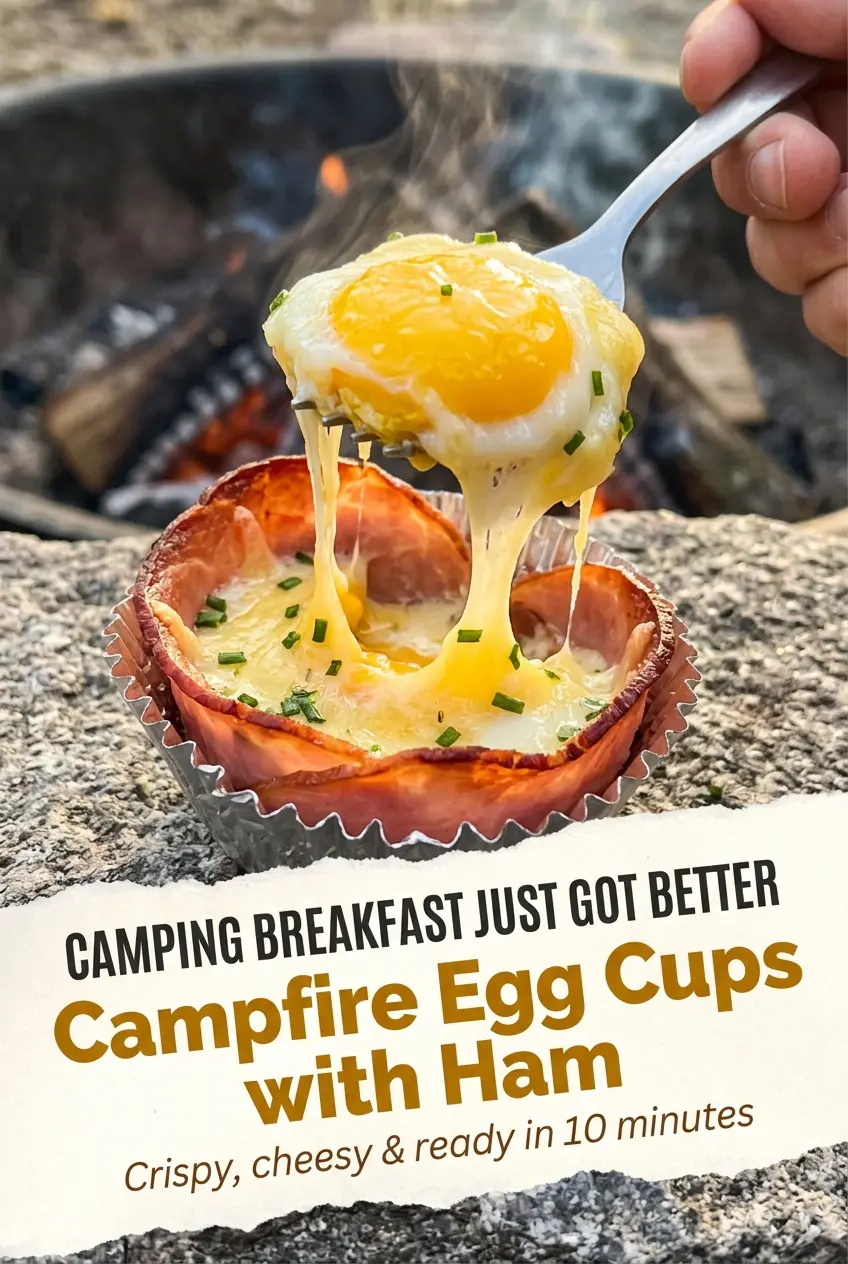
Campfire Egg Cups with Ham
Ingredients
Equipment
Method
- Prepare your campfire or grill and let it settle to medium heat with glowing embers—no open flames directly under the cups.
- Cut 6 squares of heavy-duty aluminum foil and press each into a bowl shape or muffin tin to form a sturdy cup about 3 inches wide.
- Lightly spray or butter the inside of each foil cup.
- Press one ham slice firmly into each cup, shaping it so it lines the bottom and sides like a little bowl.
- Crack one egg into each ham cup.
- Season each egg with garlic powder, smoked paprika, salt, and black pepper.
- Sprinkle shredded cheddar cheese generously over each cup.
- Carefully place the cups on a grate over the campfire embers.
- Cover loosely with foil or a lid if available.
- Cook for 8–12 minutes at medium-heat ember cooking until the egg whites are fully set and the cheese is melted and bubbly, with the yolk soft or fully set.
- Remove from heat using tongs.
- Let cool for 1 minute before serving.
- Top with fresh chives and serve directly in the foil cups.
