

Blueberry Peach Crumble
Juicy peaches and blueberries settle into a bubbling filling under a buttery oat crumble that bakes up crisp on top and spoon-soft underneath. The contrast is what makes this dessert…
Tip: save now, cook later.Juicy peaches and blueberries settle into a bubbling filling under a buttery oat crumble that bakes up crisp on top and spoon-soft underneath. The contrast is what makes this dessert worth repeating: tart fruit at the bottom, cinnamon warmth through the middle, and a topping that holds its crunch long enough to hit the table in good shape.
The part that matters most is the cornstarch and the fruit balance. Peaches bring a lot of liquid as they bake, and blueberries release their own juices fast, so the filling needs enough thickener to turn glossy instead of soupy. A splash of lemon keeps the peaches bright, and a little vanilla rounds out the whole dish without making it taste overly sweet.
Below, I’ll walk through the small details that keep the topping crumbly instead of paste-like, plus a few easy ways to adapt the crumble if your peaches are especially ripe or your pantry needs a swap.
The topping stayed crisp even after it cooled a bit, and the filling thickened up into that perfect jammy layer instead of running all over the plate. I used really ripe peaches, and the lemon kept it from tasting too sweet.
Save this blueberry peach crumble for the night you want a warm fruit dessert with a crisp oat topping and no fussy steps.
The Secret to a Crisp Crumble Instead of a Soft Blanket
The topping in a fruit crumble fails for one reason more than any other: the butter melts into the dry ingredients before the dish ever reaches the oven. That gives you a sandy paste, not the rough, crumbly bits that bake into a crisp cap. Cold butter held in cubes is what creates those pockets of steam and texture.
The other trap is overmixing once the butter goes in. You want the mixture to look uneven, with some oat clusters and some smaller crumbs. Those different sizes bake at different rates, which is how you get both crunch and a little tenderness in the same bite. If the topping looks damp all the way through before baking, it will set up dense instead of crisp.
What Each Ingredient Is Actually Doing in This Dish
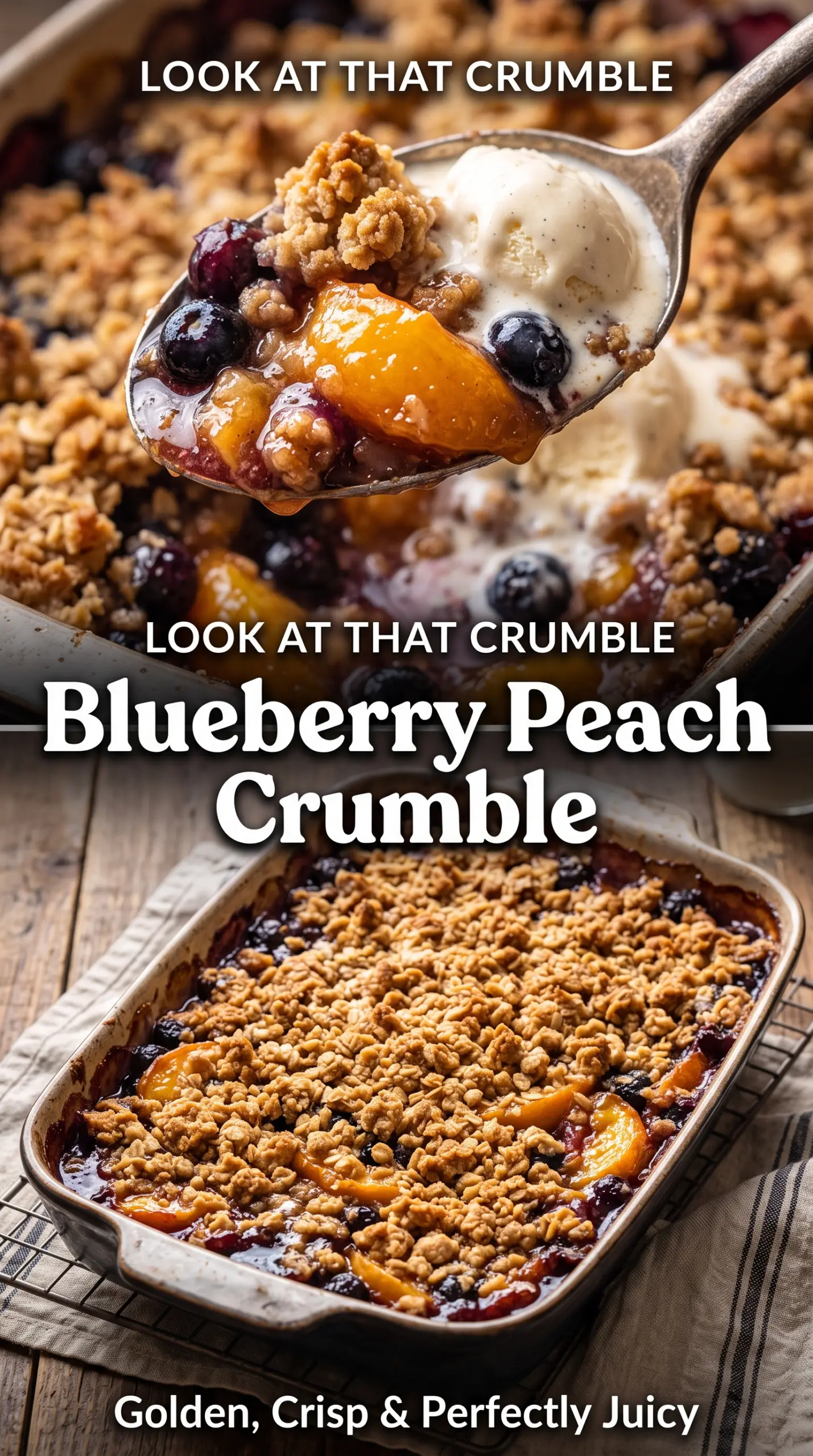
- Peaches — Fresh peaches are the backbone of the filling. They should be ripe enough to smell fragrant but still hold their shape when sliced; overly soft peaches can turn mushy before the crumble is done. If your fruit is very juicy, add the full amount of cornstarch and let the baked crumble rest before serving so the filling can set.
- Blueberries — Blueberries bring acidity, color, and extra juice that turns the filling glossy. Fresh or frozen both work, but frozen berries can release a little more liquid, so don’t thaw them first. Toss them straight in from frozen if that’s what you have.
- Cornstarch — This is what keeps the fruit from running across the plate. It thickens best once the filling hits a full bubble in the oven, so don’t underbake the crumble if the center still looks loose. If you substitute arrowroot, use a little less and expect a softer set.
- Old-fashioned rolled oats — These give the topping its chewy crispness. Quick oats can work in a pinch, but they make a finer, more packed topping that loses some texture. Keep the oats whole for the most distinct crumble.
- Cold unsalted butter — Butter is what turns the topping from dry mix into actual crumble. Unsalted gives you control over the seasoning, and the cold temperature matters more than brand or price. Cube it and cut it in fast so it stays cold long enough to bake into crumbs.
Building the Filling and Topping Without Losing Texture
Mix the Fruit Until It Looks Evenly Coated
Stir the peaches, blueberries, sugars, cornstarch, lemon juice, vanilla, cinnamon, and salt until every piece of fruit looks glossy and lightly coated. Don’t leave dry pockets of cornstarch at the bottom of the bowl, or you’ll get little starchy patches in the finished filling. The mixture should look loose in the bowl; it thickens in the oven, not before it goes in.
Work the Butter Just Until the Crumbs Form
Combine the oats, flour, brown sugar, cinnamon, and salt, then cut in the cold butter until you see a mix of pea-sized clumps and smaller crumbs. Stop before it turns into dough. If you squeeze a bit in your hand and it holds together, that’s enough; any more mixing tightens the topping and takes away the crunchy edges.
Bake Until the Fruit Bubbling Reaches the Center
Spread the fruit in the dish, cover it evenly with the crumble, and bake at 350°F until the top is deep golden and the filling is bubbling through the middle, not just around the edges. That bubbling matters because it tells you the cornstarch has activated and the juices have actually thickened. If the top is browned but the center is quiet, give it a few more minutes rather than pulling it early.
Three Ways to Adjust the Crumble Without Ruining It
Make it dairy-free
Use a solid plant-based butter block instead of regular butter. The topping will still bake up crisp, though the flavor will be a little less rich and the crumbs may brown a touch faster, so start checking near the end of the bake time.
Use frozen fruit when fresh peaches are out of season
Frozen peaches and blueberries can replace fresh fruit, but keep them frozen until the moment they go into the dish. They release more liquid, so the crumble may need a few extra minutes in the oven and a longer rest on the counter after baking.
Make it gluten-free
Swap the all-purpose flour for a good 1:1 gluten-free baking blend and use certified gluten-free oats. The texture stays close to the original, though the topping can be a little more delicate, so let it cool before serving rather than scooping too soon.
Reduce the sugar without flattening the flavor
You can cut the granulated sugar in the filling a little if your peaches are very ripe, but don’t drop it too far. Sugar does more than sweeten here; it helps the fruit juices thicken and keeps the berries from tasting sharp.
Storage and Reheating
- Refrigerator: Store covered for up to 4 days. The topping softens a bit in the fridge, but the flavor stays good.
- Freezer: Freeze baked crumble in portions for up to 2 months. Wrap it well and thaw in the refrigerator overnight before reheating.
- Reheating: Warm in a 325°F oven until heated through and the topping crisps back up. The microwave will heat the fruit, but it leaves the crumble soft, which is the most common mistake with leftovers.
Answers to the Questions Worth Asking
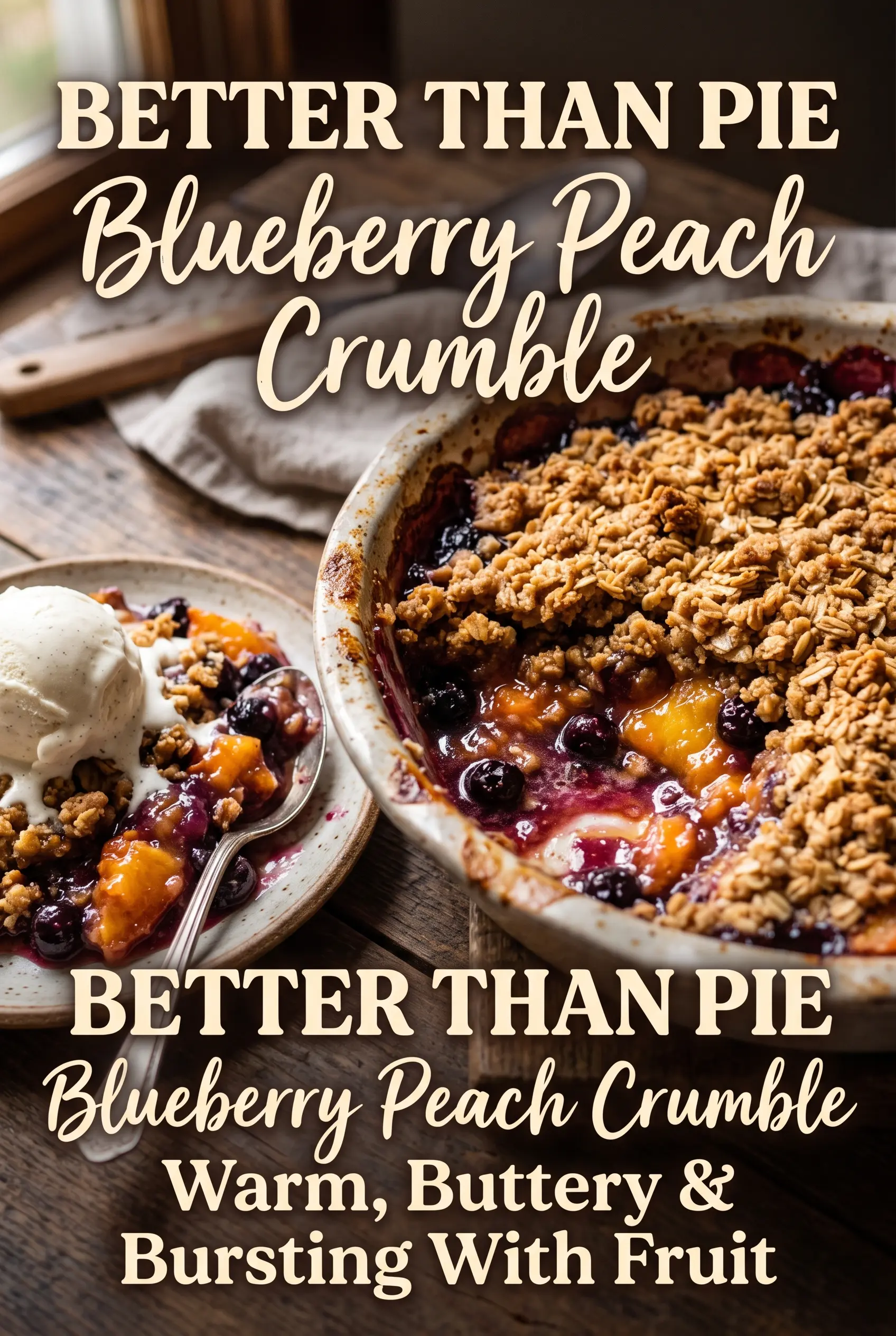
Blueberry Peach Crumble
Ingredients
Equipment
Method
- Preheat the oven to 350°F (175°C) and place an oven rack in the center position. Keep the crumble dish within reach so you can assemble right after mixing.
- Grease a 9-inch baking dish. Lightly coat the bottom and sides so the topping releases easily.
- In a mixing bowl, combine peaches, blueberries, granulated sugar, brown sugar, cornstarch, lemon juice, vanilla extract, ground cinnamon, and salt. Stir until the cornstarch is evenly distributed and no dry pockets remain.
- Spread the fruit mixture evenly into the prepared baking dish. Level the surface so the crumble bakes uniformly.
- In a separate bowl, combine old-fashioned rolled oats, all-purpose flour, brown sugar, ground cinnamon, and salt. Mix until the dry ingredients are uniform in color.
- Add cold unsalted butter cubes and cut them into the dry mixture until coarse crumbs form. The mixture should look like uneven pebbly crumbs rather than a smooth paste.
- Sprinkle the crumble evenly over the fruit. Cover the entire top so every bite gets a crisp-tender topping.
- Bake for 40–45 minutes at 350°F (175°C) until golden brown and bubbling. Watch for bubbling around the edges, which signals the filling has thickened.
- Let the crumble cool for 10 minutes before serving. This brief rest helps the juices set so the topping stays crisp.
- Serve warm, topped with vanilla ice cream if desired. Add fresh mint leaves for a bright finish right before eating.
