

Best Sausage Stuffing
The bread cubes need to feel dry and crisp before they meet the broth. If they're only lightly toasted, the center of the pan can turn soft and heavy while…
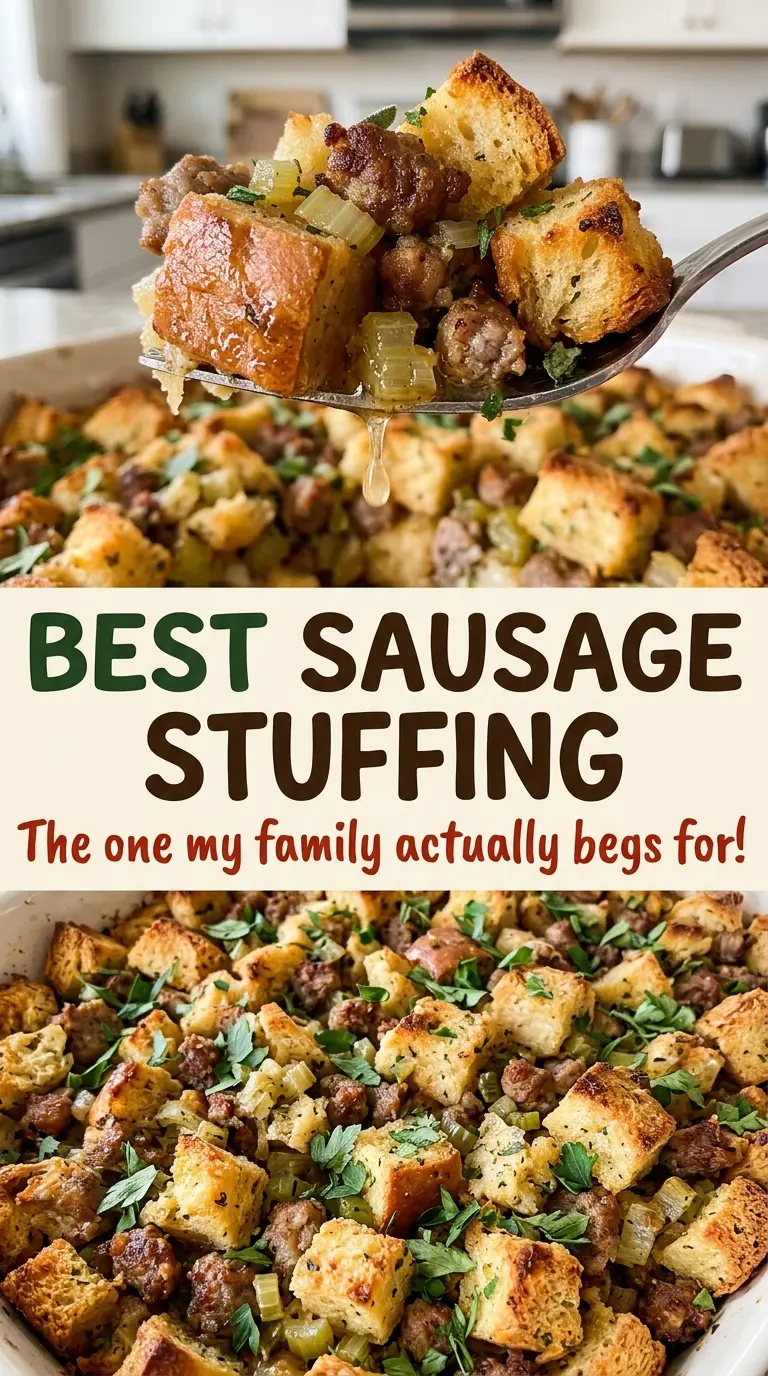
Tip: save now, cook later.The bread cubes need to feel dry and crisp before they meet the broth. If they’re only lightly toasted, the center of the pan can turn soft and heavy while the top browns. I bake them low first, then give the stuffing a covered stretch in the oven before uncovering it. That order keeps the middle tender without losing the golden top. This Best Sausage Stuffing gets its savory backbone from bulk pork breakfast sausage, with onion and celery cooked in the same skillet to pick up every bit of browned flavor.
The bread matters more than an elaborate technique. Dry cubes have room to absorb the broth and eggs without collapsing, and a short rest after tossing gives the moisture a chance to spread evenly. I keep the seasonings straightforward, too: sage and thyme bring the familiar stuffing aroma, while fresh parsley adds a clean note. The finished pan has a soft, cohesive center and crisp edges, with little browned bits of sausage throughout.

Kitchen Note
Let the bread mixture stand for five minutes after you toss it with the broth and eggs. That pause gives the cubes a moment to take up the liquid, so you don’t end up with dry pockets in the baked stuffing.
Save Best Sausage Stuffing for a crisp-topped casserole with a tender center and plenty of savory sausage in every scoop.
Why the Bread Has to Dry Before the Broth Goes In
Fresh bread seems like it should make softer stuffing, but soft cubes start out already full of moisture. Add broth and eggs to them and they can turn pasty before the middle of the casserole has had time to heat through. Drying the bread first gives each cube a sturdier surface and room to absorb the liquid evenly. The goal isn’t browned toast; it’s bread that’s dry and crisp all the way through.
That texture also explains why the loaf should be sturdy white bread rather than a delicate, airy loaf. The cubes need to hold their shape while you toss them with sausage, vegetables, and liquid. Once they’re baked, they soften into the stuffing but don’t disappear into a uniform mass. Give the cubes a stir partway through drying so the pieces on the edges of the pans don’t dry much faster than those in the middle. When they’re cool, they’ll be ready to take on the broth mixture without turning fragile.
What the Sausage, Herbs, and Eggs Each Bring to the Pan
- Sturdy white bread — A firm loaf gives the stuffing structure and absorbs the broth without falling apart. The oven-drying step matters more than seeking out a specialty loaf; cut the cubes evenly so they dry at a similar pace.
- Bulk pork breakfast sausage — It brings seasoned, savory flavor and browned pieces throughout the casserole. Bulk sausage is convenient here because you can break it into small pieces as it cooks; a leaner sausage would make a less rich stuffing.
- Unsalted butter — Butter coats the baking dish and then carries the onion, celery, and herbs as they cook. Unsalted butter lets the added kosher salt stay in balance with the sausage and broth.
- Yellow onion and celery — Finely chopping both helps them soften in the skillet and distribute through the bread instead of leaving large, crunchy pieces. They add sweetness and savory depth without competing with the sage.
- Sage, thyme, and parsley — Rubbed sage and dried thyme season the warm butter and vegetables, while fresh parsley brings a lighter herbal note. Use parsley while it’s fresh and bright; wilted leaves won’t give the same clean finish.
- Low-sodium chicken broth and eggs — The broth moistens the bread, and the eggs help the baked mixture hold together. Low-sodium broth gives you more control over the seasoning, while fresh eggs whisk smoothly into the liquid.
How to Dry, Moisten, and Bake the Stuffing Without Losing Its Texture
Dry the cubes until crisp, not browned
Heat the oven to 300°F and spread the bread cubes across two 18×13-inch rimmed baking sheets. Bake for 35 to 45 minutes, stirring once, until the cubes feel dry and crisp; they shouldn’t need to turn deeply golden. If they still feel soft in the center, give them more time rather than relying on the casserole bake to dry them out. Let them cool before adding the other ingredients.
Brown the sausage in small pieces
Raise the oven to 350°F and grease a 9×13-inch baking dish with 1 tablespoon of the butter. In a 12-inch skillet over medium heat, cook the bulk sausage for 8 to 10 minutes, breaking it into small pieces as it browns. Check that the sausage reaches 160°F, then transfer it to a large bowl with the cooled bread cubes. Leaving the pieces small makes the finished stuffing easier to scoop evenly.
Soften the vegetables in the sausage skillet
Melt the remaining 7 tablespoons of butter in the skillet, then add the finely chopped onion and celery. Cook for 6 to 8 minutes, stirring, until both are tender; if the onion still has a sharp crunch, give it another moment. Stir in the sage, thyme, kosher salt, black pepper, and chopped parsley so the herbs coat the warm vegetables. Scrape that mixture into the bowl with the bread and sausage.
Let the center set before uncovering
Whisk the chicken broth and eggs together, pour them over the bread mixture, and toss until the cubes are evenly moistened. Transfer everything to the prepared dish, cover it tightly with foil, and bake for 30 minutes. Remove the foil and bake for another 15 to 20 minutes, until the top is golden and the center reaches 160°F. Rest the pan for 10 minutes before serving so the stuffing settles and holds together when scooped.
Two Small Changes That Shift the Sausage Stuffing
A bread-and-herb pan without sausage
Leave out the sausage and make the onion-celery mixture in the butter, then toss it with the bread, herbs, broth, and eggs. The result is lighter and less savory, since you lose the browned pork and its seasoning, but the eggs still help the cubes hold together. This version still uses chicken broth, so it isn’t vegetarian.
A sage-and-thyme version without parsley
Omit the fresh parsley if you want the dried herbs to lead without a fresh green note. Keep the sage and thyme in the warm butter and vegetables as usual. The stuffing will taste a little more savory and less bright, with no change to its texture.
Storage and Reheating
- Refrigerator: Cool and refrigerate leftovers within 2 hours, then use them within 3 to 4 days. The crisp top softens in storage.
- Freezer: Freeze cooled portions in an airtight container for up to 3 months. Thaw overnight in the refrigerator; the texture will be softer than freshly baked.
- Reheating: Reheat covered in a 325°F oven until the center reaches 165°F, uncovering near the end if you’d like to bring back some crispness. Leaving it uncovered for the whole reheat can dry the edges before the middle is hot.
The Questions That Come Up When Making Sausage Stuffing
Best Sausage Stuffing
Ingredients
Equipment
Method
- Heat the oven to 300°F.
- Spread the bread cubes over two 18x13-inch rimmed baking sheets and bake for 35 to 45 minutes, stirring once, until dry and crisp.
- Let the bread cubes cool.
- Increase the oven temperature to 350°F and grease a 9x13-inch baking dish with 1 tablespoon of the butter.
- Cook the sausage in a 12-inch skillet over medium heat for 8 to 10 minutes, breaking it into small pieces, until browned and cooked to 160°F.
- Transfer the sausage to a large bowl with the bread cubes.
- Melt the remaining 7 tablespoons butter in the skillet.
- Add the onion and celery and cook for 6 to 8 minutes until tender.
- Stir in the sage, thyme, salt, pepper, and parsley, then add the mixture to the bowl.
- Whisk the chicken broth and eggs together, pour over the bread mixture, and toss until evenly moistened.
- Let the mixture stand for 5 minutes.
- Transfer the mixture to the prepared baking dish and cover tightly with foil.
- Bake for 30 minutes.
- Uncover and bake for 15 to 20 minutes, until the top is golden and the center reaches 160°F.
- Let the stuffing rest for 10 minutes before serving.
