
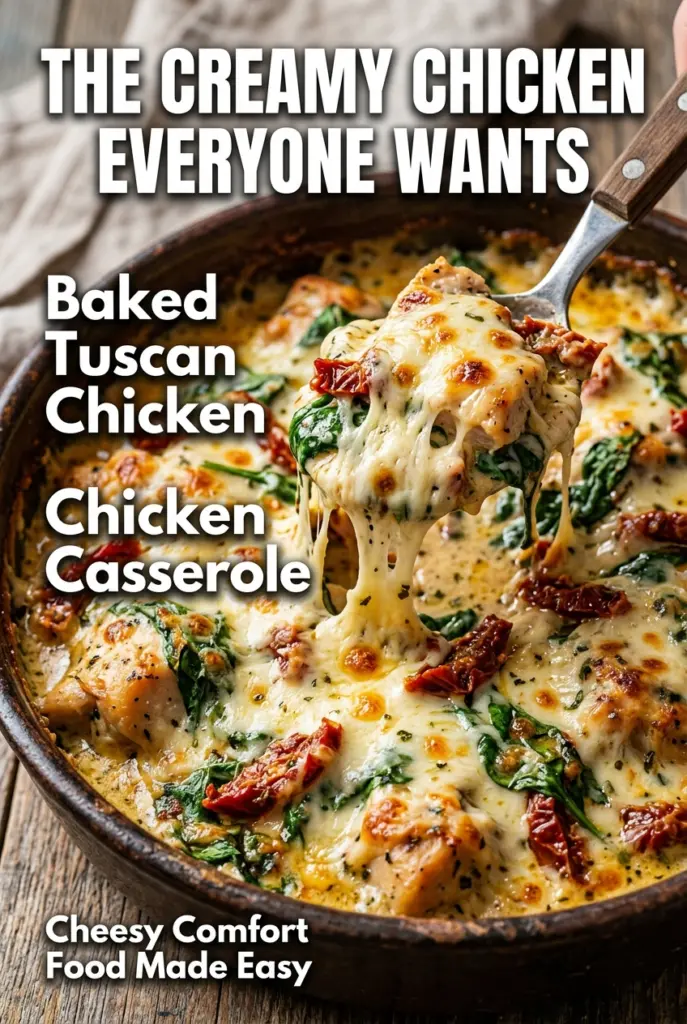
Baked Tuscan Chicken Casserole
Baked Tuscan chicken casserole lands on the table with the kind of creamy, cheesy comfort that makes people hover near the oven. The chicken stays juicy, the sauce turns rich…
Tip: save now, cook later.Baked Tuscan chicken casserole lands on the table with the kind of creamy, cheesy comfort that makes people hover near the oven. The chicken stays juicy, the sauce turns rich without feeling heavy, and the sun-dried tomatoes cut through all that cream with a tangy little punch. The mozzarella on top bakes into a bubbling blanket that pulls apart in long, satisfying strands.
What makes this version work is the balance in the pan. The chicken gets seasoned before it goes in, so every bite tastes like more than just chicken in sauce, and the broth keeps the cream from turning cloying. Parmesan thickens the sauce as it bakes, while spinach wilts right into it instead of turning watery. If you’ve ever ended up with a casserole that split, went grainy, or tasted flat, the details here fix those problems before they start.
Below you’ll find the small choices that matter most, from how to keep the chicken tender to the best way to get that golden top without drying out the casserole. There’s also a few smart swaps if you need to work with what’s in the fridge.
The sauce baked up thick and creamy, and the chicken stayed juicy instead of drying out. I used the broiler for two minutes at the end and the mozzarella got that perfect golden top without overcooking the casserole.
Save this Baked Tuscan Chicken Casserole for a creamy, cheesy dinner that bakes in one dish and still feels special.
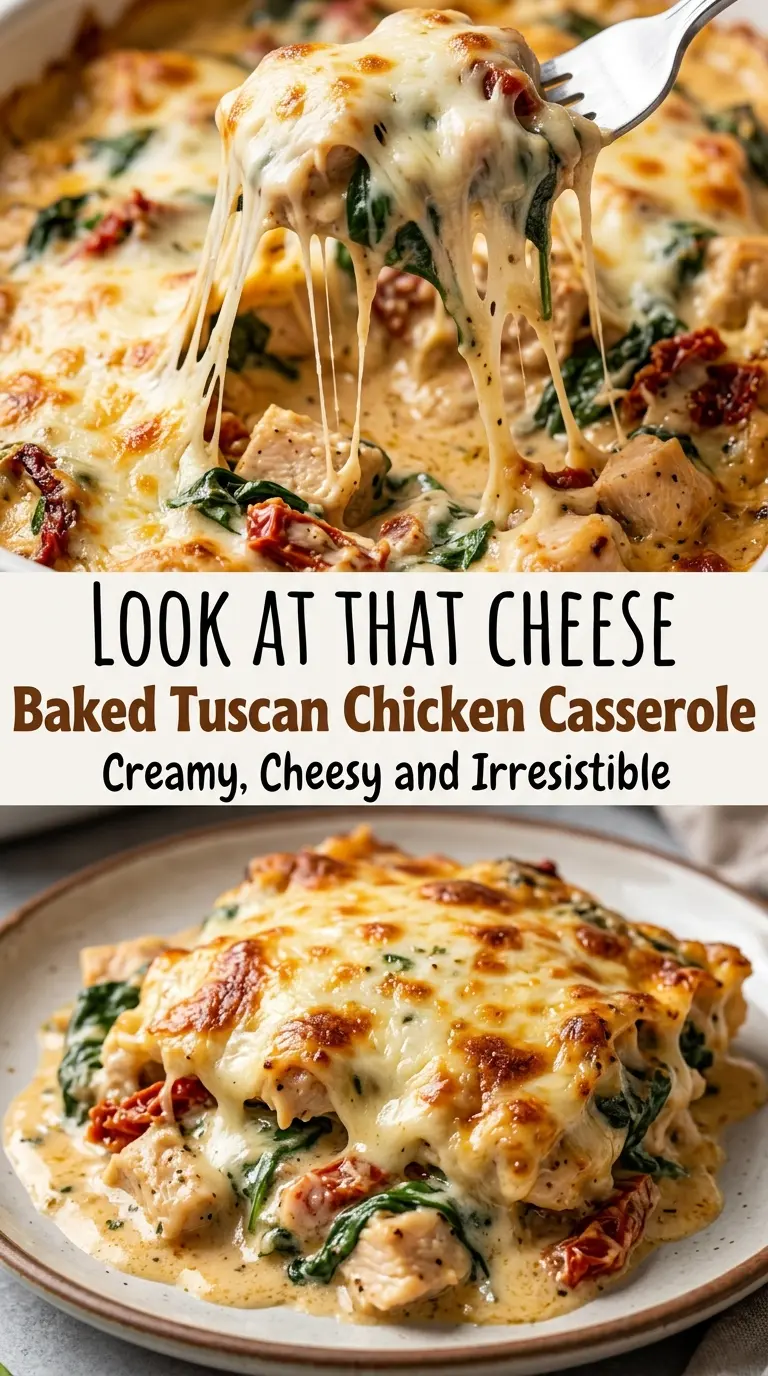
The Trick to Keeping Tuscan Chicken Casserole Creamy Instead of Greasy
The difference between a creamy casserole and a slick, separated one usually comes down to heat management. Heavy cream and Parmesan both behave better when they go into the dish with some support from broth and a gentle bake, not a hard boil. That’s why this casserole stays silky: the sauce has enough structure to thicken in the oven without breaking.
Another common failure is watery sauce. Spinach releases moisture, and sun-dried tomatoes can do the same if they’re packed in oil and not drained well. Stirring them into the sauce instead of layering them dry over the chicken helps everything cook together, so the flavor stays concentrated and the texture stays creamy.
- Chicken breasts — Cubing them gives you faster, more even cooking than leaving whole breasts in the dish. If some pieces are large and some are small, the small ones dry out before the larger pieces are done.
- Heavy cream — This is what gives the casserole its body. Half-and-half can work in a pinch, but the sauce will be thinner and less stable after baking.
- Parmesan — Grated Parmesan melts into the sauce and helps it thicken as it bakes. Use the real stuff if you can; the shelf-stable kind won’t give the same depth or texture.
- Sun-dried tomatoes — These add the tangy, savory edge that keeps the casserole from tasting one-note. Drain them well if they’re oil-packed so they don’t make the sauce greasy.
- Spinach — Fresh spinach is the right choice here because it folds into the sauce and wilts down fast. Frozen spinach needs to be thawed and squeezed dry first or it will water everything down.
Building the Casserole in a Way That Protects the Sauce
Season the Chicken First
Toss the cubed chicken with the olive oil, Italian seasoning, garlic powder, paprika, salt, and pepper until every piece is coated. This gives the chicken flavor all the way through instead of relying on the sauce alone. If the pieces look dry and powdery, keep tossing; the oil should cling to the seasonings and create a thin paste on the surface.
Mix the Sauce Until the Parmesan Disappears
Whisk the chicken broth, cream, Parmesan, and garlic together until the mixture looks smooth and slightly thickened. The Parmesan won’t fully dissolve like sugar, but it should stop looking grainy or clumpy. If you dump the cheese into the dish without whisking, it tends to settle and bake unevenly.
Bake Until the Chicken Is Just Cooked Through
Pour the sauce over the chicken, top with mozzarella, and bake uncovered until the chicken reaches 165°F and the sauce is bubbling around the edges. The center should be hot and thick, not loose and milky. If the top is browning too fast before the chicken is done, lay a loose piece of foil over the dish for the rest of the bake.
Finish Under the Broiler
A short broil at the end gives you those browned mozzarella spots that make the casserole look and taste finished. Stay close to the oven, because cheese goes from golden to burnt in a hurry. Pull it as soon as you see a few toasted spots and the top has that blistered, bubbly look.
How to Adapt This for What You Have on Hand
Make It Gluten-Free Without Losing the Creaminess
This casserole is naturally gluten-free as written, as long as your chicken broth and seasonings are certified gluten-free. The sauce gets its thickness from Parmesan and baking time, not flour, so you don’t need a separate thickener.
Swap the Cream for a Lighter Finish
You can use half-and-half if that’s what you have, but the sauce will be looser and a little less rich. If you go this route, don’t overbake the casserole or the dairy can thin out instead of thickening.
Use Chicken Thighs for Extra Juiciness
Boneless skinless thighs give you a slightly richer result and stay tender even if you bake the dish a few minutes longer. Cut them into similar-size pieces so they cook at the same pace as the breasts in the original recipe.
Storage and Reheating
- Refrigerator: Store covered for up to 4 days. The sauce thickens as it chills, so the leftovers will look more set than they did fresh from the oven.
- Freezer: It freezes, but the cream sauce can separate a little on thawing. Freeze in portions, then thaw overnight in the fridge for the best texture.
- Reheating: Reheat covered at 325°F until hot, or warm single portions in the microwave at medium power. High heat is what dries out the chicken and makes the sauce split, so go low and slow.
Answers to the Questions Worth Asking
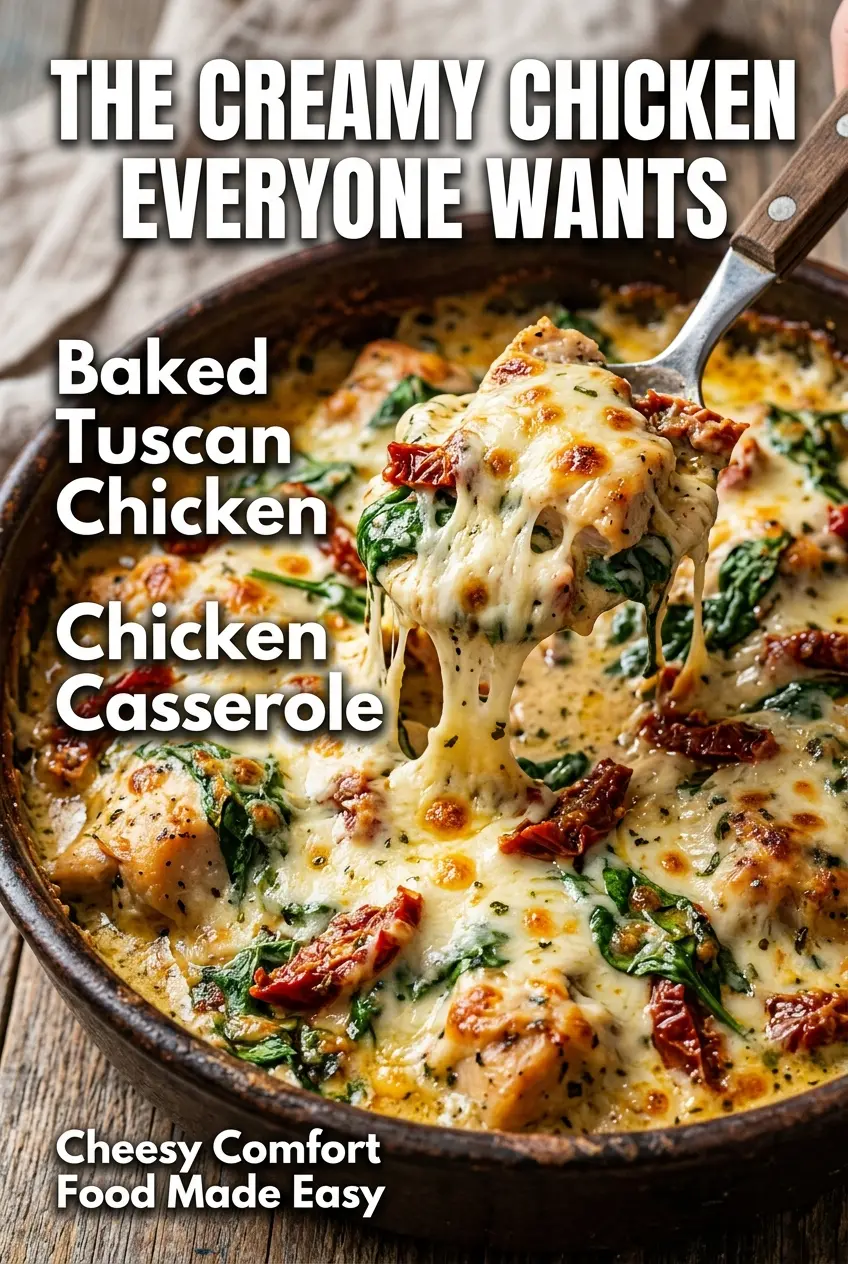
Baked Tuscan Chicken Casserole
Ingredients
Equipment
Method
- Preheat the oven to 375°F (190°C) to fully heat before baking. Keep it steady so the chicken cooks evenly.
- Grease a 9x13-inch baking dish. Lightly coat all surfaces so the casserole releases cleanly.
- Toss the cubed boneless skinless chicken breasts with olive oil, Italian seasoning, garlic powder, paprika, salt, and black pepper. Mix until evenly coated.
- Arrange the seasoned chicken in the baking dish in an even layer. Spread it out so it bakes through at the same pace.
- In a bowl, whisk together chicken broth, heavy cream, Parmesan cheese, and minced garlic. Blend until smooth and well combined.
- Stir in chopped sun-dried tomatoes and fresh spinach. Continue until the spinach begins to wilt and is evenly distributed.
- Pour the sauce mixture over the chicken in the baking dish. Make sure most of the chicken is covered.
- Sprinkle the shredded mozzarella cheese evenly over the top. Cover the surface so it melts into a bubbly layer.
- Bake uncovered for 30–35 minutes at 375°F (190°C) until the chicken is cooked through and the cheese is bubbly. Look for active bubbling around the edges.
- Broil for 2–3 minutes to create a golden, cheesy top. Watch closely so it browns without burning.
- Garnish with chopped parsley and serve warm. Let it rest briefly for easier slicing and a thicker sauce.
