
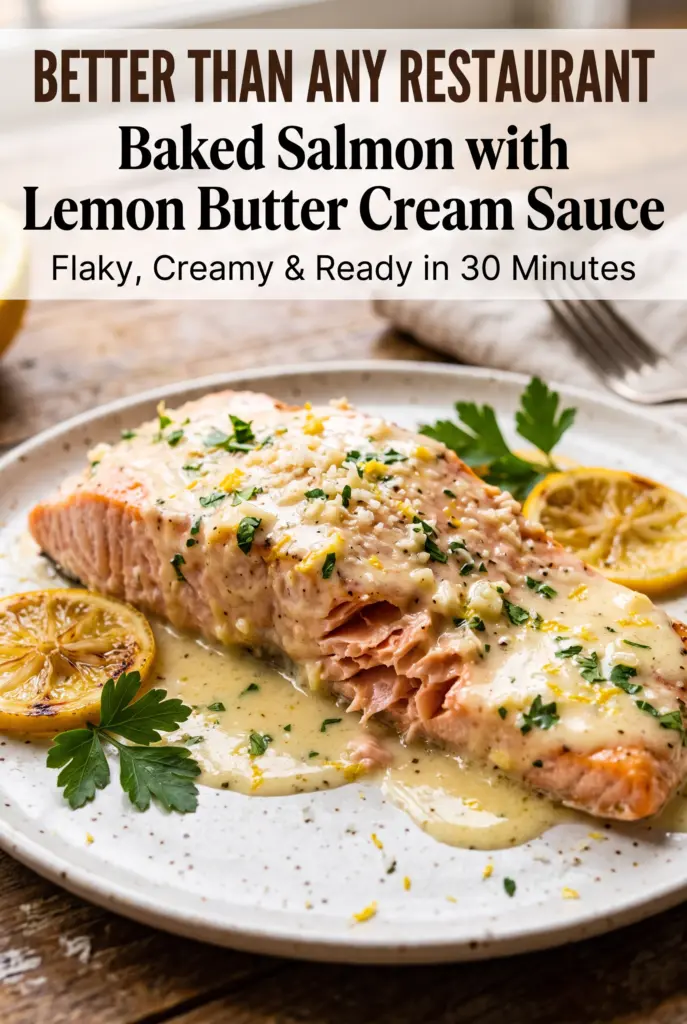
Baked Salmon with Lemon Butter Cream Sauce
Tender baked salmon and a silky lemon butter cream sauce are one of those dinners that feels polished without asking for much from you. The salmon stays flaky and moist…
Tip: save now, cook later.Tender baked salmon and a silky lemon butter cream sauce are one of those dinners that feels polished without asking for much from you. The salmon stays flaky and moist in the oven, while the sauce brings garlic, Parmesan, and fresh lemon together in a way that coats every bite instead of sliding off the fish. It’s rich, but the lemon keeps it bright enough that you want another forkful right away.
What makes this version work is the order of the sauce. The garlic goes into the butter just long enough to perfume it, then the broth and cream simmer before the Parmesan is whisked in off the hottest part of the burner. That keeps the cheese from turning grainy. The salmon also gets its own seasoning before baking, so the fish tastes complete on its own and the sauce becomes an accent, not a cover-up.
Below, I’ll walk through the key details that keep the salmon tender and the sauce smooth, plus the swaps that still give you a good result when you need to work with what’s in the fridge.
The salmon came out flaky and the lemon cream sauce thickened up beautifully without separating. I served it with rice and my husband said the sauce alone was worth making it again.
Baked Salmon with Lemon Butter Cream Sauce delivers flaky fish and a smooth garlic-Parmesan finish worth saving for an easy dinner that still feels special.
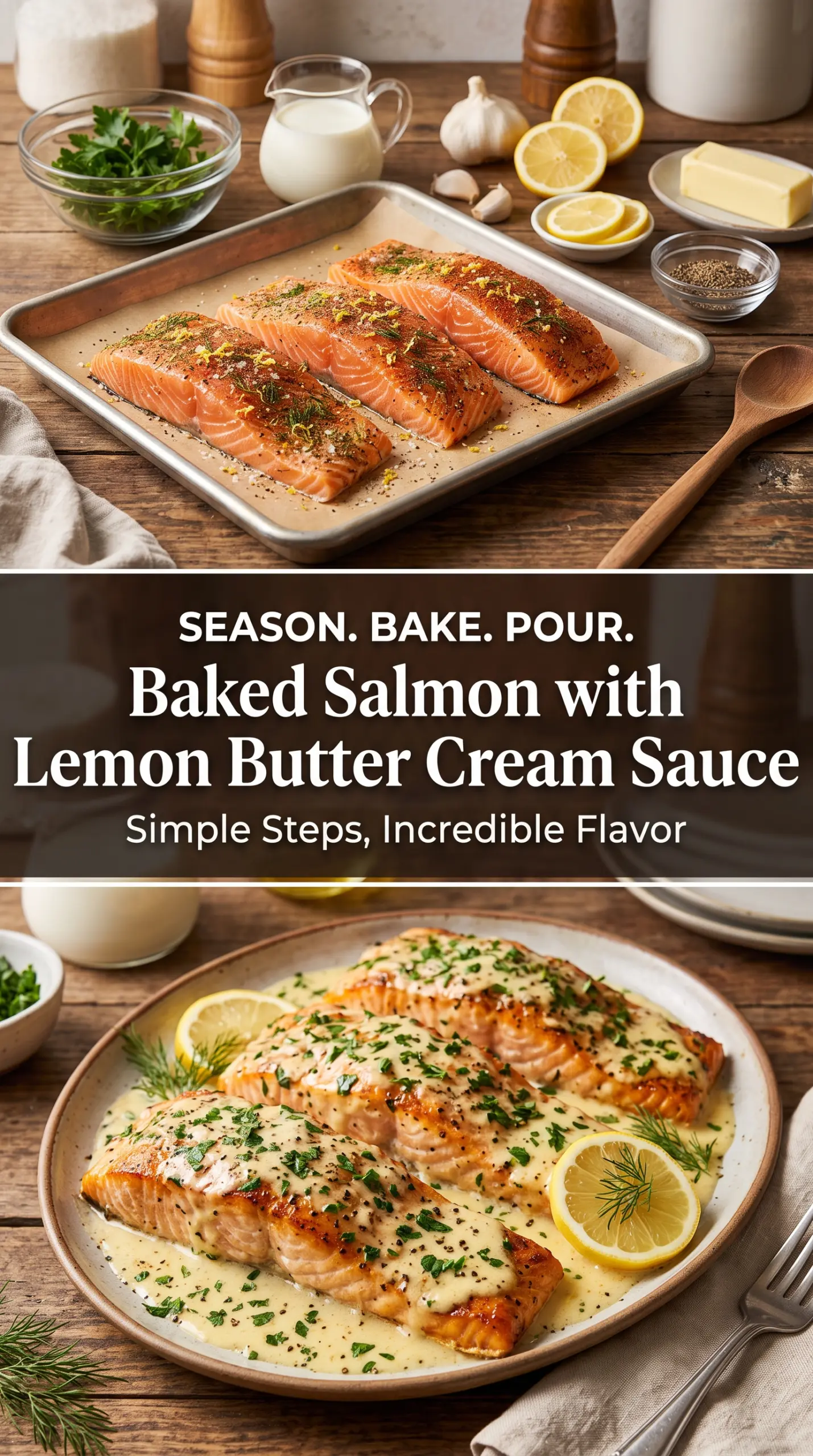
The Sauce Stays Smooth When the Cheese Goes in Last
The most common place this kind of dish goes wrong is when the Parmesan hits a sauce that’s too hot. The cream can look fine for a minute, then suddenly turn grainy or oily as the cheese seizes. Pulling the pan back from the heat before whisking in the Parmesan gives it time to melt into the cream instead of clumping up.
The other thing people miss is that lemon belongs at the end. Add it too early and the acid can dull the sauce or make the dairy look split before it ever reaches the plate. Here, the cream and broth build the body first, the cheese adds richness, and the lemon brightens everything at the finish.
- Heavy cream — This is what gives the sauce its body. Half-and-half will work in a pinch, but it makes a thinner sauce and is more likely to look loose instead of velvety.
- Chicken broth — A little broth keeps the sauce from tasting heavy and gives it enough looseness to spoon over salmon cleanly. Vegetable broth works too if that’s what you have.
- Parmesan cheese — Freshly grated Parmesan melts best and gives the cleanest texture. Pre-grated cheese usually has anti-caking agents that can leave the sauce a little gritty.
- Lemon juice and zest — Juice brings the brightness, while zest carries the stronger lemon aroma. Use both if you want the sauce to taste fresh instead of flat.
- Salmon fillets — Look for fillets that are similar in thickness so they finish at the same time. If you use thinner pieces, start checking them early; overbaked salmon dries out fast.
Getting the Salmon Flaky Before the Sauce Ever Starts
Season the Fish Evenly
Pat the salmon dry first, then brush it with olive oil and coat it with the spice mixture. Dry fish takes seasoning better and bakes with a better surface texture than fish that’s still damp. If the fillets are unevenly seasoned, the sauce ends up doing too much work to carry the flavor.
Bake Until It Just Flakes
Slide the salmon into a 400°F oven and start checking it at 12 minutes if the fillets are average thickness. The top should look opaque and the thickest part should flake with a fork, but the center can still be slightly glossy. If you wait until the fish looks completely firm all the way through, it will eat dry once the sauce goes on.
Build the Sauce in the Pan, Not in a Hurry
Melt the butter and cook the garlic just until fragrant. Once the broth and cream go in, let the mixture simmer gently until it lightly coats a spoon. Add the Parmesan after that, whisk until smooth, then finish with lemon juice, zest, and parsley. If the sauce looks too thick, loosen it with a splash of broth; if it looks thin, give it another minute over low heat instead of cranking up the burner.
Dairy-Free Version
Use a full-fat unsweetened coconut cream or a plain dairy-free cooking cream and skip the Parmesan. The sauce won’t taste exactly the same, but it will still feel rich and spoonable. Add an extra pinch of salt and a little nutritional yeast if you want more savory depth.
Gluten-Free Dinner Plate
This recipe is naturally gluten-free as written, as long as your broth is certified gluten-free. That makes it an easy main for serving with rice, potatoes, or vegetables without changing the technique.
Make It with Chicken Instead
Boneless chicken cutlets work well if you want the same sauce in a different form. Sear or bake the chicken until cooked through, then spoon the sauce over the top. You lose the delicate salmon texture, but the garlic-lemon-Parmesan combination still lands in the same satisfying way.
Storage and Reheating
- Refrigerator: Store leftovers in an airtight container for up to 2 days. The salmon stays safe longer, but the sauce is best before it starts to tighten up.
- Freezer: I don’t recommend freezing the finished dish. Cream sauces can separate when thawed, and the salmon texture turns softer than you want.
- Reheating: Warm gently in a covered skillet over low heat with a splash of broth or cream. Microwaving on high tends to overcook the fish and break the sauce.
Questions I Get Asked About This Recipe
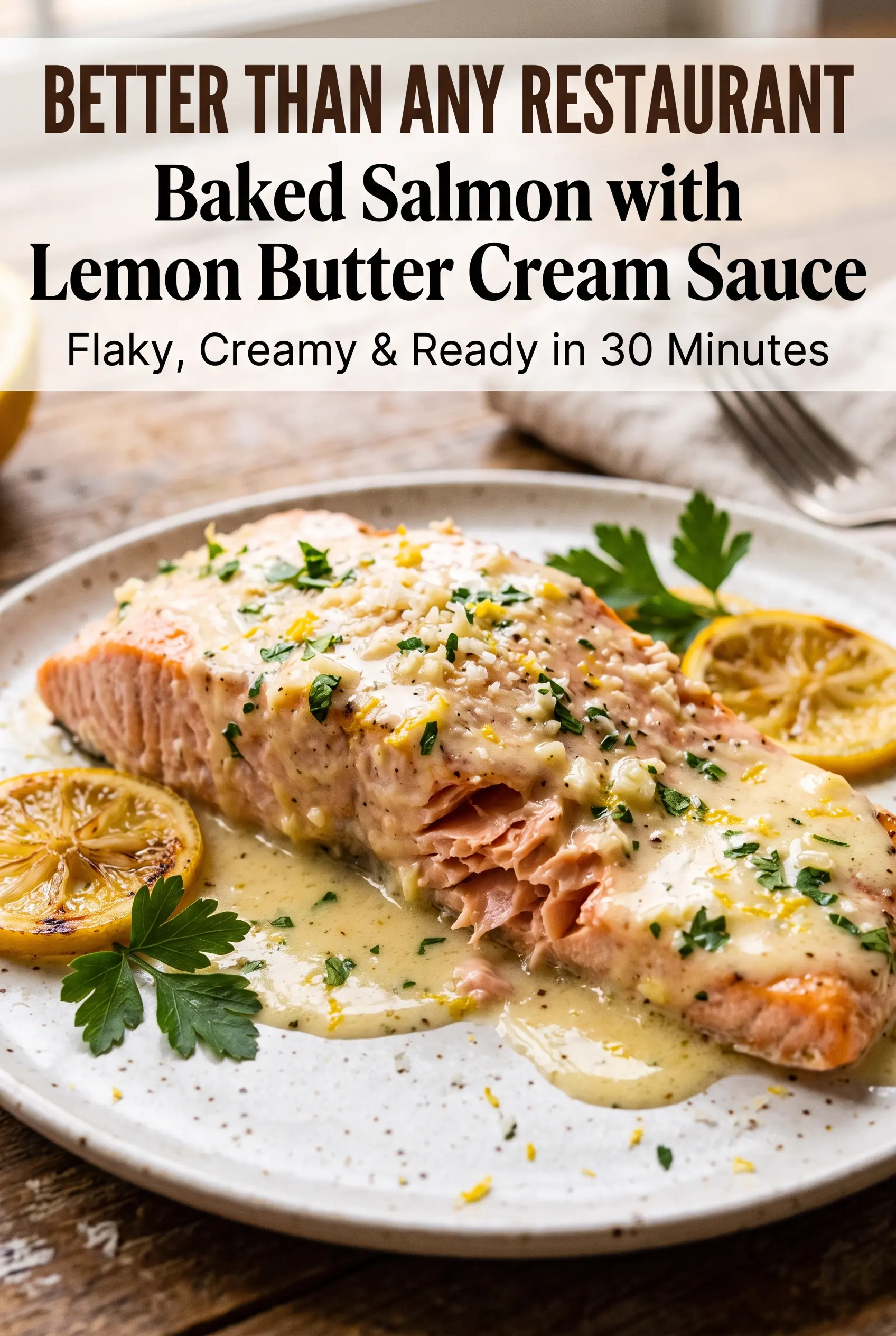
Baked Salmon with Lemon Butter Cream Sauce
Ingredients
Equipment
Method
- Preheat the oven to 400°F (200°C).
- Line a baking dish with parchment paper.
- Brush the salmon fillets with olive oil.
- Season the salmon with garlic powder, paprika, onion powder, Italian seasoning, salt, and black pepper.
- Bake for 12–15 minutes until the salmon flakes easily.
- Melt the butter in a skillet over medium heat.
- Sauté the minced garlic for 30 seconds, stirring until fragrant.
- Stir in the chicken broth and heavy cream.
- Simmer for 3–4 minutes until slightly thickened, with small bubbles around the edges.
- Add the grated Parmesan cheese and whisk until smooth.
- Stir in the fresh lemon juice, lemon zest, and chopped parsley.
- Season to taste with salt and black pepper.
- Spoon the warm lemon butter cream sauce over the baked salmon.
- Serve immediately with your chosen side dishes, such as steamed asparagus, garlic mashed potatoes, rice or pasta, and lemon slices.
