
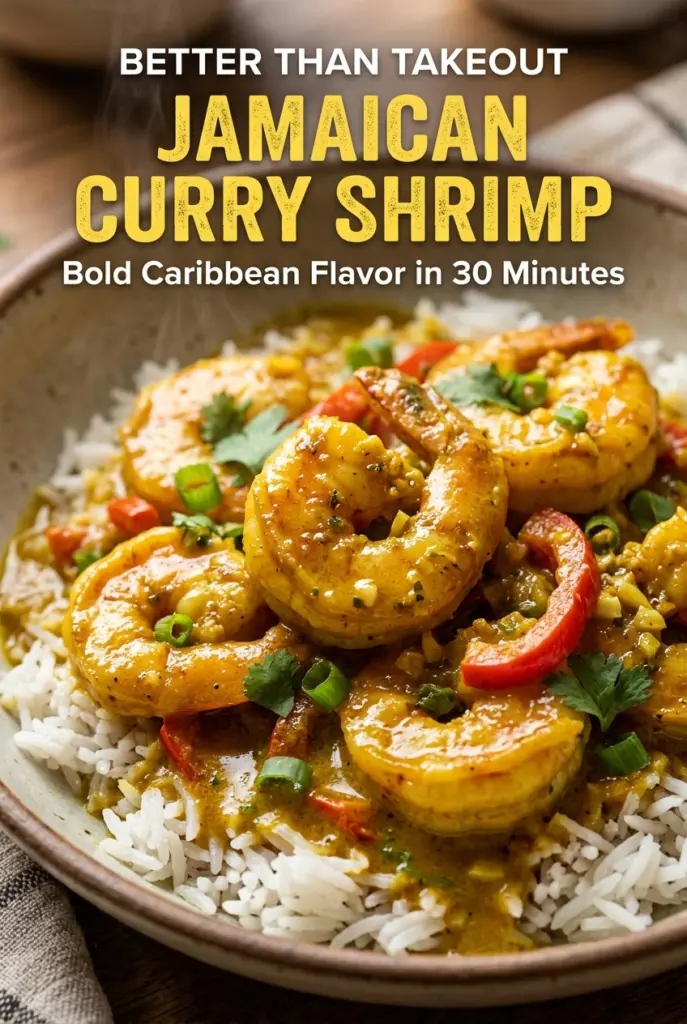
Authentic Jamaican Curry Shrimp
Curry shrimp should be bold, silky, and fast enough to pull off on a weeknight without tasting rushed. This Jamaican version gets there with a short list of ingredients and…
Tip: save now, cook later.Curry shrimp should be bold, silky, and fast enough to pull off on a weeknight without tasting rushed. This Jamaican version gets there with a short list of ingredients and a cooking method that keeps the shrimp tender while the sauce turns fragrant and creamy. The curry clings to every bite instead of pooling watery at the bottom of the pan, and the peppers and scallions give it the kind of finish that keeps you going back for one more spoonful.
The key is building the flavor in layers. The shrimp gets seasoned first, then the curry powder has a chance to bloom in the fat before the coconut milk and broth go in. That step matters. If the curry powder goes straight into liquid, it stays flat and dusty. Blooming it in the pan wakes up the spices and gives the sauce a deeper color and a rounder taste.
Below, I’ll walk through the exact order that keeps the shrimp juicy, the sauce smooth, and the heat balanced. I’ve also included a few swaps and storage notes, because this dish is quick enough to make often and worth getting right.
The sauce thickened up beautifully and the shrimp stayed tender instead of turning rubbery. I used the full amount of lime at the end and it made the whole dish pop over rice.
Save this Jamaican Curry Shrimp for the nights when you want a creamy curry sauce, tender shrimp, and rice all in one quick skillet meal.
The Reason the Shrimp Goes in Last
Jamaican curry shrimp can go wrong fast when the shrimp cooks too early or the sauce reduces too far before they’re added. Shrimp only needs a few minutes in the pan. If you simmer it with the sauce from the start, it tightens up and turns bouncy instead of tender. The goal is a curry sauce that’s already full-bodied before the shrimp hits the heat.
That’s why the onions, peppers, garlic, thyme, and curry powder get time to build the base first. Once the coconut milk and broth simmer down a bit, the sauce has enough flavor and body to coat the shrimp without needing long cooking. You’re looking for shrimp that turn opaque and pink at the edges, then finish just as the center loses its translucent look.
What Each Ingredient Is Actually Doing in This Dish
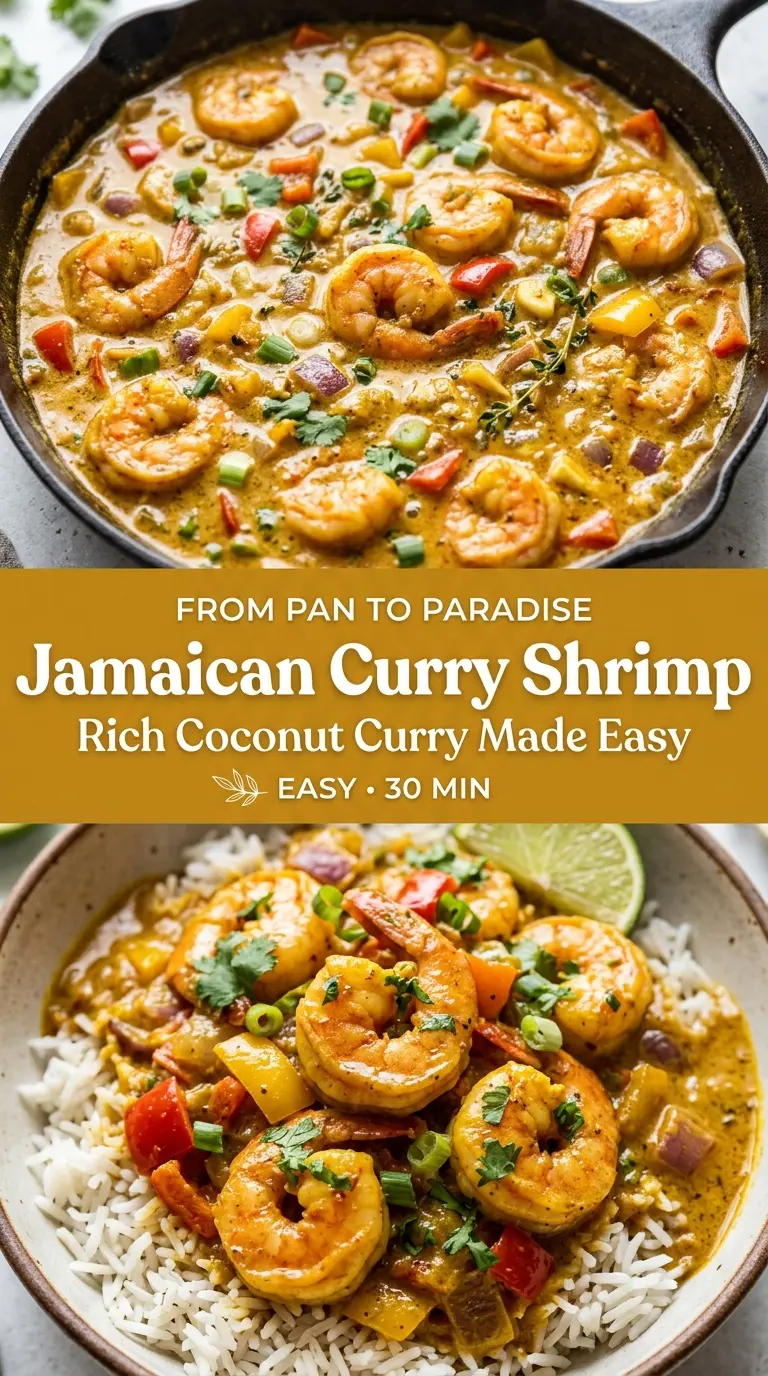
The ingredient list is short, but each part has a job. Jamaican curry powder is the backbone here, and it’s worth using a blend that smells warm and earthy rather than flat and dusty. If your curry powder has been sitting in the cabinet for years, replace it. Spices lose their power quietly, and this dish depends on them for most of its character.
- Shrimp — Large shrimp hold up best in a quick curry like this. Smaller shrimp cook too fast and can turn chewy before the sauce finishes.
- Jamaican curry powder — This is not the place to swap in a generic mild curry blend unless that’s all you have. If you need a substitute, use it, but add a pinch more paprika and thyme to bring back some depth.
- Coconut milk — Full-fat coconut milk gives the sauce its creamy body and helps mellow the Scotch bonnet heat. Light coconut milk works in a pinch, but the sauce will be thinner and less rich.
- Scotch bonnet pepper — This brings the signature heat and fruity aroma. Seed it for a cleaner burn, or use less if you want the curry warmer than hot. Habanero is the closest substitute.
- Fresh thyme — Dried thyme can work, but use less. Fresh thyme gives the dish a brighter herbal note that carries through the coconut milk.
- Lime juice — Add it at the end. Acid wakes up the curry and keeps the sauce from tasting heavy after the coconut milk has simmered.
Building the Curry Sauce Before the Shrimp Touches the Pan
Bloom the Curry in the Fat
Start with the oil and butter hot enough to shimmer, then add the onions and peppers and let them soften before the garlic goes in. The garlic only needs a short burst or it turns bitter. Once the curry powder hits the pan, stir it through the vegetables and fat until it smells deep and toasted, not raw. That toasted smell is the sign you’re building flavor instead of just coloring liquid.
Let the Coconut Milk Simmer, Don’t Boil Hard
Pour in the coconut milk and broth and keep the heat at a gentle simmer. A hard boil can make the sauce look grainy or separate at the edges. You want the sauce to reduce slightly and thicken enough to coat a spoon, not turn into paste. If it looks too thin after a few minutes, give it another minute or two before the shrimp goes in.
Cook the Shrimp Just Until It Turns Opaque
Add the shrimp and paprika, then stir and watch closely. Shrimp cook fast, and the line between tender and overdone is short. Pull the pan off the heat as soon as the shrimp is pink, curled into a loose C-shape, and opaque all the way through. Finish with lime juice and green onions while the sauce is still hot so the aromatics stay bright.
Three Ways to Make This Curry Work for Your Table
Milder Curry Without Losing the Flavor
Use half the Scotch bonnet, or swap in a milder pepper and remove the seeds and white membrane. The sauce will still taste like curry, coconut, and thyme, but the heat will sit in the background instead of leading the dish.
Dairy-Free as Written
This recipe already leans dairy-free if you use the coconut milk and skip the butter, replacing it with a little more olive oil. The sauce stays creamy because the coconut milk carries the body, not dairy.
Chicken Instead of Shrimp
Boneless chicken thighs can stand in for the shrimp if you want a longer-simmering version. Brown them first, then simmer them in the sauce until cooked through. You’ll get a deeper, heavier dish with the same curry base, but it won’t have the quick finish that makes the shrimp version so fast.
Storage and Reheating
- Refrigerator: Store leftovers for up to 2 days. The shrimp stays safe, but the texture gets firmer as it sits.
- Freezer: I don’t recommend freezing this one. Shrimp and coconut milk both change texture after thawing, and the sauce can separate.
- Reheating: Reheat gently in a skillet over low heat just until warmed through. High heat will overcook the shrimp and can cause the sauce to split, so keep it slow and short.
Answers to the Questions Worth Asking
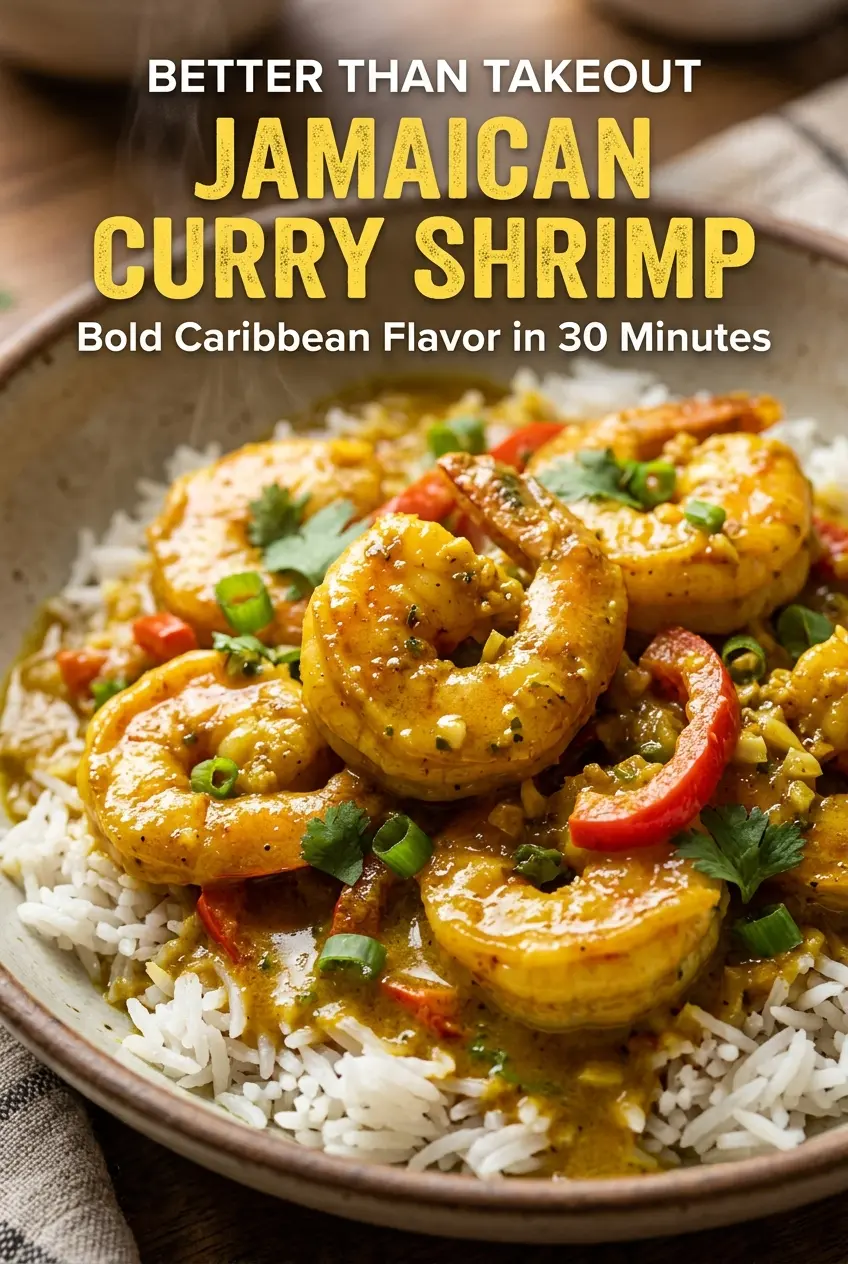
Authentic Jamaican Curry Shrimp
Ingredients
Equipment
Method
- Season the shrimp with 1 tbsp Jamaican curry powder, salt, and black pepper.
- Heat the olive oil and butter in a large skillet over medium-high heat until the butter foams.
- Add the sliced onion and red bell pepper and cook for 3 minutes, stirring once or twice until slightly softened.
- Add the minced garlic, thyme leaves, and minced Scotch bonnet pepper and stir for 30 seconds until fragrant and just starting to brown.
- Sprinkle in the remaining Jamaican curry powder and cook until fragrant, about 15 to 30 seconds.
- Pour in the coconut milk and chicken broth, scraping up any browned bits, then simmer for 5 minutes to thicken slightly.
- Add the shrimp to the simmering sauce and stir to coat, then cook for 3–4 minutes until the shrimp turn pink and curl.
- Stir in the lime juice and cook for 30 to 60 seconds to brighten the flavor.
- Garnish with the sliced green onions.
- Serve the curry over warm cooked white rice and top with fresh lime wedges and chopped cilantro or parsley.
