
Apple Fritter Bread with Cinnamon Glaze
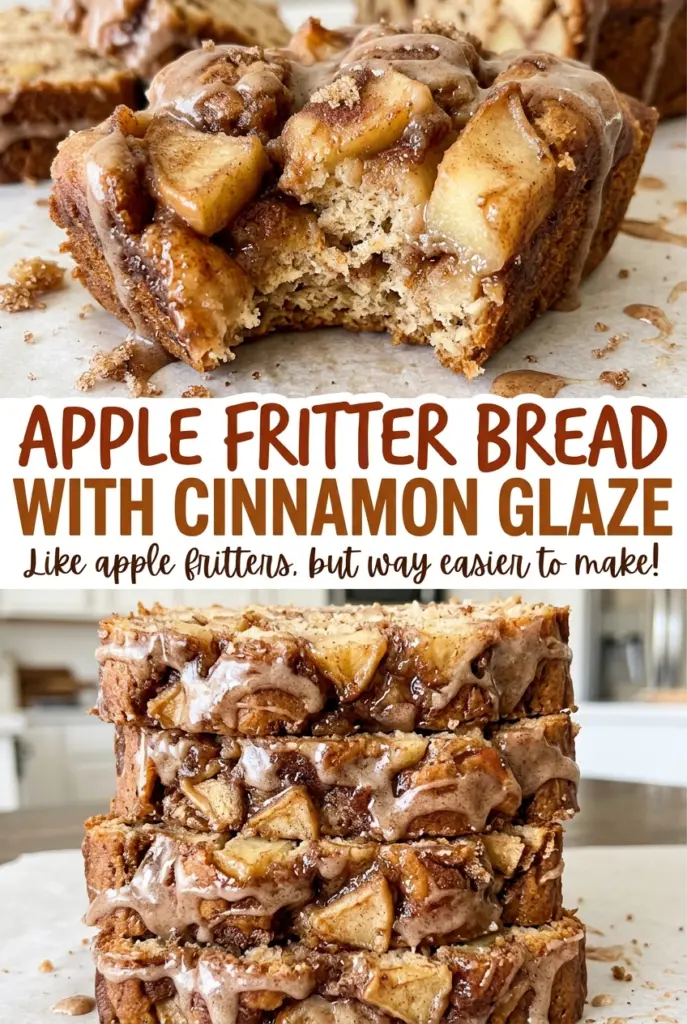
The first slice should show cinnamon-coated apples at more than one level, with soft bread between them instead of one dense stripe through the middle. I like this Apple Fritter…
Tip: save now, cook later.The first slice should show cinnamon-coated apples at more than one level, with soft bread between them instead of one dense stripe through the middle. I like this Apple Fritter Bread with Cinnamon Glaze because it brings that apple-fritter combination into a sliceable loaf, and the cinnamon glaze gives the top a sweet finish without hiding the fruit.
Tossing the diced apples with sugar and cinnamon before they go into the pan coats each piece and catches the cinnamon sugar that gathers in the bowl. That little bit of coating travels into the layers with the apples, so the loaf has cinnamon-sweet pockets tucked through its tender crumb. Once the glaze sets, each slice has a soft apple center and a thin cinnamon finish.
Kitchen Note
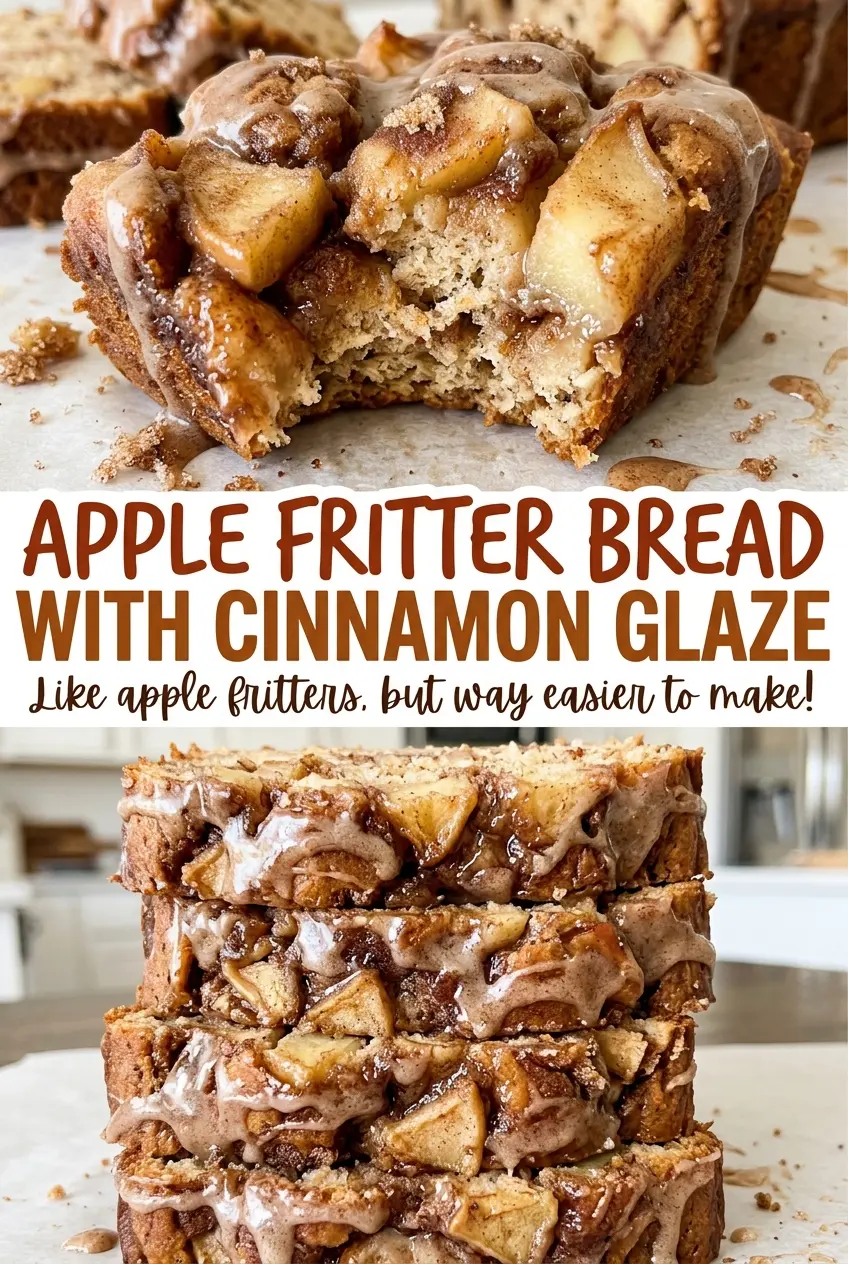
I let the loaf cool completely before drizzling the glaze. Even a slightly warm top can thin the icing and make it run down into the bread instead of setting in a neat cinnamon ribbon.
Save this Apple Fritter Bread with Cinnamon Glaze for its soft apple layers and cinnamon icing on top.
Why Two Apple Layers Beat One Thick Cinnamon-Sugar Center
It’s easy to think all the apples should go in one generous layer, but a single band can leave the middle of a loaf heavy with fruit. Dividing the apples between two layers spreads them through the crumb, so more slices get a little apple rather than a large pocket concentrated in one spot. The lower layer becomes part of the center, while the second layer gives the top its unmistakable apple-fritter look.
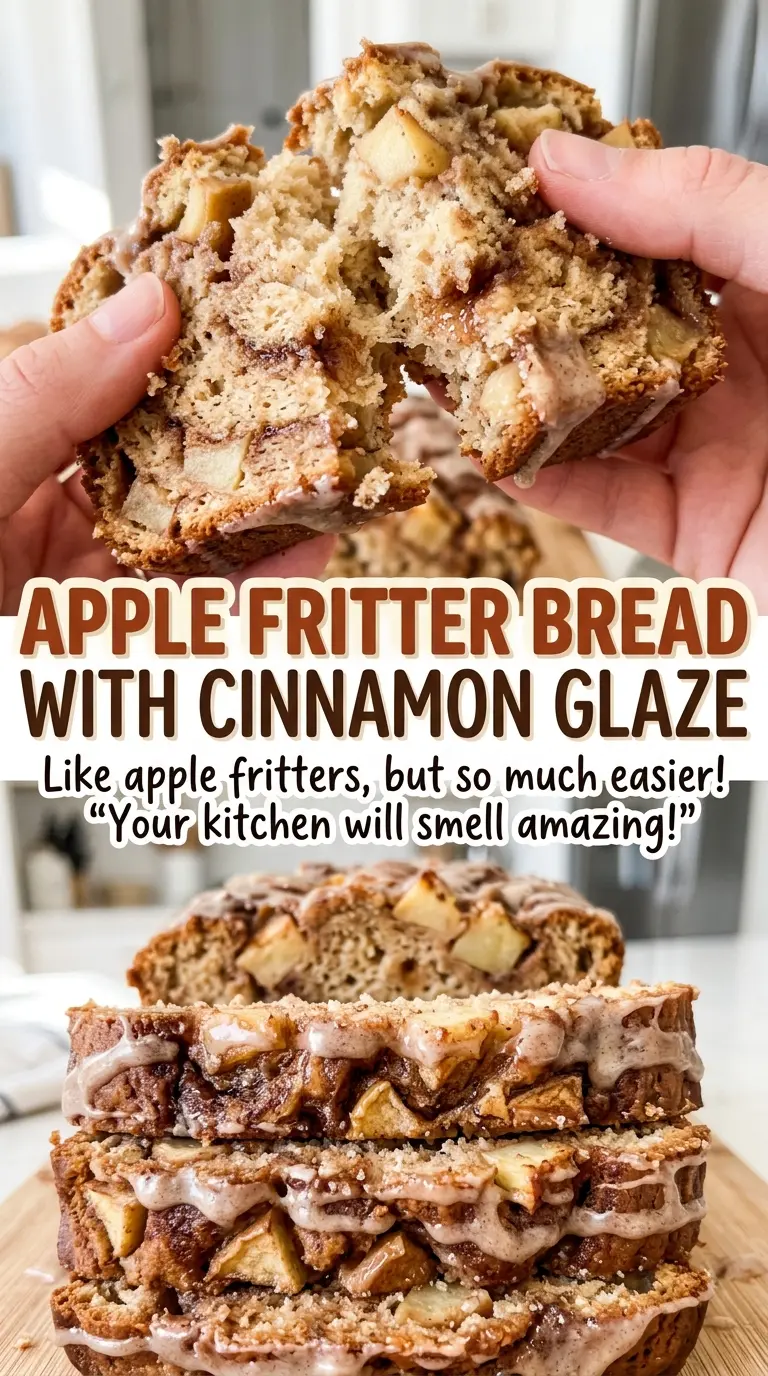
The batter is soft enough to spread over the first layer, then the last portion of batter covers most of that fruit before the remaining apples go on top. A gentle pass with a knife connects the layers without turning the whole loaf into a uniform cinnamon swirl. When you slice it, look for distinct apple pieces and streaks of cinnamon sugar between them. That contrast is what keeps the loaf feeling like apple fritter bread instead of plain cake with fruit stirred through it.
What the Apples, Butter, and Milk Bring to This Loaf
- Apples — Firm apples hold their shape better than soft, mealy ones, giving each slice tender pieces rather than applesauce-like patches. Peel them and cut them into even half-inch pieces so they soften at a similar pace. A tart apple gives the loaf a brighter contrast; a sweeter one makes the cinnamon layer taste rounder.
- Granulated sugar and cinnamon — Tossing these with the apples seasons the fruit itself and creates the cinnamon-sugar coating that runs through the loaf. Ground cinnamon is what ties the apple layer to the glaze, so use a fresh-smelling jar rather than one that has been sitting open for years.
- Unsalted butter and eggs — Softened butter traps air when beaten with sugar, helping the bread bake up tender instead of dense. Room-temperature eggs blend in more smoothly than cold ones. Good-quality butter is noticeable here, but standard grocery-store unsalted butter works well.
- All-purpose flour and baking powder — All-purpose flour gives the loaf enough structure to hold the apple layers while staying soft. Baking powder provides the lift, so use it rather than self-rising flour, which would change the balance of leavening and salt.
- Whole milk — Whole milk keeps the batter rich and tender. It also helps bring the flour mixture together without making the crumb as lean as a lower-fat milk would.
- Powdered sugar — Its fine texture makes a smooth glaze without the gritty feel granulated sugar would leave. A regular store-brand powdered sugar is fine; the consistency comes from whisking it with the milk until smooth.
How to Layer and Bake the Apple Fritter Loaf
Coat the Apples and Prepare the Pan
Heat the oven to 350°F and grease a 9×5-inch loaf pan. Peel, core, and dice the apples into half-inch pieces, then toss them with the granulated sugar and cinnamon until the coating looks even. The pieces should be small enough to fit neatly into the loaf but not so tiny that they disappear into the crumb. Keep the cinnamon sugar that gathers in the bowl; it goes into the layers with the apples.
Cream the Butter and Sugar Until Fluffy
Beat the softened butter with the granulated sugar for about 2 minutes, until the mixture looks lighter and fluffy rather than dense and pasty. Add the room-temperature eggs one at a time, beating after each addition, then mix in the vanilla. Adding the eggs separately helps them blend into the creamed butter instead of leaving slick streaks. Scrape the sides of the bowl if butter or sugar is clinging there.
Alternate the Flour Mixture and Milk
Whisk the flour, baking powder, and salt together in a separate bowl so the leavening is spread through the flour. Add the dry mixture to the butter mixture in three additions, alternating with the milk; begin and end with the flour mixture. Mix only until the last streaks of flour disappear, since continued beating can make the loaf firm rather than tender. The finished batter will be thick enough to spread, not pour.
Build Two Apple Layers and Swirl Lightly
Spread half the batter in the greased pan, then add half the apples and their accumulated cinnamon sugar. Cover with the remaining batter, spread it gently toward the edges, and arrange the rest of the apples on top. Draw a knife gently through the layers to create a few swirls; repeated stirring will blur the layers and make the fruit less distinct. Don’t worry if some apple pieces remain visible on the surface.
Bake, Cool, and Finish with Cinnamon Glaze
Bake for 60 to 70 minutes, until a toothpick inserted into the bread portion comes out clean or with a few moist crumbs. Let the loaf cool in the pan for 15 minutes, then transfer it to a wire rack and cool completely. Whisk the powdered sugar, milk, and cinnamon until the glaze is smooth. Drizzle it over the cooled loaf and give it time to set before slicing, so the top keeps a defined finish.
Two Simple Ways to Adapt the Loaf
Make It Dairy-Free
Replace the butter with dairy-free baking sticks in the same amount, and use unsweetened oat milk in place of the whole milk in both the batter and glaze, keeping the same amounts. Baking sticks give the batter a closer texture than soft tub spread; the loaf will be a little less buttery, with a faint oat note.
Leave Off the Cinnamon Glaze
For a less sweet loaf, skip the glaze and serve the bread once it has cooled. The cinnamon-sugar apples still give each slice its apple-fritter character, but the finish is more restrained and the top stays soft rather than icing-coated.
Storage and Reheating
- Refrigerator: Keep the cooled, glazed loaf in an airtight container for up to 4 days. The crumb firms when chilled, and the glaze may become a little tacky.
- Freezer: Freeze the loaf or individual slices without glaze for the best finish. Wrap tightly, freeze for up to 2 months, then thaw in the refrigerator and glaze after it has fully thawed.
- Reheating: Warm an individual slice in the microwave for 10 to 15 seconds. The glaze will soften, so avoid heating it longer than needed.
Questions That Come Up While Baking This Loaf
Apple Fritter Bread with Cinnamon Glaze
Ingredients
Equipment
Method
- Heat the oven to 350°F and grease a 9x5-inch loaf pan.
- Toss the apples with the granulated sugar and cinnamon until evenly coated.
- Beat the softened butter and granulated sugar until light and fluffy, about 2 minutes.
- Beat in the eggs one at a time, then mix in the vanilla extract.
- Whisk together the flour, baking powder, and salt.
- Add the flour mixture to the butter mixture in three additions, alternating with the milk and beginning and ending with the flour mixture, mixing just until combined.
- Spread half of the batter in the prepared pan, then layer on half of the apple mixture, including any accumulated cinnamon sugar.
- Spread the remaining batter over the apples.
- Top with the remaining apple mixture, and gently swirl through the layers with a knife.
- Bake for 60 to 70 minutes, until a toothpick inserted into the bread portion comes out clean or with a few moist crumbs.
- Cool in the pan for 15 minutes, then transfer to a wire rack and cool completely.
- Whisk the powdered sugar, milk, and cinnamon until smooth.
- Drizzle the glaze over the cooled loaf and let the glaze set before slicing.
