

5-Ingredient Rotisserie Chicken Casserole
Tender rotisserie chicken, a creamy filling, and a crisp, cheesy cornbread topping make this casserole the kind of dinner that disappears fast. It lands in that sweet spot between comforting…
Tip: save now, cook later.Tender rotisserie chicken, a creamy filling, and a crisp, cheesy cornbread topping make this casserole the kind of dinner that disappears fast. It lands in that sweet spot between comforting and low-effort, with enough structure to feel like a real meal and enough pantry shortcuts to keep the prep calm. The stuffing mix on top does more than add crunch; it turns the whole dish into something with contrast, which is what keeps a creamy casserole from tasting flat.
The reason this version works is balance. Rotisserie chicken already brings seasoning and moisture, so the filling doesn’t need much more than soup, sour cream, and cheese to turn rich and cohesive. Keeping the stuffing mix dry on top is the move here. It bakes into a golden lid instead of dissolving into the filling, which is where a lot of casseroles go soft and one-note.
Below you’ll find the exact layering order that keeps the top crisp, plus a few smart swaps if you want to use what you’ve got on hand. The method is simple, but the small details matter if you want clean scoops and a casserole that still looks good after it hits the table.
The stuffing stayed crisp on top and the filling was creamy without getting soupy. I used leftover rotisserie chicken and it baked up perfectly in the time you said.
Save this rotisserie chicken casserole for nights when you want a creamy, cheesy dinner with a crisp cornbread topping and almost no prep.
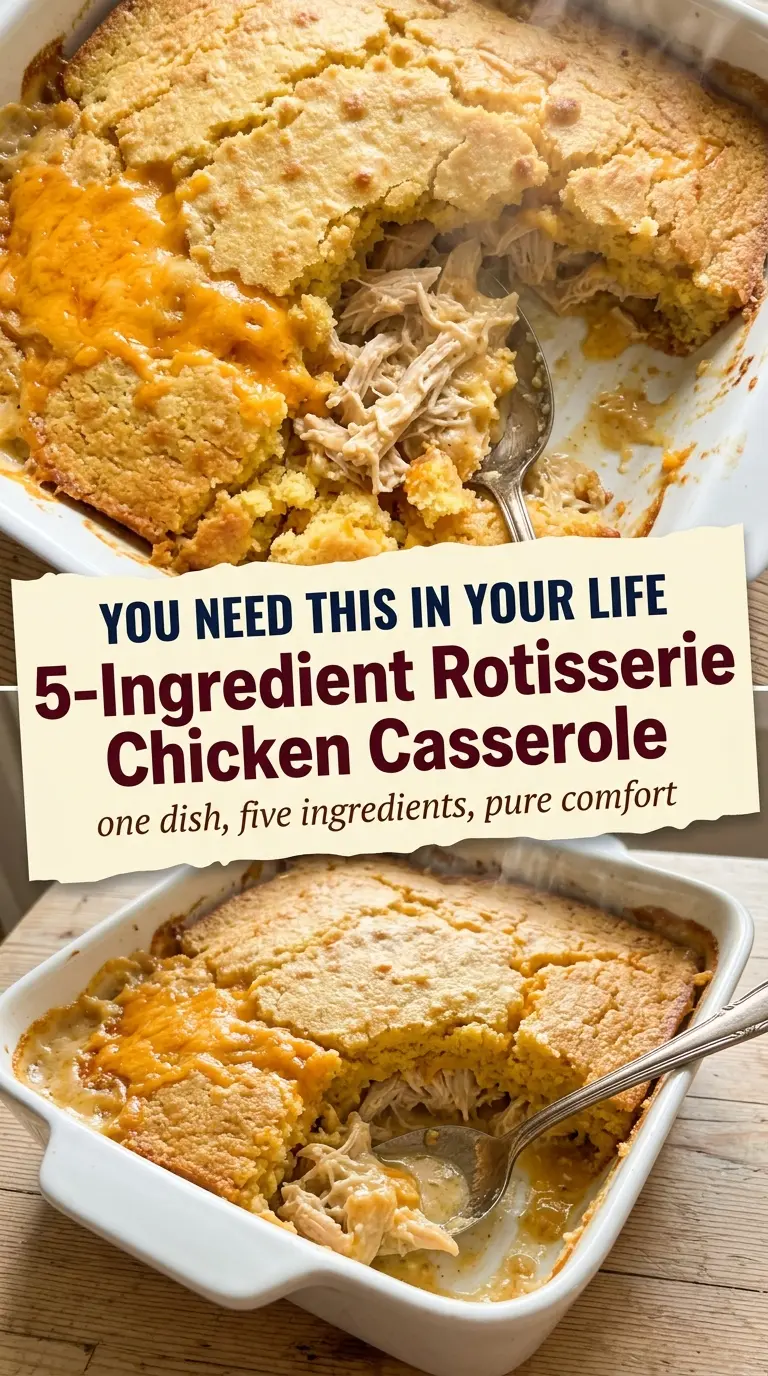
The Trick to Keeping the Topping Crisp Instead of Soggy
A casserole like this can go wrong in one of two ways: the filling turns loose and watery, or the topping softens before the center is hot. The fix is built into the order of operations. The chicken mixture needs to be thick enough to hold its shape in the pan, and the stuffing mix has to stay dry on top until it hits the oven. That contrast is what gives you a creamy middle and a baked, textured lid instead of one blended mass.
Rotisserie chicken helps a lot here because it has less surface moisture than poached chicken and better flavor straight from the package. Sour cream adds body and a little tang, while the condensed soup keeps the sauce stable during baking. If your casserole has ever come out runny, it usually means the filling was thinned too much before it baked or the top absorbed moisture too early.
- Rotisserie chicken — This is the backbone of the dish. Use the meat from a freshly bought bird if you can, since it shreds cleanly and stays juicy. If you’re using leftover chicken, warm it slightly before mixing so it folds into the sauce evenly.
- Cream of chicken soup — This gives the filling its built-in thickness and seasoning. A homemade white sauce won’t behave the same way here unless you cook it to a similar condensed texture.
- Sour cream — It adds richness without making the casserole heavy. Plain Greek yogurt can work in a pinch, but it brings more tang and a slightly tighter texture once baked.
- Cheddar cheese — Mild or sharp both work, but sharper cheddar gives the filling more punch. Shred it yourself if you want the smoothest melt; pre-shredded cheese is fine, but it won’t melt quite as silkily.
- Corbread stuffing mix — This is the topping that makes the casserole feel complete. Keep it dry and scatter it evenly so every bite gets a little crunch. If the layer looks patchy, it bakes patchy.
How to Layer It So the Center Stays Creamy and the Top Browns
Mix the creamy base first
Start by stirring the soup, sour cream, and most of the cheddar together until the mixture looks smooth and thick. Fold in the shredded chicken last so every piece gets coated without breaking down into strings. If the filling seems loose at this point, don’t thin it out with milk; it should look spoonable, not pourable.
Spread it into the dish without packing it down
Use a lightly greased 9×13-inch baking dish and spread the filling into an even layer. Don’t press it flat like a meatloaf. A little air in the mixture helps it heat through evenly, and a packed layer can turn dense at the edges before the middle is done.
Build the topping in a dry layer
Scatter the dry cornbread stuffing mix over the top so it covers the filling completely. Then finish with the remaining cheddar. That order matters because the stuffing needs direct heat to toast while the cheese on top melts into the crumbs and helps them brown. If you toss everything together first, the topping loses its texture and sinks into the filling.
Bake until the edges bubble
Pull the casserole when the top is golden and the filling is bubbling around the edges. The center should be hot all the way through, but don’t wait for the whole surface to look dry; that’s how the topping overbakes. Let it rest for a few minutes before serving so the filling settles and scoops cleanly.
How to Adapt This for Different Pantries and Diets
Gluten-Free Version
Use a gluten-free condensed cream of chicken soup and swap the cornbread stuffing mix for a gluten-free stuffing or a crushed gluten-free cracker topping. The texture will still be cozy and baked, though the top may brown a little faster depending on the brand you use.
More Veggies Without Losing the Comfort Factor
Stir in a cup of thawed frozen peas, chopped cooked broccoli, or sautéed mushrooms before baking. Keep the additions cooked and well-drained so they don’t release water into the filling and thin out the sauce.
Swap the Cheese for What You Have
Monterey Jack, Colby, or a cheddar-jack blend all melt well here. If you use a very mild cheese, add a pinch of black pepper or garlic powder to keep the filling from tasting flat.
Storage and Reheating
- Refrigerator: Store covered for up to 4 days. The topping softens a bit as it sits, but the flavor holds up well.
- Freezer: It freezes well if you cool it completely, wrap it tightly, and freeze in portions or as a full casserole. Expect the sour cream to make the filling slightly less smooth after thawing, though the texture is still good.
- Reheating: Warm individual portions in the microwave, or reheat the whole dish covered in a 325°F oven until hot in the center. Uncover it for the last few minutes if you want to bring some crispness back to the top.
Answers to the Questions Worth Asking

5-Ingredient Rotisserie Chicken Casserole
Ingredients
Equipment
Method
- Preheat your oven to 375°F (190°C) and lightly grease a 9×13-inch baking dish with a thin coating of oil or cooking spray.
- Shred the rotisserie chicken, discarding skin and bones, until you have about 3 cups of tender pulled meat.
- In a large bowl, stir together the cream of chicken soup, sour cream, and 1½ cups of the shredded cheddar until combined and smooth.
- Fold in the shredded chicken until evenly coated so every piece is lightly creamy.
- Spread the chicken mixture into the prepared baking dish in an even layer so it bakes uniformly.
- Sprinkle the dry cornbread stuffing mix evenly over the top, covering the filling completely for a crispier finish.
- Scatter the remaining ½ cup of cheddar cheese over the stuffing layer so it melts into gooey pockets.
- Bake uncovered for 30–35 minutes at 375°F (190°C), until the top is golden, the cheese is melted and bubbling at the edges, and the casserole is heated through.
- Let rest for 5 minutes to set the layers before serving, then scoop deep to include stuffing, cheese, and the creamy chicken filling underneath.
